NASA Moon Base: India Invited to Join Lunar Mission

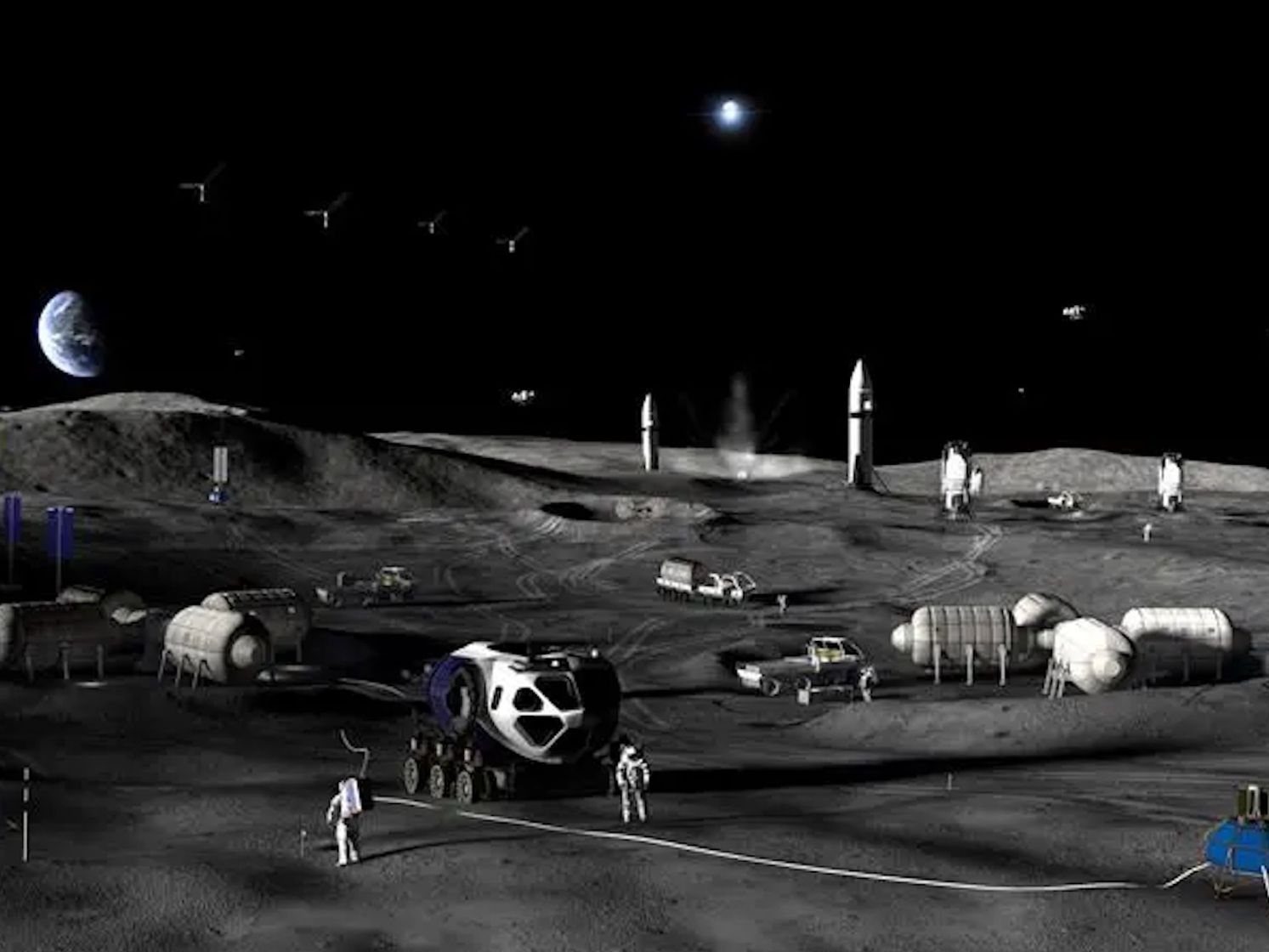
NASA Moon Base cooperation could open a new chapter in India-US space relations after NASA invited the Indian Space Research Organisation (ISRO) to participate in its ambitious programme for establishing a long-term human presence on the Moon. The invitation was discussed during the 9th India-US Civil Space Joint Working Group meeting held at ISRO headquarters in Bengaluru on August 5 and 6, 2026.
Thank you for reading this post, don't forget to subscribe!The development comes at an important time for India’s space programme. India’s successful Chandrayaan-3 landing in 2023 near the lunar South Pole demonstrated the country’s ability to operate in one of the Moon’s most difficult regions. NASA is now planning future lunar missions around the same area because of its scientific importance and the possible presence of water ice.
NASA Moon Base Plans Focus on the Lunar South Pole
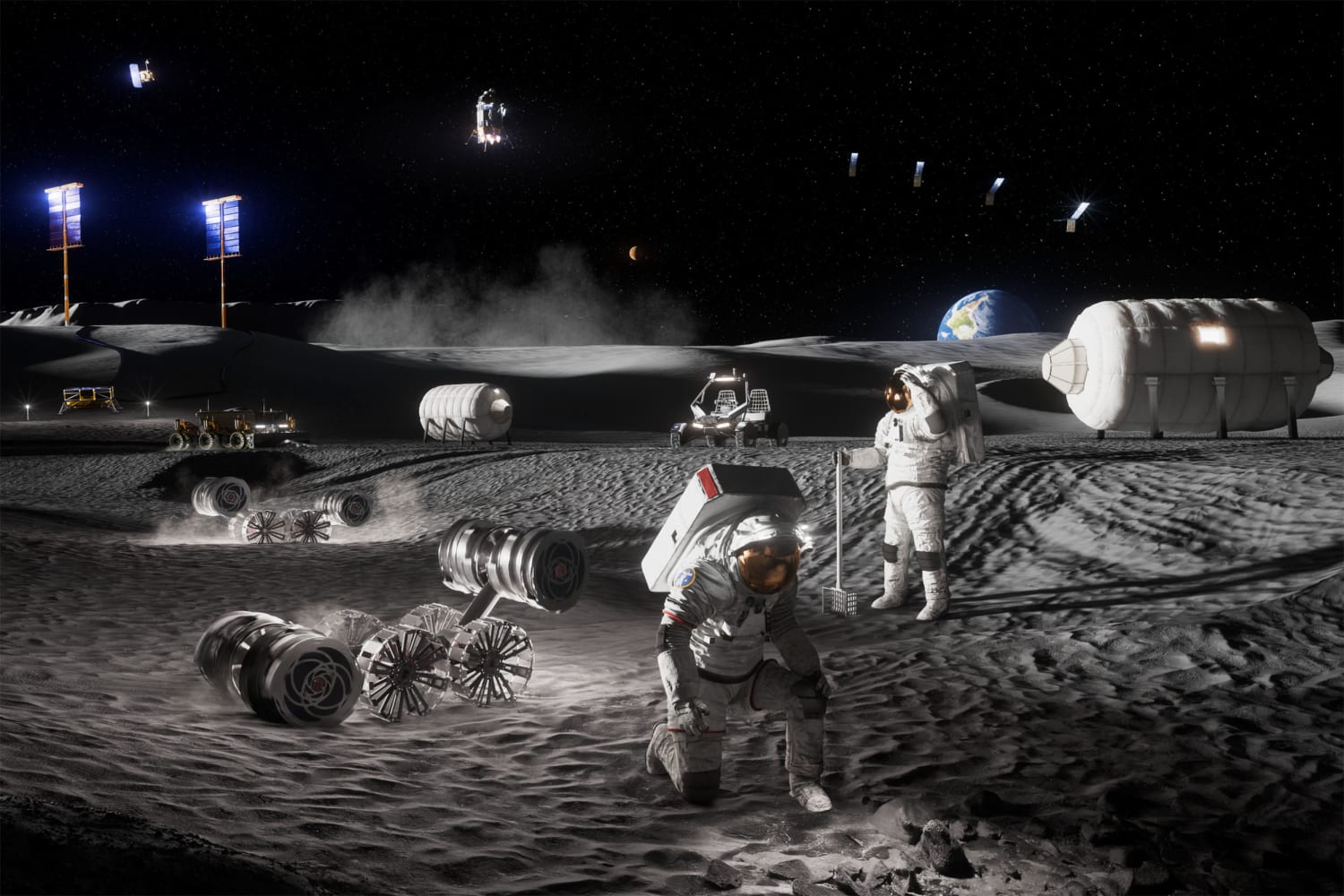
NASA’s planned Moon Base is aimed at creating a long-term human outpost near the lunar South Pole. Unlike earlier Moon missions that focused mainly on short visits, the new approach involves building infrastructure that can support astronauts for longer periods.
The lunar South Pole is especially important because some craters in the region remain permanently in darkness. Scientists believe these areas may contain deposits of water ice. Water could become a valuable resource for future lunar activities because it can potentially be processed into drinking water, oxygen and hydrogen-based rocket fuel.
The availability of such resources could reduce the amount of material that future missions need to transport from Earth. This makes the South Pole an important location for the next generation of lunar exploration.
NASA’s planned programme involves a series of crewed and uncrewed missions to gradually establish the systems required for a sustainable human presence on the Moon.
India’s Chandrayaan-3 Experience Gives It a Strong Position
India’s growing role in lunar exploration is one of the major reasons the NASA invitation is significant. In August 2023, Chandrayaan-3 successfully landed the Vikram lander and deployed the Pragyan rover near the lunar South Pole.
The achievement made India the first country to successfully soft-land a spacecraft in the region. It also demonstrated India’s ability to design and operate a lunar mission at comparatively low cost.
The landing site was later named Shiv Shakti Point. The mission provided India with valuable experience in lunar surface operations, navigation, landing and scientific exploration.
This experience could be useful if India becomes more deeply involved in future international missions to the Moon. India’s knowledge of operating spacecraft in the South Polar region is particularly relevant because NASA’s proposed Moon Base is also expected to focus on this part of the lunar surface.
India-US Space Cooperation Is Expanding
The proposed NASA Moon Base partnership is part of a wider expansion in India-US civil and commercial space cooperation. The Bengaluru meeting brought together senior officials from both countries to discuss future cooperation in space science, technology and human spaceflight.
ISRO Chairman and Secretary of the Department of Space Dr. V. Narayanan and US Ambassador to India Sergio Gor were among the officials involved in the discussions. The meeting also included representatives from NASA and other US and Indian institutions.
The two countries discussed expanding cooperation under the US-India Transforming the Relationship Utilizing Strategic Technology (TRUST) Initiative. This broader framework has been supporting closer cooperation in advanced technologies and strategic areas.
The discussions also included future scientific cooperation and the possibility of greater sharing of scientific data.
Artemis Accords Provide a Framework for Cooperation
India’s participation in the Artemis Accords provides an important foundation for possible cooperation with NASA. India signed the accords on June 21, 2023, becoming the 27th country to join the initiative.
The Artemis Accords set out principles for peaceful and sustainable exploration of the Moon and other celestial bodies. They encourage countries to cooperate in scientific research, share information and develop responsible approaches to space exploration.
India’s involvement in the accords means that the country already has a framework for working with the United States and other participating nations on future lunar activities.
The latest discussions in Bengaluru also mentioned cooperation on open scientific data sharing. Such cooperation could allow researchers from different countries to use scientific information generated through lunar missions.
Chandrayaan Missions Changed Global Interest in the Moon
India’s lunar programme has developed steadily since Chandrayaan-1 was launched in 2008. The mission played an important role in detecting evidence of water-related molecules on the Moon.
The discovery increased international scientific interest in lunar resources, particularly around the polar regions. The Moon’s water resources are now considered important for future exploration because they could support human activities and reduce dependence on supplies brought from Earth.
Chandrayaan-3 later strengthened India’s position in lunar exploration by achieving a successful soft landing near the South Pole.
Together, these missions have helped establish India as an important player in international lunar science.
NISAR Shows the Depth of India-US Space Partnership
The proposed lunar cooperation also builds on existing successful projects between ISRO and NASA. One of the most important examples is the NASA-ISRO Synthetic Aperture Radar (NISAR) mission.
NISAR is a joint Earth-observation satellite developed by the two countries. It uses advanced radar technology to study changes on Earth’s surface, including land movement, natural disasters, forests, glaciers and other environmental features.
The mission demonstrates how India and the United States can combine their scientific and technological capabilities to develop complex space systems.
The experience gained through projects such as NISAR could support further cooperation in lunar science and exploration.
Gaganyaan Adds a Human Spaceflight Dimension
India’s own human spaceflight programme is another important part of the developing partnership. Through Gaganyaan, India is working towards sending Indian astronauts into low Earth orbit using an Indian spacecraft and launch vehicle.
The programme is expected to provide experience in crew safety, life-support systems, astronaut training and human spaceflight operations.
India’s long-term space plans go beyond low Earth orbit. The country has discussed ambitions involving a future space station, advanced lunar missions and human exploration beyond Earth orbit under its broader Space Vision 2047.
Participation in international lunar programmes could provide Indian scientists and engineers with additional opportunities to work with other major space agencies.
Open Scientific Data Could Become an Important Area
One of the notable points from the Bengaluru discussions was the agreement to continue discussions on open scientific data sharing under the Artemis Accords.
Scientific data from lunar missions can help researchers understand the Moon’s geology, environment and resources. Making such information available to a wider scientific community can also encourage new research and international collaboration.
For India, greater access to international lunar data could support research institutions and universities working on planetary science, robotics and space technology.
At the same time, India has traditionally supported wider scientific cooperation and the sharing of knowledge generated through space research.
Why the Moon Base Matters for Future Space Exploration
A permanent or long-term lunar outpost would represent a major change in human space exploration. The Moon could become a testing ground for technologies needed for future missions to Mars and other destinations.
Astronauts could test habitats, power systems, communication networks, resource-use technologies and advanced robots in the lunar environment. The experience could help scientists understand how humans can live and work away from Earth for extended periods.
The lunar South Pole is particularly attractive because of its potential water resources and unusual lighting conditions.
India’s experience from Chandrayaan-3 therefore gives it an important technological and scientific connection to the region where NASA hopes to develop its future lunar activities.
A New Phase for India-US Lunar Cooperation
The NASA Moon Base invitation reflects the changing position of India in global space exploration. India is no longer involved only in satellite launches and Earth-observation projects. Its successful lunar missions have created opportunities for deeper cooperation in planetary exploration and human spaceflight.
If the proposed partnership develops further, Indian scientists and engineers could participate in one of the most ambitious international space projects of the coming decades.
The cooperation would also add another major dimension to the growing India-US relationship in space, alongside NISAR, Gaganyaan-related discussions, scientific data sharing and cooperation under the Artemis Accords.