




NASA Swift Rescue Mission Saves Ageing Observatory

The NASA Swift Rescue Mission is a new effort by NASA to protect its ageing space telescope from falling out of orbit. The agency has launched a mission worth ₹283.8 crore ($30 million) to extend the life of the Neil Gehrels Swift Observatory, which has been working in space since 2004.
Thank you for reading this post, don't forget to subscribe!About the Swift Observatory
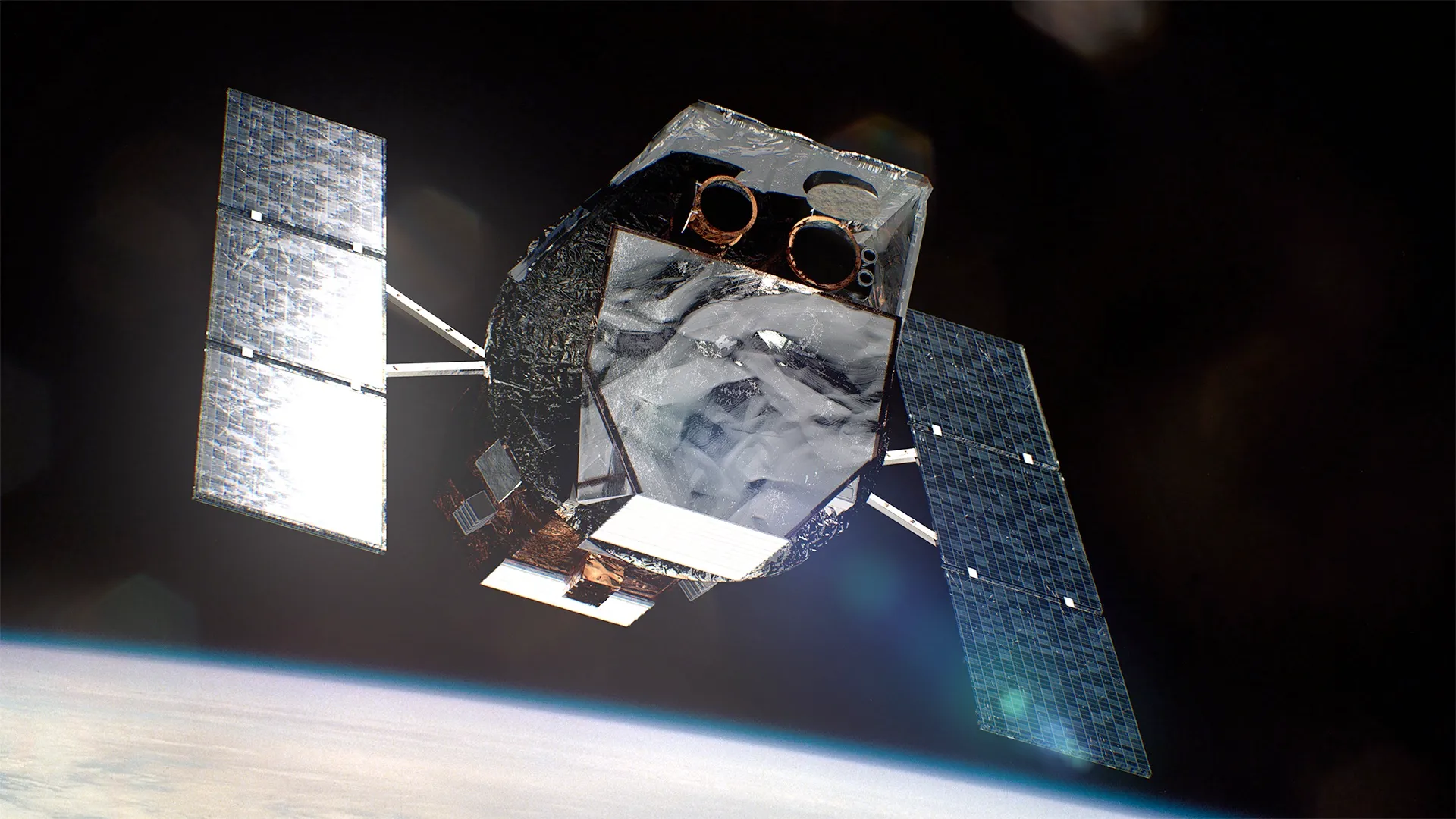
The Neil Gehrels Swift Observatory is an important telescope under NASA’s MIDEX programme. It studies gamma-ray bursts, which are the most powerful explosions in the universe. The satellite carries advanced instruments like the Burst Alert Telescope, helping scientists quickly observe space events and collect useful data for research.
Why the Satellite is Falling
The observatory is slowly losing height due to increased solar activity. This activity heats Earth’s upper atmosphere, causing it to expand. As a result, satellites like Swift face more atmospheric drag, which pulls them closer to Earth. By 2026, its orbit has dropped below 400 km, raising concerns about its future.
NASA’s Rescue Plan and Technology
To solve this problem, NASA plans to send a robotic spacecraft built by Katalyst Space Technologies. The robot will dock with the telescope using special arms and push it to a safer orbit of around 550 km. This process is called a “reboost” and could extend the mission by up to 10 years. After completing the task, the robotic craft will safely burn up in Earth’s atmosphere.
Significance and Challenges of the Mission
The NASA Swift Rescue Mission shows a new way of maintaining satellites without replacing them. This technology can save money and improve the life of space missions. However, the process is complex because it involves docking two objects in space while dealing with strong atmospheric drag. Despite the challenges, the mission is seen as a major step forward in space technology.