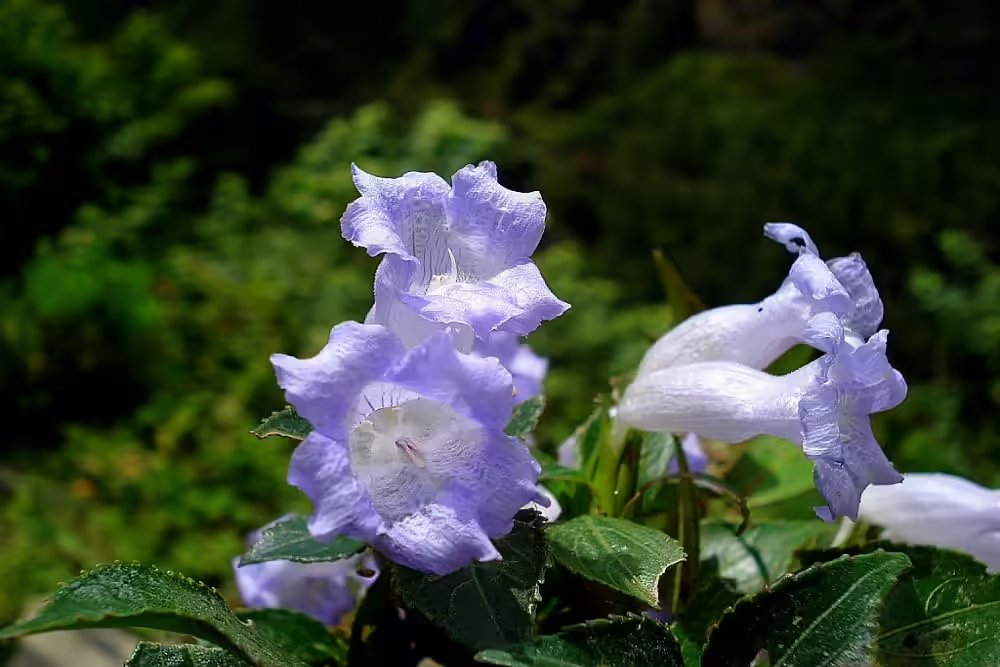
Neelakurinji Bloom in Kudremukh

Neelakurinji Bloom has attracted attention in the Kudremukh hills of Karnataka, where a rare blue-violet flowering plant resembling the famous Neelakurinji has appeared along trekking trails. The flowering has been observed in the Kudremukh region of Chikkamagaluru district, bringing renewed interest in the unique plant life of the Western Ghats. The area is known for its high-altitude grasslands, shola forests and rich biodiversity.
The appearance of blue-violet flowers is especially significant because the Western Ghats is home to several flowering plants that are adapted to cool mountain environments. However, not every blue-violet bloom seen in the region is necessarily the true Neelakurinji. Local observations suggest that the current flowering in Kudremukh is scattered and limited rather than a large-scale mass flowering event.

Neelakurinji and Its Unique Flowering Pattern
Neelakurinji is the common name for Strobilanthes kunthiana, a flowering shrub found naturally in parts of the Western Ghats. It is widely known for its distinctive blue-violet flowers and unusual flowering behaviour.
Many populations of true Neelakurinji are associated with a flowering cycle of around 12 years. During a major flowering season, large areas of mountain slopes can appear covered with blue-violet flowers. After flowering and producing seeds, the plants complete their life cycle, while new plants develop for several years before the next major flowering period.
The long flowering interval makes the plant an important part of the ecological identity of the Western Ghats. It also means that changes in flowering patterns can attract considerable attention from researchers, forest officials and local communities.
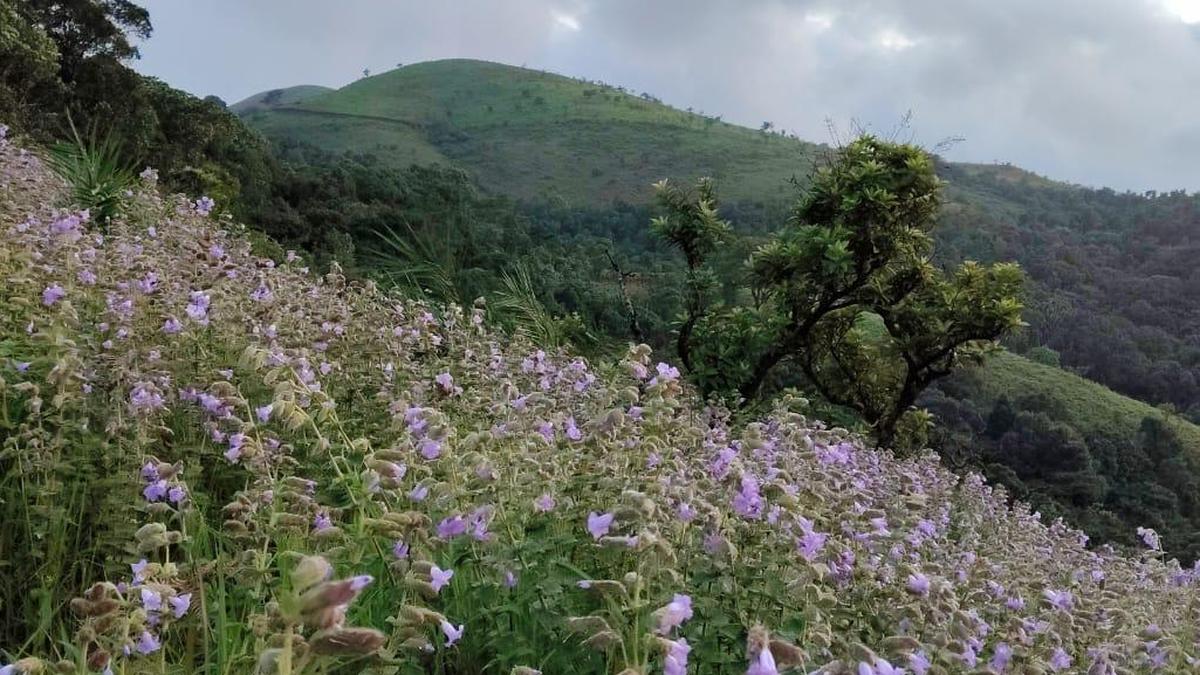
Kudremukh Hills and Western Ghats Ecosystem
Kudremukh is located in Chikkamagaluru district of Karnataka and forms part of the Western Ghats mountain system. The region contains a combination of montane grasslands and shola forests, creating suitable habitats for many specialised plants and animals.
The Western Ghats is one of India’s most important biodiversity regions. Its mountains influence rainfall patterns across peninsular India and support numerous endemic species. Endemic species are plants or animals naturally restricted to a particular geographical region.
High-altitude flowering plants in the Kudremukh landscape are particularly sensitive to changes in temperature, rainfall, land use and human activity. Maintaining the natural grassland and forest environment is therefore important for preserving these species.
Scattered Flowers and the 2026 Bloom
The flowers currently being seen around Kudremukh have a strong visual resemblance to Neelakurinji. However, the flowering has been described as scattered and limited compared with the extensive blooms reported from the region during previous flowering seasons.
This distinction is important because the true Neelakurinji is recognised for its characteristic mass flowering behaviour. A scattered bloom may involve related plants or early flowering populations rather than representing the main 12-year flowering event.
Botanical identification is therefore important before assigning every blue-violet flowering plant to Strobilanthes kunthiana. Differences in plant structure, leaves, flowers and flowering behaviour can help specialists identify the species correctly.
Neelakurinji in Kerala
The flowering of Neelakurinji is also being watched in Kerala. The 12-year flowering cycle has been associated with several high-altitude locations in the Western Ghats.
The slopes around Chokramudi in Bison Valley are among the areas where flowering has been reported, with peak flowering expected during September and October 2026. Such flowering events can transform large stretches of mountain vegetation and attract considerable public interest.
The timing of flowering can vary between locations and populations. Local weather conditions, elevation and ecological factors can influence when flowers appear.
Conservation Concerns
The Neelakurinji flowering cycle is closely connected with the health of high-altitude grassland ecosystems. Habitat disturbance can affect the plants and the wider ecological community that depends on these landscapes.
Habitat loss, uncontrolled human activity and tourism pressure can create challenges for fragile mountain vegetation. Since the Western Ghats contains many species found nowhere else, damage to these habitats can have long-term effects on biodiversity.
The assessment of Strobilanthes kunthiana in relation to the IUCN Red List has also increased attention on its conservation status and the threats affecting its natural habitat. Protecting flowering areas during sensitive periods can help reduce damage to plants and surrounding vegetation.
Local Ecological Knowledge
Local communities have developed their own knowledge and names for plants associated with the Neelakurinji flowering cycle. In parts of Kerala, the Muthuvan tribal community uses the term “kallappoov” for scattered or false blooms that may appear before the main flowering event.
Traditional ecological knowledge can provide useful information about seasonal changes, plant behaviour and local landscapes. Such knowledge can complement scientific observation and botanical research.
The presence of these local terms also shows how flowering plants can become closely connected with the cultural and environmental knowledge of communities living in the Western Ghats.
Forest Protection and Visitor Management
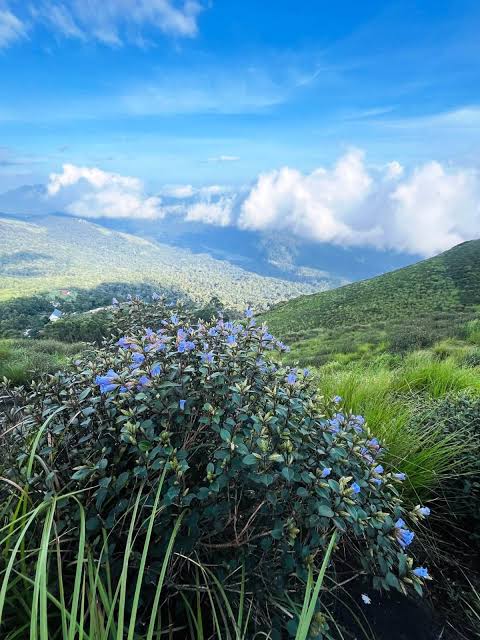
The flowering season has increased interest in the Kudremukh landscape, but the fragile nature of high-altitude habitats requires careful management. Forest authorities and local administrations have emphasised responsible behaviour in protected areas.
Visitors entering sensitive forest landscapes need to follow designated routes and avoid damaging plants or vegetation. Limiting litter, preventing fires and respecting restrictions in protected areas are also important for reducing pressure on the ecosystem.
Kudremukh National Park is an important protected landscape in Karnataka, and its conservation efforts cover forests, grasslands and wildlife habitats. The appearance of blue-violet flowers has once again highlighted the ecological value of these mountain ecosystems.
Importance of the Western Ghats
The Neelakurinji flowering phenomenon is more than a seasonal natural event. It highlights the ecological importance of the Western Ghats and the need to protect its specialised mountain habitats.
The combination of shola forests, grasslands, streams and high-altitude vegetation supports a wide range of biodiversity. Changes in these habitats can influence plants, insects, birds and other wildlife.
The 2026 flowering observations in Kudremukh have therefore renewed attention on the region’s botanical diversity, the unusual life cycle of Neelakurinji and the importance of protecting fragile high-altitude ecosystems.