New Aspergillus Species Western Ghats: Discovery Expands India’s Fungal Diversity

Recent research by the MACS-Agharkar Research Institute (ARI) in Pune has led to the groundbreaking discovery of two new Aspergillus species in the Western Ghats, one of the world’s most significant biodiversity hotspots. These newly identified fungi, Aspergillus dhakephalkarii and Aspergillus patriciawiltshireae, mark a milestone in India’s fungal taxonomy. Additionally, the study has recorded two more species A. aculeatinus and A. brunneoviolaceus for the first time in India. The findings not only highlight the rich microbial diversity of the Western Ghats but also open new avenues for research in fungal biotechnology, ecology, and conservation.
Thank you for reading this post, don't forget to subscribe!New Aspergillus Species Western Ghats: A Scientific Breakthrough
The discovery of new Aspergillus species in the Western Ghats underscores the region’s status as a living laboratory for biodiversity. The Western Ghats, spanning across Maharashtra, Karnataka, Kerala, and Tamil Nadu, are known for their complex ecosystems that support rare flora, fauna, and microbial species. The recent research provides the first comprehensive insight into the Aspergillus section Nigri, commonly referred to as black aspergilli, from this region.
The study’s outcomes are particularly significant because black aspergilli are vital for several industrial applications, including citric acid production, food fermentation, and biocontrol in agriculture. Despite their wide ecological and commercial importance, the Western Ghats had not been explored in depth for fungal diversity making this discovery a notable contribution to both science and industry.
Aspergillus Section Nigri and Its Importance
The Aspergillus Section Nigri, or black aspergilli group, includes species that are cosmopolitan in nature. They thrive in soil, decaying plant matter, and various natural habitats. Members of this group play key roles in breaking down organic materials, maintaining ecological balance, and contributing to human industries.
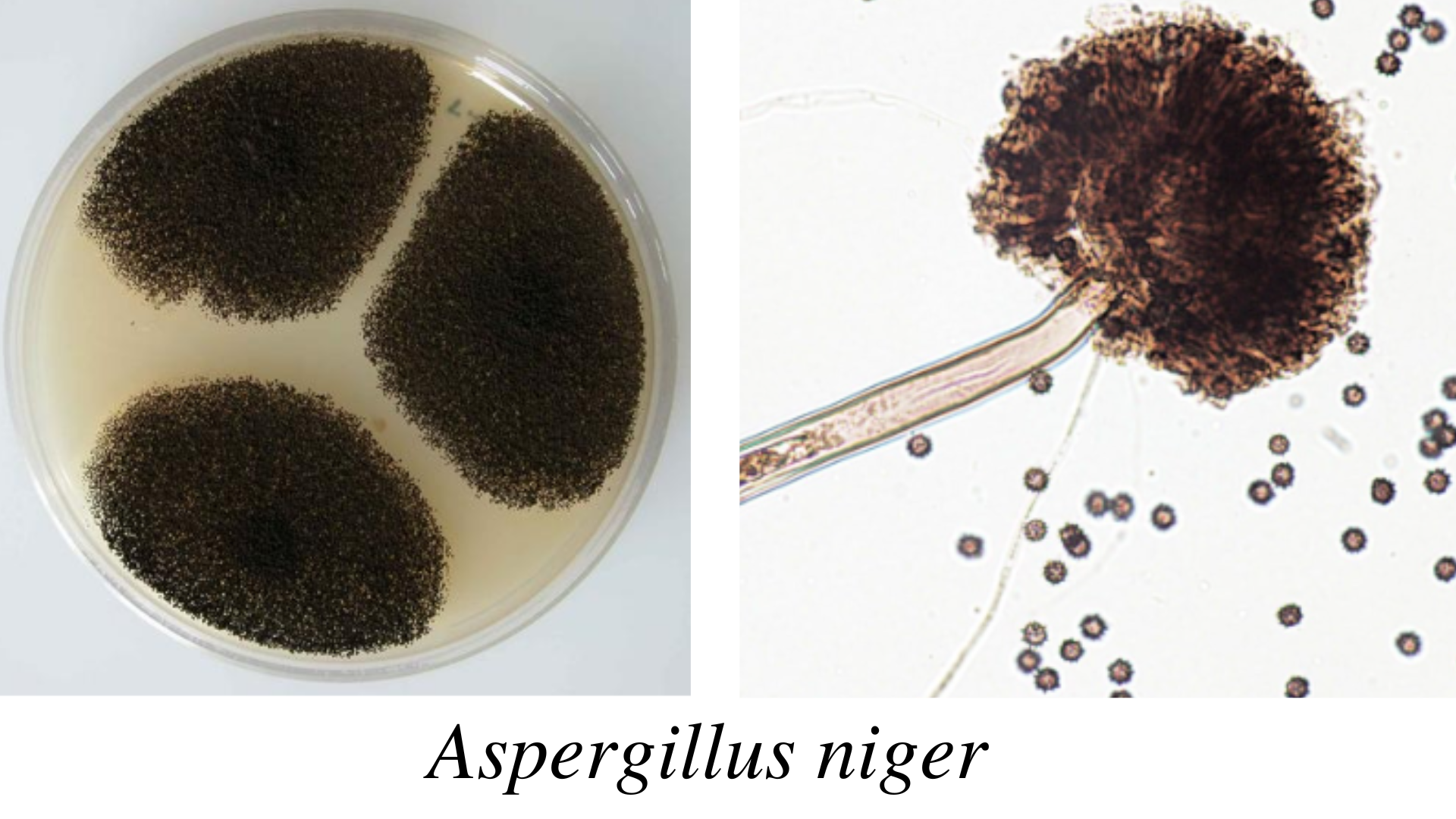
The identification of A. dhakephalkarii and A. patriciawiltshireae adds depth to the understanding of this group’s diversity. These species have distinct morphological and genetic traits that set them apart from previously known Aspergillus members. The discovery also hints at potential untapped industrial applications such as novel enzyme production or unique bioactive compounds that could be explored in future studies.
Research Methodology and Taxonomic Approach
To establish these fungi as new species, the researchers used a polyphasic taxonomic approach, combining both morphological and molecular data. Multiple gene regions including ITS (Internal Transcribed Spacer), CaM (Calmodulin), BenA (Beta-tubulin), and RPB2 (RNA polymerase II subunit) were analyzed.
Advanced maximum likelihood phylogenetic methods were applied to confirm the distinct identities of the new Aspergillus species. This rigorous molecular framework is widely regarded as the global gold standard for fungal identification. It ensures that the classification is not only accurate but also reliable for future reference in fungal taxonomy.
This integrative approach sets a benchmark for similar biodiversity studies in India, especially for microfungi, which are often overlooked in conventional ecological research.
Morphological Traits of Aspergillus dhakephalkarii
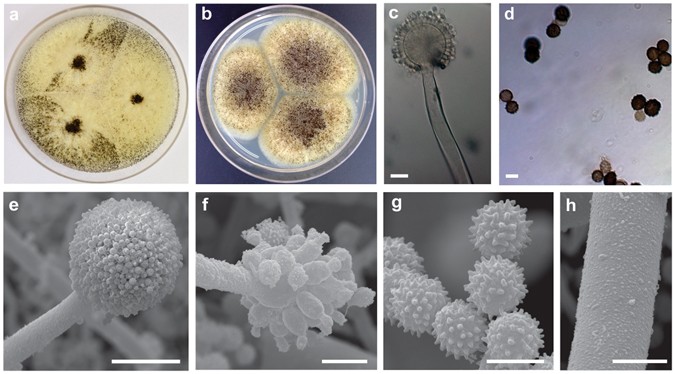
The newly identified Aspergillus dhakephalkarii exhibits rapid growth with pale to dark brown spores and yellowish sclerotia. Its uniseriate conidiophores possess two to three branches. The conidia (spores) are smooth and ellipsoidal, making them distinct from closely related species that usually have spiny or spherical spores.
These subtle yet crucial morphological differences played a major role in classifying the fungus as a separate species. The organism’s ability to adapt to the Western Ghats’ humid conditions also reveals the region’s microclimatic suitability for rare fungal evolution.
Morphological Traits of Aspergillus patriciawiltshireae
Aspergillus patriciawiltshireae displays equally fascinating characteristics. It grows rapidly, producing yellowish-orange sclerotia and has echinulate (spiny) conidia. Unlike A. dhakephalkarii, its conidiophores are multiseriate, branching into more than five columns. It also shows acid production on specific growth media, a key trait that could have industrial significance in the future.
These unique features underline its distinct position within the Aspergillus Section Nigri, contributing to a clearer understanding of the group’s internal diversity and evolutionary adaptations.
New Aspergillus Species Western Ghats: Phylogenetic Relationships
The genetic relationships among the new Aspergillus species provide fascinating evolutionary insights. Phylogenetic trees developed in the study place A. dhakephalkarii close to A. saccharolyticus, while A. patriciawiltshireae shares lineage ties with A. indologenus, A. japonicus, and A. uvarum within the Japonici series.
These genetic affiliations reveal how species evolve in specific climatic and ecological conditions, emphasizing the Western Ghats’ role as a cradle for fungal diversification. Understanding these relationships can also help in predicting ecological behavior and biotechnological potential of such fungi.
First Indian Records of Other Aspergillus Species
In addition to the two new species, the study recorded A. aculeatinus and A. brunneoviolaceus in India for the first time. These findings expand the known distribution range of black aspergilli in Asia.
The identification of these species adds another layer to India’s growing record of microbial diversity. It also highlights the importance of advanced molecular tools in uncovering hidden biodiversity that traditional field surveys might overlook.
New Aspergillus Species Western Ghats: Broader Impact and Future Research
This discovery represents the first Indian study to employ an advanced integrative taxonomy approach on Aspergillus fungi. It underlines the Western Ghats’ global importance as a biodiversity hotspot that demands both exploration and conservation.
By uncovering these new species, scientists have demonstrated that much of the microbial world remains undiscovered. Continued research could lead to the identification of fungi with industrial, pharmaceutical, and agricultural benefits. Moreover, such studies reinforce the need to protect sensitive ecosystems like the Western Ghats, which are under threat from deforestation and climate change.
The MACS-Agharkar Research Institute’s achievement serves as a reminder that India’s biodiversity extends beyond plants and animals its microbial realm holds immense scientific and economic potential. The discovery of the new Aspergillus species in the Western Ghats is not just a taxonomic milestone but a celebration of nature’s unseen diversity and resilience.