



Teghaza 001 Reveals Mars’ Water Past

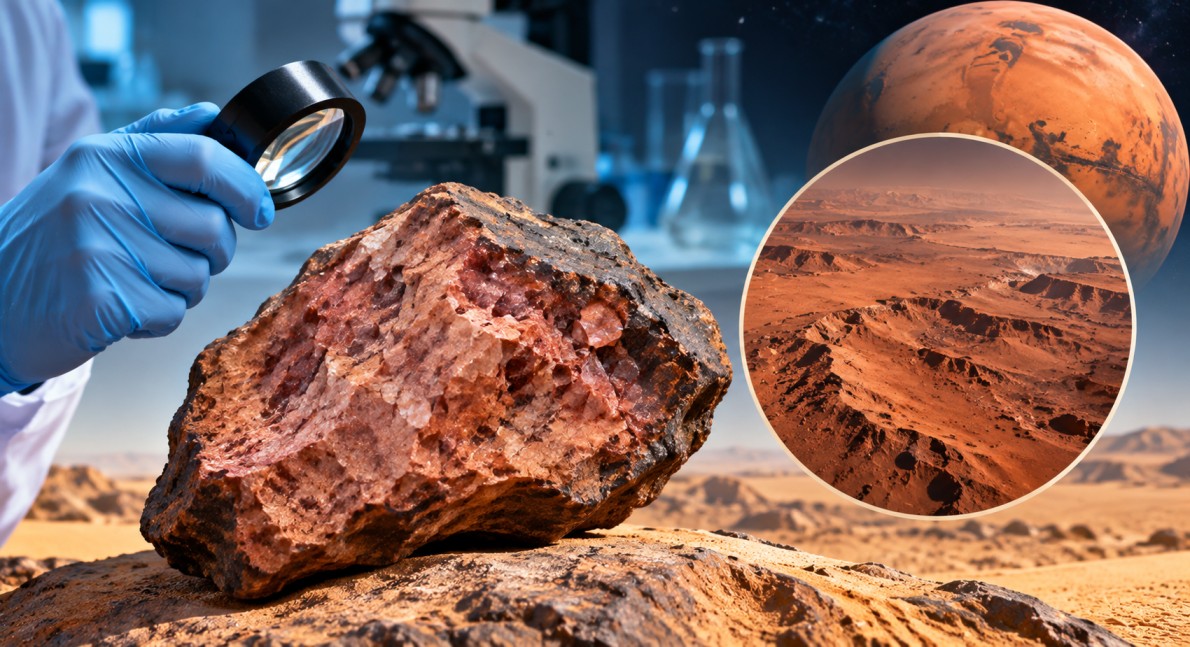
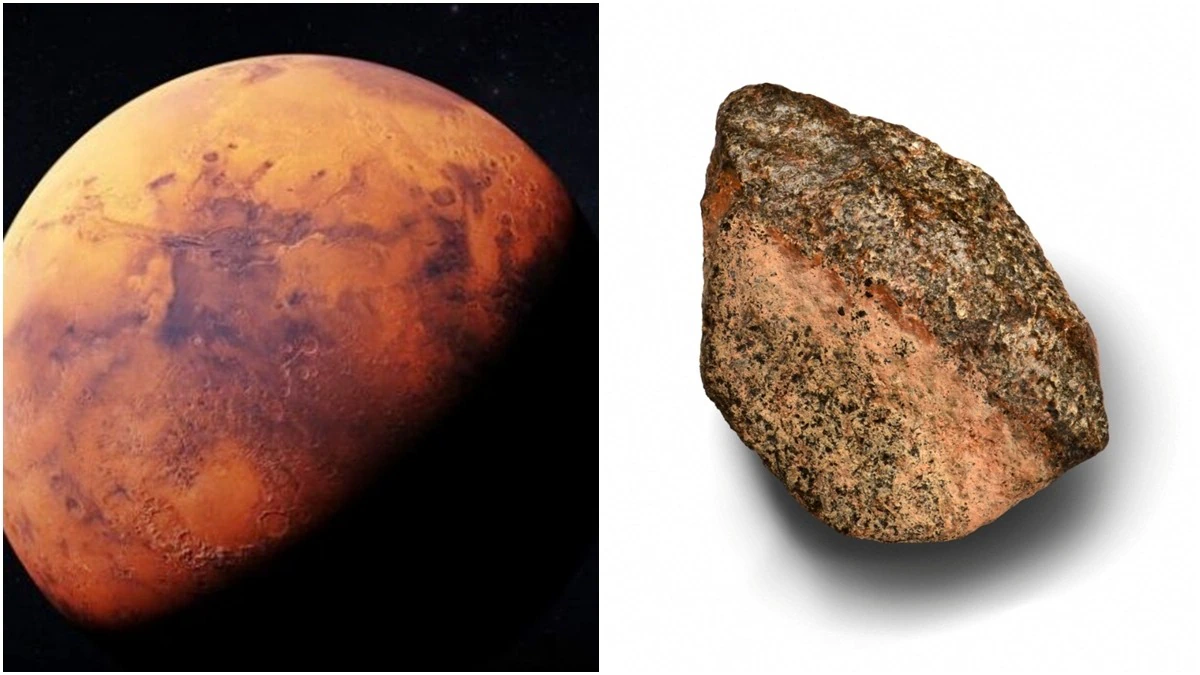
Teghaza 001 is helping scientists understand the early history of Mars and the role of water on the planet. A study published in Science on 29 October 2026 examined this ancient Martian meteorite, which was discovered in Mali’s Sahara Desert in 2022. The rose-coloured rock weighs around 800 grams and is more than 4.1 billion years old. Its minerals provide clues about the early Martian crust and how water changed the planet’s rocks long ago.
The findings offer a new look at Mars during a period when its surface was very different from the dry, cold world seen today. Researchers found evidence that water altered the rock around 4.1 billion years ago, suggesting that water played an active role in the planet’s early geological history.

What Is Teghaza 001?
Teghaza 001 is a meteorite that originated on Mars and later reached Earth. It was found in the Sahara Desert in Mali in 2022. The meteorite is considered one of the most ancient Martian rocks discovered on Earth, with an estimated age of more than 4.1 billion years.
Martian meteorites are valuable because they provide samples of the planet that scientists can study in laboratories. Unlike spacecraft instruments, which examine rocks and soil from specific locations on Mars, meteorites can be analysed using detailed equipment available on Earth.
The meteorite’s age makes it especially important for studying the early stages of Mars. It preserves information about the planet’s crust and the conditions that existed billions of years ago.
Evidence of Ancient Water on Mars
Researchers found that water had changed the minerals in Teghaza 001 around 4.1 billion years ago. This process is known as water alteration. It happens when water interacts with rock and changes its mineral structure or chemical composition.
The discovery provides evidence that water was present on early Mars and was active enough to affect the planet’s rocks. It supports the idea that ancient Mars had a more complex water history than the dry environment seen on much of its surface today.
Scientists are interested in understanding when water existed, how long it lasted and how it moved through the planet’s crust. These questions are important for studying Mars’ past climate and whether conditions may once have supported life.
The findings do not prove that life existed on Mars. Instead, they provide evidence about the environmental conditions that existed during the planet’s early history.
What the Rock Reveals About Mars’ Early Crust
Teghaza 001 has a composition made up of a single rock type, and it contains zircon crystals. These features provide clues about the formation and development of Mars’ early crust.
Zircon is a mineral that can preserve information about the conditions under which a rock formed. Scientists can study its structure and chemical composition to learn about ancient geological processes.
The meteorite’s mineral composition also resembles material found in the cratered southern highlands of Mars. These regions have been observed by NASA’s Mars Reconnaissance Orbiter.
The comparison helps researchers connect a rock found on Earth with geological features observed on Mars. It may offer clues about the types of rocks that formed in the planet’s ancient highlands.
How Martian Rocks Reach Earth
Martian meteorites begin their journey when a powerful impact strikes the surface of Mars. The impact can throw pieces of rock into space. Some fragments travel through the Solar System and eventually enter Earth’s atmosphere.
If a fragment survives its passage through the atmosphere, it may land on Earth as a meteorite. Scientists can then identify its origin by studying its minerals, chemical composition and other features.
Martian meteorites are commonly grouped into categories known as shergottites, nakhlites and chassignites, often called the SNC groups. Some specimens, however, do not fit neatly into these groups and are described as ungrouped Martian meteorites.
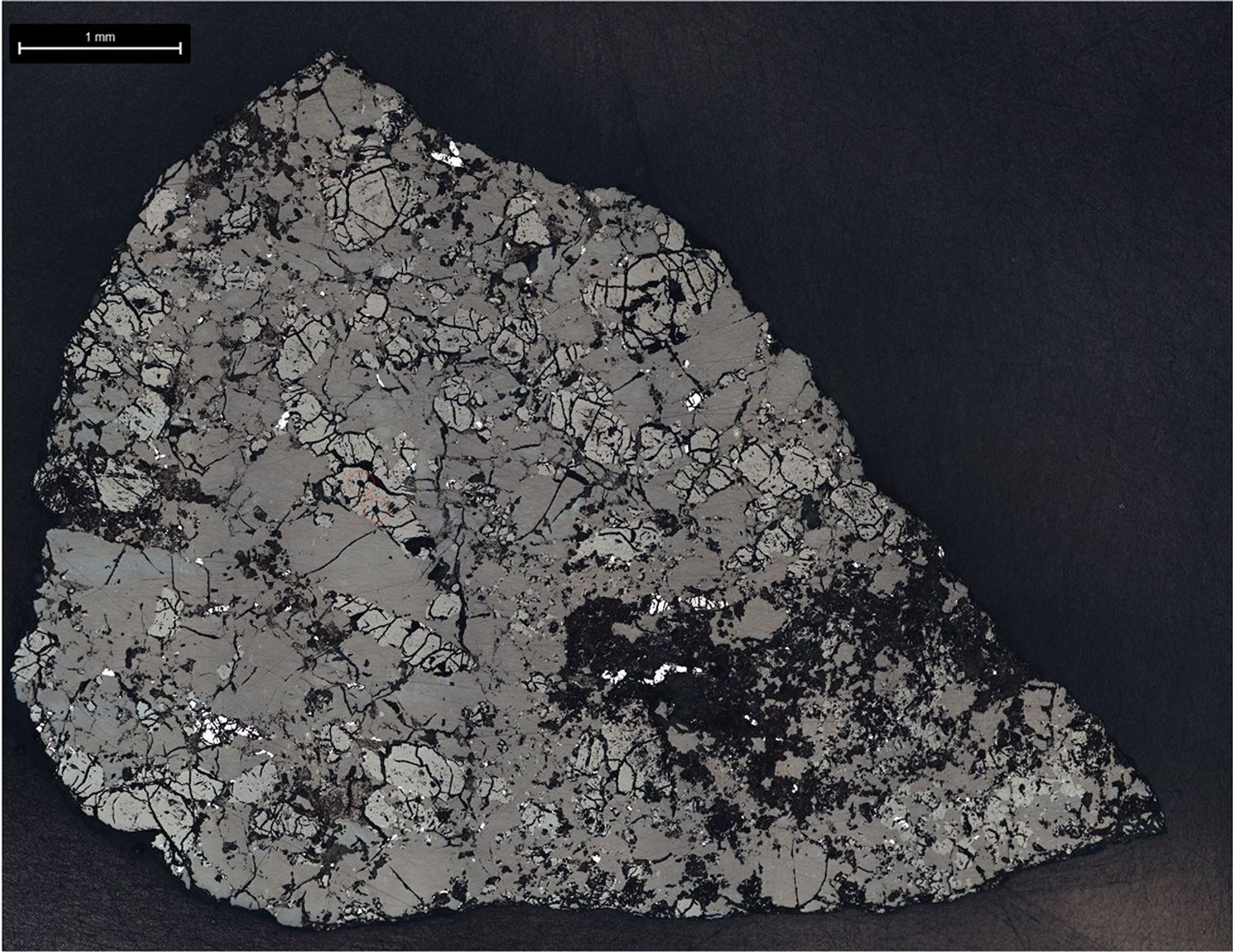
These rocks provide a natural record of Mars’ geological history, including evidence of volcanic activity and past contact with water.
Scientists Studying the Meteorite
The University of New Mexico initially identified Teghaza 001 as a Martian meteorite. The research was supported by NASA and involved scientists studying the rock’s composition and history.
The study’s lead author, Yang Liu, is a researcher at NASA’s Jet Propulsion Laboratory. Alicia Cruz-Uribe of the University of Maine also contributed to the analysis.
The research shows how meteorites found in deserts can provide important information about other worlds. By studying ancient Martian material on Earth, scientists can investigate the planet’s early crust and the changes caused by water billions of years ago.