

Project Suncatcher Tests AI in Space

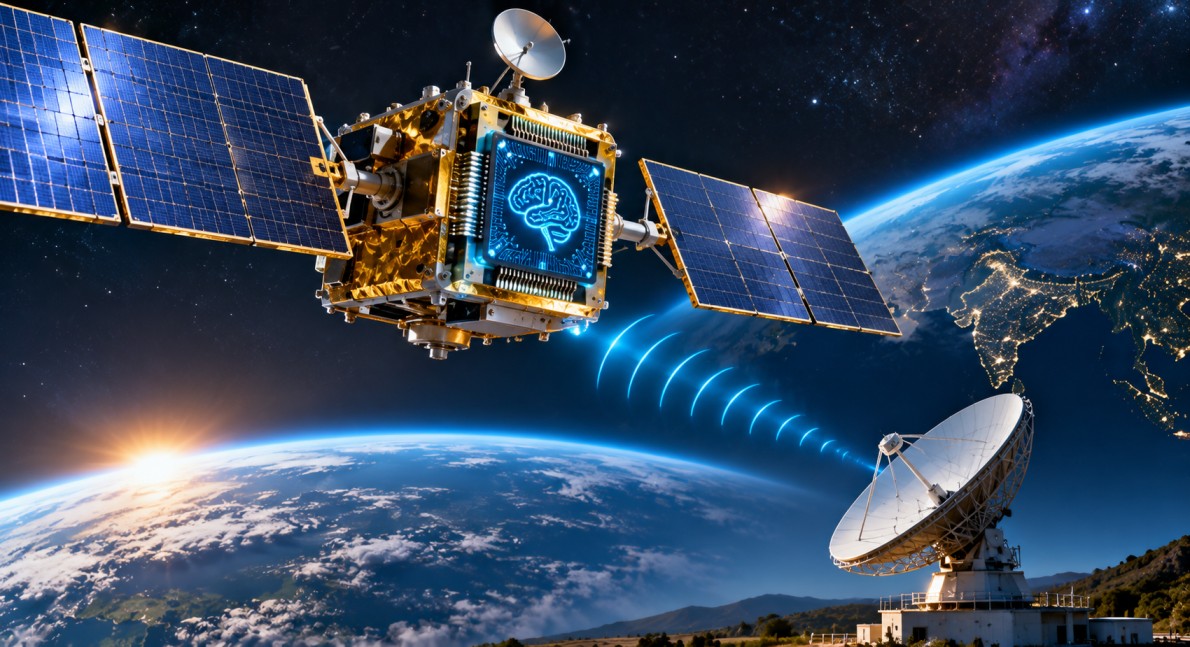
Project Suncatcher has reached a new milestone after a Google prototype satellite ran an artificial intelligence (AI) model in orbit and sent a complete response back to Earth. Google announced the achievement on 31 October 2026. The company’s CEO, Sundar Pichai, described it as a “hello world” moment for AI computing in space.
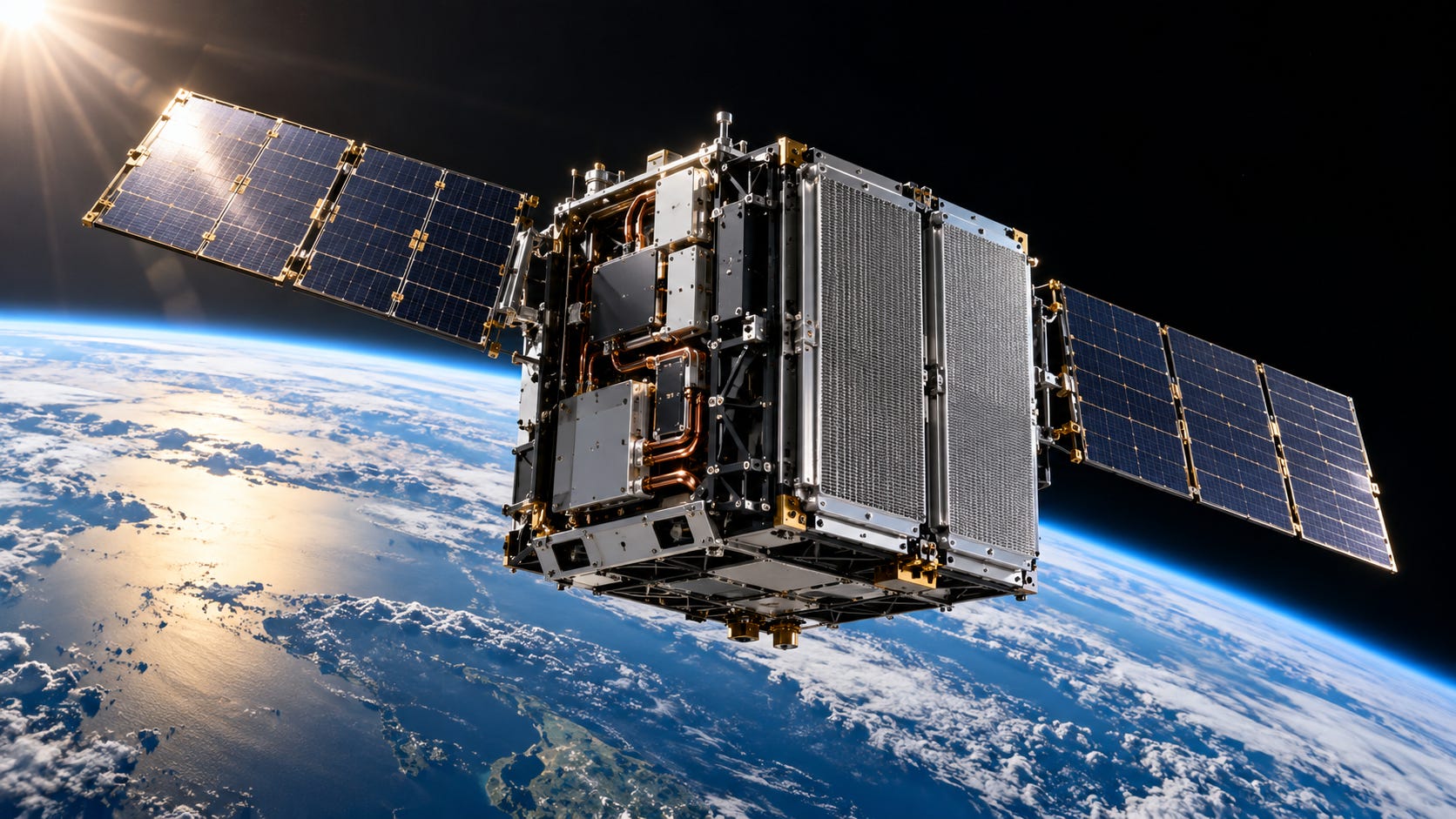
The prototype was developed by Google with Planet and launched on 1 October aboard SpaceX’s Transporter-18 rideshare mission. The test showed that an AI model could receive a prompt, process it on a satellite and return an answer to a ground station.

First AI Response from Orbit
During a communication pass with a ground station, the team sent a prompt to Gemma 4, an open AI model running on a Tensor Processing Unit (TPU) aboard the satellite. The prompt asked the model to write a haiku about space.
The satellite returned the following response:
“Blue marble below
Data streams in silent grace
Starlight feeds my core.”
The response was received as the satellite passed over Svalbard, Norway. The team also tested other prompts, including requests for space-themed limericks and information about the satellite’s technical status.
This demonstration is important because it showed that the satellite could carry out an AI task in orbit and send the result back to Earth. The test was a small but meaningful step towards studying how computing systems could operate in space.
What Is Google’s Project Suncatcher?
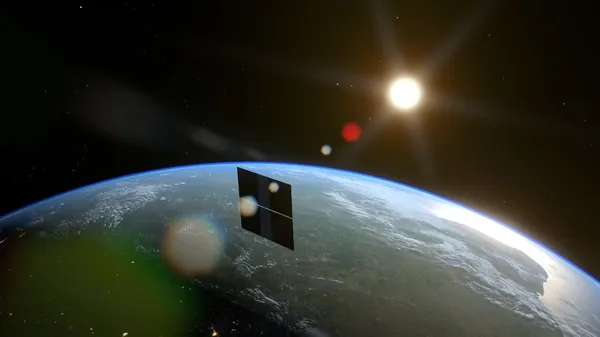
Google announced Project Suncatcher on 4 November 2025. The project explores whether machine-learning computing systems could be built and operated in space on a larger scale.
AI systems need significant computing power and electricity. On Earth, large data centres use energy to run computer chips and cooling systems. Project Suncatcher looks at whether satellites could use sunlight in space to support AI computing.
Satellites in low Earth orbit can receive sunlight for long periods, although they also pass through Earth’s shadow. Google has said that solar panels in low Earth orbit could generate up to eight times more power than similar panels on Earth under suitable conditions.
The project is still in an early stage. Its purpose is to study the technical challenges of running AI systems in orbit, rather than to replace existing data centres immediately.
How AI Runs on a Satellite
The satellite used a Tensor Processing Unit, or TPU, to run the Gemma 4 model. A TPU is a specialised computer chip developed by Google for machine-learning tasks.
AI models process information through many mathematical operations. TPUs are designed to handle these operations efficiently, especially when a system needs to process large amounts of data.
Running an AI model on a satellite creates special challenges. The equipment must work in a changing thermal environment and withstand radiation in space. It also needs a reliable power supply and a communication link to send data to Earth.
The Project Suncatcher test demonstrated that an AI model could complete a task while operating aboard a satellite. Further tests will be needed to understand how the hardware performs during longer missions and under different space conditions.
What Comes Next for Project Suncatcher?
Google’s next phase will examine how TPUs respond to the temperature changes and radiation exposure found in orbit. These tests are important because computer chips designed for use on Earth may behave differently in space.
The company plans to launch two interconnected satellites in 2027. The mission is expected to test optical links between the spacecraft.
Optical links use light, often through lasers, to transfer data. Connecting satellites through these links could help create a network in space. Such a system may allow spacecraft to share information directly rather than sending every piece of data to Earth first.
A network of connected satellites could eventually support larger computing tasks. However, the project will need to address challenges such as power storage, heat management, radiation protection, data transfer and the cost of launching equipment.
Why Space-Based AI Is Being Explored
The growth of AI has increased demand for computing infrastructure and electricity. Researchers and technology companies are exploring different ways to provide more computing power while managing energy use.
Project Suncatcher examines whether space could become one part of that future infrastructure. Solar energy is a major reason for the interest, but operating computers in orbit also involves difficult engineering problems.
The first AI response from the satellite does not mean that large AI data centres are ready to move into space. It demonstrates an early technical capability and provides information for future experiments.
As Google continues testing its prototype, the project will help researchers understand whether satellite-based AI computing can become practical for more complex workloads.