



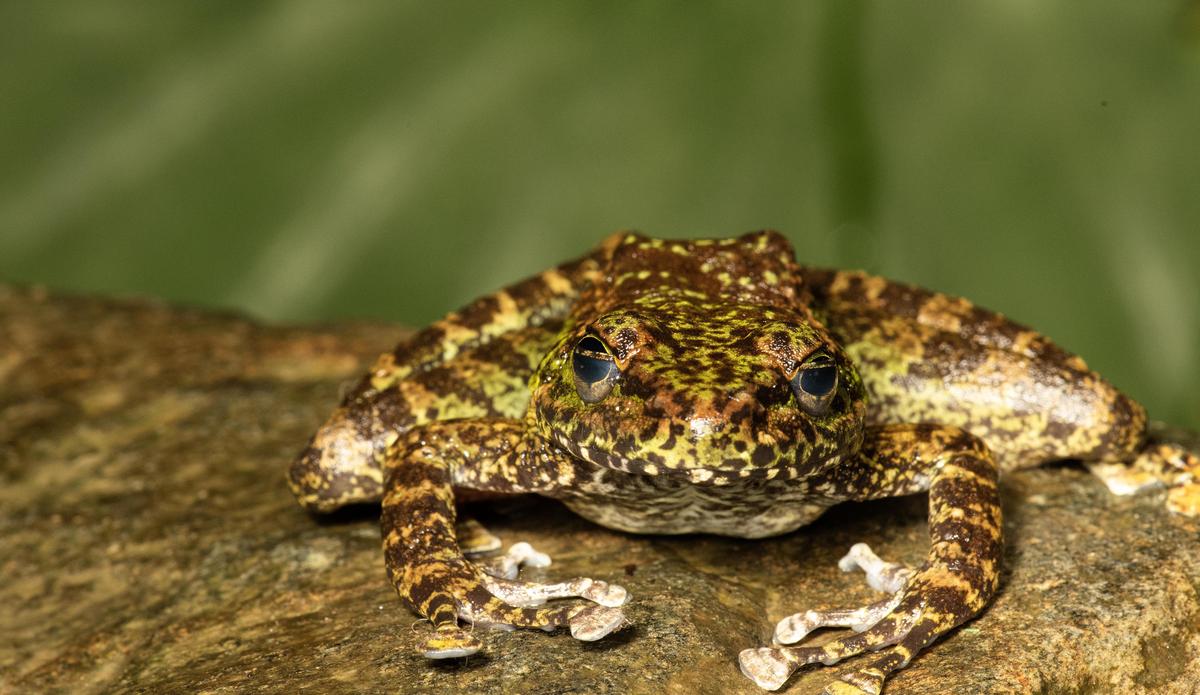
New Cascade Frogs Discovered in Northeast India

New Cascade Frogs have been identified in Northeast India and West Bengal, adding three newly recognised species to the region’s rich amphibian diversity. The discovery was published on 12 August 2026 in the peer-reviewed Bulletin of the Museum of Comparative Zoology. The research was led by Prof. S. D. Biju of the Department of Environmental Studies at the University of Delhi.
Thank you for reading this post, don't forget to subscribe!The study used DNA analysis, physical features and field observations to examine cascade frogs from more than 300 geographic populations. This detailed research helped scientists identify species that are closely related but have important differences.
Cascade Frogs Live Around Fast-Flowing Streams
Cascade frogs belong to the genus Amolops. They are also commonly known as torrent frogs because many species live near fast-flowing streams and waterfalls.
These frogs are closely connected with forest streams, rocky watercourses and humid mountain habitats. The Eastern Himalaya and surrounding areas are especially important for this group because they provide the cool and wet environments these amphibians need.
Frogs living in stream ecosystems can also be sensitive to changes in water quality, forest cover and temperature. Their presence can therefore provide useful information about the condition of mountain and forest ecosystems.
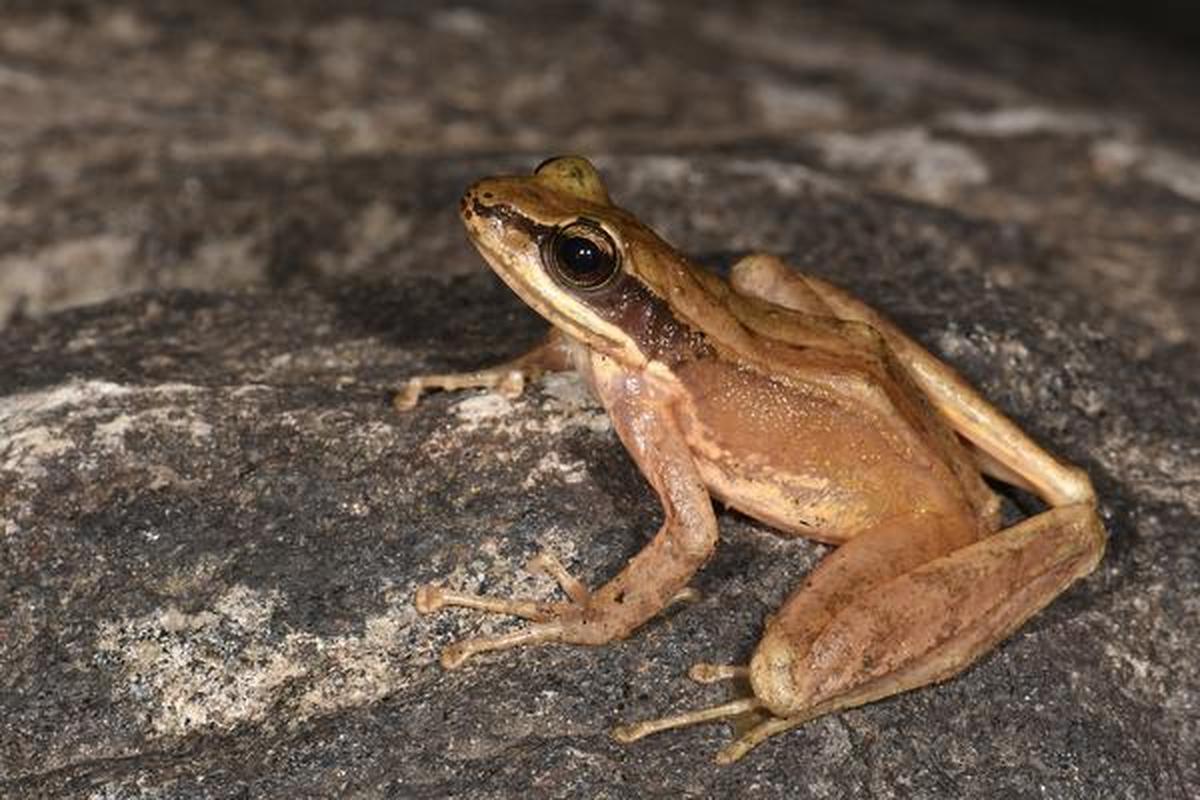
Three New Frog Species Identified
The research identified three new species: Ammachi’s Cascade Frog (Amolops ammachi), Sendenyu Cascade Frog (Amolops sendenyu), and Beautiful Cascade Frog (Amolops bella).
Amolops ammachi was discovered in the Jampui Hills of Tripura. The species was named after Padmini Varkey, a Kerala-based social worker and philanthropist who is known as Ammachi.
The second species, Amolops sendenyu, was recorded in Nagaland. Its name comes from Sendenyu Village, connecting the new frog with the place where it was found.
The third species, Amolops bella, was recorded from West Bengal. Scientists described it as having a green body with yellowish-green or reddish-brown mosaic-like patterns. These colour patterns, along with other physical characteristics, helped researchers distinguish it from related frogs.
DNA and Physical Features Helped Confirm the Species
Identifying a new frog species is not based only on appearance. Closely related frogs can have similar body shapes and colours, making identification difficult.
For this study, researchers combined DNA evidence with morphological analysis. Morphology means studying physical characteristics such as body structure, skin patterns, measurements and other visible features.
Scientists also studied both adult frogs and tadpoles. Looking at different stages of the frog’s life can provide additional information about how species differ.
The research involved more than 300 cascade frog populations, allowing scientists to compare specimens from different parts of the region. This broad approach helped researchers understand relationships between different Amolops populations.
Northeast India Remains Important for Amphibian Research
The discovery highlights the biodiversity of Northeast India, where mountains, forests and streams create suitable habitats for many amphibian species.
Tripura and Nagaland contain large areas of forest and hilly terrain, while parts of West Bengal are connected with the Eastern Himalayan biodiversity region. These landscapes support many species that depend on clean streams and forest ecosystems.
New species discoveries also show why continued wildlife surveys are important. Some amphibians may live in remote areas and remain unknown to science for many years.
Five More Cascade Frogs Recorded in India
Along with the three newly described species, researchers also recorded five cascade frog species in India for the first time. These are Amolops afghanus, Amolops nepalicus, Amolops wangyali, Amolops medogensis and Amolops bellulus.
These new records expand the known distribution of the Amolops genus in India and provide more information about the movement and distribution of amphibian species across South and Southeast Asia.
The findings also strengthen the scientific understanding of India’s amphibian diversity. Continued surveys of forests, rivers and mountain streams can help researchers identify more species and better understand how environmental changes are affecting these sensitive ecosystems.