


Perseverance Rover Record on Mars

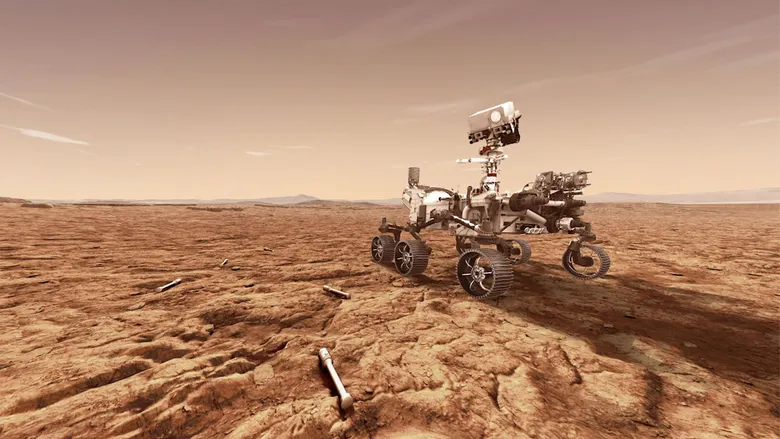
Perseverance Rover Record marks a major achievement in space exploration, as NASA’s Mars rover reached 28.10 miles (45.22 kilometres) of total driving distance on the Red Planet by 11 October 2026. It surpassed the previous record held by NASA’s Opportunity rover, which travelled 28.06 miles (45.16 kilometres) during its mission from 2004 to 2018. The achievement highlights advances in autonomous navigation and the continued search for signs of ancient life on Mars.
Perseverance Breaks the Mars Driving Record
NASA’s Perseverance rover took around five and a half years to cover the record distance. Opportunity, by comparison, travelled a similar distance over nearly 15 years. Perseverance landed on Mars on 18 February 2021 and has been exploring Jezero Crater as part of NASA’s Mars 2020 mission.

On 14 June 2026, the rover completed a marathon-equivalent journey of 26.2 miles (42.195 kilometres). It reached that distance on its 1,890th Martian day, known as a sol. A sol is slightly longer than an Earth day, lasting about 24 hours and 39 minutes.
The new record reflects the rover’s ability to travel across challenging Martian terrain while carrying scientific instruments used to study rocks, soil and the planet’s ancient environment.
How Perseverance Drives Across Mars
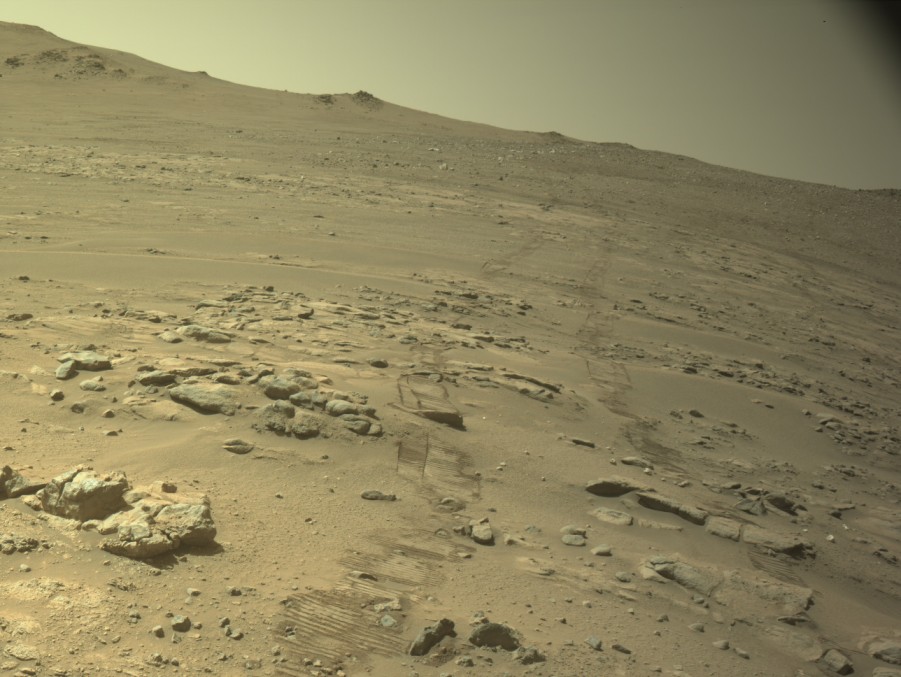
Perseverance uses an autonomous navigation system called AutoNav to help it move across the Martian surface. The system analyses nearby terrain, identifies obstacles and helps select a safe route.
According to the information provided by NASA’s mission team, AutoNav handles more than 90% of the rover’s driving without direct human intervention. However, rover operations still depend on planning by engineers on Earth, who send commands and set scientific goals.
Driving autonomously is important because communication between Earth and Mars takes several minutes each way. A rover cannot depend on people on Earth to control every movement in real time. Its navigation system allows it to make certain driving decisions independently.
NASA’s Jet Propulsion Laboratory (JPL) manages the Perseverance mission. Engineers and scientists work together to plan routes, monitor the rover’s condition and choose locations for scientific study.
Exploring Jezero Crater for Signs of Ancient Life
Perseverance landed in Jezero Crater because scientists believe the area once contained a lake and an ancient river delta. Such environments may have provided conditions suitable for microbial life billions of years ago.
The rover studies rocks and geological features to understand how Mars changed over time. It also investigates the crater’s western rim, including areas where evidence of ancient water-related and hydrothermal activity may be preserved.
The mission does not mean that life has been discovered on Mars. Instead, scientists are searching for signs that the planet may once have supported microbial organisms and examining whether ancient environments could have been habitable.
Perseverance also collects and stores rock and soil samples. These samples could help scientists answer important questions about Mars if future missions successfully return them to Earth for detailed laboratory analysis.
Ingenuity and Other Technology on Mars
The Perseverance mission also carried Ingenuity, a small robotic helicopter that demonstrated powered, controlled flight on another planet for the first time. Ingenuity completed its final flight in January 2024 after its rotor blades were damaged, but its flights provided valuable information about aerial exploration on Mars.
The helicopter demonstrated how future aircraft might help explore areas that are difficult for ground vehicles to reach. Perseverance continues to provide information through its cameras, scientific instruments and sample-collection work.
What Comes Next for Perseverance?
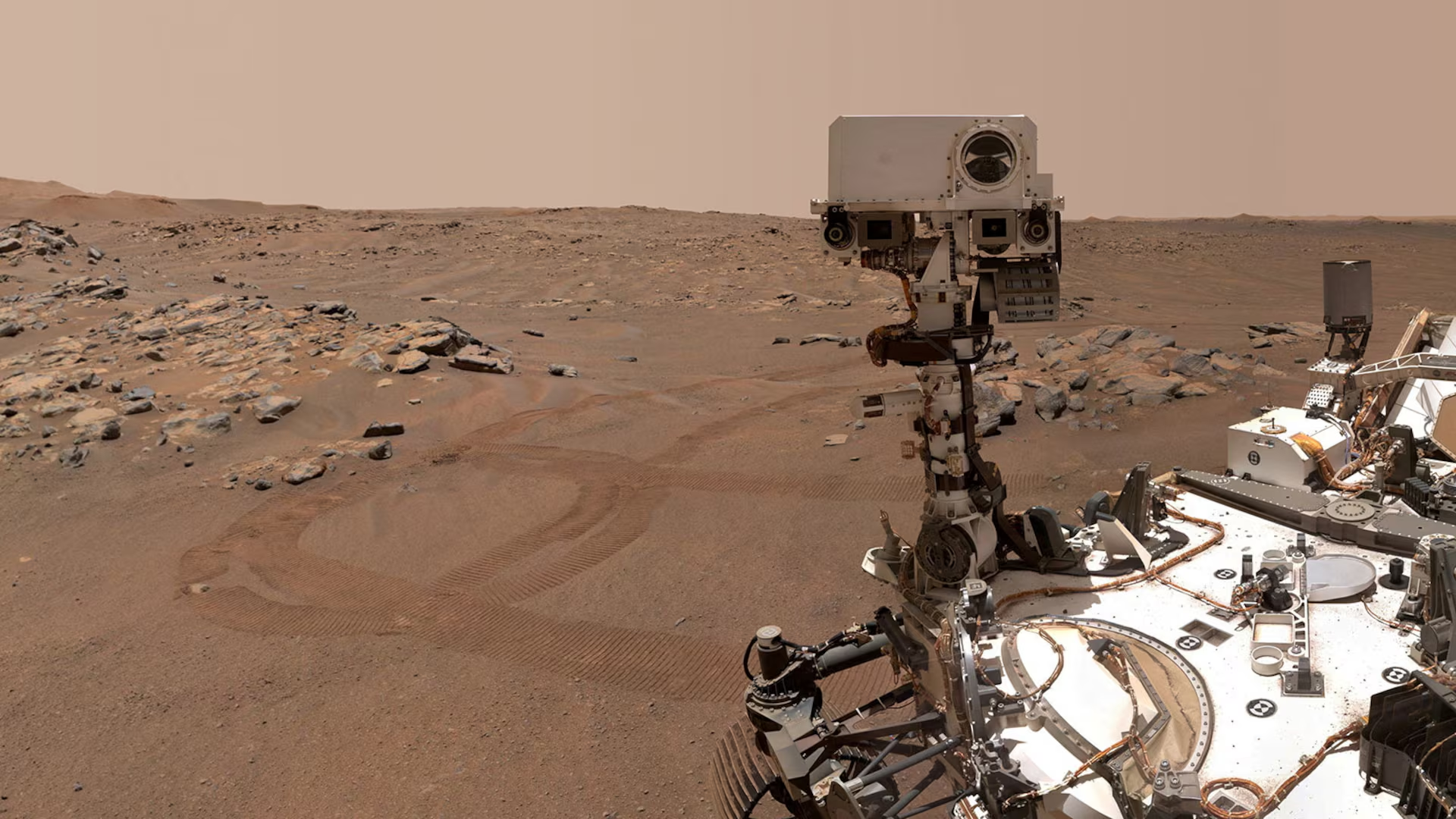
The mission has been extended through approximately the end of 2028, according to the supplied report. Project manager Steven Lee said the rover’s systems remained healthy and could potentially support operations into the 2030s. Actual mission duration will depend on the rover’s condition, available resources and NASA’s future decisions.
The driving record is one part of a wider scientific effort to understand Mars. Each journey helps Perseverance reach new rock formations and investigate different parts of Jezero Crater.
The rover’s work also supports planning for future robotic and human exploration. Better knowledge of the Martian surface, terrain and geological history can help scientists prepare for missions that may one day explore the planet in greater detail.