


Nine Forms of Maa Durga: Nine Powers and Their Eternal Life Lessons

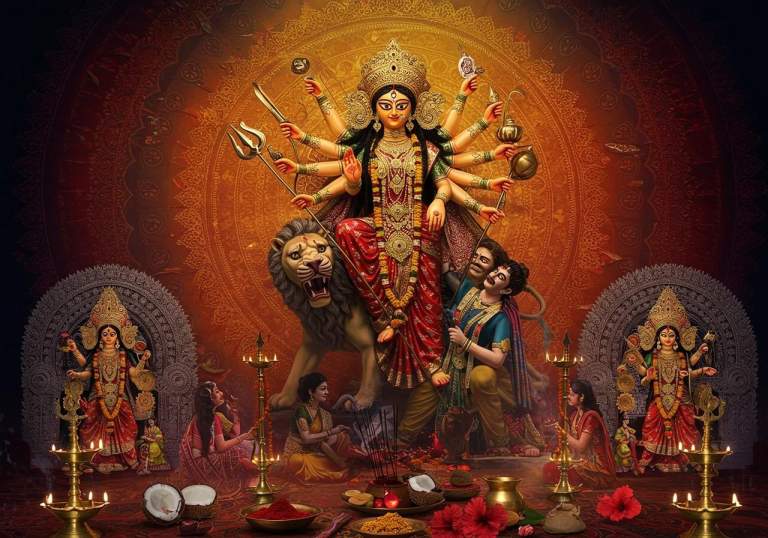
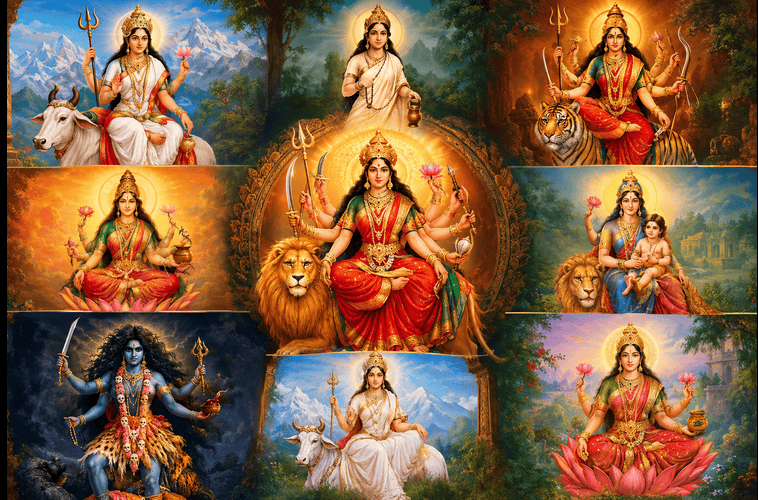
The Nine Forms of Maa Durga represent the divine power, courage, wisdom, love, and protection of Goddess Durga. Celebrated during the nine days of Navaratri, these forms teach us important lessons about life, from the innocence of childhood and the importance of knowledge to the strength to fight evil and the wisdom to guide others. Each form has a unique story and spiritual meaning that inspires devotees to live with courage, kindness, discipline, and faith.
Navaratri is one of the most important Hindu festivals dedicated to Goddess Durga. During these nine days, devotees worship her nine forms, known as the Navadurga. Each form represents a different aspect of the divine feminine energy and reminds us that strength can appear in many ways. Sometimes, strength means standing up against injustice. At other times, it means showing patience, caring for others, or choosing peace over anger.

The story of Maa Durga’s nine forms is not only about divine power. It also reflects the different stages of human life and the lessons we learn as we grow. Let us explore the nine forms of Goddess Durga and understand the eternal messages behind them.
The Spiritual Importance of the Nine Forms of Maa Durga
Goddess Durga is widely worshipped as a symbol of protection, power, and the victory of good over evil. Her nine forms show different qualities that help people face the challenges of life.
During Navaratri, devotees offer prayers, perform rituals, observe fasting according to their traditions, and seek the blessings of the goddess. Each day is traditionally associated with one of the nine forms. Together, these forms represent devotion, knowledge, bravery, creativity, motherhood, justice, transformation, peace, and spiritual wisdom.
The nine forms are:
- Maa Shailaputri
- Maa Brahmacharini
- Maa Chandraghanta
- Maa Kushmanda
- Maa Skandamata
- Maa Katyayani
- Maa Kalaratri
- Maa Mahagauri
- Maa Siddhidatri
Each form carries a special message that can inspire people of every age.
Maa Shailaputri: The Power of New Beginnings
Maa Shailaputri is the first form of Goddess Durga worshipped during Navaratri. Her name means “daughter of the mountain,” as she is the daughter of Himavan, the king of the Himalayas. She is traditionally depicted riding a bull and holding a trident and a lotus.
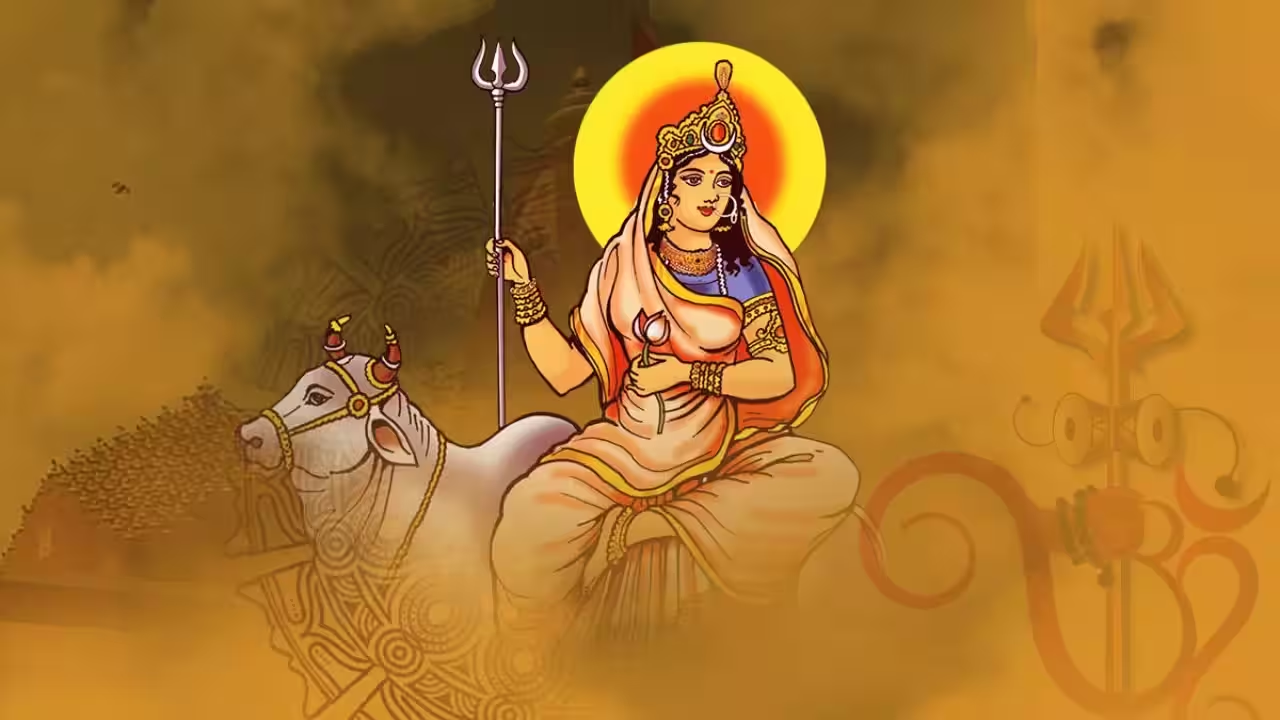
Shailaputri represents purity, stability, and the beginning of a spiritual journey. Like a mountain that stands firm through changing seasons, she teaches us the importance of remaining strong and grounded.
Her form can also be connected with the innocence of childhood. Every child begins life with curiosity, hope, and endless possibilities. Similarly, every new beginning offers an opportunity to learn, grow, and discover our abilities.
Maa Shailaputri reminds us that every great journey starts with a single step. Whether we begin a new course, start a job, build a relationship, or work towards a personal goal, we need faith, patience, and a strong foundation.
Life lesson: Welcome new beginnings with confidence and remain firm in your values.
Maa Brahmacharini: The Path of Knowledge and Discipline
Maa Brahmacharini is the second form of Goddess Durga. She represents devotion, discipline, patience, and the pursuit of knowledge. She is commonly depicted wearing simple white clothing and holding a rosary and a water pot.
According to Hindu tradition, this form represents Goddess Parvati’s deep devotion and penance to attain Lord Shiva as her husband. Her dedication shows the importance of commitment and perseverance in achieving a meaningful goal.
Brahmacharini’s message is especially relevant to students and young people. Learning requires regular effort, concentration, and the willingness to continue even when a subject seems difficult. Success rarely comes from one day of hard work. It develops through consistent practice and patience.
Her teachings also apply to adults. Knowledge does not end when formal education is completed. We continue learning through our experiences, relationships, work, and the mistakes we make along the way.
Life lesson: Stay dedicated to your goals and understand that true growth requires patience and continuous learning.
Maa Chandraghanta: The Strength to Face Challenges
Maa Chandraghanta is the third form of Goddess Durga. Her name comes from the crescent-shaped bell associated with her forehead. She is generally shown riding a tiger or lion and carrying weapons in her many hands.
This form represents bravery, alertness, and the power to protect others. Her appearance reflects readiness to confront danger and defend righteousness.
Life brings challenges at every stage. Students may face examinations, young adults may struggle to establish their careers, and families may experience difficult situations. During such times, courage and clear thinking help us move forward.
Chandraghanta teaches that bravery does not mean living without fear. It means facing difficulties with determination and doing what is right even when the situation is uncomfortable.
Her form also reminds us to remain alert to injustice and to support people who need help.
Life lesson: Face challenges with courage, confidence, and a commitment to what is right.
Maa Kushmanda: The Divine Power of Creation
Maa Kushmanda is the fourth form of Goddess Durga. According to Hindu belief, she created the universe through her divine smile, bringing light and energy into the darkness. Her name is traditionally associated with the cosmic egg, representing the universe.
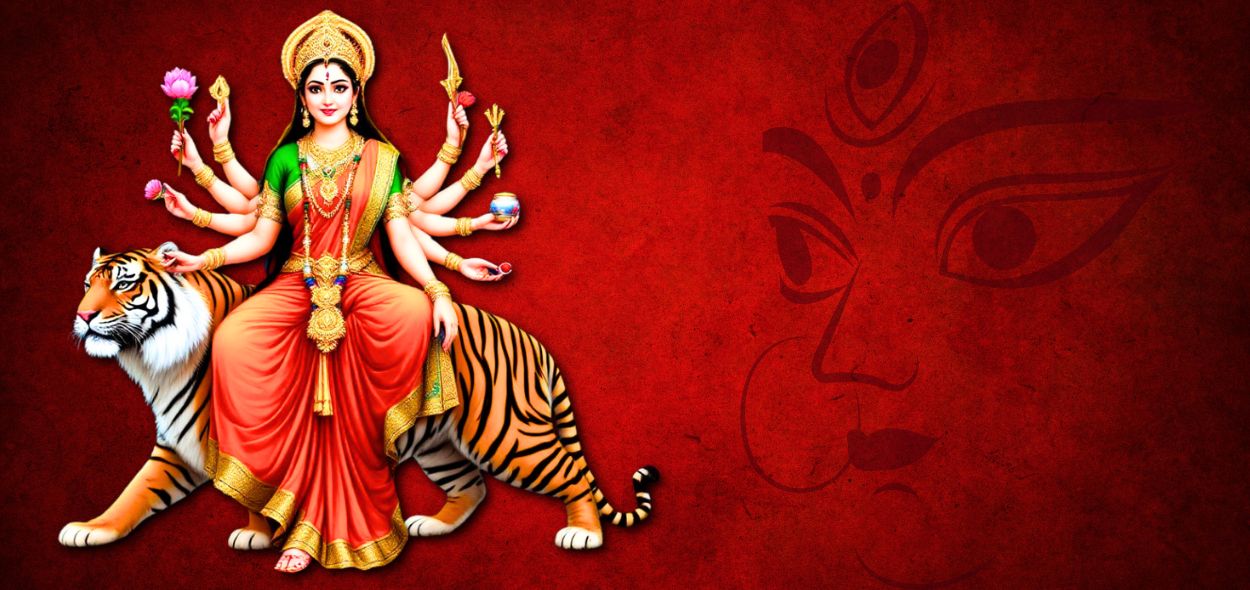
She is often depicted with eight arms, holding various objects and weapons, including a pot of nectar in traditional representations. Her form symbolises creativity, vitality, prosperity, and the life-giving power of the universe.
Kushmanda reminds us that creation is an important part of life. People create new ideas, develop skills, build homes, nurture relationships, and contribute to their communities. Every positive effort can bring something valuable into the world.
Her story also encourages us to recognise the power of hope. Even when circumstances appear difficult, a fresh idea or a small positive action can create new opportunities.
Life lesson: Use your creativity, energy, and positive thinking to build something meaningful.
Maa Skandamata: The Unconditional Love of a Mother
Maa Skandamata is the fifth form of Goddess Durga and the mother of Lord Skanda, also known as Kartikeya. She is often depicted holding her son in her lap while seated on a lotus or riding a lion.
Her form represents motherhood, compassion, protection, and selfless love. A mother’s care often provides children with their first experience of safety, encouragement, and emotional support.
However, Skandamata’s message extends beyond the relationship between a mother and child. It teaches everyone the importance of caring for others and accepting responsibility for their well-being.
Parents, teachers, friends, and community members can all express this quality through kindness and support. Sometimes, a few encouraging words or a little help at the right time can make a significant difference in someone’s life.
Skandamata also reminds us that caring for others requires patience and understanding. True love is not limited to words; it is demonstrated through everyday actions.
Life lesson: Practise compassion, protect those who depend on you, and offer support without expecting anything in return.
Maa Katyayani: The Courage to Protect Justice
Maa Katyayani is the sixth form of Goddess Durga. She is associated with the sage Katyayana in Hindu tradition and is widely worshipped as a powerful warrior goddess.
Her form is particularly connected with the battle against Mahishasura, the buffalo demon who threatened the gods. In the well-known story of Goddess Durga, she represents the divine power that rises to defeat evil and restore balance.
Katyayani symbolises courage, determination, and the strength to stand against injustice. Her story reminds us that kindness does not mean accepting wrongdoing. Sometimes, protecting what is right requires firm decisions and fearless action.
In everyday life, this lesson may mean speaking up when someone is treated unfairly, helping a person in need, or refusing to participate in dishonest behaviour. It also reminds us to use our strength responsibly rather than to harm or control others.
Maa Katyayani teaches that true power becomes meaningful when it protects people and supports justice.
Life lesson: Stand up for what is right and use your strength to protect others.
Maa Kalaratri: The Power to Destroy Darkness
Maa Kalaratri is the seventh form of Goddess Durga and one of her most fierce manifestations. She is commonly depicted with a dark complexion, dishevelled hair, and a powerful appearance. Despite her fearsome form, she is regarded as a protector who removes fear and destroys evil.
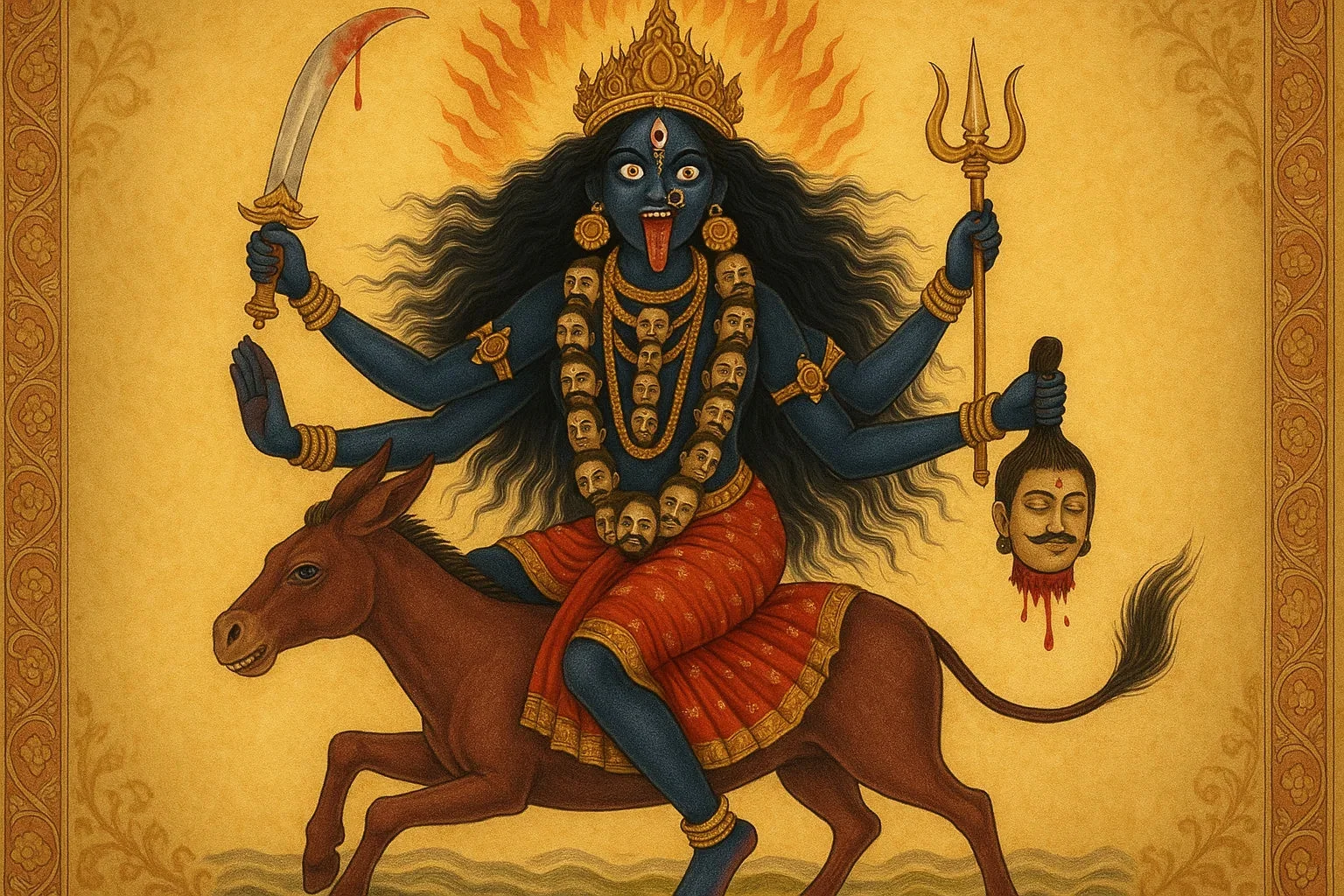
Her name is associated with darkness and time. In Hindu tradition, she represents the force that destroys negative energies and confronts destructive powers.
One well-known story connected with the goddess describes the demon Raktabija, whose drops of blood could create more demons when they touched the ground. The fierce goddess Kali, closely associated with this aspect of the divine feminine, is described in traditional accounts as preventing the demon’s multiplication by consuming his blood. Such stories illustrate the need to confront evil at its source.
Kalaratri’s message is not simply about fighting external enemies. It can also encourage us to recognise harmful habits, ignorance, dishonesty, and destructive behaviour within ourselves.
Change can be uncomfortable, and facing difficult truths requires courage. Yet meaningful improvement often begins when we stop avoiding our problems and take responsible action.
Life lesson: Do not allow fear to control you. Confront negativity with courage, wisdom, and determination.
Maa Mahagauri: The Return of Peace and Purity
Maa Mahagauri is the eighth form of Goddess Durga. Her name means “the extremely fair one” or “the great white one,” and she is associated with purity, serenity, compassion, and peace. She is commonly depicted wearing white garments and riding a bull.
In traditional accounts, Mahagauri represents purity and spiritual transformation. Her calm appearance offers a contrast to the fierce energy associated with Kalaratri.
Her form teaches us that life should not be filled with constant struggle. After facing difficulties, we also need time to rest, reflect, forgive, and rebuild our relationships.
Peace does not always mean that every problem has disappeared. Sometimes, it means finding the strength to respond calmly, letting go of unnecessary anger, and choosing understanding instead of conflict.
Mahagauri encourages us to keep our hearts pure through kindness, honesty, and compassion. Her message is especially important in a world where misunderstandings and disagreements can easily create distance between people.
Life lesson: Choose peace over unnecessary conflict and allow kindness and forgiveness to guide your actions.
Maa Siddhidatri: The Wisdom of Spiritual Fulfilment
Maa Siddhidatri is the ninth and final form of Goddess Durga worshipped during Navaratri. Her name refers to the giver of siddhis, or spiritual accomplishments and extraordinary abilities described in Hindu traditions.
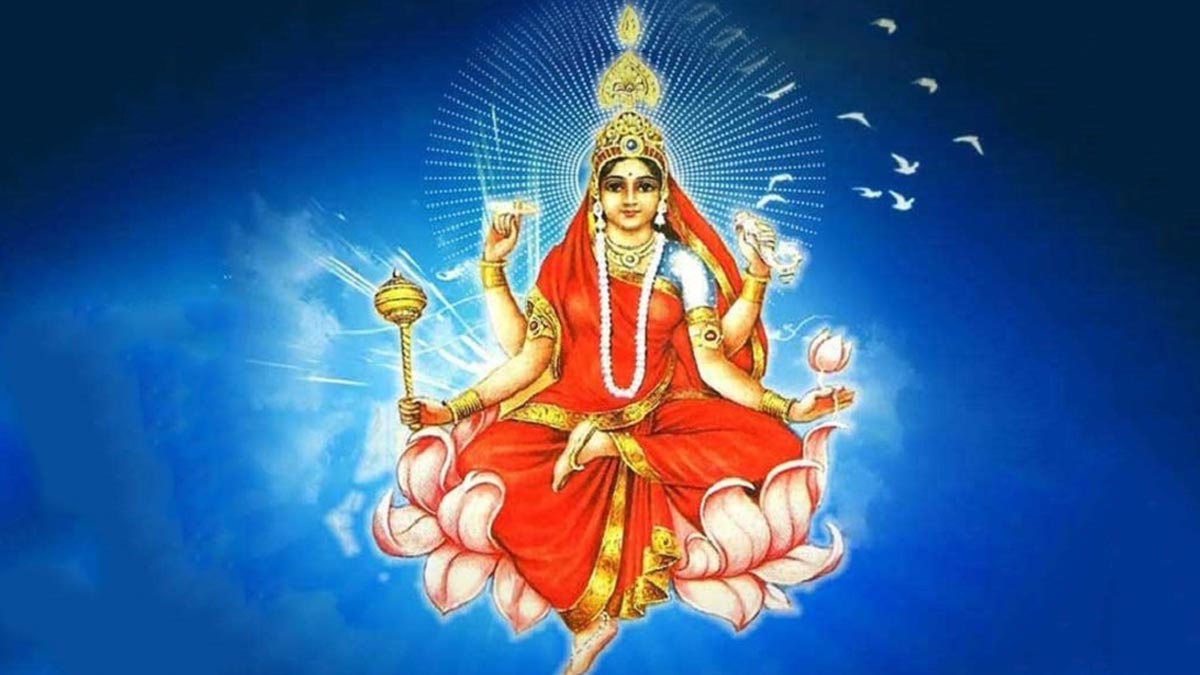
She is commonly depicted seated on a lotus and holding symbolic objects in her hands. Devotees worship her for spiritual growth, wisdom, and divine blessings.
Siddhidatri represents the culmination of the journey through the nine forms. After learning discipline, developing courage, creating new possibilities, caring for others, protecting justice, and discovering peace, the journey reaches a stage of deeper understanding.
Her message is that knowledge becomes more valuable when it is used wisely. A person may gain education, experience, and professional success, but true wisdom also involves humility, compassion, and the willingness to help others.
For young people, Siddhidatri encourages respect for the experiences of elders and a willingness to learn from mistakes. For adults, she offers a reminder that personal growth should also benefit families, communities, and society.
Life lesson: Seek wisdom, remain humble, and use your knowledge to help others.
What the Nine Forms of Maa Durga Teach Us About Life
The nine forms of Maa Durga can be understood as a symbolic journey through the qualities needed to live a meaningful life. Each form offers a different lesson, but together they present a balanced message about personal growth.
| Form of Maa Durga | Main Quality | Lesson for Everyday Life |
|---|---|---|
| Shailaputri | Strength and purity | Begin every journey with confidence |
| Brahmacharini | Discipline and devotion | Keep learning and working towards your goals |
| Chandraghanta | Courage | Face challenges with determination |
| Kushmanda | Creativity | Bring positive ideas into the world |
| Skandamata | Love and compassion | Care for others selflessly |
| Katyayani | Bravery and justice | Stand up against wrongdoing |
| Kalaratri | Fearlessness | Confront negativity and harmful behaviour |
| Mahagauri | Peace and purity | Practise forgiveness and understanding |
| Siddhidatri | Wisdom and fulfilment | Use your knowledge for the benefit of others |
These qualities are useful at every stage of life. Children can learn discipline and kindness, young adults can develop courage and responsibility, and older people can share their experiences and wisdom with future generations.
The nine forms also remind us that strength is not limited to physical power. Patience, compassion, creativity, honesty, and self-control are equally important qualities.
How Navaratri Celebrates the Nine Forms of Maa Durga
Navaratri means “nine nights” and is celebrated in different ways across India. The festival honours the divine feminine and celebrates the victory of good over evil.
During the festival, devotees worship a different form of Goddess Durga on each day. They may visit temples, perform puja at home, observe fasts according to their beliefs, sing devotional songs, and participate in community celebrations.
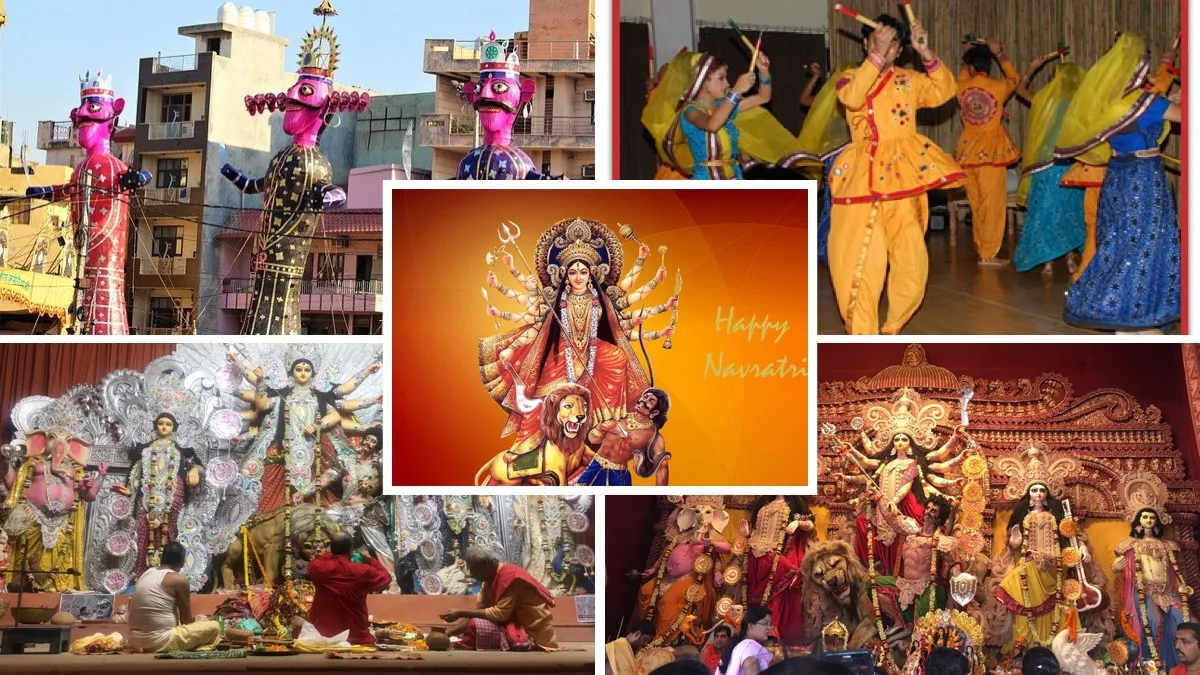
In many traditions, each day is associated with a particular colour, although the colours can vary according to regional customs and calendars. In eastern India, especially West Bengal, Durga Puja is celebrated with elaborate pandals, artistic idols, cultural programmes, and community gatherings.
Although the customs differ, the central message remains connected with faith, devotion, courage, and the victory of righteousness. The festival also brings families and communities together, allowing people to share traditions and pass cultural values to younger generations.
Navaratri offers an opportunity to reflect on the teachings of the goddess rather than focusing only on rituals. By practising patience, supporting others, standing against injustice, and choosing peace, devotees can bring the spirit of the festival into their daily lives.
Why the Story of Maa Durga Remains Relevant Today
The story of Maa Durga continues to inspire people because its central themes remain meaningful across generations. Everyone faces moments when courage is needed, when patience is tested, or when compassion can make a difference.
Shailaputri inspires us to begin again. Brahmacharini encourages us to work towards our goals. Chandraghanta reminds us to face challenges, while Kushmanda celebrates creativity and new possibilities. Skandamata teaches love, Katyayani inspires justice, and Kalaratri represents the courage to confront darkness.
Mahagauri reminds us to seek peace after conflict, while Siddhidatri teaches us to use experience and knowledge wisely.
Together, the nine forms show that personal growth is not a single achievement. It is a continuous process of learning, making mistakes, improving our behaviour, and developing a deeper understanding of ourselves and others.
The divine story of Maa Durga also reminds devotees that good and evil are not merely themes found in ancient stories. They can be reflected in the choices we make every day. Honesty over dishonesty, kindness over cruelty, courage over fear, and understanding over hatred are all ways to put these timeless lessons into practice.
FAQs About the Nine Forms of Maa Durga
1. What are the nine forms of Maa Durga?
The nine forms are Shailaputri, Brahmacharini, Chandraghanta, Kushmanda, Skandamata, Katyayani, Kalaratri, Mahagauri, and Siddhidatri. These forms are collectively known as Navadurga.
2. Why are the nine forms of Maa Durga worshipped during Navaratri?
The nine forms are worshipped during Navaratri to honour the different aspects of Goddess Durga’s divine power. Each form represents qualities such as devotion, courage, creativity, compassion, justice, peace, and wisdom.
3. Which is the first form of Goddess Durga?
Maa Shailaputri is the first form of Goddess Durga worshipped during Navaratri. Her name means “daughter of the mountain,” and she symbolises strength, purity, and new beginnings.
4. Which form of Maa Durga represents courage?
Maa Chandraghanta and Maa Katyayani are both associated with courage and strength. Chandraghanta represents readiness to face challenges, while Katyayani is particularly connected with warrior strength and the protection of righteousness.
5. Which form of Goddess Durga represents peace?
Maa Mahagauri represents purity, serenity, and peace. Her form reminds devotees of the importance of compassion, forgiveness, and harmony.
6. Which is the ninth form of Maa Durga?
Maa Siddhidatri is the ninth form of Goddess Durga. She represents spiritual accomplishments, wisdom, and divine blessings.
7. What is the main message of the nine forms of Maa Durga?
The main message is that courage, discipline, compassion, justice, peace, and wisdom are essential qualities for a meaningful life. The nine forms inspire people to grow spiritually and face life’s challenges with faith and determination.
8. What is the significance of the nine forms of Maa Durga in daily life?
The nine forms offer lessons that can be applied to everyday situations. They encourage people to learn continuously, care for others, stand against injustice, overcome fear, maintain peace, and use their knowledge responsibly.