Portable Ion Chromatography Aquamonitrix Revolutionizes Field Environmental Monitoring

Portable Ion Chromatography Aquamonitrix
Recent advances have brought ion chromatography out of expensive laboratories and into the field. Scientists at the University of Tasmania have developed a portable ion chromatograph named Aquamonitrix, enabling real-time analysis of soil pore water. This innovation is transforming environmental monitoring and chemistry education, making them more accessible, practical, and cost-effective.
Thank you for reading this post, don't forget to subscribe!Portable Ion Chromatography Aquamonitrix Technology
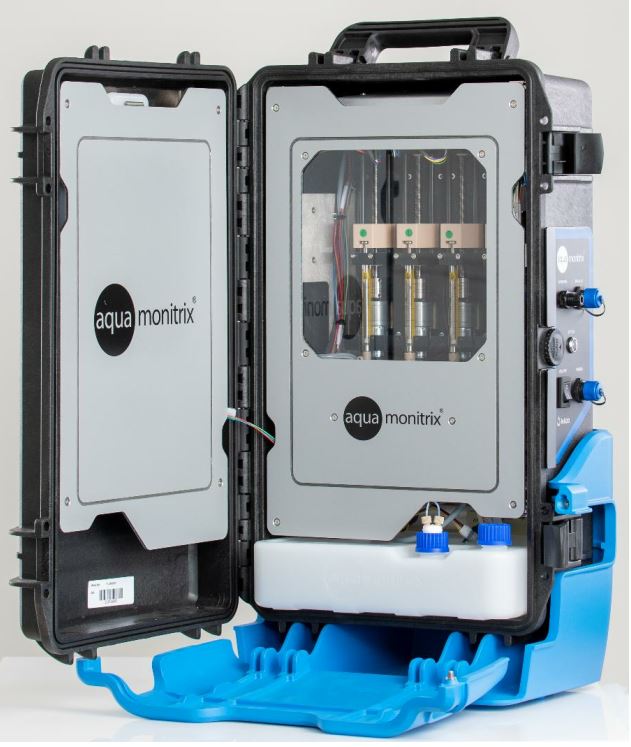
Ion chromatography (IC) is a powerful analytical technique used to separate and quantify ions in a sample. Traditionally, it required large, sophisticated, and costly laboratory setups. Aquamonitrix simplifies this complex process by introducing a compact and portable design. The device employs a short chromatographic column and operates with a low-pressure pump, significantly reducing both size and cost.
Unlike conventional systems that rely on expensive and sometimes hazardous chemicals, Aquamonitrix runs on a sodium chloride (NaCl) solution, which is inexpensive and environmentally friendly. The instrument is equipped with a UV light absorbance detector that can distinctly identify nitrate and nitrite ions, both of which absorb ultraviolet light differently. This selectivity ensures precise detection without interference from other ions commonly present in environmental samples.
By combining innovative hardware and efficient analytical chemistry, Aquamonitrix brings the power of ion chromatography to the field allowing scientists, educators, and environmental professionals to obtain data on-site without needing to return to the laboratory.
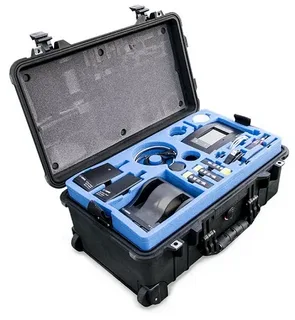
Field Application and Procedure Using Portable Ion Chromatography Aquamonitrix
Aquamonitrix’s design makes it easy to use in outdoor environments. The process begins when students or field researchers collect soil pore water samples using a portable vacuum pump. The samples are filtered immediately on-site to remove debris or particulate matter before being injected directly into the device.
Within minutes, Aquamonitrix produces chromatograms graphs that display peaks corresponding to different ions, primarily nitrate and nitrite. These compounds are significant environmental indicators because they reflect nutrient pollution and agricultural runoff, both of which can harm ecosystems and human health if present in excess.
Real-time readings from Aquamonitrix allow immediate assessment of soil and water quality. Later, the same samples can be verified in a laboratory using conventional ion chromatography, ensuring data accuracy and building confidence in the device’s field performance.
Comparison Between Laboratory Systems and Portable Ion Chromatography Aquamonitrix
Traditional laboratory-based ion chromatography instruments are large, power-hungry, and expensive, often costing tens of thousands of dollars. They use longer columns, high-pressure pumps, and can detect multiple ions simultaneously, generating detailed but complex data. While these systems are comprehensive, their lack of portability limits their application in remote or field conditions.
In contrast, Aquamonitrix is battery-powered and costs about one-tenth of a conventional lab system. Although it doesn’t replace the full range of capabilities offered by laboratory chromatographs, it performs exceptionally well for targeted applications such as nitrate and nitrite detection. Field trials have shown that the results obtained using Aquamonitrix closely align with laboratory data, demonstrating high reliability and precision.
This makes the device a valuable complement to existing laboratory infrastructure, bridging the gap between fieldwork and high-end analytical testing.
Educational and Environmental Benefits
Beyond its technical prowess, Aquamonitrix offers significant educational benefits. It transforms the way chemistry is taught, allowing students to experience scientific investigation outside the traditional lab environment. By collecting and analyzing data in real time, learners develop a deeper understanding of analytical chemistry concepts and environmental processes.
For educators, this tool offers a practical way to demonstrate real-world applications of chemical analysis, fostering curiosity and engagement. Students can visualize how pollutants like nitrates and nitrites move through soil and water systems, connecting classroom theory with ecological impact.
Environmentally, Aquamonitrix supports ongoing monitoring of nitrogen compounds in various ecosystems. Elevated nitrate and nitrite levels contribute to problems like eutrophication and groundwater contamination. With portable devices like Aquamonitrix, these issues can be tracked more efficiently, leading to faster intervention and better management strategies.
The research team behind Aquamonitrix is also expanding its scope by developing similar portable analyzers for ammonia and arsenic detection, addressing pressing global challenges related to agricultural runoff and contaminated groundwater.
Future Prospects
The potential of portable ion chromatography extends far beyond academic and pilot research projects. As devices like Aquamonitrix become more widely available, they could revolutionize environmental science, agriculture, and water treatment monitoring.
In agriculture, farmers could use portable chromatographs to monitor soil nutrients and optimize fertilizer use, improving yields while reducing environmental pollution. In public health, portable arsenic detectors could provide life-saving data in regions affected by groundwater contamination.
Moreover, continuous on-site monitoring using low-cost, portable systems can help regulatory bodies and communities respond quickly to pollution events, ensuring sustainable water and soil management.
With its simplicity, affordability, and accuracy, Aquamonitrix marks a major leap in analytical technology bringing precision measurement tools directly to the field and democratizing access to scientific data. This development represents a step toward a future where real-time environmental monitoring is not a privilege of advanced laboratories but a standard practice worldwide.