Pumpkin Toadlet Species Found in Brazil’s Misty Cloud Forests

Pumpkin Toadlet Species discoveries continue to amaze scientists, and a new one from southern Brazil has once again shown how much remains hidden in nature. Researchers have identified a tiny new pumpkin toadlet living deep inside the cloud forests of the Serra do Quiriri mountain range. This finding highlights both the beauty and the vulnerability of the Atlantic Forest, one of the world’s richest natural regions that is slowly shrinking due to human activity.
Thank you for reading this post, don't forget to subscribe!This newly described toadlet belongs to the genus Brachycephalus, a group famous for its very small frogs that are found nowhere else on Earth. Each new discovery from this group reminds experts how unique and fragile these forest ecosystems are.
Finding in the Serra do Quiriri Mountains
The new pumpkin toadlet species was discovered in the Serra do Quiriri, a mountainous area covered in dense cloud forests. These forests sit at elevations above 750 metres and are almost always cool, damp, and foggy. Such conditions create a perfect home for small creatures that depend on moisture to survive.
Scientists found the tiny frog hidden among fallen leaves on the forest floor. Until now, around 42 species of Brachycephalus were known. The addition of this new member shows that even well-studied regions like southern Brazil can still surprise researchers.
One of the World’s Smallest Frogs
This pumpkin toadlet species is incredibly small, measuring between 8.9 and 13.4 millimetres. To put that into perspective, it is smaller than a fingernail. Because of its size, it ranks among the smallest four-limbed animals known on the planet.
Its tiny body allows it to live safely within leaf litter, where it feeds, hides from predators, and stays moist. However, this same feature also makes it easy to overlook, which explains why such species can remain undiscovered for so long.
Bright Colours and Unique Looks
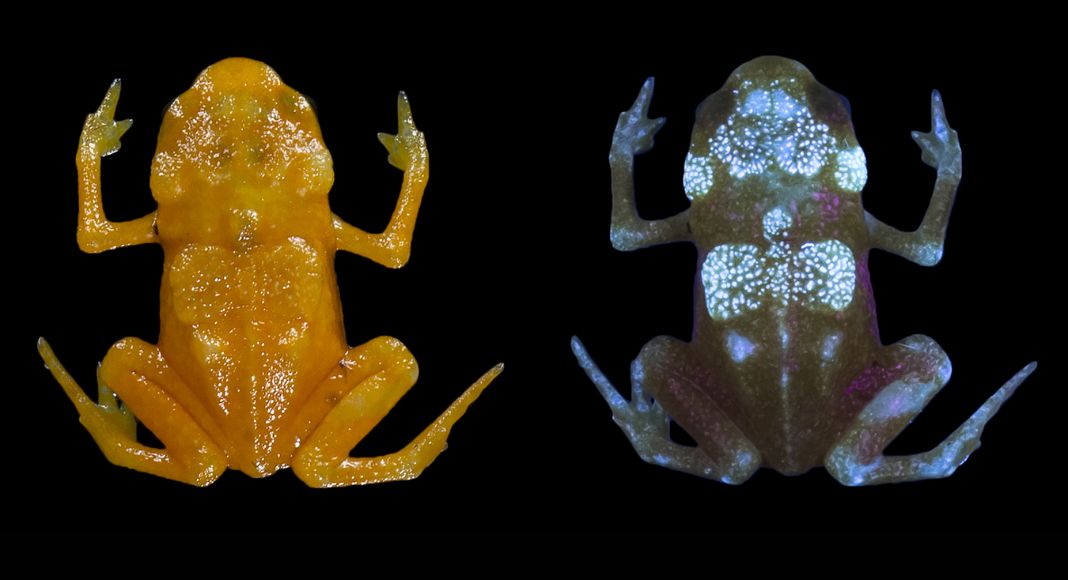
The frog stands out because of its bright orange colour, which gives pumpkin toadlets their common name. This vivid shade helps distinguish it from other closely related species. The top of its body has smooth skin, while the sides are slightly rougher.
Greenish to brownish markings can be seen along its sides and belly, adding to its unique appearance. Its rounded snout and compact shape also help scientists tell it apart from similar frogs found in nearby areas.
Talking Without Listening
One of the most fascinating features of this pumpkin toadlet species is how it communicates. Although it produces calls made up of short pulses, the frog cannot actually hear its own sounds. This may seem strange, but it has found another way to interact.
Instead of relying on sound, the toadlet uses visual signals. It inflates its vocal sac, opens its mouth, and even waves its arms to communicate with others. This form of visual communication is rare among frogs and makes this species especially interesting to researchers studying animal behaviour.
A Name With a Message
The species has been named Brachycephalus lulai in honour of Brazilian President Luiz Inácio Lula da Silva. The name is meant to draw attention to the importance of protecting Brazil’s natural heritage, especially the Atlantic Forest.
Although the species is currently considered to face low immediate risk, its habitat is under constant pressure. Deforestation, mining activities, and unplanned tourism continue to damage forest areas, even in remote mountain regions.
Why Protection Matters
This discovery is not just about adding a new name to a list. It serves as a reminder that many small and sensitive species depend entirely on healthy forests. Once their habitat is destroyed, they have nowhere else to go.
The pumpkin toadlet species from Serra do Quiriri shows how much biodiversity can exist in a small patch of forest. Protecting these areas ensures that such unique creatures can survive and that future discoveries remain possible.