



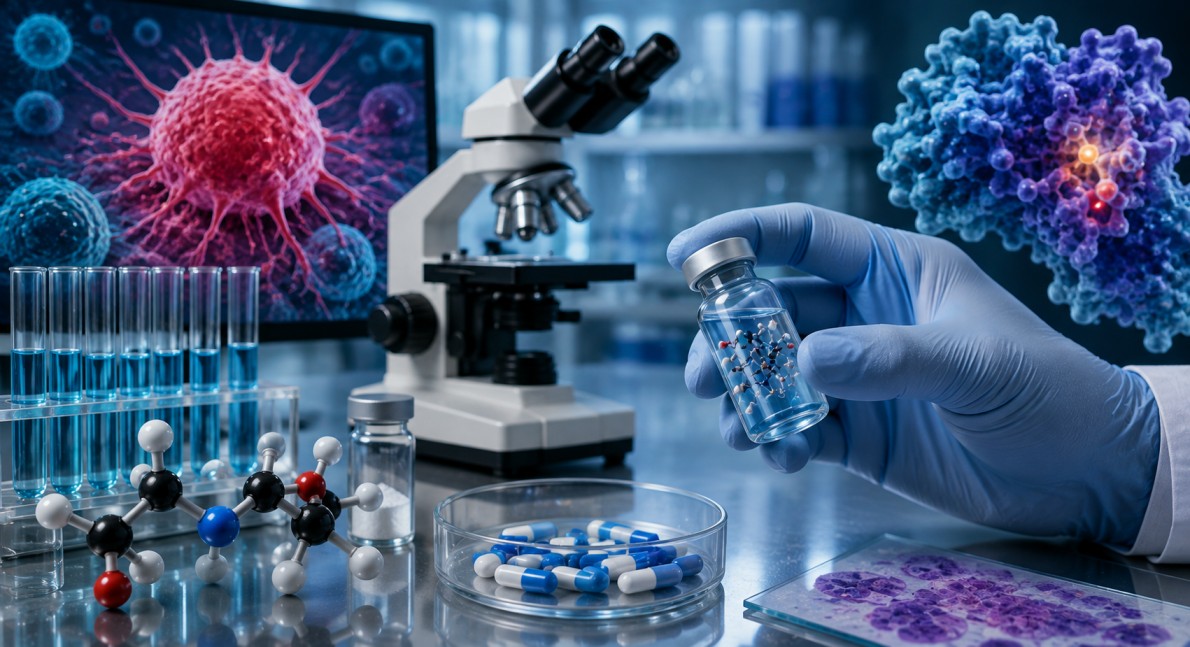
RK-251 Cancer Drug Shows Promise

RK-251 Cancer Drug is drawing attention after Indian researchers developed a new experimental compound designed to become active mainly in the chemical environment found inside cancer cells. The research, led by scientists from the Institute of Advanced Study in Science and Technology (IASST) and the Indian Institute of Technology Guwahati (IIT Guwahati), describes RK-251 as a reactive oxygen species (ROS)-responsive prodrug. The findings were published in the Journal of Medicinal Chemistry in July 2026.
Thank you for reading this post, don't forget to subscribe!A New Approach to Cancer Treatment
RK-251 is different from a conventional drug because it is designed to remain relatively inactive until it encounters a specific chemical trigger. Researchers developed it as a prodrug, meaning the compound is converted into an active drug after a particular biological or chemical process takes place.
In this case, the trigger is reactive oxygen species, or ROS. Cancer cells can have higher levels of ROS than many normal cells. The researchers used this difference to create a system in which RK-251 can be activated in a high-ROS environment.
The study was carried out by a research team including Rahul Kesarwani, Nikita Pal, Dorothy Das, Asis Bala and Krishna P. Bhabak. Their work combined chemistry, drug discovery and biological testing to investigate whether the compound could selectively affect cancer cells.
How RK-251 Works
RK-251 is based on NBDHEX, a compound known for inhibiting a protein called glutathione-S-transferase pi, or GSTP1. GSTP1 is found at increased levels in several types of cancer and can help cancer cells deal with certain harmful chemical stresses.
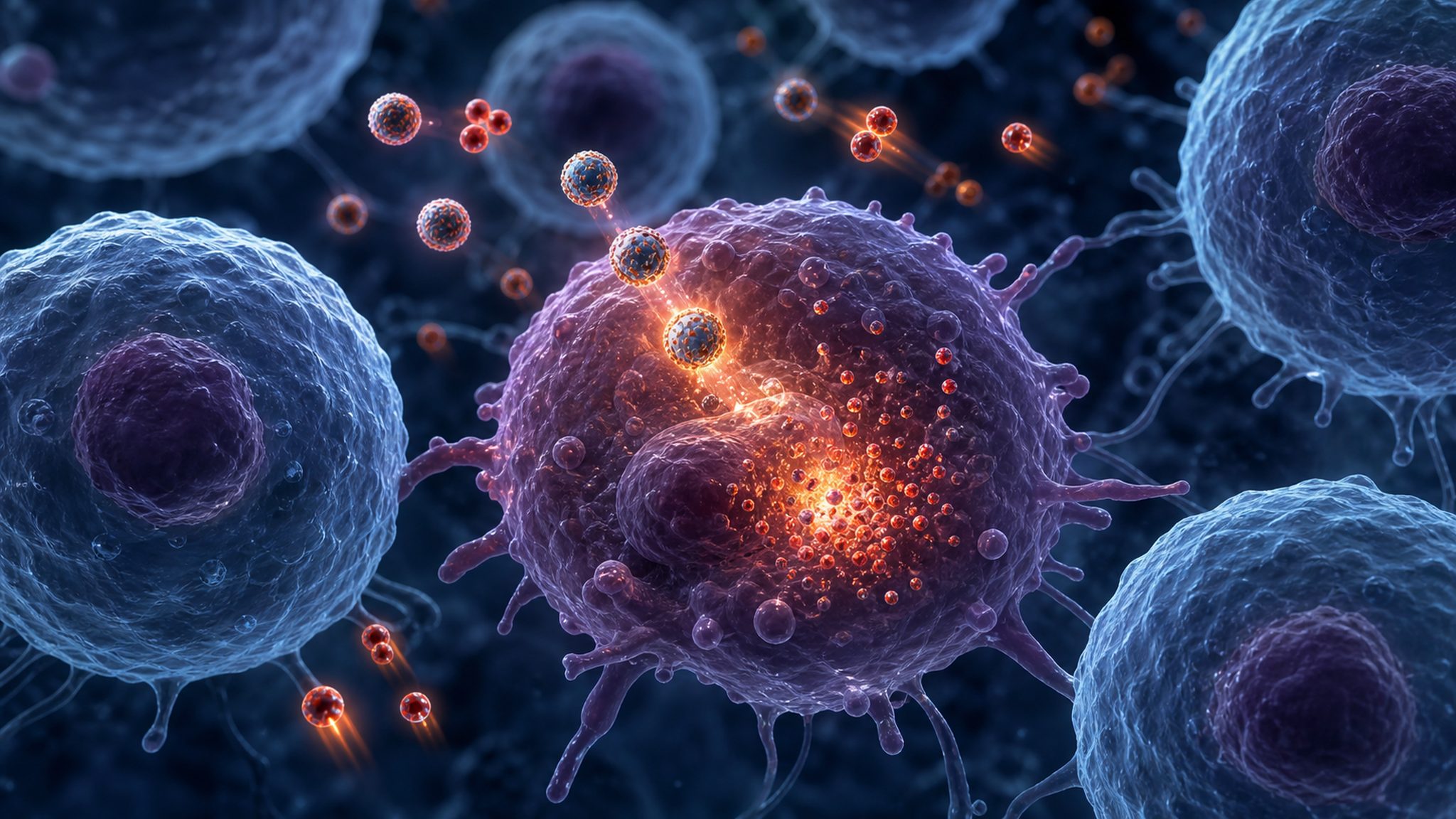
The researchers attached NBDHEX to a ROS-sensitive chemical system and a near-infrared fluorescent component. When ROS activates RK-251, the molecular structure breaks apart and releases NBDHEX. At the same time, the reaction produces a fluorescent signal that can help researchers observe the activation process.
This combination gives RK-251 two important features: it can deliver an anticancer compound after activation and can also provide a visible signal showing that the activation has taken place.
Testing Against Triple-Negative Breast Cancer
The researchers tested RK-251 against MDA-MB-231 cells, a laboratory model commonly used to study triple-negative breast cancer. This form of breast cancer does not have three common targets oestrogen receptors, progesterone receptors and HER2 that are used for some other breast cancer treatments.
According to the published study, RK-251 showed anticancer activity against the cancer cells and was more effective against them than against the non-malignant cells tested. The researchers also observed changes in important cancer-related marker genes.
These results are important because selective drug activation is one of the areas researchers are exploring to reduce unwanted effects on healthy tissue. However, laboratory activity does not mean that a treatment is ready for patients.
Zebrafish Testing Adds More Data
The research team also used developing zebrafish embryos as a biological model. The scientific name of the zebrafish is Danio rerio, and it is widely used in biomedical research.
The study reported that RK-251 activation could be observed through fluorescence in the zebrafish model. The researchers did not find noticeable abnormalities or acute toxicity under the conditions tested. These experiments provide additional early-stage information about the compound’s behaviour, but they cannot replace human clinical studies.
Research from Assam Gains Attention
The work brings together researchers from IASST in Guwahati and IIT Guwahati, highlighting collaboration between institutions working in different areas of science. IASST researchers contributed expertise in pharmacology and drug discovery, while the IIT Guwahati team worked on the chemical development of the compound.
The study was published online on July 2, 2026, and appeared in the July 23 issue of the Journal of Medicinal Chemistry, a peer-reviewed scientific journal published by the American Chemical Society.
What Comes Next for RK-251
RK-251 remains an experimental research compound. The published work describes laboratory and preclinical testing, rather than a treatment approved for use in people. More research will be needed to understand its safety, effectiveness, dosage, metabolism and behaviour in living systems before any potential human clinical trials.
The development also shows how researchers are exploring targeted and activatable drug designs. Instead of simply delivering an active drug throughout the body, these approaches attempt to use differences between cancer cells and healthy cells as a trigger for drug activation.
For RK-251, the next stages of research will determine whether the promising laboratory findings can eventually be translated into a safe and effective treatment.