


Sea-Level Rise Declaration Adopted

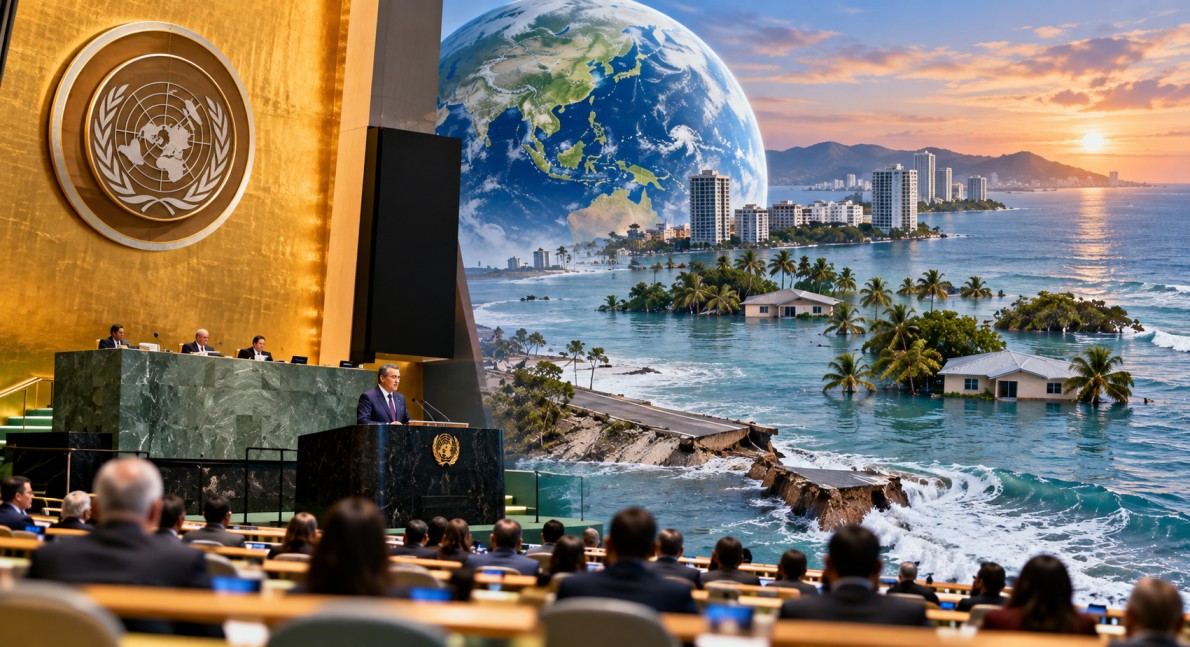
Sea-Level Rise has received fresh attention at the United Nations after the General Assembly adopted a political declaration on September 24, 2026. The declaration was approved during a high-level meeting at UN Headquarters in New York and focuses on the growing risks faced by low-lying coastal areas and small island states. It also addresses important questions about statehood, maritime zones, climate adaptation and international cooperation.
Thank you for reading this post, don't forget to subscribe!UN Declaration Addresses Rising Seas
The high-level meeting was held during the 81st session of the UN General Assembly. It was convened under a decision adopted by the General Assembly in 2024, which called for stronger international cooperation to address the threats linked to rising sea levels. The 2026 meeting brought governments and other stakeholders together to discuss practical responses to the growing risks.
The declaration recognises that sea-level rise is not only an environmental issue. It can affect communities, infrastructure, economies, food systems, cultural heritage and national development. The UN General Assembly President noted that global mean sea level rose from an average rate of 2.1 millimetres per year during 1993–2002 to 4.7 millimetres per year during 2015–2024.
Statehood and Changing Coastlines
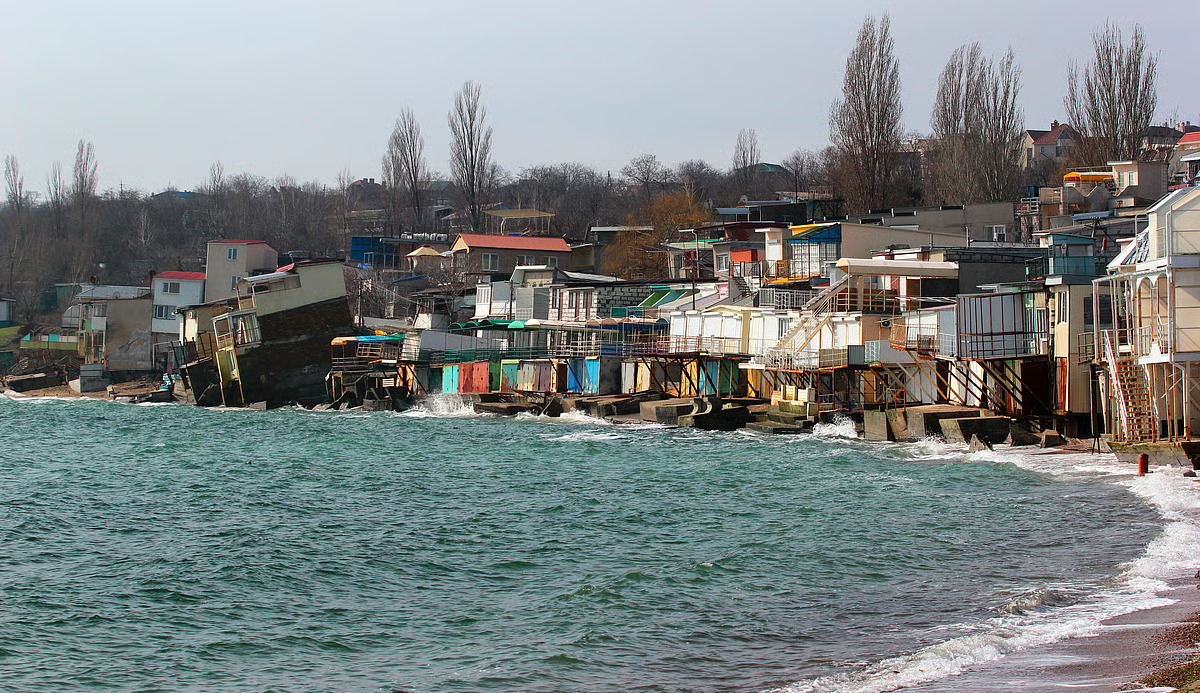
One of the important issues addressed by the declaration is the future of countries that face severe coastal flooding or the possible loss of land because of rising seas.
For vulnerable island and coastal states, physical changes to territory can create difficult questions about sovereignty and international legal status. The declaration supports the continuity of statehood, sovereignty and participation in international organisations despite the effects of climate-related sea-level rise.
This issue is particularly important for small island developing states, many of which have raised concerns about whether changes to their physical territory could affect their legal identity as states.
The declaration therefore provides political support for the principle that rising seas should not automatically result in the loss of a country’s statehood.
Maritime Zones and International Law
The declaration also addresses maritime zones established under the United Nations Convention on the Law of the Sea, or UNCLOS.
Maritime zones include areas such as territorial seas and exclusive economic zones. Coastal changes caused by rising sea levels can create uncertainty about coastlines and maritime boundaries.
The declaration affirms the stability of maritime zones once they have been established in accordance with international law. During the UN meeting, representatives of small island states highlighted the importance of maintaining their maritime rights even as physical coastlines change.
This issue has been part of wider international discussions for several years. Small island states and other vulnerable countries have pushed for greater legal certainty as they prepare for the long-term effects of climate change.
Focus on Climate Adaptation
The declaration also calls attention to adaptation and resilience. Countries facing rising seas need measures that can protect people and infrastructure from coastal flooding and other impacts.
These measures can include stronger coastal protection, improved planning, early warning systems and better monitoring of changes in sea levels. International support and finance are also important for developing countries that may not have enough resources to build large-scale adaptation projects.
The UN has emphasised that rising seas can affect major infrastructure and global economic systems. Ports, roads, electricity networks and supply chains in coastal areas can all face greater risks as flooding becomes more frequent or severe.
Hundreds of Millions Face Coastal Risks
The impact of sea-level rise extends well beyond small island nations. Large populations also live in low-lying coastal areas around the world.
According to the UN General Assembly President’s address, around 900 million people live in low-lying coastal zones, while more than one billion people could be exposed to coastal hazards by 2050. Coastal regions are also home to major cities, industrial centres, ports and transport networks.
This makes sea-level rise an issue with economic and social effects far beyond the areas directly affected by seawater. Disruption to ports and transport networks can affect international trade, food supplies, employment and access to essential goods.
Links With International Legal Developments
The 2026 declaration comes after several international legal developments concerning climate change and sea-level rise.
The International Tribunal for the Law of the Sea issued an advisory opinion in May 2024 concerning states’ obligations to protect the marine environment from climate change-related harm. The International Court of Justice has also addressed climate change and state obligations through its advisory opinion issued in 2025.
These developments have contributed to a wider discussion about how international law applies as climate change changes physical environments and creates new risks for coastal countries.
The UN General Assembly declaration is a political document and forms part of this broader international effort to create greater cooperation and legal certainty around sea-level rise.
A Continuing Global Climate Issue
The UN’s 2026 meeting also places sea-level rise within the wider climate and sustainable development agenda. The General Assembly has called for stronger cooperation, better scientific information and practical measures to protect vulnerable communities.
For countries facing coastal flooding, the focus now extends beyond measuring how quickly oceans are rising. Governments are also looking at how to protect communities, maintain infrastructure, strengthen disaster preparedness and secure financial support for adaptation.
The declaration keeps sea-level rise high on the international agenda and provides a common political framework for countries to continue discussions on statehood, maritime zones, adaptation, resilience and the protection of people living in vulnerable coastal areas.