


Shukrayaan Sweden Partnership Boosts Venus Mission

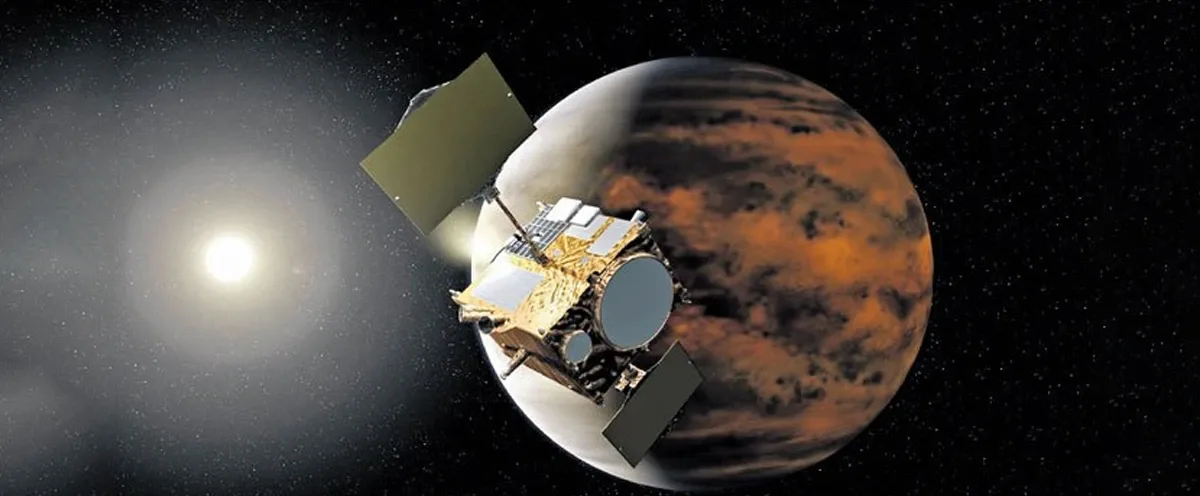
India is preparing for its ambitious Venus mission under the Shukrayaan programme. The Shukrayaan Sweden Partnership has added a major international scientific collaboration to the mission. The spacecraft will study Venus’s atmosphere, clouds, surface, and weather systems with the help of advanced instruments from both countries.
India-Sweden Collaboration in Space
The Shukrayaan Sweden Partnership became important after Sweden agreed to support India’s Venus orbiter mission. The Swedish Institute of Space Physics will develop the Venusian Neutrals Analyser (VNA) instrument for the spacecraft.

This instrument will help scientists study how charged particles from the Sun interact with Venus’s atmosphere and exosphere. The partnership will strengthen scientific cooperation between India and Sweden in deep space research.
Mission Details and Launch Plan
The Union Cabinet approved the Venus orbiter mission in 2024 with a budget of Rs 1,236 crore. ISRO will launch the spacecraft using the powerful LVM-3 rocket, India’s heavy-lift launch vehicle.
The spacecraft will first travel in an elliptical path before entering Venus’s orbit. The planned orbit includes a periapsis of 500 km and an apoapsis of 60,000 km around Venus.
Scientists expect the spacecraft to reach Venus by July 2028 after a journey of around 112 days.
Scientific Goals of the Mission
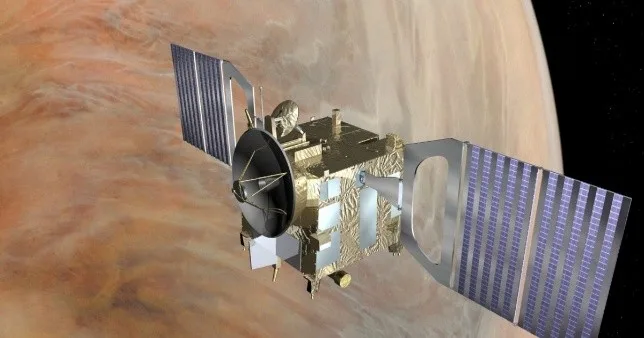
The Shukrayaan Sweden Partnership will help researchers understand Venus in greater detail. ISRO plans to study the planet’s thick atmosphere, volcanic surface, and fast-moving clouds.
Scientists are also interested in finding out whether Venus once had conditions suitable for liquid water before turning into a greenhouse planet. The mission may provide important information about climate change and planetary evolution.
Why Venus Is Important
Venus is the second planet from the Sun and is often called Earth’s twin because of its similar size and mass. However, Venus has an extremely hot atmosphere filled mainly with carbon dioxide.
Surface temperatures on Venus rise above 460°C, making it the hottest planet in the solar system. Studying Venus can help scientists better understand how planets change over time.
Mission Progress and Future Plans
ISRO completed the Preliminary Design Review of the mission in April 2026. The space agency is now moving forward with the next stages of spacecraft development and payload testing.
The Shukrayaan Sweden Partnership is expected to improve India’s planetary exploration capabilities and increase international cooperation in space science.