



SiC Semiconductor Facility Comes to Odisha

SiC Semiconductor manufacturing is set to get a major boost in Odisha with approval for a new silicon carbide device manufacturing facility worth ₹3,406.25 crore. The project, proposed by SiCSem Private Limited, was approved on September 15, 2026, and will be developed at IDCO Infovalley-II in Arisol Mouza under Jatni tehsil of Khordha district.
Thank you for reading this post, don't forget to subscribe!The facility will be Odisha’s second semiconductor unit and is expected to strengthen the state’s growing electronics and semiconductor industry. The project will focus on manufacturing silicon carbide devices used in electric vehicles, renewable energy systems, railways, defence electronics and other high-power applications.
SiC Semiconductor Project in Odisha
The new SiC Semiconductor facility will cover an area of 21.889 acres. It will be established within the Falta Special Economic Zone at IDCO Infovalley-II.
The project is designed to manufacture two important types of silicon carbide devices: SiC diodes and SiC MOSFETs. Once fully operational, the facility is planned to produce around 4.8 million SiC diodes and 91.2 million SiC MOSFETs every year.
The scale of the proposed production shows the focus on building a strong domestic supply chain for advanced power semiconductor components.
What is Silicon Carbide?
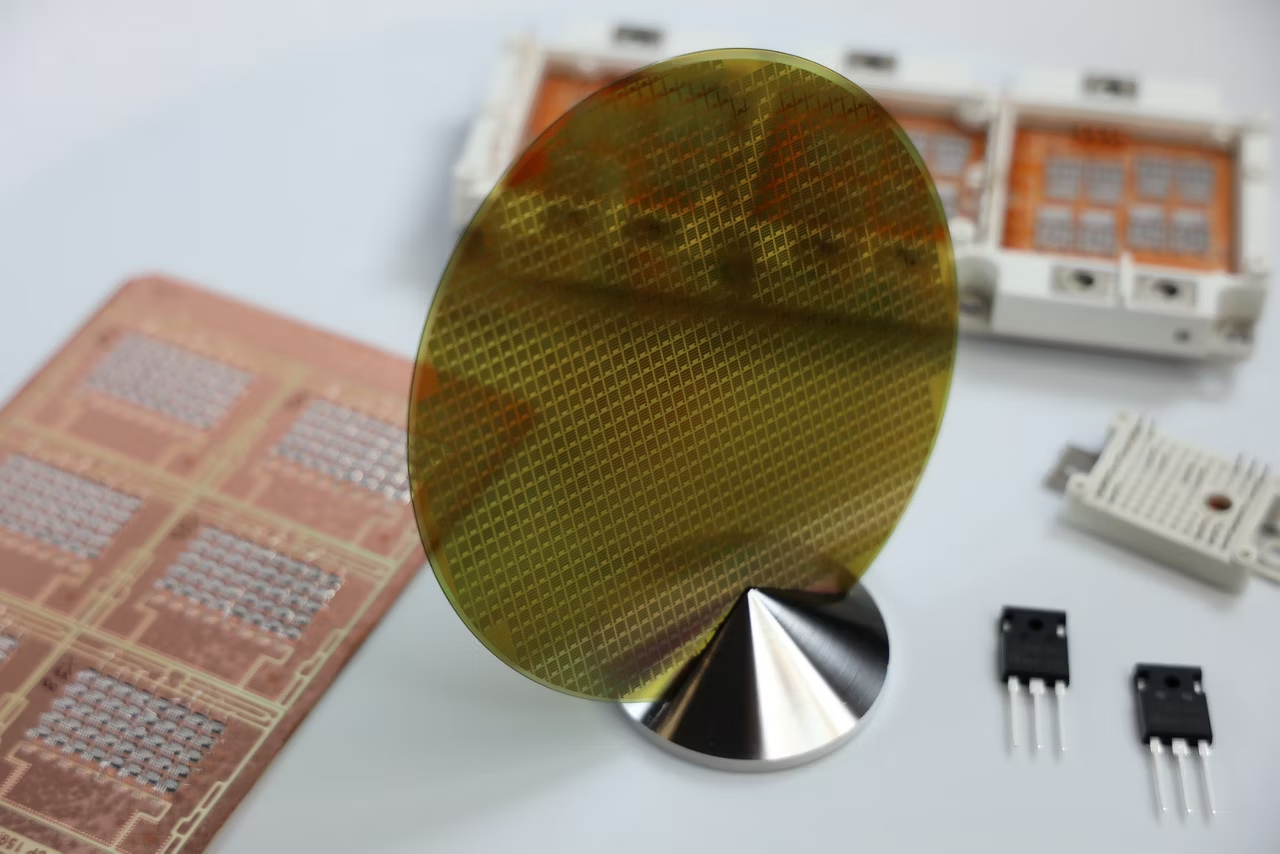
Silicon carbide, commonly called SiC, is a semiconductor material made from silicon and carbon. It belongs to a category known as wide-bandgap semiconductors.
Compared with conventional silicon-based semiconductor materials, silicon carbide devices can work efficiently at higher temperatures and higher voltages. They can also help reduce energy losses in certain electronic systems.
These properties make SiC Semiconductor technology useful in applications where efficiency, high power and heat management are important.
Uses of SiC Semiconductor Technology
SiC Semiconductor devices are becoming increasingly important in modern industries. One major application is the electric vehicle (EV) sector.
Electric vehicles use power electronics to control the flow of electricity between the battery, motor and other systems. SiC devices can help improve the efficiency of these systems and reduce energy losses.
The technology is also useful in renewable energy. Solar power systems and other renewable-energy installations use power conversion equipment, where high-efficiency semiconductor devices can play an important role.
Railway systems, industrial equipment, power infrastructure and defence electronics are other areas where SiC devices can be used.
SiC Diodes and MOSFETs
The Odisha facility will manufacture both SiC diodes and SiC MOSFETs.
A SiC diode is a semiconductor component that allows electric current to flow mainly in one direction. It is used in power conversion and other high-power electronic systems.
A SiC MOSFET is a power semiconductor switch. It can control electrical power efficiently and is used in applications such as electric vehicles, charging systems, industrial equipment and renewable-energy systems.
Producing these components within India can support industries that require advanced power electronics.
₹3,406 Crore Investment
The total investment planned for the project is ₹3,406.25 crore. The funding structure includes support from both the central government and the Odisha government, along with investment from the project promoter.
The project has been proposed to receive a central capital subsidy of ₹700 crore. The Odisha government is expected to provide a subsidy of ₹350 crore, while the promoter contribution is estimated at ₹1,956.25 crore.
This funding structure is designed to support the development of semiconductor manufacturing infrastructure, which requires significant investment in specialised equipment, technology and production facilities.
Project Approval
The SiC Semiconductor project received approval during the 217th meeting of the Unit Approval Committee, held on August 29, 2026.
The approval clears an important stage for the proposed facility. Further development will involve establishing the manufacturing infrastructure and specialised systems needed to produce silicon carbide devices at commercial scale.
The project is expected to contribute to the expansion of Odisha’s semiconductor ecosystem and attract more technology-related industrial activity to the state.
Employment Opportunities
The new facility is projected to create around 1,270 direct jobs.
Semiconductor manufacturing requires people with skills in electronics, engineering, manufacturing, quality control, research, equipment operation and industrial management. The project could therefore create opportunities across several technical and operational areas.
Additional indirect employment could also emerge through suppliers, maintenance services, logistics, construction and other businesses connected with the facility.
Export Potential
The SiC Semiconductor facility is also expected to have a strong export focus. The project is projected to generate around ₹7,043 crore in export turnover during its first five years of operations.
It is also expected to generate approximately ₹4,523 crore in Net Foreign Exchange over the same five-year period.
Export-oriented semiconductor manufacturing can connect Indian production facilities with international electronics and technology supply chains.
Odisha’s Growing Semiconductor Industry
The new project adds to Odisha’s efforts to develop a semiconductor and electronics manufacturing ecosystem. Semiconductor production has become an important area of industrial development as countries seek reliable and diversified technology supply chains.
Odisha has been developing industrial infrastructure to attract electronics and advanced manufacturing projects. The new SiC Semiconductor facility can add a specialised segment focused on power devices rather than conventional consumer electronics alone.
The location in Khordha district also provides the project with access to the state’s developing industrial and infrastructure network.
Support for Electric Vehicles and Clean Energy
Demand for efficient power semiconductors is expected to grow alongside electric vehicles and renewable energy systems.
EV manufacturers require advanced power electronics for batteries, motors and charging systems. Renewable energy projects also need efficient devices for converting and managing electrical power.
SiC Semiconductor technology can support these applications because of its ability to operate under demanding electrical and temperature conditions. The Odisha facility will therefore produce components relevant to several industries linked with India’s growing clean-energy and technology sectors.
Strengthening India’s Semiconductor Supply Chain
The Odisha project comes at a time when India is expanding its semiconductor manufacturing capabilities. Semiconductor devices are essential components in automobiles, communication equipment, industrial machines, consumer electronics, defence systems and energy infrastructure.
Building domestic manufacturing capacity can help develop local suppliers, technical skills and supporting industries. It can also provide Indian electronics and technology companies with greater access to locally manufactured components.
The proposed SiC Semiconductor facility will focus on a specialised part of this ecosystem by producing power devices based on silicon carbide.
Industrial Outlook for the Project
With an investment of more than ₹3,400 crore, planned annual production of millions of semiconductor devices and projected exports of more than ₹7,000 crore over five years, the project represents a significant industrial development for Odisha.
The combination of central support, state incentives and promoter investment is intended to establish a large-scale manufacturing facility. Once developed, the unit will produce SiC diodes and MOSFETs for sectors ranging from electric mobility and renewable energy to railways and defence electronics.
The project is expected to add new manufacturing capacity while creating jobs and expanding Odisha’s role in India’s developing semiconductor industry.