SPHEREx Interstellar Organic Discovery Reveals Secrets of Comet 3I/ATLAS

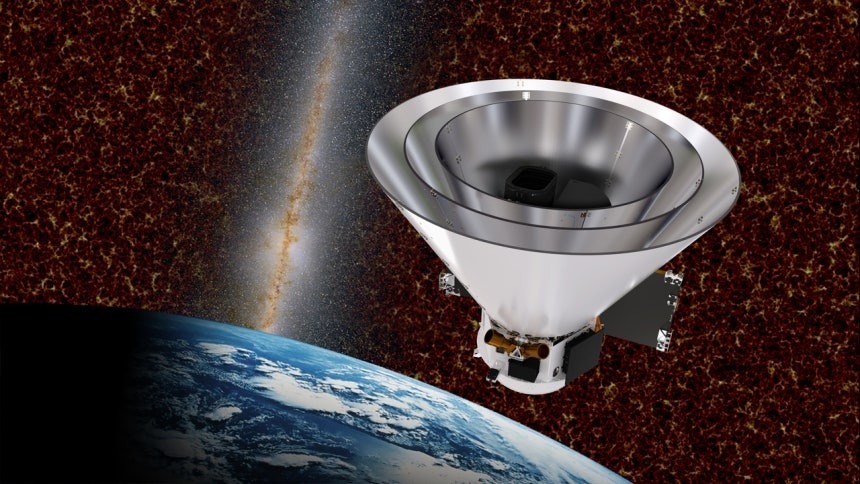
NASA’s SPHEREx space telescope has opened a new chapter in space research with the SPHEREx Interstellar Organic Discovery linked to comet 3I ATLAS. This rare object is only the third known interstellar comet ever observed passing through our solar system. The discovery has provided scientists with valuable information about material that formed far beyond the influence of our Sun.
Thank you for reading this post, don't forget to subscribe!The observations were made in December 2025, shortly after the comet passed its closest point to the Sun. Using advanced infrared technology, SPHEREx detected a rich mix of organic molecules within the comet. These findings are helping researchers better understand the chemical building blocks that exist in distant star systems.
Infrared Study of a Rare Interstellar Comet
SPHEREx turned its powerful infrared instruments toward comet 3I ATLAS soon after it completed its closest approach to the Sun. Infrared technology allows scientists to detect heat signatures and chemical compositions that are not visible through normal optical telescopes.
During the observation, scientists identified several organic molecules, including methanol, methane and cyanide. These compounds are important because they are linked to biological processes on Earth. However, researchers clearly stated that such molecules do not automatically mean life exists. Organic molecules can also form naturally in space without any involvement of living organisms.
The presence of these compounds in an interstellar comet is significant. It shows that the ingredients needed for complex chemistry are not limited to our solar system. Instead, they may be common throughout the galaxy.
Brightness Increase After Solar Approach
One of the most surprising findings connected to the SPHEREx Interstellar Organic Discovery was the delayed brightening of comet 3I ATLAS. Nearly two months after its closest approach to the Sun, the comet showed a dramatic increase in brightness.
Scientists explained that this change is linked to a process called sublimation. Sublimation happens when frozen ice changes directly into gas without turning into liquid first. As sunlight warmed the comet, heat slowly reached deeper layers beneath the surface. This caused hidden ices to vaporize and escape into space.
The escaping gases formed a glowing cloud around the comet known as a coma. This coma contained water vapour, carbon dioxide and carbon monoxide. The expanding gas and dust reflected sunlight, making the comet appear brighter from Earth.
Release of Ancient Subsurface Material
Researchers believe that the delayed activity suggests that deeper and older material was released after the initial solar heating. These materials had likely remained trapped beneath the surface for billions of years.
The comet was seen ejecting carbon rich particles, soot, rocky dust and even larger solid fragments. This indicates that 3I ATLAS is not only releasing light gases but also heavier materials. Such behaviour is unusual compared to many comets formed within our own solar system.
Because this comet originated outside our solar system, its composition provides a rare opportunity to study untouched material from another star system. Scientists believe that this material formed long before our Sun was created. Studying it helps researchers compare the chemistry of different parts of the galaxy.
How SPHEREx Made the Discovery Possible
SPHEREx was launched in March 2025 and is managed by NASA’s Jet Propulsion Laboratory. The telescope studies the universe in 102 infrared wavelengths. This wide coverage allows scientists to map the entire sky and detect chemical signatures across vast regions of space.
Its all sky infrared surveys made it possible to quickly analyze the changing chemistry of comet 3I ATLAS. Without such advanced instruments, it would have been much harder to detect the detailed mix of molecules present in the comet.
Comet 3I ATLAS was first discovered in July 2025 by the ATLAS telescope in Chile. Scientists soon confirmed that it was interstellar because of its extreme speed and unusual path through the solar system. Unlike typical comets that orbit the Sun in repeating cycles, this object entered from outside the solar system and will eventually leave, never to return.

Expanding Knowledge of the Galaxy
The SPHEREx Interstellar Organic Discovery highlights the importance of space telescopes in capturing rare events. Interstellar comets pass through our solar system only occasionally, and each visit provides valuable scientific information.
By studying these visitors, scientists can compare the chemistry of other star systems with our own. The detection of organic molecules suggests that complex chemistry may be widespread across the Milky Way. This does not confirm the presence of life elsewhere, but it does strengthen the idea that the basic ingredients for life may be common.
The discovery also shows how advanced infrared missions can observe changes in real time. From tracking brightness increases to identifying specific molecules, SPHEREx has demonstrated its ability to study dynamic cosmic events.
As comet 3I ATLAS continues its journey back into interstellar space, scientists will continue analyzing the data collected. The insights gained from this rare encounter will help shape future research on planetary formation, cosmic chemistry and the search for life beyond Earth.
The SPHEREx Interstellar Organic Discovery stands as an important milestone in modern astronomy, offering a deeper understanding of the materials that exist far beyond our solar neighbourhood and revealing how interconnected the universe may truly be.