Supreme Court Disability Pension Arrears Relief

Supreme Court Disability Pension Arrears has become a major topic of discussion after the top court delivered an important judgment that brings relief to thousands of former Armed Forces personnel across India. In a strong and clear ruling, the Supreme Court of India stated that eligible ex-servicemen are entitled to receive full arrears of disability pension from the original cut-off dates January 1, 1996, or January 1, 2006. The Court made it clear that these arrears cannot be restricted to just three years before filing a claim.
Thank you for reading this post, don't forget to subscribe!This decision is being seen as a major step in protecting the financial rights of those who have served the nation.
What the Case Was About
The dispute began when many retired Armed Forces personnel approached the Armed Forces Tribunal seeking arrears of disability pension. Some of them had not been paid the enhanced pension benefits from the correct date. Instead, payments were limited to only three years before they filed their applications.
The Union government argued that such claims should follow the time limits mentioned in the Limitation Act, 1963. According to this argument, even if pension was wrongly denied earlier, the arrears could not go beyond the three-year period before filing the claim.
However, the Supreme Court did not agree with this reasoning.
What the Supreme Court Said
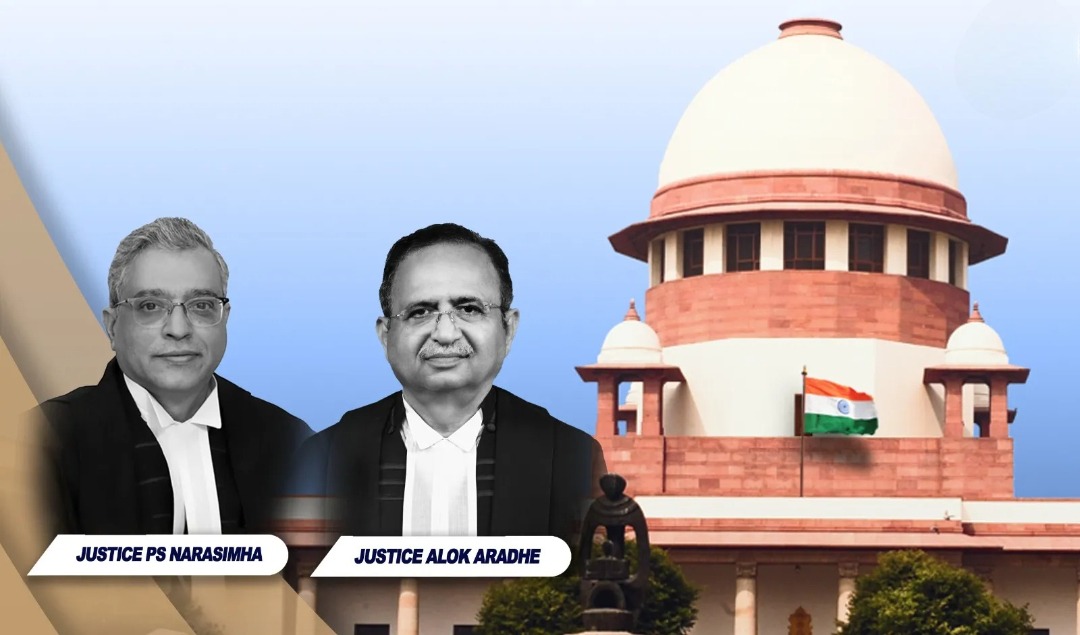
A Bench of Justice Pamidighantam Sri Narasimha and Justice Alok Aradhe carefully examined the matter. The Court clearly stated that disability pension is not charity or a favor from the government. It is a legal right earned by Armed Forces personnel because of the sacrifices they make during service.
The Court explained that once a person is found eligible for disability pension, the benefit must be given from the date it became due. It cannot be reduced or limited simply because the claim was filed later.
The judges also described pension as a “deferred portion of compensation.” This means it is part of the payment that a soldier earns while serving the country. It is not a gift. It is something they rightfully deserve.
Connection with Property Rights
The Court also referred to Article 300A of the Indian Constitution. Article 300A protects the right to property. The judges said that pension falls under this protection because it is a valuable financial right.
By linking pension to property rights, the Court strengthened the position of ex-servicemen. It made it clear that such benefits cannot be taken away or reduced without proper legal grounds.
This approach shows how the judiciary is giving importance to social security and financial dignity, especially at a time when discussions about welfare benefits and financial stability are widely taking place across the country.
Supreme Court Disability Pension Arrears: Background of the 2014 Judgment
The matter has its roots in a 2014 case titled Union of India vs Ram Avtar. In that case, the Supreme Court extended the benefit of “broad banding” of disability pension even to those who retired with service-related disabilities but were not formally invalidated from service.
Broad banding means increasing the percentage of disability for pension calculation, depending on the severity of the disability. This ensures that those who suffer greater disabilities receive higher pension benefits.
After that 2014 judgment, many ex-servicemen became eligible for higher pensions. However, the issue remained about how far back the arrears should be paid. That question has now been clearly answered by the Supreme Court.
Relief to Thousands of Families
This judgment will directly impact thousands of former soldiers and their families. Many veterans have faced financial difficulties due to delays or partial payments of disability pension. For some families, this pension is the main source of income.
With rising living costs, medical expenses, and inflation, full arrears can make a big difference. Several ex-servicemen groups have welcomed the decision and described it as a long-awaited step toward justice.
In recent years, issues related to military pensions have often been in the news, especially with debates around schemes like One Rank One Pension (OROP). This latest ruling once again highlights the importance of fair treatment for those who serve in the Armed Forces.
Supreme Court Disability Pension Arrears: Government’s Argument Rejected
The Centre had argued that allowing unlimited arrears could create a financial burden. It said that legal claims should follow time limits set by law. However, the Court rejected this view.
The judges pointed out that disability pension is a continuing right. If someone was eligible from a certain date, then the payment should start from that date. The delay in filing a case cannot erase the original right.

This clarification is important because it prevents technical reasons from reducing genuine benefits.
Wider Meaning of the Judgment
This ruling is not just about money. It sends a strong message that the nation values the service and sacrifice of its soldiers. By stating that disability pension is a right and not charity, the Court has given moral strength to veterans.
It also reflects a broader trend where courts are focusing on social justice and human dignity. Across India, there are ongoing discussions about strengthening welfare systems, improving support for retired government employees, and ensuring transparency in benefit schemes.
The Supreme Court’s decision fits into this larger picture of ensuring fairness and accountability.
Supreme Court Disability Pension Arrears: Why This Decision Matters Now
India is currently witnessing discussions about defence reforms, modernization of the Armed Forces, and welfare measures for soldiers. At such a time, this ruling adds importance to the idea that financial security for veterans must not be compromised.
As the country continues to honor its Armed Forces through various public programs and awareness campaigns, this judgment reinforces that recognition must also be reflected in practical benefits.
For many families, the payment of full arrears may help clear debts, manage medical treatments, or support children’s education. It is a reminder that policies and court decisions have real-life effects on people’s lives.
The Supreme Court’s stand on Supreme Court Disability Pension Arrears ensures that those who defended the nation receive what is rightfully theirs, without unfair limits or restrictions.