




Uddanam Paathara Tradition Fades: Ancient Grain Storage Ritual Struggles to Survive

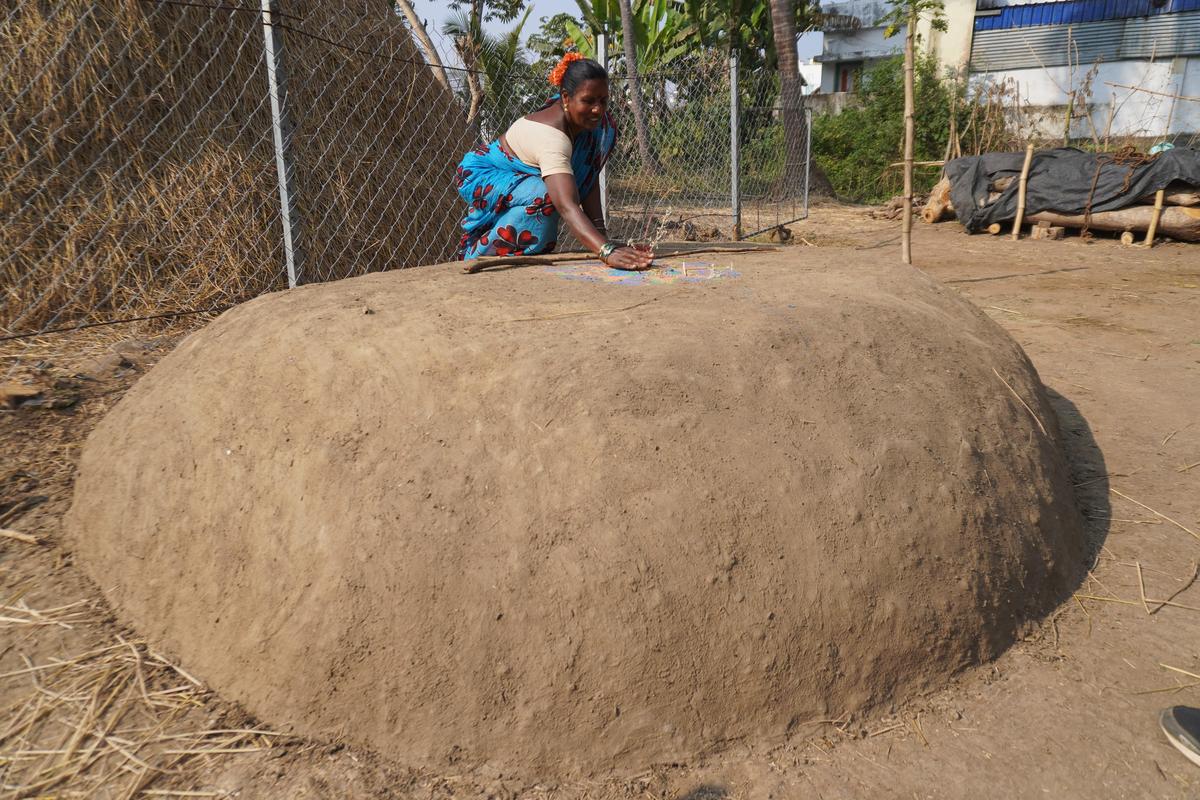
On a fog-laden morning ahead of Sankranti, 52-year-old farmer Marla Dillemma steps out of her modest home in Jalantara Saasanam village in Srikakulam district and begins preparing for a ritual that once defined agrarian life in the region. As the Uddanam Paathara Tradition Fades, she gathers clay, wildflowers, and freshly harvested paddy to consecrate her Paathara a traditional underground grain storage pit that has served farming families along the Mahendratanaya River for generations.
A Ritual Rooted in Land and Faith
The construction and consecration of a Paathara is not done casually. It is tied to specific days in the agricultural calendar, often around harvest festivals such as Sankranti. The farmer cleans the pit, lines it with straw, coats it with clay, and finally seals it with cow dung once the paddy is stored inside. Prayers are offered to seek protection from pests, moisture, and misfortune.

For families in Uddanam, this ritual was once as important as sowing or harvesting. The act symbolised gratitude to the earth and faith in nature’s cycle. Older villagers recall how children would watch their parents and grandparents perform every step, slowly learning the method themselves.
Today, that scene has become rare.
What Is Paathara or Khoni?
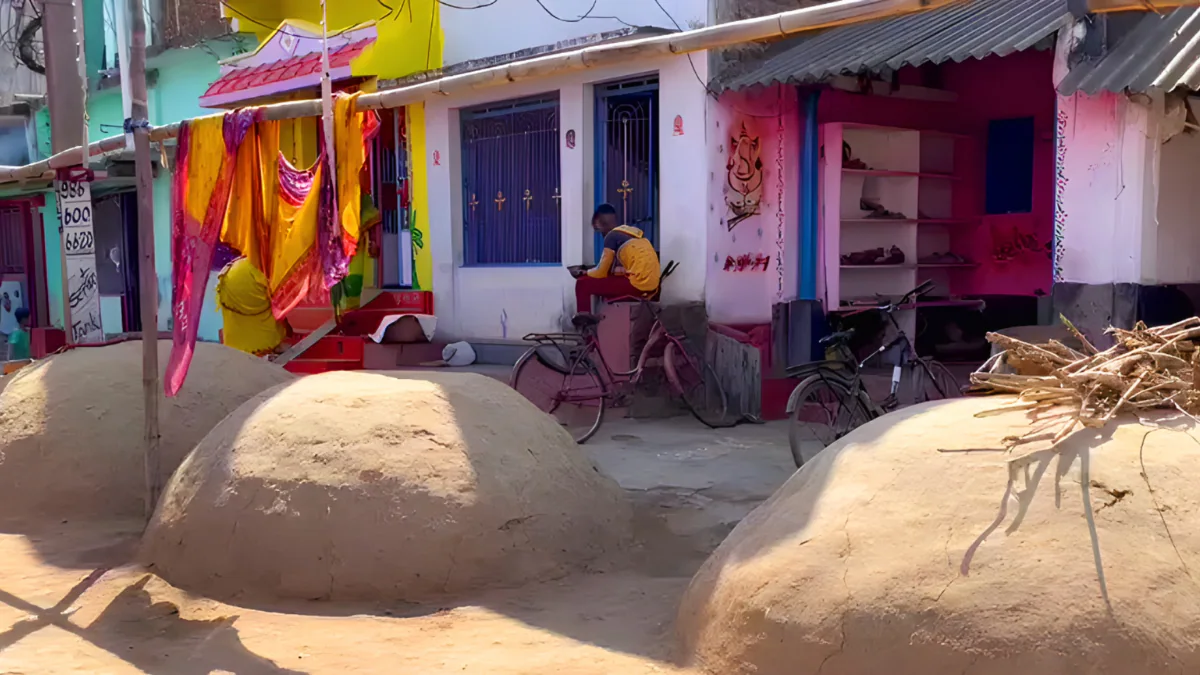
Locally called Paathara in Telugu and Khoni in Odia, the structure is a rectangular pit dug into the ground, usually in front of a thatched house. It is carefully lined with straw and clay, creating a natural insulation layer. After filling it with paddy, the top is sealed tightly to prevent air, moisture, or rodents from entering.
The paddy stored inside is meant only for household consumption. It is not sold in markets and not used as seed for the next crop. Families traditionally stored enough grain to last until the next monsoon season.
In earlier times, every paddy-growing household had at least one Paathara. In larger joint families, multiple pits were common. The size of the Paathara often reflected the family’s landholding and number of members.
A Taste That Modern Storage Cannot Match
Many farmers believe that rice stored in a Paathara develops a unique flavour over time. The grains may show slight discolouration, but this is considered a sign of maturity rather than spoilage. When cooked, such rice is said to be more aromatic and satisfying.
“There is a softness and taste that you don’t get from rice kept in sacks or godowns,” says an elderly farmer from the village. For him, Paathara rice is closely tied to memories of childhood meals and family gatherings.
The stored paddy also holds cultural value. Rice taken from the Paathara is often used for rituals, including Talambraalu, a wedding ceremony where grains are showered over the bride and groom as a blessing for prosperity and harmony.
A Practice Shrinking with Changing Lifestyles
Jalantara Saasanam has around 200 households. This year, only two Paatharas were built. Twenty years ago, nearly every home had one.
The reasons are many. Cement roads have replaced mud paths. Thatched houses have given way to concrete structures. Living spaces are smaller, leaving no room for digging pits inside the house compound. Some families who still wish to maintain the practice now dig Paatharas near cattle sheds or in relatives’ yards.
Another major factor is the decline in paddy cultivation. Limited irrigation means that most farmers now grow paddy only during the Kharif season. With reduced production, families feel less need for long-term household storage.
Modern storage options such as plastic drums, metal bins, and government procurement systems have also changed habits. While these methods are convenient, they lack the cultural meaning attached to Paathara.
Knowledge at Risk of Disappearing
Building a Paathara requires skill. The clay must be of the right type. The straw lining must be arranged carefully. The sealing process must be perfect to ensure airtight conditions.
Earlier, elderly men and women were experts in these techniques. They passed on the knowledge through observation and practice. Today, many of these elders have passed away, and few young people have learned the craft.
“Youngsters are not interested,” says a village elder. “They think this is old-fashioned. But once this generation is gone, who will remember how to do it?”
Surviving in Pockets Across Uddanam
The tradition still survives in a handful of villages in Kanchili, Sompeta, and Itchapuram mandals. These areas lie close to the Andhra Pradesh–Odisha border, where cultural practices from both regions blend.
Even here, Paathara is no longer common. Farmers who continue the practice often do so out of deep attachment rather than practical necessity. For them, it is a way of staying connected to their ancestors.
Efforts to improve irrigation through funding support from agencies like NABARD have brought some hope. Better water supply could encourage more farmers to grow paddy and possibly revive interest in traditional storage. However, infrastructure alone may not be enough to bring back a fading cultural habit.
Between Convenience and Heritage
For families like Ms. Dillemma’s, maintaining a Paathara is not easy. It requires extra effort, time, and space. Yet she believes it is worth it.
“This is how our elders lived. This is how they respected food,” she says.
Her children, however, are unsure if they will continue the practice once they start their own households. They appreciate the tradition but are also drawn to the convenience of modern storage methods.
This quiet tension reflects a larger reality across rural India, where many age-old practices are slowly disappearing. The story of Paathara is not just about a storage pit. It is about changing relationships with land, food, and tradition.
As concrete replaces clay and plastic replaces straw, the Uddanam Paathara Tradition Fades, leaving behind memories of a time when food security was built underground, sealed with faith, and shared within families who trusted both the earth and each other.