IBC Amendment Bill Budget Session: Government Set to Strengthen India’s Insolvency Framework

The IBC Amendment Bill Budget Session is expected to be a key moment for India’s economic reform agenda, as the Union government prepares to introduce the Insolvency and Bankruptcy Code (Amendment) Bill, 2025 in Parliament. The Bill is likely to be tabled in the second half of the Budget session beginning March 9. The proposed law aims to make India’s insolvency system faster, more efficient, and more in line with global best practices.
Thank you for reading this post, don't forget to subscribe!The Insolvency and Bankruptcy Code (IBC), enacted in 2016, transformed the way stressed companies are handled in India. It introduced time-bound processes and shifted control from defaulting promoters to creditors. Over the years, the law has helped resolve thousands of cases, but challenges such as delays and litigation remain. The upcoming amendment seeks to address these issues.
Government Ready to Introduce the Bill
Union Finance Minister Nirmala Sitharaman has confirmed that the government is ready to table the amendment Bill, as the parliamentary committee examining it has already submitted its report. She made this statement during a media interaction in New Delhi, a day after presenting the Union Budget 2026–27 in the Lok Sabha. The Finance Minister also holds charge of the Corporate Affairs Ministry.
The submission of the committee’s report clears the way for the government to move forward with the legislation. Officials believe the revised Bill reflects practical experience gained from nearly a decade of implementing the IBC.
Key Objectives of the Proposed Amendments
The main goal of the proposed changes is to improve timelines and effectiveness of insolvency proceedings. Faster admission of cases is one of the major focus areas. Delays at the admission stage often slow down the entire resolution process and reduce the value of distressed assets.
The amendments are also expected to strengthen the role of resolution professionals, improve transparency, and reduce unnecessary litigation. By streamlining procedures, the government hopes to ensure quicker and more predictable outcomes for all stakeholders.
Improving Resolution Outcomes
Another important objective is to increase the success rate of resolution plans. In many cases, insolvency proceedings end in liquidation instead of revival, which leads to job losses and destruction of business value.
The government aims to encourage resolutions that keep businesses operational wherever possible. Clearer guidelines for evaluating resolution plans and better monitoring of the process are expected to support this goal. This approach can help preserve productive assets and protect employment.
Strengthening Investor and Creditor Confidence
A strong insolvency framework is essential for a healthy financial system. Banks and lenders are more willing to extend credit when they are confident that bad loans can be resolved in a reasonable time.
The proposed amendments under the IBC Amendment Bill Budget Session are expected to increase certainty and reduce risks for creditors. Greater clarity in the law can also improve investor confidence, including among foreign investors, who closely track how countries handle business failures.
Legislative Background of the IBC
The Insolvency and Bankruptcy Code was enacted in 2016 and has been amended six times so far. The last amendment was made in 2021. Each round of changes has sought to fine-tune the law based on emerging challenges and court rulings.
A Bill to amend the IBC was earlier introduced in the Lok Sabha on August 12, 2025. It proposed several changes, including reducing the time taken to admit insolvency applications. The Bill was referred to a select committee, which submitted its report in December 2025. The government has now incorporated the committee’s suggestions into the revised Bill.
Alignment with Global Standards
The government has stated that one of its aims is to bring India’s insolvency regime closer to international best practices. Many developed economies focus on quick resolution, business continuity, and fair treatment of stakeholders.
By adopting similar principles, India hopes to strengthen its position as an attractive destination for investment and improve its ease of doing business rankings.
What to Expect Next
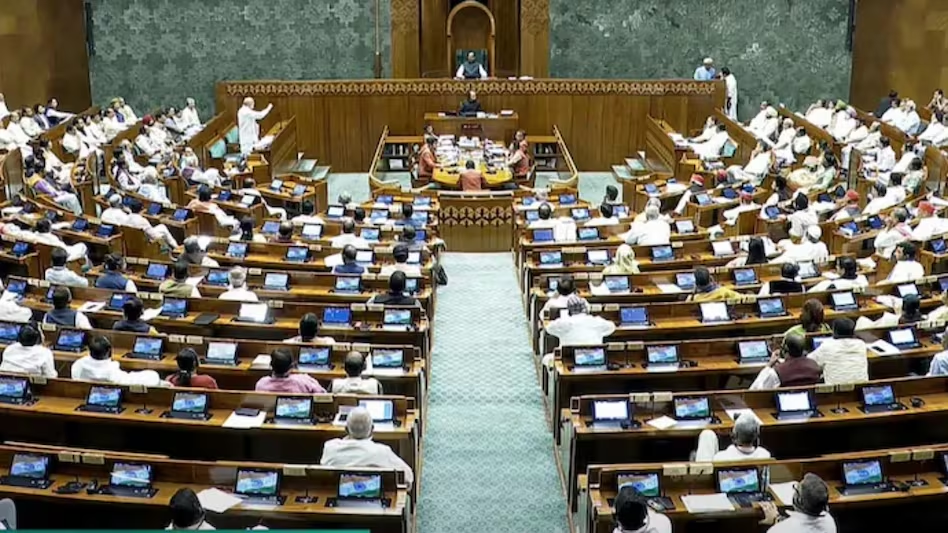
With the government ready to introduce the Bill, Parliament is expected to take up detailed discussions during the Budget session. If passed, the amendments will mark another important step in strengthening India’s insolvency framework.
The IBC Amendment Bill Budget Session reflects the government’s continued effort to build a more robust, transparent, and efficient system for resolving corporate distress, supporting long-term economic growth.