Varanasi 2.5 Lakh Sapling Record: City Enters Guinness World Records

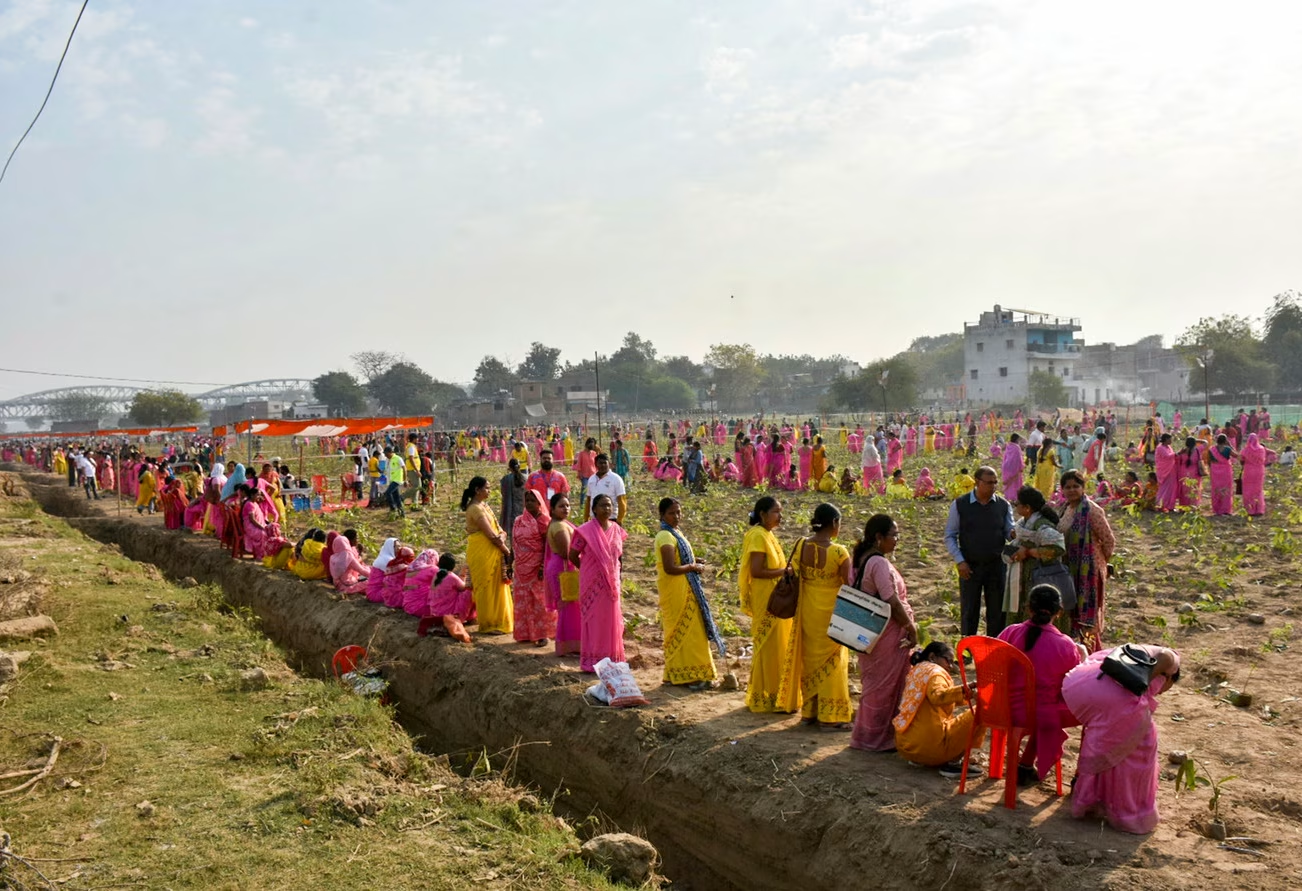
The historic city of Varanasi has achieved a remarkable environmental milestone with the Varanasi 2.5 Lakh Sapling Record. More than 2.5 lakh saplings were planted within a single hour, earning the city a place in the prestigious Guinness World Records. The massive plantation drive was organised by the Varanasi Municipal Corporation on March 1 and saw participation from over 20,000 local residents.
Thank you for reading this post, don't forget to subscribe!This large-scale effort highlights a growing focus on urban greenery and sustainable development in one of India’s most culturally important cities.
Record-Breaking Plantation Drive
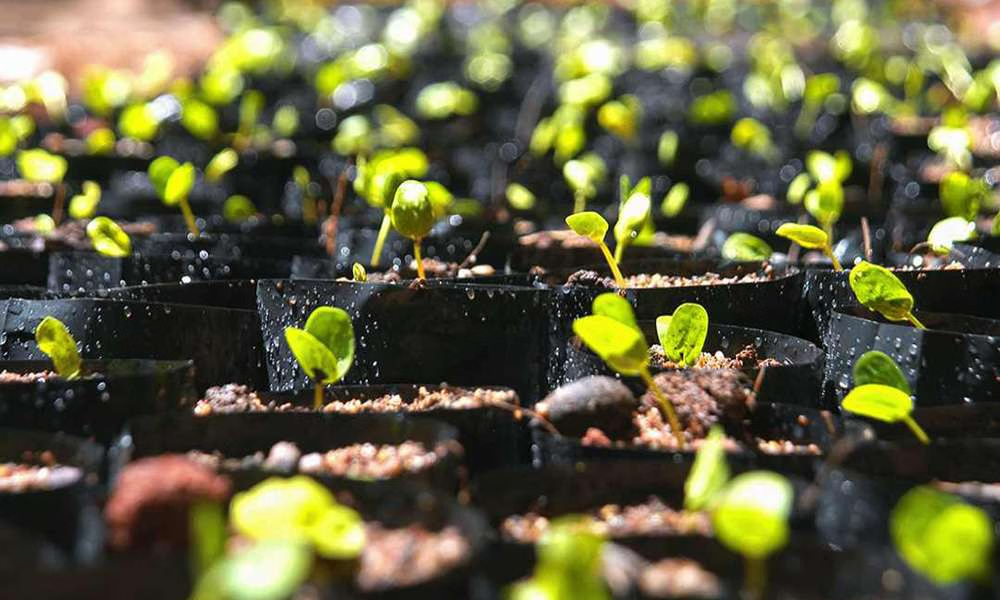
The plantation campaign was carried out in the Domari area along the banks of the Ganga River, where a major urban forest project named Namo Van is being developed. During the one-hour campaign, around 2.51 lakh saplings were planted using the Miyawaki plantation technique.
This achievement surpassed the earlier record held by China, where around 1.53 lakh saplings had been planted within an hour. Officials from Guinness World Records confirmed the new record after verifying the large-scale effort.
The plantation area spreads across nearly 350 bighas of land, making it one of the largest coordinated urban plantation drives in recent years.
Miyawaki Method Boosts Urban Greenery
The plantation under the Namo Van project mainly uses the Miyawaki Method, a technique that promotes dense planting of native species. This method helps forests grow much faster than traditional plantations and supports stronger biodiversity.
Authorities plan to plant nearly three lakh trees in total under the project. These include:
- Around 2.5 lakh saplings planted using the Miyawaki method
- About 10,000 timber trees
- Nearly 40,000 fruit-bearing trees
Experts believe such dense urban forests can improve air quality, increase biodiversity, and help strengthen the riverbank ecosystem along the Ganga.
Namo Van to Include Public Spaces
Beyond environmental benefits, the Namo Van project is also designed as a public recreation space. The development plan includes several facilities aimed at encouraging community engagement with nature.
Planned features include:
- A 4-kilometre walking track
- Dedicated yoga and meditation zones
- A four-hectare flower park
- A two-hectare herbal garden
- A children’s play area
- An open-air gym
Authorities expect the project to attract visitors and generate tourism-based revenue. Estimates suggest the site could start earning around ₹2 crore annually from the third year, with the potential to rise to nearly ₹7 crore by the seventh year.
Growing Focus on Urban Environmental Projects
The Varanasi 2.5 Lakh Sapling Record highlights the increasing importance of urban forests in modern city planning. By combining ecological restoration with public spaces, the project aims to improve environmental sustainability while offering recreational opportunities for residents.
Such initiatives are becoming crucial for improving air quality, supporting biodiversity, and building climate resilience in rapidly growing cities.