



Space Weapons: US Confirms Orbital Deployment

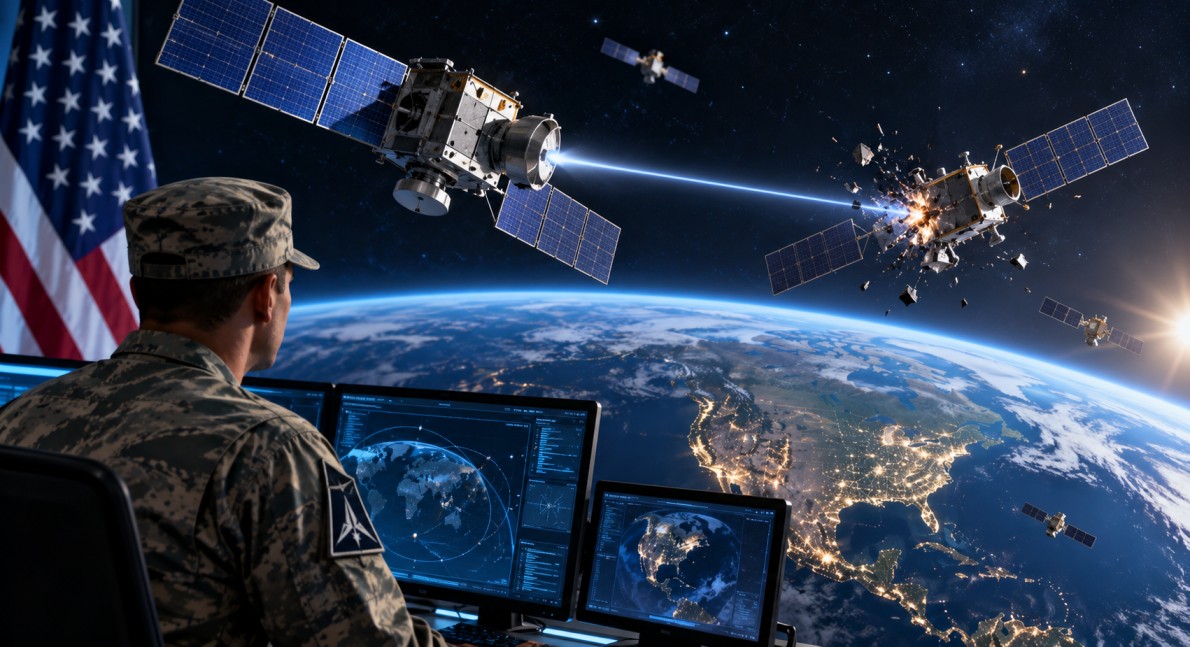
Space Weapons have entered a new phase in US military policy after Air Force Secretary Troy Meink publicly confirmed on 14 September 2026 that the United States has “on-orbit space control weapons” deployed in space. Meink made the announcement during the Air & Space Forces Association’s 2026 Air, Space & Cyber Conference in National Harbor, Maryland. The statement was the clearest public confirmation so far from a US official that American weapon systems are operating in orbit.
Thank you for reading this post, don't forget to subscribe!US Confirms Weapons in Orbit
Meink said the systems are intended to defend US and allied forces against hostile actions in space. However, he did not reveal the number, type or exact capabilities of the weapons.
The US official also did not say whether the systems use kinetic methods, such as physically damaging another space object, or non-kinetic methods such as electronic or cyber effects. He said that providing specific information about the systems would not support the intended deterrent effect.
The limited disclosure means that important technical details about the Space Weapons remain classified or undisclosed.
What Is Space Control?
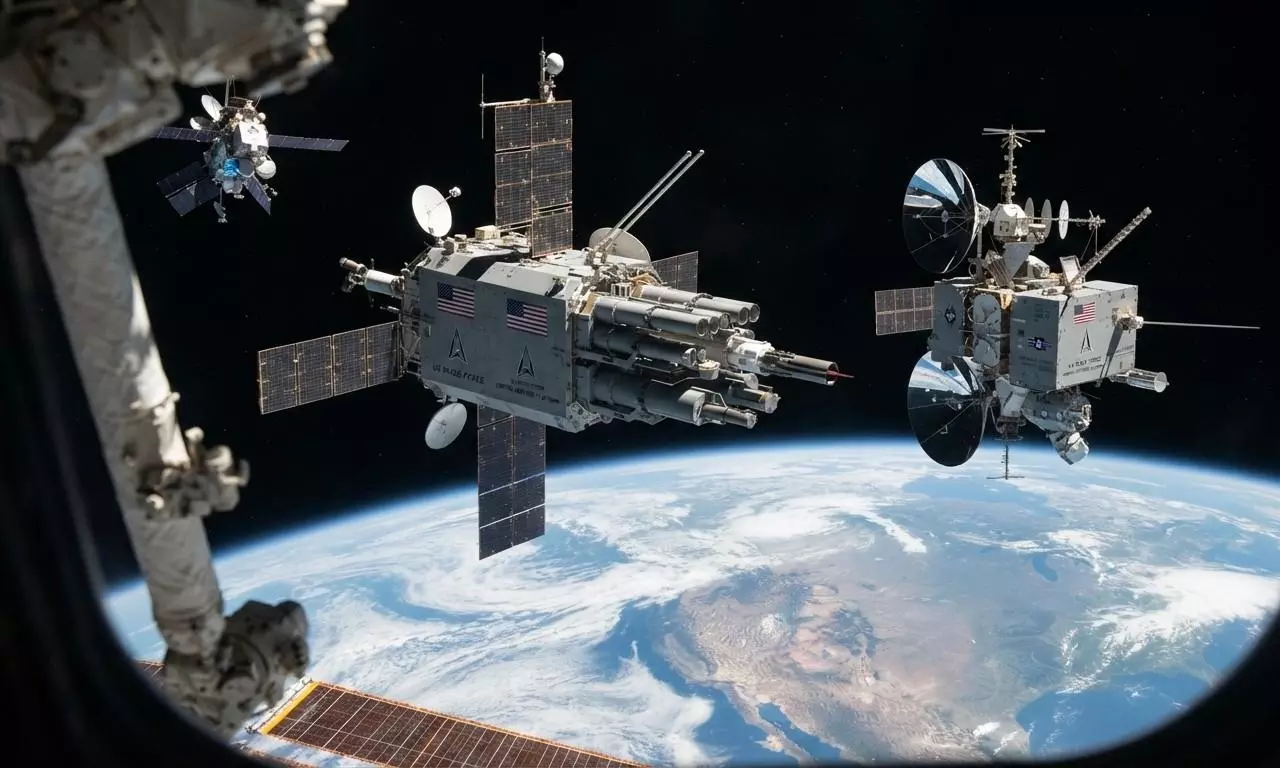
Space control refers to military activities designed to protect friendly space systems and limit an adversary’s ability to use space-based assets.
Modern militaries depend heavily on satellites for communications, navigation, intelligence, missile warning and other operations. Protecting these systems has therefore become an important part of national security planning.
US Space Force planning has increasingly discussed space as a military operating environment. Its concepts include defensive activities to protect satellites as well as capabilities intended to disrupt or degrade hostile space systems.
Russia and China Drive US Concerns
The US has repeatedly identified China and Russia as major competitors in space security. American officials have raised concerns about their development and demonstration of counter-space capabilities.
Counter-space systems can be designed to interfere with, disrupt, disable or destroy satellites. They can include a range of technologies, from electronic warfare and cyber tools to systems capable of physically attacking spacecraft.
Meink said the US needs to ensure that its forces can continue operating in space if they face hostile action. The latest disclosure therefore comes as Washington becomes more open about its military space capabilities.
Space Weapons and the Golden Dome Programme
The announcement is also connected to the wider expansion of US space-based defence programmes.
Meink highlighted the Space-Based Interceptor (SBI) programme, which is being developed as part of the broader Golden Dome missile-defence effort. He said the programme had moved from an initial contract to flight-ready hardware in less than a year. The US is evaluating different designs as it considers how such interceptors could be deployed in the future.
Space-based interceptors are intended to provide another layer of missile defence by using systems positioned in orbit to detect and potentially intercept threats.
New Satellite Surveillance System
Another major programme discussed by Meink is the Space-Based Air-Moving Target Indication (AMTI) system.
The programme aims to use satellites to detect and track airborne objects from space. Such a system could provide another source of information for monitoring aircraft and other airborne threats.
The US Space Force has awarded SpaceX a $4.2 billion contract to begin developing the AMTI constellation. Meink said the first satellites are expected to launch in September 2026.
The programme reflects the growing role of satellites in military surveillance and early-warning systems.
Outer Space Treaty and Military Activity
The growing discussion around Space Weapons has also renewed attention on international rules governing outer space.
The 1967 Outer Space Treaty prohibits countries from placing nuclear weapons or other weapons of mass destruction in orbit. It does not impose a general ban on all conventional military activities or conventional weapons in space.
As countries develop more advanced counter-space technologies, questions about responsible behaviour, space security and preventing dangerous debris are becoming increasingly important.
The use of kinetic anti-satellite weapons can create large amounts of orbital debris, which can threaten other spacecraft operating in the same environment.
A More Open US Space Policy
The latest announcement represents a change in how openly US officials discuss military capabilities in orbit. While Washington has long developed space-based military systems, officials have historically been cautious about publicly confirming offensive capabilities.
The US Space Force began speaking more openly about space warfare and space-control concepts in recent years. Meink’s statement now provides a direct acknowledgement that some Space Weapons are already deployed in orbit.
At the same time, the US government has not disclosed the specific systems involved, their locations, their numbers or their operational capabilities.
Growing Military Role of Space
Satellites have become essential to modern military operations and civilian economies. Communications networks, navigation services, weather monitoring, financial systems and internet infrastructure all depend heavily on space-based technology.
As reliance on satellites increases, countries are investing in ways to protect their own systems and respond to threats against them.
The US disclosure comes alongside wider investments in space-based surveillance, missile defence and counter-space capabilities. China and Russia are also developing military space technologies, making the security of Earth’s orbital environment an increasingly important part of international defence planning.