

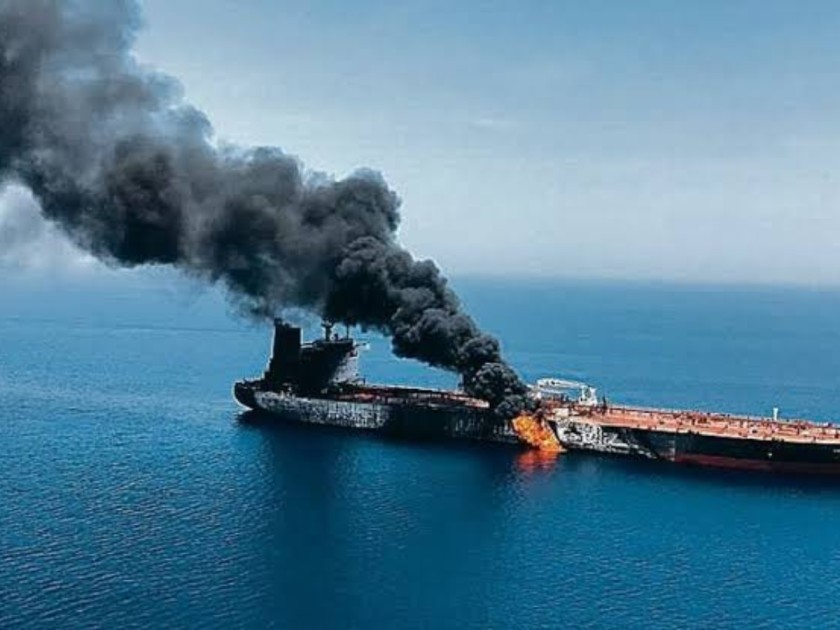
El Gaia Attack Sparks US-Iran Dispute

El Gaia Attack near the coast of Oman has led to conflicting claims from the United States and Iran, with both sides giving different explanations about what happened to the Panama-flagged oil tanker. The vessel was attacked in waters near the Strait of Hormuz, one of the world’s most important routes for international oil transportation.
The incident has increased attention on maritime security in the region, particularly because the Strait of Hormuz connects the Persian Gulf with the Gulf of Oman and is used by a large number of commercial ships and oil tankers. The United States and Iran have presented different versions of the events surrounding the tanker.

Iran’s Account of the Incident
Iran’s Islamic Revolutionary Guard Corps (IRGC) said the tanker struck a naval mine while attempting to travel through what it described as a restricted area south of the Strait of Hormuz.
According to the Iranian account, the vessel caught fire after hitting the mine and was engulfed in flames. Iranian authorities also said warnings had previously been issued about the risks of using what they called an “illegal passage.”
The Iranian version suggests that the incident was connected to the tanker’s movement through an area that Tehran considers restricted.
The statement was carried by Iranian media and presented the incident as an accident involving a naval mine rather than a direct missile or drone attack.
US Rejects Iran’s Claim
The United States Central Command (CENTCOM) has rejected Iran’s explanation of the El Gaia Attack.
According to CENTCOM, the tanker was initially hit by an Iranian missile during the previous month. The attack reportedly left the vessel unable to operate normally.
The US military further said that the tanker was attacked again by an Iranian drone during the weekend while it was sitting in waters off the coast of Oman.
This account is significantly different from the explanation provided by Iran. While Iran says the tanker struck a naval mine while moving through a restricted area, the United States says the vessel was deliberately targeted by Iranian weapons.
Different Accounts Create Uncertainty
The conflicting statements have made it difficult to establish a single publicly accepted explanation for the El Gaia Attack.
Iran’s account focuses on the location of the vessel and the alleged use of a restricted maritime route. The US account instead points to two separate attacks involving a missile and a drone.
The difference between the two versions is significant because determining whether a commercial tanker was damaged by a mine, missile or drone has major implications for maritime security and regional tensions.
Independent verification of the competing claims would be important for establishing exactly what happened to the vessel.
Strait of Hormuz Remains Sensitive
The incident occurred near the Strait of Hormuz, a strategically important waterway between Iran and Oman.
The Strait is a major route for global energy shipments. Large quantities of crude oil and petroleum products pass through the area every day, making maritime security around the waterway important for international energy markets.
Any attack or serious security incident involving an oil tanker in the region can therefore attract international attention.
The El Gaia Attack comes amid continuing tensions involving the United States and Iran. The presence of military forces, commercial vessels and energy shipments in the same region makes incidents at sea particularly sensitive.
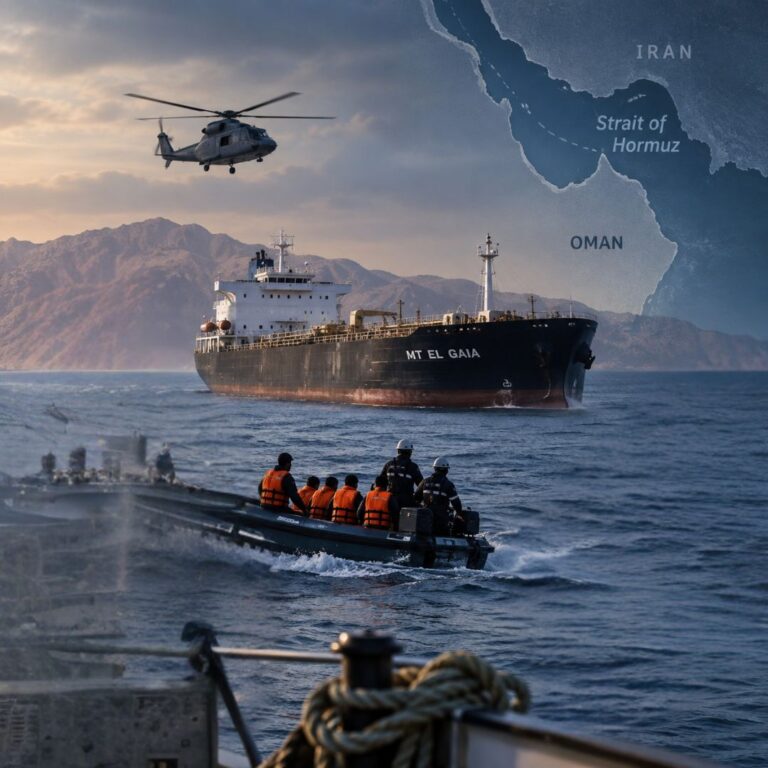
Indian Crew Members on the Tanker
India has also been closely following the situation because Indian nationals were among the crew of the vessel.
India’s Ministry of External Affairs (MEA) stated that the tanker was carrying 14 Indian nationals as part of its crew. One Indian seafarer was reported missing following the incident.
The presence of Indian crew members has added a humanitarian dimension to the incident. The safety of Indian seafarers working on international commercial vessels remains an important concern whenever ships operate in areas affected by conflict or maritime security threats.
Indian authorities are monitoring developments and the condition of the crew members involved.
Importance of Maritime Security
The El Gaia Attack highlights the risks faced by commercial shipping in strategically important waterways.
Oil tankers and other cargo vessels regularly operate through areas where regional military tensions can affect maritime traffic. Mines, missiles, drones and other threats can create serious risks for civilian crews and vessels.
Maritime security operations therefore involve monitoring shipping routes, identifying possible threats and protecting commercial vessels.
For shipping companies, incidents in sensitive waters can also lead to higher insurance costs, longer routes and additional security measures.
Risk to Global Oil Trade
The Strait of Hormuz is especially important because of its role in the global oil trade. Any prolonged disruption in the region could affect the movement of energy supplies between oil-producing countries and international markets.
Even individual attacks on commercial vessels can create uncertainty for shipping companies and energy traders. If vessels are considered at risk, operators may choose to change routes or increase security arrangements.
A serious escalation around the Strait could therefore have effects beyond the immediate region.
US-Iran Tensions Remain a Major Factor
The conflicting statements over the El Gaia Attack reflect the wider tensions between Washington and Tehran.
The United States has maintained a military presence in the region to protect its interests and monitor maritime security. Iran, meanwhile, has significant military capabilities around the Persian Gulf and Strait of Hormuz.
Both countries have previously accused each other of threatening commercial shipping and regional stability.
The latest dispute over the tanker adds another point of tension between the two sides and could lead to further diplomatic or military statements in the coming days.
Investigation and Crew Safety
The exact circumstances surrounding the El Gaia Attack remain a key issue. The competing accounts from Iran and the United States will need to be assessed against available evidence, including information from the vessel, crew, maritime authorities and other sources.
For India, the immediate concern remains the safety of its citizens aboard the tanker, particularly the Indian seafarer reported missing.
The incident also highlights the wider challenges faced by international shipping crews operating near areas of military tension. Ensuring safe passage for commercial vessels remains an important issue for countries dependent on international maritime trade.