Viksit Bharat Rozgar Act vs MGNREGA: What the New Law Means for Rural Women

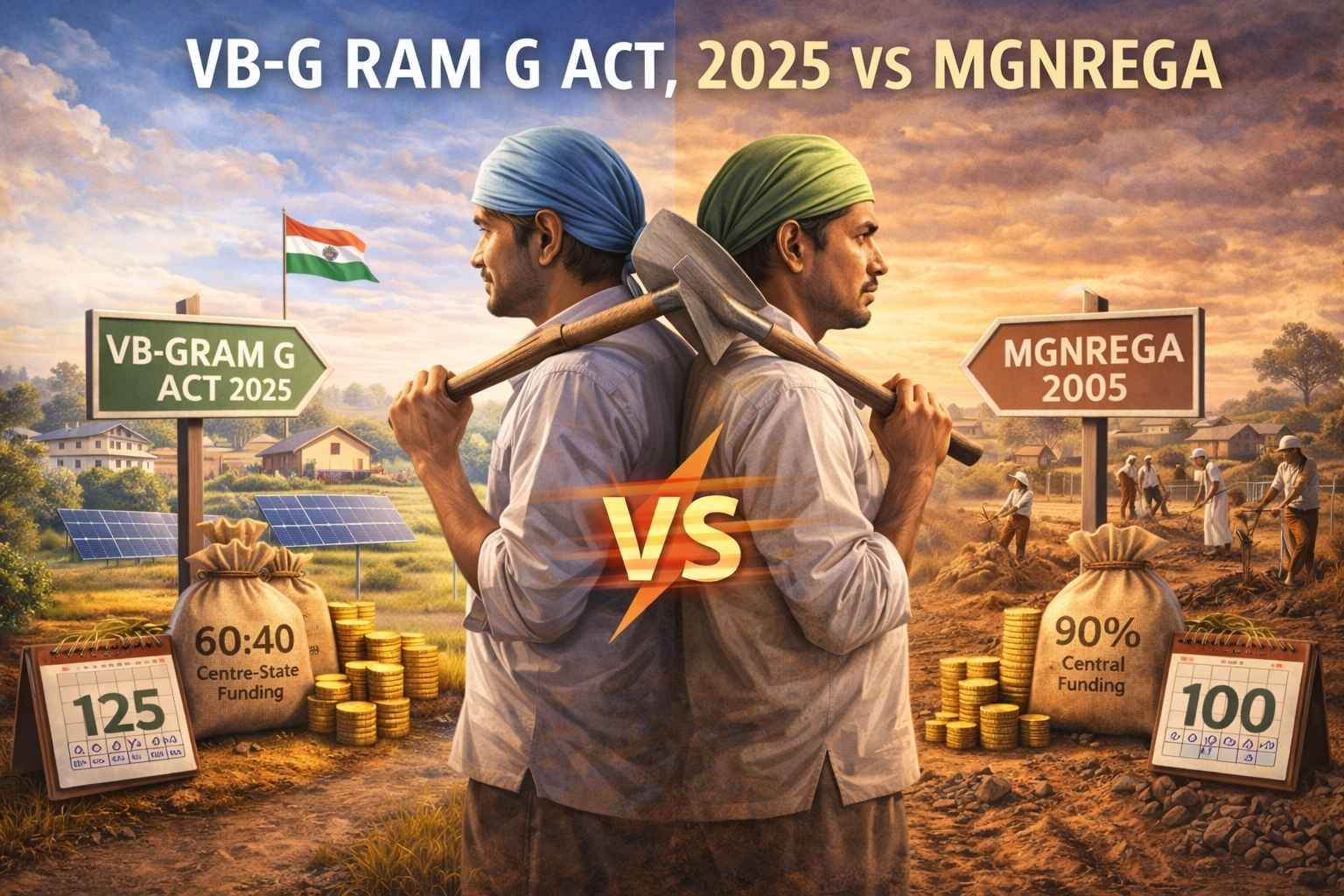
The debate around Viksit Bharat Rozgar Act vs MGNREGA has intensified as the government introduces the Viksit Bharat Guarantee for Rozgar and Ajeevika Mission (Gramin) Act (VB-G RAM G). The new Act promises to increase guaranteed workdays from 100 under MGNREGA to 125 days, presenting itself as a major upgrade in India’s rural employment framework. However, the redesign includes changes that could weaken the very concept of a “work guarantee,” particularly affecting rural women who have relied on MGNREGA for predictable and dignified employment.
Thank you for reading this post, don't forget to subscribe!The Importance of MGNREGA for Rural Women
For many rural women, access to predictable work is as important as the number of days offered. India’s female labour force participation rate remains low, with most women engaged in unpaid family work rather than independent paid employment.
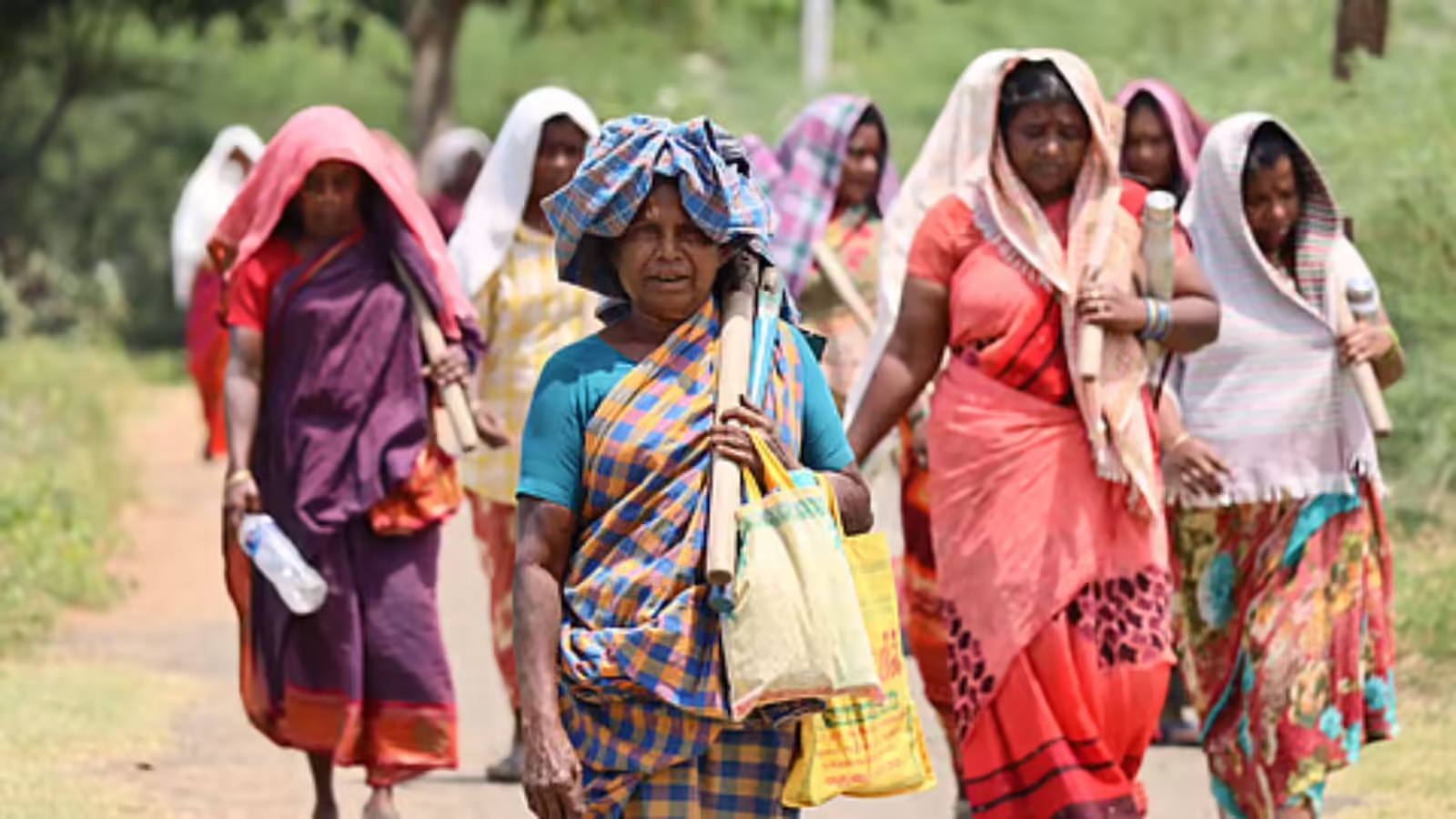
MGNREGA has been unique in this context. Women’s participation has steadily grown from 48% of total person-days in 2008–09 to nearly 58% in 2024–25. This steady involvement reflects MGNREGA’s role as a reliable source of dignified, paid work for rural women. Several key features contribute to this success:
- Social Legitimacy: Government-provided employment carries social acceptance, making it easier for women to join.
- Proximity of Work: Worksites are located close to homes, reducing travel time and costs.
- Childcare Support: Provision of crèches allows mothers with young children to participate.
- Equal Wages: Legally mandated equal wages, paid directly into bank accounts, reduce dependence on male family members.
These factors have not only provided income but also strengthened women’s bargaining power within households, offering a measure of economic independence.
Patriarchy and the Risk of Exclusion
Rural labour markets are still deeply patriarchal. Women are often seen as a secondary workforce, expected to work only when family income is insufficient. This perception makes them the first to be excluded when employment opportunities shrink.
Under VB-G RAM G, conditional job availability could reinforce this exclusion. In areas with high labour supply, women may be crowded out first, intensifying existing gender hierarchies instead of challenging them.
Impact of Reduced Guaranteed Work on Daily Life
Many rural women, particularly from marginalised communities, work as agricultural labourers. A reduction in reliable employment under VB-G RAM G could have serious consequences:
- Women may be forced into informal, irregular work with no guaranteed wages.
- Bargaining power for fair wages may weaken without an alternative employment option.
- Dependence on landowning caste–class groups may increase, limiting independence.
- Working conditions may worsen both economically and socially.
This shows that weakening the work guarantee does more than reduce income; it reshapes rural labour markets, often to the disadvantage of women.
Process and Policy Consultation
Large welfare policies need careful monitoring, evaluation, and consultation. MGNREGA, despite its challenges such as delayed payments or uneven work availability, remained a truly demand-driven programme that provided employment of last resort.
The passage of VB-G RAM G without proper consultation with workers, women’s groups, or state governments marks a significant departure from this approach. Instead of addressing implementation gaps, the new law may undermine the reliability that MGNREGA offered for decades.
Beyond Numbers: Predictable Work Matters Most
The debate around VB-G RAM G is not just about increasing workdays from 100 to 125. The real question is whether rural women will continue to have access to local, predictable, fairly paid work when local labour markets fail. If the guarantee weakens, the burden will fall disproportionately on women who had gained some economic autonomy through MGNREGA.
In the rush to rebrand rural employment under “Viksit Bharat”, there is a risk of dismantling one of India’s most quietly transformative labour interventions for rural women, without first addressing the real problems that needed reform. For these women, the promise of employment is not merely about income it is about security, dignity, and power within their communities and households.
What the Future Holds
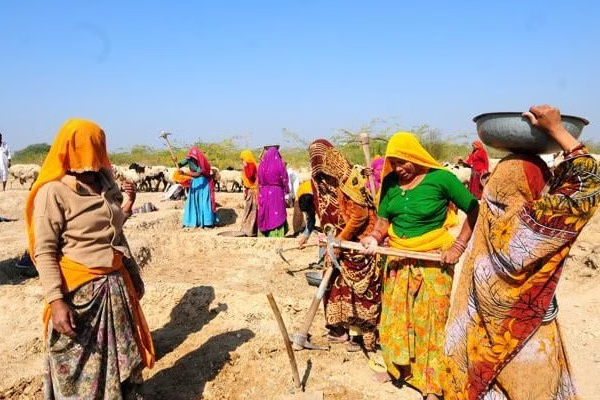
The Viksit Bharat Rozgar Act could be an opportunity to strengthen rural livelihoods if implemented with care and inclusivity. But unless the government ensures that women retain meaningful access to guaranteed work, the changes may inadvertently deepen existing inequalities. Rural employment programmes need to prioritize predictability, accessibility, and fairness not just numerical increases in workdays.
As the new law unfolds, close attention will be required to monitor its real-world impact on the people who depend on it most. For rural women, the stakes are high, and the difference between a guaranteed livelihood and a conditional one could determine their economic independence and social standing for years to come.