


Artificial Intelligence: Meaning, Types, Uses, Benefits and Challenges

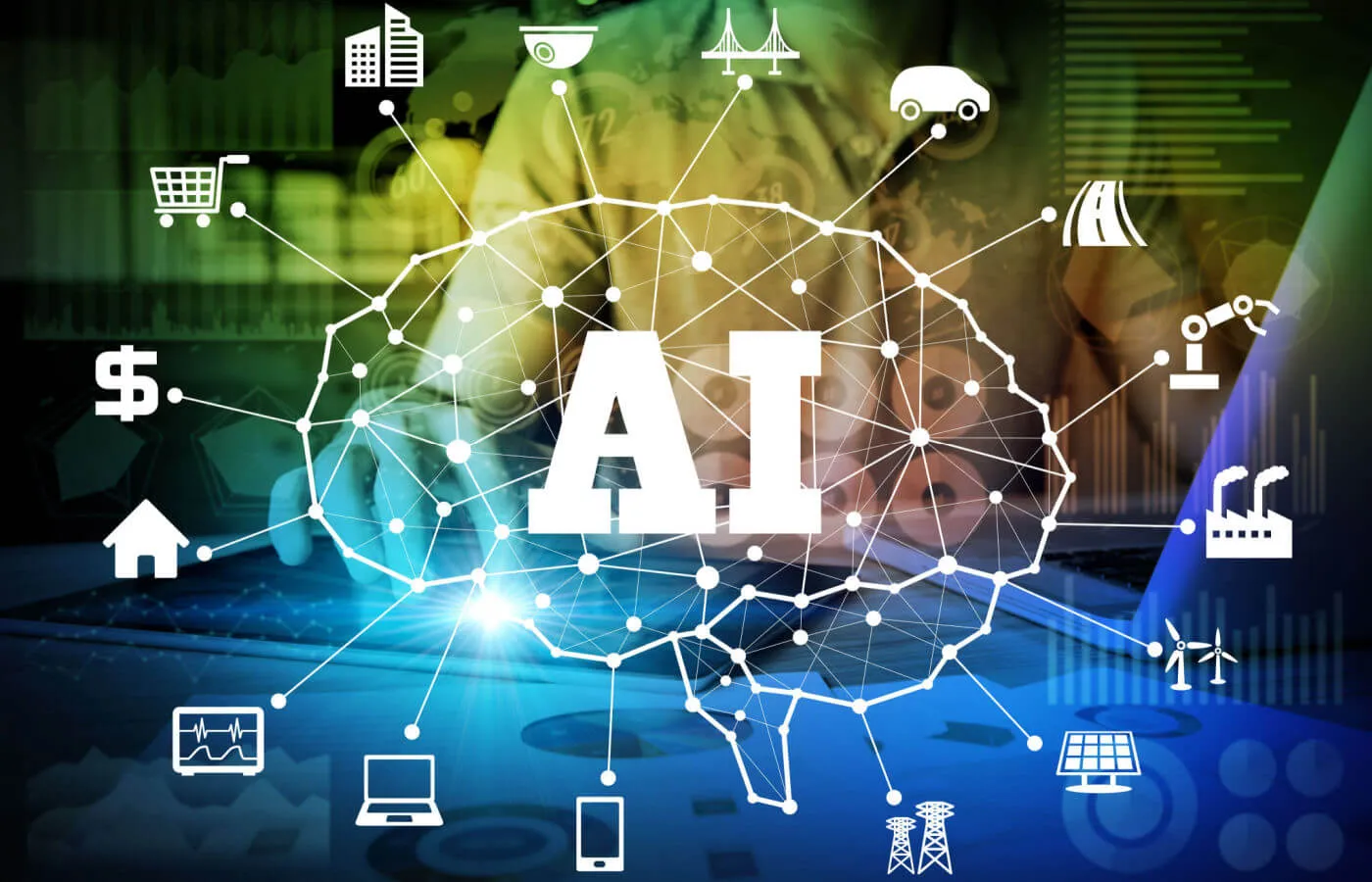
Artificial Intelligence (AI) is one of the fastest-growing technologies in the modern world. Today, AI is changing how people work, learn, communicate, and solve problems. From smartphones and voice assistants to self-driving cars and medical diagnosis, AI has become a major part of daily life.
Thank you for reading this post, don't forget to subscribe!In recent years, AI became more popular because of advanced tools like ChatGPT developed by OpenAI. These tools can answer questions, write content, and even help in coding or learning. However, ChatGPT is only one small example of what AI can do. Artificial Intelligence is much bigger and is being used in many sectors worldwide.
What is Artificial Intelligence?
Artificial Intelligence means the ability of a computer or machine to perform tasks that normally require human intelligence. These tasks include learning, problem-solving, decision-making, understanding language, and recognizing patterns.
In simple words, AI allows machines to “think” and “learn” in a smart way.
For example:
- Voice assistants like Siri and Alexa
- Face recognition in smartphones
- Recommendation systems on YouTube or Netflix
- Chatbots used in customer support
AI does not fully think like humans yet, but in specific tasks, it can work as efficiently as humans or sometimes even better.
Main Characteristics of AI
Artificial Intelligence has some important features:
1. Learning Ability
AI systems can learn from data and improve over time.
2. Problem Solving
AI can analyze problems and suggest solutions quickly.
3. Decision Making
AI can study patterns and make predictions based on available data.
4. Automation
AI helps machines perform repetitive tasks without human help.
These qualities make AI useful in many industries.
Machine Learning and Deep Learning
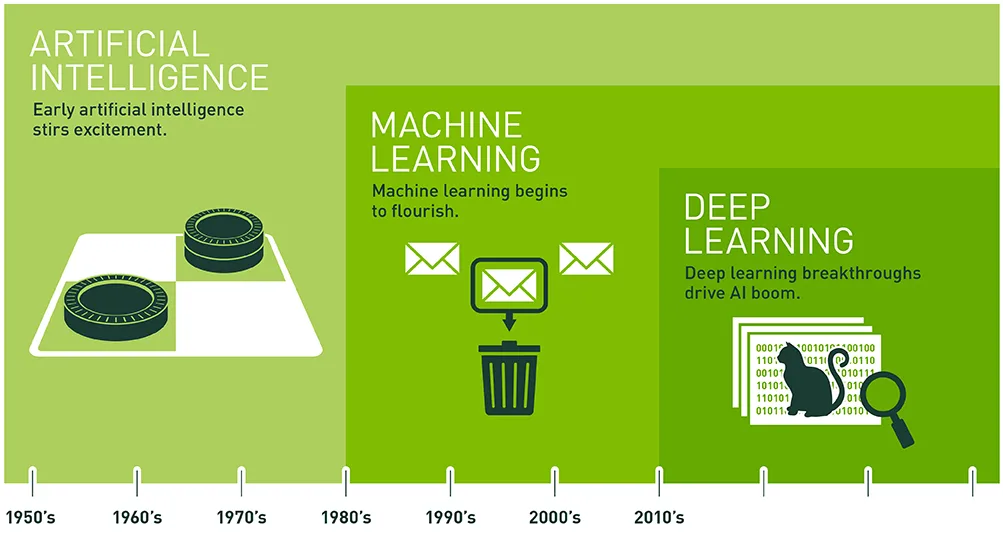
Many people confuse AI, Machine Learning, and Deep Learning. They are related but not the same.
| Technology | Meaning |
|---|---|
| Artificial Intelligence (AI) | Broad field of making machines intelligent |
| Machine Learning (ML) | Subset of AI where machines learn from data |
| Deep Learning (DL) | Subset of ML using neural networks like the human brain |
Machine Learning (ML)
Machine Learning helps computers learn from data without being directly programmed for every task.
Example:
An email system learns which emails are spam.
Deep Learning (DL)
Deep Learning uses advanced neural networks to process huge amounts of data such as:
- Text
- Images
- Videos
- Audio
Deep Learning powers advanced AI tools like image recognition and generative AI.
Global AI Governance
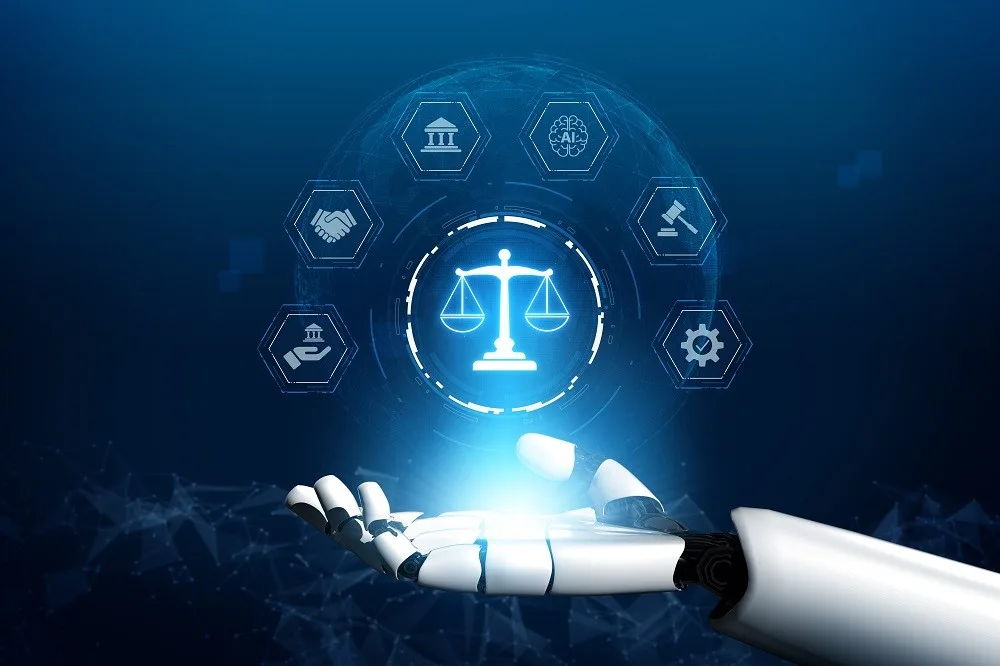
Because AI is becoming powerful, countries are making rules for safe AI usage.
India
NITI Aayog has released important AI-related documents like:
- National Strategy for AI
- Responsible AI for All
India focuses on:
- Social inclusion
- Economic growth
- Innovation
- Trustworthy AI
United Kingdom
United Kingdom supports a flexible AI regulation system.
Its AI principles include:
- Safety
- Transparency
- Fairness
- Accountability
United States
United States introduced the AI Bill of Rights to reduce AI-related harms in:
- Education
- Healthcare
- Employment
China
China has introduced strict AI regulations, especially for recommendation algorithms and information sharing.
Categories of Artificial Intelligence
AI is mainly divided into two categories.
1. Weak AI (Narrow AI)
Weak AI is designed for a specific task only.
Examples:
- Chess-playing AI
- Voice assistants
- Search engines
- Recommendation systems
This type of AI cannot perform outside its assigned task.
2. Strong AI
Strong AI refers to machines that can think and solve problems like humans.
Such AI could:
- Understand emotions
- Learn independently
- Solve complex problems
Currently, Strong AI is mostly theoretical and not fully developed.
Types of Artificial Intelligence
AI can also be classified into four types.
1. Reactive AI
This AI reacts only to current input.
It:
- Does not remember past experiences
- Cannot learn from previous data
Example:
Chess AI that calculates the best move.
2. Limited Memory AI
This AI can learn from past experiences for a short time.
Example:
Tesla Model S and other self-driving vehicles.
These systems:
- Observe surroundings
- Remember recent events
- Improve decisions
3. Theory of Mind AI
This is an advanced AI concept.
Such AI could understand:
- Human emotions
- Intentions
- Social behavior
It is still under development.
4. Self-Aware AI
This is the most advanced type.
Self-aware AI would:
- Be conscious
- Understand its own existence
- Think independently
Currently, this exists only in science fiction.
AI vs Augmented Intelligence
Many people think AI will replace humans completely. But another concept called Augmented Intelligence focuses on helping humans.
| AI | Augmented Intelligence |
| Replaces human tasks | Supports humans |
| Works independently | Works with humans |
| Goal is automation | Goal is enhancement |
Example:
An AI medical system helping doctors diagnose diseases faster is augmented intelligence.
Applications of Artificial Intelligence
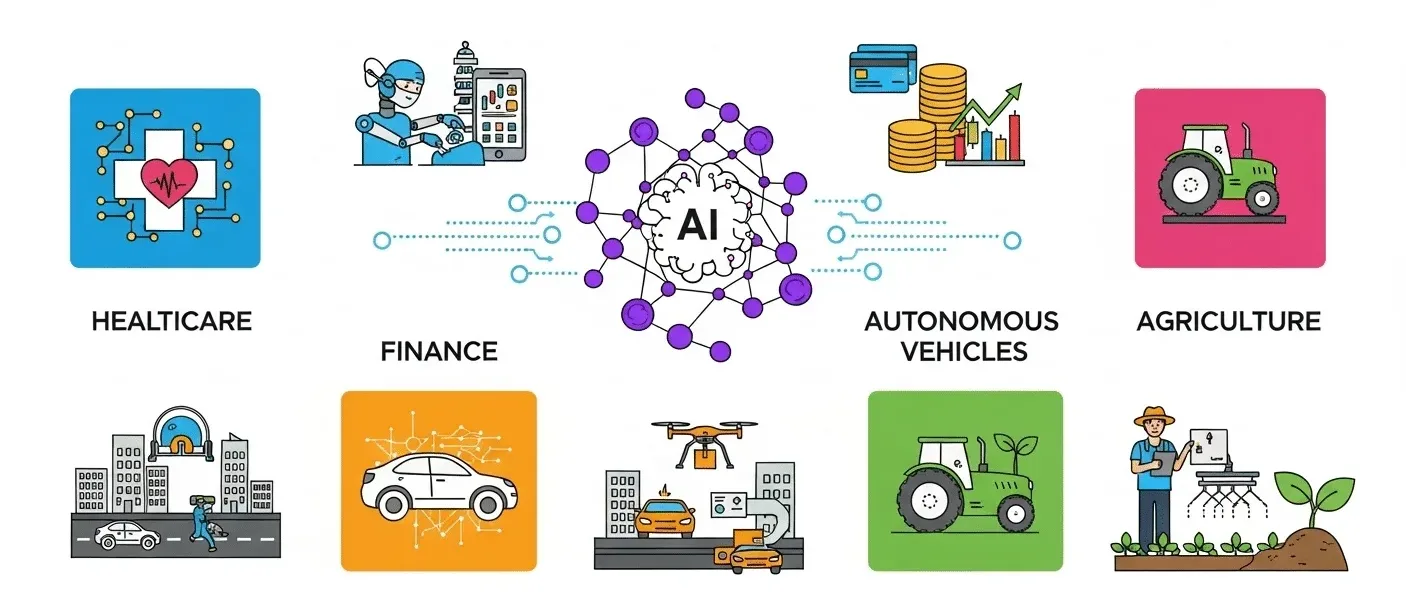
AI is used in many sectors.
1. Healthcare
AI improves:
- Disease diagnosis
- Treatment planning
- Patient monitoring
- Medical research
Doctors use AI to detect diseases like cancer earlier.
Indian Council of Medical Research has released ethical guidelines for AI in healthcare.
2. Business
Companies use AI to:
- Improve customer service
- Analyze market trends
- Detect fraud
- Automate repetitive work
AI chatbots are widely used in business support.
3. Education
AI makes learning smarter.
Benefits include:
- Personalized learning
- Faster doubt solving
- Better teaching tools
Indian Institute of Technology Kharagpur has worked on AI resource platforms for education.
Generative AI tools help students understand difficult topics more easily.
4. Judiciary
AI helps the legal system through:
- Faster document analysis
- Translation of judgments
- Case management
The Supreme Court of India uses:
- SUVAS
- SUPACE
These AI tools improve court efficiency.
5. Cybersecurity
AI helps in:
- Detecting cyber attacks
- Monitoring suspicious activities
- Improving digital security
It can identify threats faster than humans.
6. Transportation
AI powers:
- Self-driving vehicles
- Traffic management
- Route optimization
This improves road safety and saves time.
7. Space Research
AI is useful in space missions.
It helps with:
- Autonomous robots
- Satellite data analysis
- Space exploration
AI enables machines to work in dangerous environments where humans cannot easily survive.
Advantages of Artificial Intelligence
AI offers many benefits.
1. Better Accuracy
AI reduces human error in many tasks.
2. Faster Decision-Making
AI can analyze huge data within seconds.
3. Higher Productivity
Automation saves time and increases output.
4. Continuous Learning
AI improves by learning from new data.
5. Innovation
AI enables discoveries in science and technology.
6. 24/7 Availability
Unlike humans, AI systems can work all day without fatigue.
Disadvantages of Artificial Intelligence
Despite benefits, AI has several risks.
1. Job Loss
Automation may replace some jobs, especially repetitive work.
Examples:
- Data entry
- Customer support
- Manufacturing tasks
Workers may need new skills.
2. Ethical Concerns
AI raises issues such as:
- Bias
- Unfair decisions
- Privacy violations
Biased data can produce biased results.
3. Security Risks
Hackers can misuse AI for:
- Cybercrime
- Deepfakes
- Fraud
This creates serious risks.
4. Overdependence
Too much dependence on AI can weaken human skills.
People may stop thinking critically.
5. Lack of Transparency
Some AI models act like a “black box.”
This means people cannot easily understand how AI made a decision.
6. High Cost
Developing AI systems requires:
- Large infrastructure
- Skilled experts
- Huge datasets
This makes AI expensive.
Ethical Issues in Artificial Intelligence
Ethics is becoming very important in AI.
Important ethical concerns include:
- Should AI make life-changing decisions?
- Who is responsible if AI makes mistakes?
- How should personal data be protected?
Governments and companies must create clear rules.
AI should be:
- Fair
- Transparent
- Safe
- Accountable
Future of Artificial Intelligence
AI will continue growing rapidly.
In the future, AI may improve:
- Smart cities
- Robotics
- Healthcare
- Agriculture
- Banking
- Education
However, responsible development is necessary.
Important steps for the future:
- Improve AI education
- Build better regulations
- Increase human-AI collaboration
- Ensure safe data usage
- Promote international cooperation
AI should help humans, not harm them.
Artificial Intelligence has huge potential to transform the world. It can improve healthcare, education, business, security, and scientific research. AI makes work faster, more accurate, and more efficient.
At the same time, AI also brings challenges such as job loss, privacy risks, and ethical concerns. Because of this, humans must use AI wisely. The best future is one where humans and AI work together to build a safer and better world.
FAQs
Q1. What is Artificial Intelligence?
Artificial Intelligence is technology that allows machines to perform tasks requiring human intelligence.
Q2. What is the difference between AI and Machine Learning?
AI is the broad concept of machine intelligence, while Machine Learning is a part of AI that learns from data.
Q3. What are examples of AI?
Examples include ChatGPT, Siri, Alexa, self-driving cars, and recommendation systems.
Q4. What are the main advantages of AI?
AI improves accuracy, productivity, decision-making, and automation.
Q5. What are the disadvantages of AI?
Major disadvantages include job loss, ethical issues, privacy risks, and high costs.