


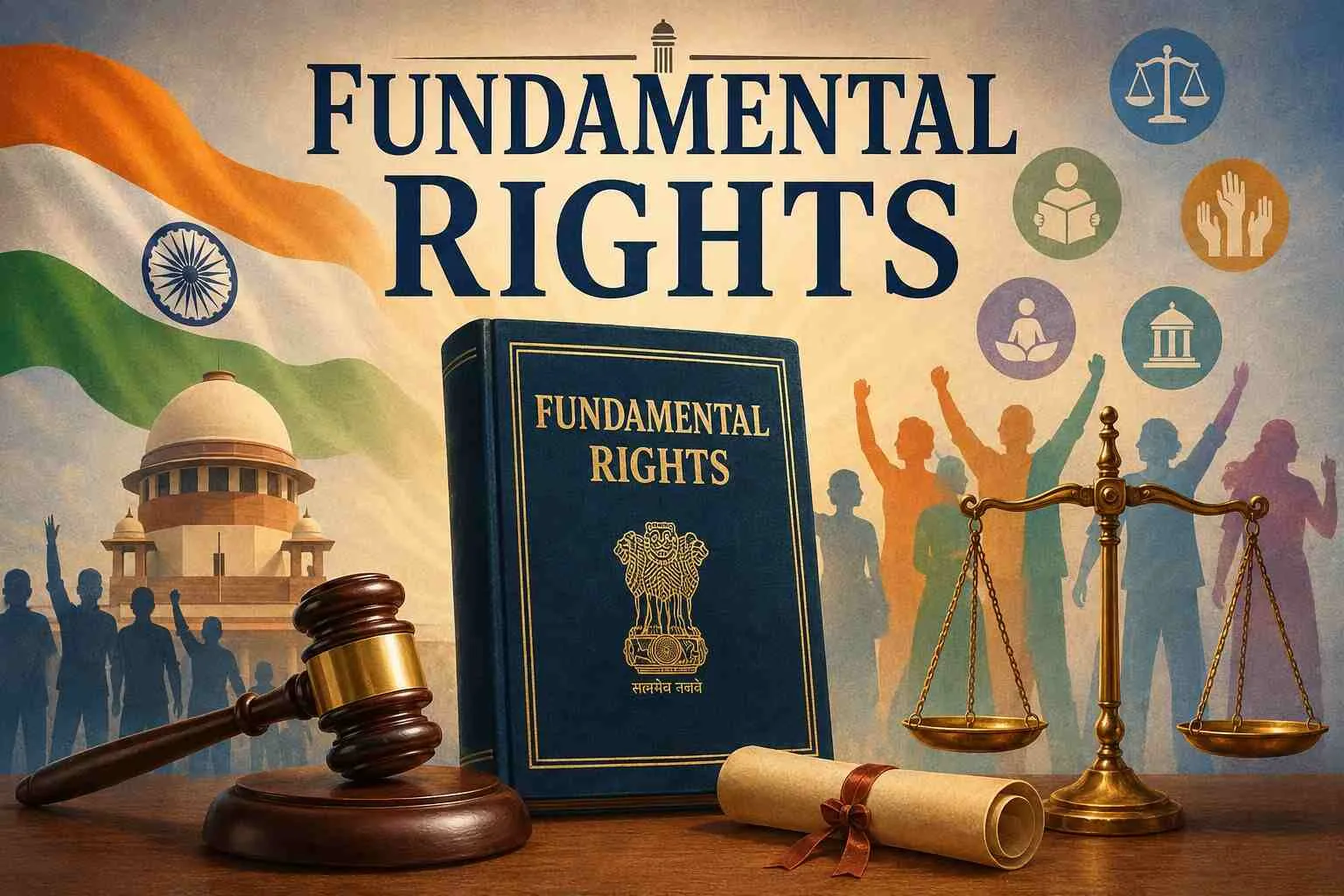
Fundamental Rights in India: Easy Explanation of Articles 23 to 35(Part-2)

Fundamental Rights in India are the basic rights given to every citizen by the Constitution. These rights protect the freedom, equality, dignity, and justice of every person. They also prevent discrimination, exploitation, and misuse of power. Articles 23 to 35 of the Indian Constitution explain important rights such as protection from exploitation, freedom of religion, cultural and educational rights, and the right to constitutional remedies.
Thank you for reading this post, don't forget to subscribe!Right Against Exploitation (Articles 23 and 24)
The Right Against Exploitation protects people from forced labour, human trafficking, and child labour. It ensures that no person is treated unfairly or forced to work against their will.
Article 23 – Prohibition of Human Trafficking and Forced Labour
Article 23 prohibits human trafficking and all forms of forced labour.
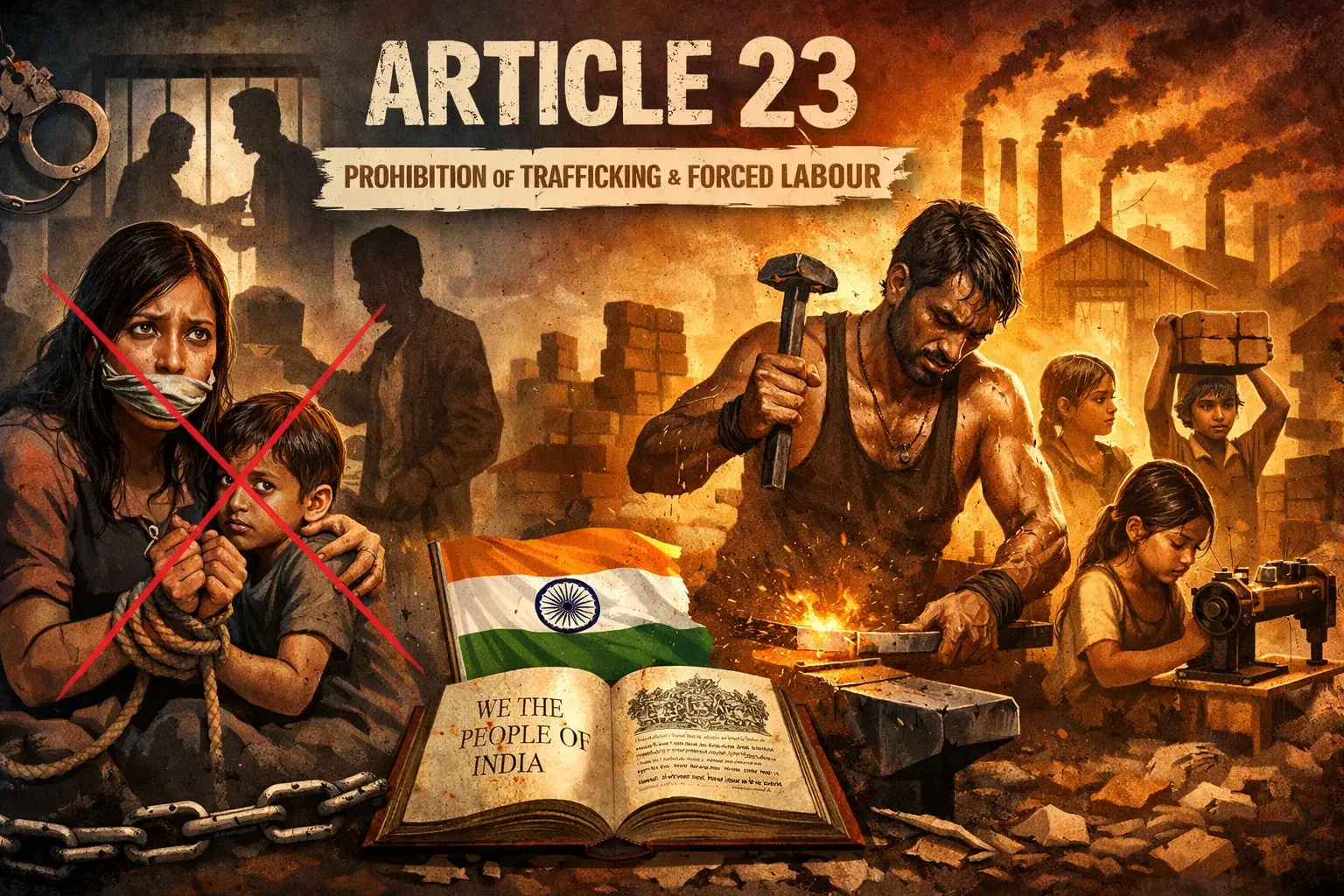
Human trafficking includes:
- Buying and selling of men, women, and children
- Forced prostitution
- Slavery
- Practices such as the Devadasi system
It also bans begar, which means making someone work without paying wages.
This protection is available to both Indian citizens and non-citizens.
To enforce this right, the government passed the Immoral Traffic (Prevention) Act, 1956, which punishes people involved in human trafficking and related crimes.
Article 24 – Prohibition of Child Labour
Article 24 protects children from dangerous work.
According to this Article:
- Children below 14 years cannot be employed in factories, mines, or other hazardous workplaces.
To strengthen this protection, the Child and Adolescent Labour (Prohibition and Regulation) Act, 1986, amended in 2016, introduced stricter rules.
The amendment provides that:
- Children below 14 years cannot work in any occupation.
- Adolescents between 14 and 18 years cannot work in hazardous industries.
These laws help protect children’s education, health, and future.
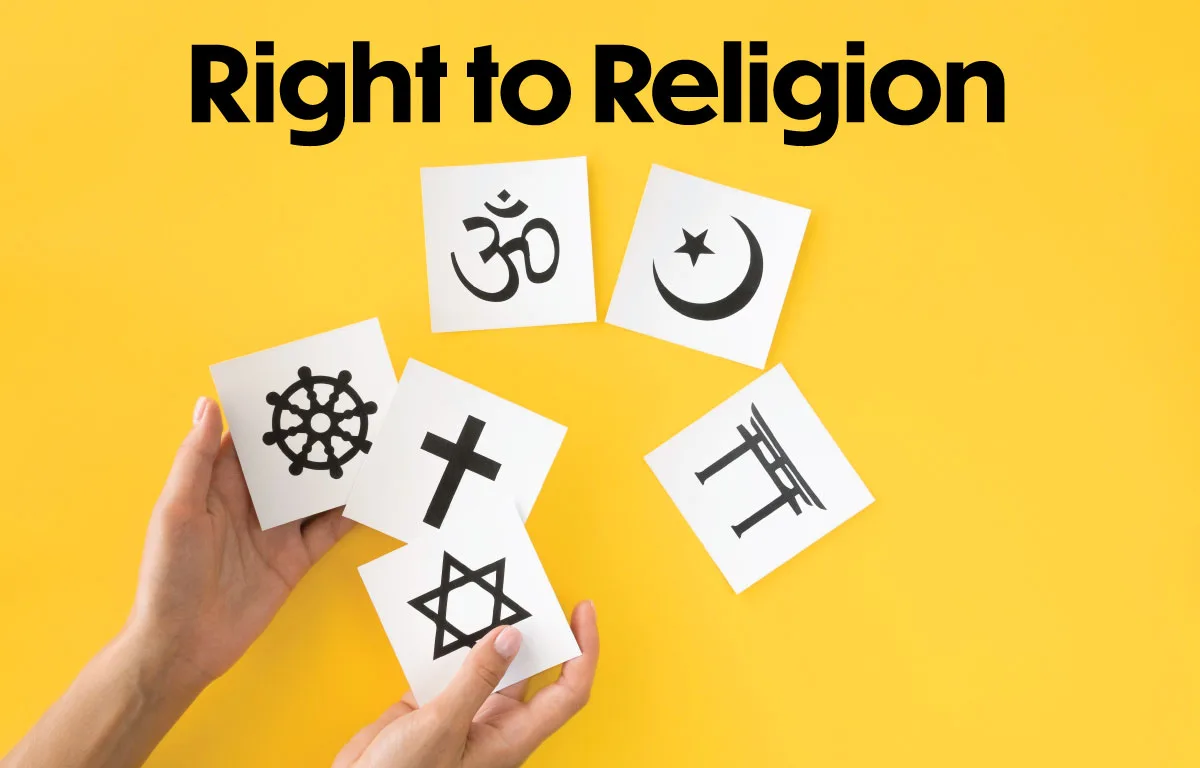
Right to Freedom of Religion (Articles 25 to 28)
India is a secular country where every person has the freedom to choose and practice any religion.
Article 25 – Freedom of Conscience and Religion
Article 25 gives every person the freedom to:
- Choose any religion or choose not to follow any religion.
- Profess religious beliefs openly.
- Practice religious customs and ceremonies.
- Spread information about their religion.
However, this freedom has reasonable limits.
The government can restrict religious activities if they affect:
- Public order
- Morality
- Public health
For example, harmful practices like sati, human sacrifice, or bigamy can be prohibited even if they are claimed to be religious practices.
The Constitution allows people to spread their religion but does not allow forced religious conversion.
Article 26 – Freedom to Manage Religious Affairs
Every religious group has the right to:
- Establish religious and charitable institutions.
- Manage religious matters independently.
- Own movable and immovable property.
- Manage their own property.
These rights are also subject to public order, morality, and health.
Article 27 – Freedom from Taxation for Promotion of Religion
Article 27 states that no person can be forced to pay taxes for promoting or maintaining a particular religion.
This means:
- Government tax money cannot be used to promote one religion over another.
- India treats all religions equally.
However, the government may collect fees for managing religious institutions because such fees are for administration and not for promoting religion.
Article 28 – Freedom from Religious Instruction
Article 28 deals with religious education in schools.
It states that:
- Government-funded educational institutions cannot provide religious instruction.
- Students cannot be forced to attend religious worship or religious classes without their consent.
- If the student is a minor, the guardian’s consent is required.
This protects the secular nature of education.
Cultural and Educational Rights (Articles 29 and 30)
India has many languages, cultures, and traditions. These Articles protect this diversity.
Article 29 – Protection of Language, Script, and Culture
Article 29 gives every section of citizens the right to preserve their:
- Language
- Script
- Culture
It also states that no citizen can be denied admission to an educational institution only because of:
- Religion
- Race
- Caste
- Language
Although Article 29 mainly protects minorities, it also protects the interests of the majority whenever needed.
Article 30 – Rights of Minorities to Establish Educational Institutions
Religious and linguistic minorities have the right to:
- Establish educational institutions.
- Manage these institutions according to their needs.
The government cannot discriminate against these institutions while providing aid.
The 44th Constitutional Amendment Act, 1978 also protected minority institutions by ensuring fair compensation if their property is acquired by the government.
Articles 31, 31A, 31B and 31C
Originally, the Right to Property was one of the Fundamental Rights.
However, the 44th Constitutional Amendment Act, 1978 removed it from the list of Fundamental Rights.
Today, the Right to Property is a legal right under Article 300A.
Article 31A
Article 31A protects certain laws related to:
- Land reforms
- Acquisition of estates
- State management of property
- Mergers of corporations
- Mining leases
These laws cannot easily be challenged under Articles 14 and 19.
Article 31B and the Ninth Schedule
Article 31B protects laws included in the Ninth Schedule from being challenged for violating Fundamental Rights.
However, in the famous I.R. Coelho case (2007), the Supreme Court ruled that laws placed in the Ninth Schedule can still be reviewed if they violate the Basic Structure of the Constitution.
The idea of the Basic Structure Doctrine was first introduced in the Kesavananda Bharati case (1973).
Article 31C
Article 31C protects laws made to implement certain Directive Principles of State Policy, especially those mentioned in Articles 39(b) and 39(c).
Such laws cannot normally be challenged under Articles 14 and 19 if they are made to achieve social and economic justice.
Right to Constitutional Remedies (Article 32)
Article 32 is one of the most important Articles of the Constitution.
Dr. B. R. Ambedkar called it the “Heart and Soul of the Constitution.”
It gives citizens the right to approach the Supreme Court whenever their Fundamental Rights are violated.
The Supreme Court can issue different types of writs to protect these rights.
These include:
- Habeas Corpus
- Mandamus
- Prohibition
- Certiorari
- Quo Warranto
The Parliament may also give similar powers to other courts, while High Courts already have such powers under Article 226.
Normally, Article 32 cannot be suspended except during a National Emergency under Article 359.
Only Fundamental Rights can be enforced under Article 32. Other legal or statutory rights cannot be enforced through this Article.
Articles 33, 34 and 35
These Articles explain special situations where Parliament has additional powers regarding Fundamental Rights.
Article 33
Article 33 allows Parliament to restrict certain Fundamental Rights of:
- Armed Forces
- Police
- Paramilitary Forces
- Intelligence Agencies
These restrictions help maintain discipline, national security, and proper functioning of these services.
Article 34
Article 34 deals with situations where martial law is imposed.
Martial law may be declared during serious situations such as:
- War
- Armed rebellion
- Violent riots
- Invasion
Parliament can protect government officials who acted to restore law and order during such periods.
Article 35
Article 35 gives only Parliament the power to make laws regarding certain Fundamental Rights.
Parliament can make laws on matters such as:
- Residence requirements for certain government jobs
- Punishment for untouchability
- Human trafficking
- Forced labour
- Restricting rights of armed forces
- Compensation during martial law
This ensures that these important matters are governed by uniform laws across India.
Importance of Fundamental Rights in India
Fundamental Rights are essential for maintaining democracy and protecting citizens.
They:
- Protect individual freedom.
- Promote equality before the law.
- Prevent exploitation and discrimination.
- Safeguard religious freedom.
- Protect the culture and language of different communities.
- Strengthen India’s secular character.
- Ensure justice for weaker and disadvantaged sections of society.
- Allow citizens to approach courts whenever their rights are violated.
- Maintain the dignity and respect of every individual.
These rights form the foundation of the Indian Constitution and help create a fair, democratic, and inclusive society where every person enjoys equal protection under the law.
Frequently Asked Questions
1. What are Fundamental Rights in India?
Fundamental Rights are basic constitutional rights that protect the freedom, equality, dignity, and justice of every person in India.
2. Which Articles deal with the Right Against Exploitation?
Articles 23 and 24 deal with the Right Against Exploitation.
3. What is Article 32 known for?
Article 32 gives citizens the right to approach the Supreme Court for the protection of Fundamental Rights.
4. Is the Right to Property still a Fundamental Right?
No. After the 44th Constitutional Amendment Act, 1978, the Right to Property became a legal right under Article 300A.
5. Which Articles protect religious freedom?
Articles 25 to 28 protect the Right to Freedom of Religion.
6. Which Articles protect minority educational institutions?
Articles 29 and 30 protect the cultural and educational rights of minorities.
7. Can children below 14 years work in factories?
No. Article 24 prohibits children below 14 years from working in factories, mines, and other hazardous occupations.