

Slave Dynasty of Delhi Sultanate(Part-i): History, Rulers, Administration and Architecture

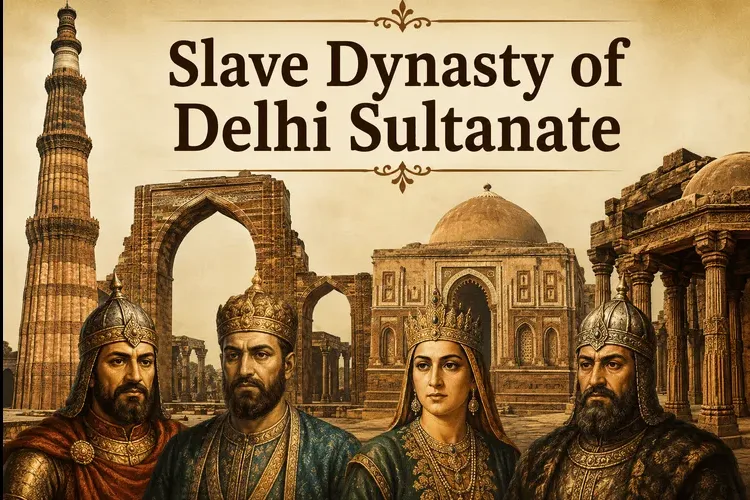
The Slave Dynasty of Delhi Sultanate was the first Muslim ruling dynasty in India. It ruled from 1206 to 1290 and laid the foundation of the Delhi Sultanate. The rulers of this dynasty were mostly Turkish slaves who later became powerful kings because of their military skills, intelligence, and leadership qualities. This dynasty is also known as the Mamluk Dynasty.
The important rulers of the Slave Dynasty were Qutbuddin Aibak, Iltutmish, Raziya Sultan, and Balban. They expanded the Delhi Sultanate, strengthened administration, fought enemies, and built famous monuments. The period of the Slave Dynasty was important because it created a strong political system in northern India that lasted for many centuries.

Origin of the Slave Dynasty
The Slave Dynasty began after the death of Muhammad Ghori in 1206. Muhammad Ghori did not have any children, so his empire was divided among his trusted generals and slaves. One of his most loyal slaves was Qutbuddin Aibak.
Aibak had helped Muhammad Ghori greatly in expanding Turkish power in India after the Second Battle of Tarain in 1192 against Prithviraj Chauhan. After Ghori’s death, Aibak became the ruler of Delhi and established the Slave Dynasty.
The rulers of this dynasty were called “slaves” because many of them were originally bought as slaves in childhood and later trained in military and administration. In those times, talented slaves could rise to very high positions.
Qutbuddin Aibak (1206–1210)
Early Life and Rise
Qutbuddin Aibak was born in Central Asia. He was sold as a slave in childhood and later purchased by Muhammad Ghori. Because of his bravery and loyalty, he became one of Ghori’s most trusted commanders.
After Muhammad Ghori’s death, Aibak became the ruler of Delhi in 1206. He is considered the founder of the Slave Dynasty.
Achievements of Qutbuddin Aibak
Aibak worked hard to strengthen Turkish rule in India. He ruled mainly from Lahore and later from Delhi. He separated the Delhi Sultanate from Ghazni and made it independent.
He was known for his generosity and was given the title “Lakh Baksh,” which means “giver of lakhs.”
Some important achievements of Aibak were:
- Establishment of the Slave Dynasty
- Strengthening Turkish rule in northern India
- Beginning construction of the Qutub Minar
- Construction of Quwwat-ul-Islam Mosque in Delhi
Death of Aibak
In 1210, Qutbuddin Aibak died after falling from a horse while playing chaugan, which was a form of polo. After his death, his son-in-law Iltutmish became the ruler.
Iltutmish (1211–1236)
Real Consolidator of the Delhi Sultanate
Iltutmish is considered the real builder and consolidator of the Delhi Sultanate. He faced many problems when he became ruler because many nobles and regional kings refused to accept his authority.
At that time:
- Bengal and Bihar had become independent
- Rajput rulers regained many territories
- Rival Turkish leaders threatened Delhi
Despite these challenges, Iltutmish successfully strengthened the Sultanate.
Expansion of Territory
Iltutmish recovered important regions such as:
- Gwalior
- Ajmer
- Bayana
- Nagaur
- Multan
- Lahore
He also defeated rebellious governors in Bengal and Bihar. His campaigns helped expand and secure the Delhi Sultanate.
Mongol Threat
During Iltutmish’s reign, the Mongol ruler Genghis Khan attacked Central Asia. The Mongol invasion created fear throughout Asia.
Iltutmish acted carefully and avoided direct conflict with the Mongols. His wise policy helped protect Delhi from destruction.
Administrative Reforms
Iltutmish introduced many important reforms:
- Organized administration properly
- Introduced silver coin called Tanka
- Introduced copper coin called Jital
- Strengthened the iqta system
- Improved law and order
He also received recognition from the Abbasid Caliph, which increased his prestige.
Chahalgani or Group of Forty
Iltutmish created a group of forty powerful Turkish nobles called the Chahalgani. These nobles helped in administration but later became very powerful and interfered in royal succession.
Death of Iltutmish
Iltutmish died in 1236. Before his death, he chose his capable daughter Raziya as his successor because he believed his sons were weak.
Raziya Sultan (1236–1240)
First Woman Sultan of Delhi
Raziya Sultan was the first and only woman ruler of the Delhi Sultanate. She was intelligent, brave, and skilled in administration.
After the death of Iltutmish, many nobles opposed her because she was a woman. However, she eventually became Sultan.
Challenges Faced by Raziya
Raziya faced opposition from:
- Her brothers
- Turkish nobles
- Conservative groups
The Turkish nobles did not want a woman to rule over them.
Administrative Ability
Raziya worked sincerely for the welfare of the kingdom. She:
- Maintained law and order
- Led military expeditions personally
- Controlled rebellious governors
- Tried to reduce the power of Turkish nobles
She dressed like a male ruler and appeared openly in court to handle state affairs.
Conflict with Nobles
Raziya appointed an Abyssinian noble named Yaqut Khan to an important position. Turkish nobles became jealous and accused her of favoring him too much.
Rebellions broke out in many regions. During one rebellion, Yaqut was killed and Raziya was imprisoned.
Later, she married Malik Altunia and tried to regain Delhi, but she was defeated. In 1240, Raziya Sultan was killed while escaping.
Importance of Raziya Sultan
Raziya proved that women could rule effectively. Though her reign was short, she remains one of the most famous rulers in Indian history.
Mongol Invasions and Their Impact
The Mongols were among the most feared warriors in world history. Under Genghis Khan, they created a huge empire.
Mongol Threat to India
The Mongols attacked the Khwarizm Empire in Central Asia and reached near the borders of India. This created danger for the Delhi Sultanate.
Iltutmish wisely avoided direct confrontation with Genghis Khan. However, Mongol attacks continued for many years.
Effects of Mongol Attacks
The Mongol invasions:
- Created fear in northwestern India
- Forced Delhi rulers to strengthen defenses
- Increased military expenses
- Made Punjab an important frontier region
The rulers of the Delhi Sultanate continuously worked to protect India from Mongol invasions.
Balban (1266–1287)
Rise of Balban
Balban was originally a member of the Chahalgani group created by Iltutmish. He slowly became very powerful during the reign of Sultan Nasiruddin Mahmud.
In 1266, Balban became Sultan of Delhi.
Strong and Strict Ruler
Balban believed in strong monarchy. He wanted the Sultan to be respected and feared by everyone.
He introduced strict court rules and ceremonies to increase royal authority.
Policy of Blood and Iron
Balban followed the policy of “blood and iron” to crush rebellions and maintain law and order.
He took harsh action against:
- Rajput rebels
- Dacoits
- Mewatis
- Rebellious nobles
Forests were cleared and criminals were punished severely.
Military Reforms
Balban reorganized the army and strengthened border defenses against the Mongols.
He improved the military department called Diwan-i-Arz.
Centralized Administration
Balban increased the powers of the Sultan and reduced the influence of nobles. He believed the king represented God on Earth.
Death of Balban
Balban died in 1287. He was one of the strongest rulers of the Slave Dynasty and played an important role in strengthening the Delhi Sultanate.
After his death, weak rulers came to power, and finally the Khilji Dynasty replaced the Slave Dynasty in 1290.
Administration of the Delhi Sultanate
Position of the Sultan
The Sultan was the supreme authority in the empire. He controlled:
- Administration
- Army
- Justice
- Revenue system
The Sultan had absolute powers.
Important Departments
The administration had different departments:
Diwan-i-Wizarat
Handled finance and revenue.
Diwan-i-Arz
Managed military affairs.
Diwan-i-Insha
Handled royal correspondence and records.
Diwan-i-Rasalat
Managed religious matters and foreign affairs.
Iqta System
The empire was divided into areas called iqtas. Officers called iqtadars collected taxes and maintained law and order.
This system helped the Sultan manage the empire efficiently.
Importance of Nobility
The Turkish nobles played an important role in the Delhi Sultanate.
Role of Nobles
The nobles:
- Helped in administration
- Led armies
- Influenced succession to the throne
However, they often became too powerful and created problems for rulers.
Chahalgani
The Chahalgani or Group of Forty became very influential after the death of Iltutmish. They decided who would become Sultan.
Balban later reduced their power and strengthened the monarchy.
Architecture of the Slave Dynasty
The rulers of the Slave Dynasty built many important monuments that showed the beginning of Indo-Islamic architecture in India.
Qutub Minar
The Qutub Minar is one of the most famous monuments in India. It was started by Qutbuddin Aibak in 1199 and completed by Iltutmish.
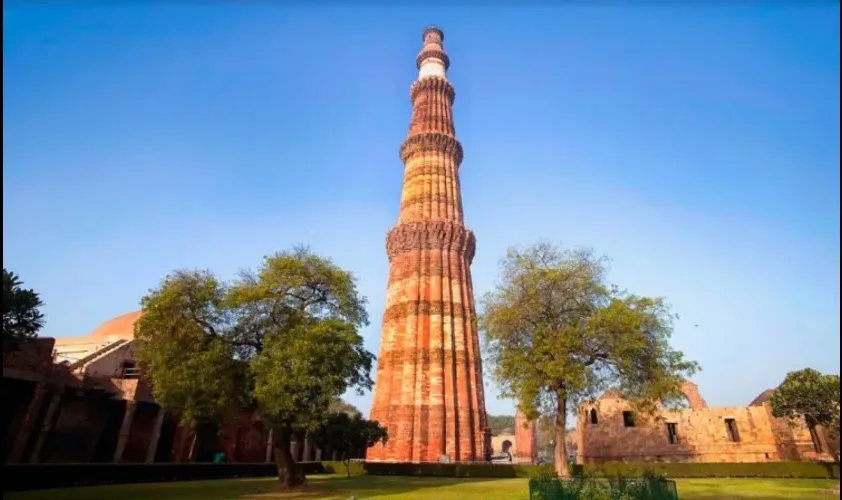
Features of Qutub Minar:
- Built with red sandstone
- About 73 meters high
- Contains Arabic inscriptions
- Example of Indo-Islamic architecture
Today, it is a UNESCO World Heritage Site.
Quwwat-ul-Islam Mosque
This mosque was built by Qutbuddin Aibak near the Qutub Minar. It is considered one of the earliest mosques in India.
The mosque used materials from demolished temples and contains beautiful carvings and pillars.
Adhai Din Ka Jhonpra
Adhai Din Ka Jhonpra is located in Ajmer, Rajasthan. It was built by Qutbuddin Aibak in 1199.
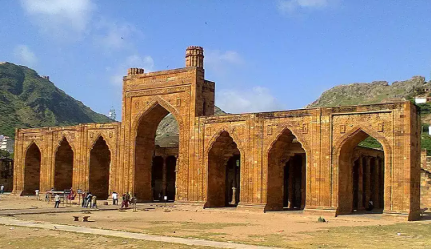
The monument is famous for its:
- Indo-Islamic architecture
- Beautiful arches
- Detailed carvings
Tomb of Iltutmish and Balban
The tombs built during the Slave Dynasty show the early development of Islamic architecture in India.
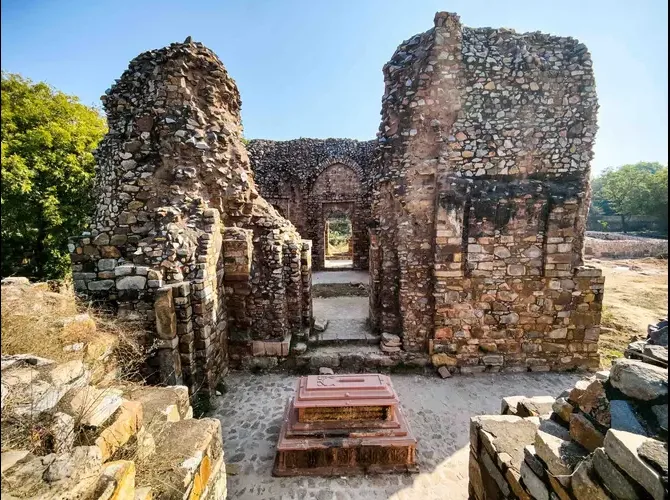
Balban’s tomb is especially important because it introduced the true arch in Indian architecture.
Decline of the Slave Dynasty
After Balban’s death, weak rulers came to power. The nobles became powerful again and political instability increased.
Finally, in 1290, Jalaluddin Khilji defeated the last ruler of the Slave Dynasty and established the Khilji Dynasty.
This ended the rule of the Slave Dynasty.
Contribution of the Slave Dynasty
The Slave Dynasty made many important contributions to Indian history.
Political Contribution
- Established the Delhi Sultanate
- Created a strong central government
- Protected northern India from invasions
Administrative Contribution
- Introduced organized administration
- Developed revenue and military systems
- Strengthened monarchy
Cultural Contribution
- Encouraged Indo-Islamic culture
- Built important monuments
- Introduced Persian influence in administration and literature
Architectural Contribution
The rulers built famous monuments that still attract tourists from all over the world.
Conclusion
The Slave Dynasty of Delhi Sultanate was an important phase in medieval Indian history. It laid the foundation of Muslim rule in India and created a powerful political system in northern India.
Qutbuddin Aibak established the dynasty, Iltutmish strengthened it, Raziya Sultan showed courage and leadership, and Balban made the monarchy powerful. Despite internal conflicts and Mongol threats, the rulers of the Slave Dynasty managed to build a strong empire.
The dynasty also left behind great architectural monuments such as the Qutub Minar and Quwwat-ul-Islam Mosque. Its administrative and military systems influenced later rulers of India.
Even today, the history of the Slave Dynasty helps us understand the political, cultural, and architectural development of medieval India.
FAQs
1. Who founded the Slave Dynasty in India?
Qutbuddin Aibak founded the Slave Dynasty in 1206 after the death of Muhammad Ghori.
2. Why is the Slave Dynasty also called the Mamluk Dynasty?
It is called the Mamluk Dynasty because many rulers were originally Turkish slaves who later became rulers.
3. Who was the real consolidator of the Delhi Sultanate?
Iltutmish is known as the real consolidator of the Delhi Sultanate because he strengthened and expanded it.
4. Who was the first woman ruler of the Delhi Sultanate?
Raziya Sultan was the first and only woman ruler of the Delhi Sultanate.
5. What was the Chahalgani?
The Chahalgani was a group of forty powerful Turkish nobles formed during Iltutmish’s rule.
6. What was Balban’s policy of Blood and Iron?
It was a strict policy used by Balban to crush rebellions and maintain law and order.
7. Which famous monument was built during the Slave Dynasty?
The Qutub Minar was one of the most famous monuments built during the Slave Dynasty.
8. When did the Slave Dynasty end?
The Slave Dynasty ended in 1290 when Jalaluddin Khilji established the Khilji Dynasty.