Commerce Ministry: Key Reforms, Schemes and Achievements

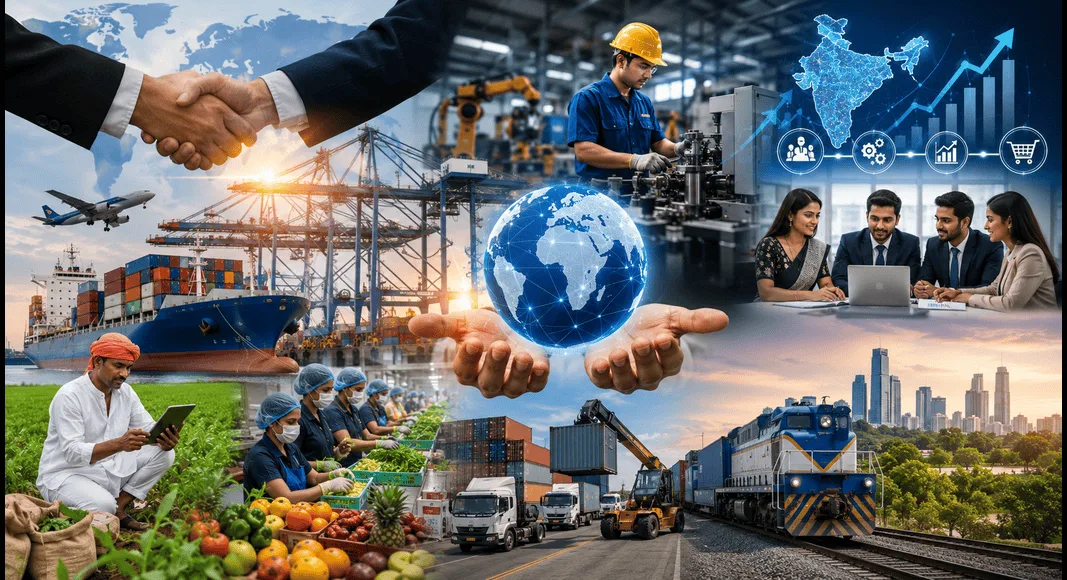
India’s economic growth depends heavily on trade, industries, exports, innovation, and investment. The Commerce Ministry highlights many important reforms introduced by the Ministry of Commerce and Industry to improve the country’s business environment. These initiatives focused on making India an attractive destination for investment, increasing exports, encouraging innovation, supporting industries, and creating employment opportunities.
Thank you for reading this post, don't forget to subscribe!Many of these reforms have continued to influence India’s economy even after 2019. Several policies have been expanded or improved between 2020 and 2025, helping India become one of the fastest-growing major economies in the world.
What is the Ministry of Commerce and Industry?
The Ministry of Commerce and Industry is responsible for:
- Promoting domestic and international trade
- Increasing exports
- Attracting foreign investment
- Supporting industries and startups
- Protecting intellectual property rights
- Improving ease of doing business
- Developing industrial infrastructure
- Encouraging innovation and entrepreneurship
Its policies directly affect businesses, farmers, manufacturers, exporters, startups, and consumers.
Ease of Doing Business in India
One of the biggest achievements in 2019 was India’s remarkable improvement in the World Bank’s Ease of Doing Business rankings.
India moved to 63rd position among 190 countries, improving from 77th rank the previous year. It was also recognized as one of the world’s top-performing economies in improving the business environment.
The improvement came mainly because of reforms in:
1. Starting a Business
The government simplified company registration by combining several application forms into one online process.
Benefits included:
- Faster company registration
- Less paperwork
- Reduced processing time
- Better digital services
2. Construction Permits
Obtaining building approvals became easier and less expensive.
This encouraged industries to build factories, warehouses, and commercial buildings more quickly.
3. Trading Across Borders
India improved customs procedures by introducing electronic documentation and better port infrastructure.
This reduced:
- Export delays
- Import costs
- Paperwork
- Time required for customs clearance
4. Insolvency Resolution
The Insolvency and Bankruptcy Code (IBC) significantly improved recovery rates.
Earlier, resolving insolvency cases took more than four years. By 2019, the average time had reduced considerably, making India more attractive to investors.
Although the World Bank later discontinued the Ease of Doing Business Report, many of these reforms continue under India’s business reform initiatives.
Global Innovation Index
Innovation is an important factor for economic development.
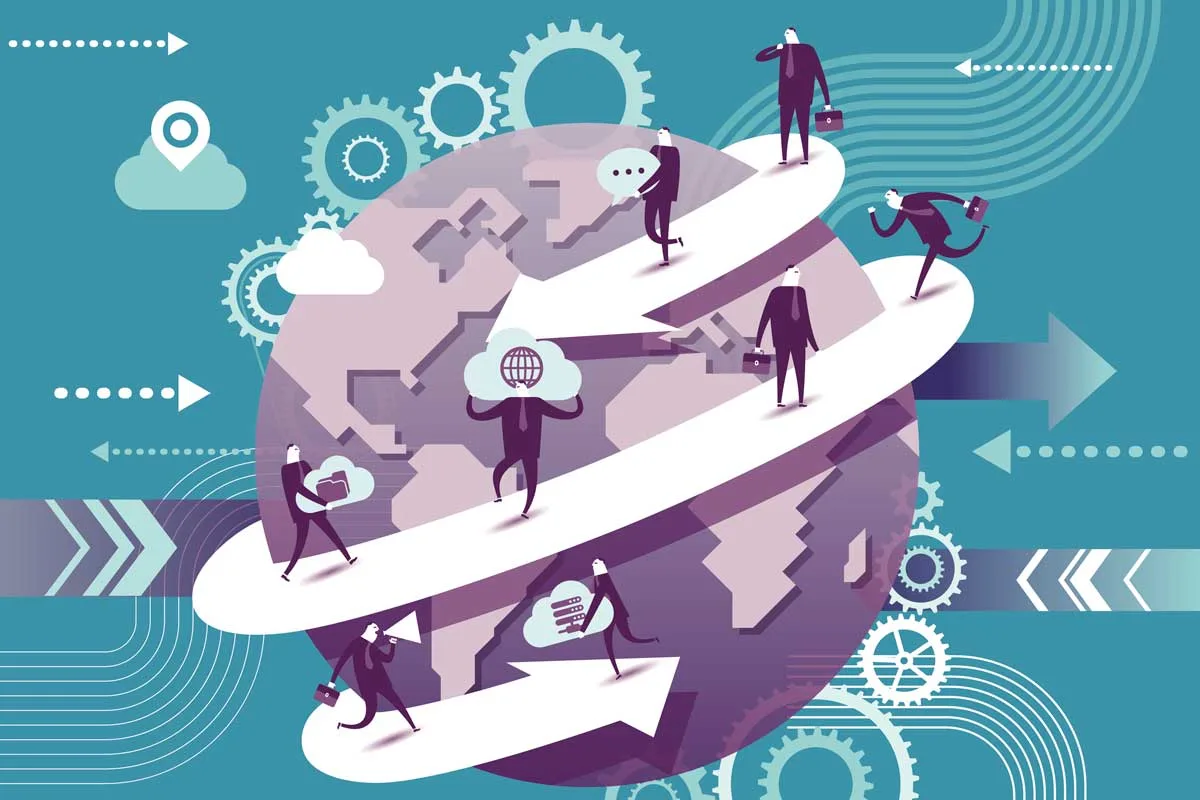
India improved its ranking from 81st in 2015 to 52nd in the Global Innovation Index 2019.
India also remained the most innovative economy in Central and Southern Asia.
The country’s strengths included:
- Information Technology
- Engineering graduates
- Scientific research
- Creative industries
- ICT service exports
- Startup ecosystem
Cities such as Bengaluru, Mumbai, and New Delhi were recognized among the world’s leading science and technology clusters.
Between 2020 and 2025, India further strengthened its startup ecosystem through initiatives like Startup India, Digital India, semiconductor manufacturing support, and AI innovation programs.
Export Promotion Measures
Exports play a major role in earning foreign exchange and creating employment.
The Ministry introduced several schemes to support exporters.
NIRVIK Scheme
The NIRVIK Scheme was introduced by the Export Credit Guarantee Corporation (ECGC).
Its objectives were:
- Increase insurance coverage for exporters
- Reduce lending risk for banks
- Improve export financing
- Support small exporters
This encouraged banks to provide easier loans to export businesses.
Export Credit Guarantee Corporation (ECGC)
ECGC is a government-owned company.
Its main functions include:
- Export credit insurance
- Risk protection
- Export finance support
- Encouraging international trade
It protects exporters against payment risks from foreign buyers.
Transport and Marketing Assistance (TMA)
Transportation costs are often high for agricultural exports.
The TMA Scheme provides financial assistance for transporting agricultural products to selected international markets.
Benefits include:
- Lower export cost
- Better market access
- Higher income for farmers
- Increased agricultural exports
Origin Management System
India signed several Free Trade Agreements (FTAs) with different countries.
The Origin Management System simplified the issuance of Certificates of Origin.
Major advantages include:
- Paperless processing
- Faster approvals
- Real-time tracking
- Greater transparency
This reduced transaction costs for exporters.
RoDTEP Scheme
The Remission of Duties and Taxes on Export Products (RoDTEP) Scheme replaced the earlier Merchandise Exports from India Scheme (MEIS).
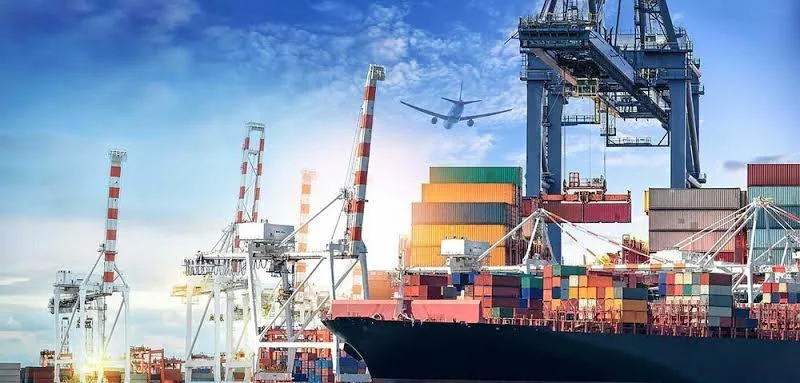
Its objectives are:
- Refund hidden taxes
- Improve export competitiveness
- Make exports WTO compliant
- Support MSMEs
Today, RoDTEP continues to be one of India’s major export promotion schemes.
National Logistics Policy
Efficient logistics reduce transportation costs and improve exports.
The National Logistics Policy aims to:
- Improve transport infrastructure
- Reduce logistics costs
- Increase supply chain efficiency
- Promote multimodal transport
- Make India a global logistics hub
From 2022 onward, initiatives like PM Gati Shakti have further strengthened logistics planning across the country.
Multi-Modal Transportation
Goods often travel through:
- Roads
- Railways
- Waterways
- Air transport
Using multiple transport modes helps reduce costs and improve delivery speed.
The Multi-Modal Transportation of Goods Bill aims to improve accountability and simplify transportation across different modes.
Skill Development for Logistics
The government introduced Qualification Packs (QPs) for logistics workers.
These provide standard skill training in areas like:
- Warehousing
- Transportation
- Supply chain management
- Cargo handling
This helps improve workforce quality.
Agriculture Export Policy
Agriculture exports provide better income opportunities for farmers.
The Agriculture Export Policy aims to:
- Increase agricultural exports
- Connect Farmer Producer Organizations (FPOs) with exporters
- Improve product quality
- Expand overseas markets
The Agricultural and Processed Food Products Export Development Authority (APEDA) also launched digital platforms to help farmers register and participate in export markets.
APEDA
APEDA promotes exports of agricultural and processed food products.
Its major functions include:
- Quality certification
- Export promotion
- Farmer registration
- Market development
- Capacity building
The Farmer Connect mobile application also helps farmers access export-related services.
Steel Import Monitoring System (SIMS)
India imports large quantities of steel.
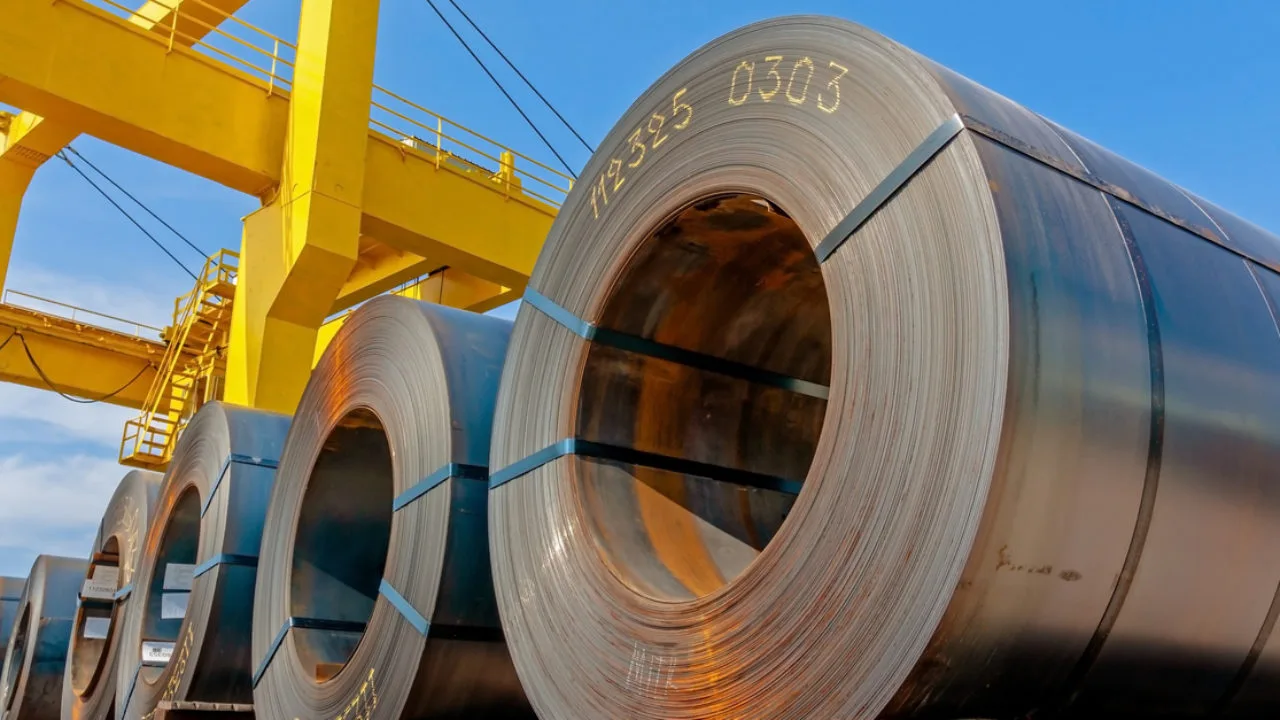
The Steel Import Monitoring System helps the government monitor imports in advance.
It provides:
- Better policy planning
- Market information
- Protection for domestic industries
Importers register online before importing specified steel products.
Trade Facilitation Measures
The Ministry introduced several initiatives to simplify international trade.
India-Mauritius CECPA
India signed the Comprehensive Economic Cooperation and Partnership Agreement with Mauritius.
The agreement promotes:
- Bilateral trade
- Investment
- Economic cooperation
Border Haats
Border Haats are local markets located near international borders.
These markets:
- Promote local trade
- Improve livelihoods
- Strengthen relations with neighboring countries
- Help border communities
India expanded Border Haats along the Bangladesh border.
Special Economic Zones (SEZs)
Special Economic Zones encourage exports by offering various business incentives.
The SEZ Amendment Act allowed trusts and other entities to establish units in SEZs.
Additional facilities such as:
- Cafeterias
- Crèches
- Gymnasiums
were also permitted for employees working inside SEZs.
Foreign Direct Investment (FDI) Reforms
The government introduced several FDI reforms.
Important changes included:
- 100% FDI in coal mining
- 100% FDI in contract manufacturing
- Easier rules for single-brand retail
- More flexibility for online retail
These reforms increased investor confidence and promoted manufacturing.
Between 2020 and 2025, India continued liberalizing FDI rules in various sectors.
National Institute of Design Expansion
The government granted Institution of National Importance status to four new National Institutes of Design located in:
This strengthened India’s design education system.
National Traders’ Welfare Board
Small traders form the backbone of India’s economy.
The National Traders’ Welfare Board was established to recommend:
- Insurance benefits
- Pension schemes
- Access to finance
- Welfare measures
The Board works to improve the overall business environment for traders.
India’s Position on RCEP
India chose not to join the Regional Comprehensive Economic Partnership (RCEP).
The government believed certain concerns remained unresolved.
Major concerns included:
- Protection of farmers
- Dairy sector
- Small manufacturers
- Trade imbalance
Instead, India continued negotiating trade agreements that better protected domestic interests.
Developments After 2019 (2020-2025)
Several important developments took place after the 2019 review.
These include:
- Launch of PM Gati Shakti for integrated infrastructure planning.
- National Logistics Policy introduced in 2022.
- Production Linked Incentive (PLI) Scheme boosted manufacturing across sectors like electronics, pharmaceuticals, telecom, and automobiles.
- India signed new trade agreements with countries including the UAE and Australia.
- Digital trade systems became more efficient through paperless customs and online export services.
- India emerged as one of the world’s fastest-growing startup ecosystems.
- Semiconductor manufacturing received major policy support.
- Foreign Direct Investment continued to remain strong in several sectors.
- Export promotion initiatives increasingly focused on MSMEs and high-value manufacturing.
- India strengthened its position in global supply chains through the “Make in India” and “Atmanirbhar Bharat” initiatives.
Challenges Ahead
Despite many achievements, several challenges remain:
- Reducing logistics costs further
- Increasing manufacturing exports
- Supporting MSMEs
- Expanding global market access
- Improving infrastructure
- Simplifying trade regulations
- Increasing innovation and research investment
Addressing these challenges will help India become a leading global manufacturing and trading nation.
Conclusion
The Commerce Ministry marked an important phase in India’s economic reforms. Improvements in ease of doing business, export promotion, innovation, logistics, foreign investment, and industrial development laid a strong foundation for future growth.
The reforms introduced during 2019 have continued to evolve between 2020 and 2025. Policies such as the National Logistics Policy, Production Linked Incentive Scheme, digital trade systems, and new free trade agreements have strengthened India’s position in the global economy.
As India moves toward becoming a developed nation, the Ministry of Commerce and Industry will continue to play a vital role in promoting investment, supporting businesses, creating jobs, and expanding India’s global trade presence.
FAQs
1. What is the main role of the Ministry of Commerce and Industry?
The Ministry of Commerce and Industry is responsible for promoting trade, increasing exports, attracting investments, supporting industries and startups, improving the ease of doing business, and creating policies that strengthen India’s economic growth.
2. What was India’s Ease of Doing Business ranking in 2020?
India ranked 63rd among 190 countries in the World Bank’s Ease of Doing Business Report 2020, improving by 14 positions from the previous year.
3. What is the Global Innovation Index (GII)?
The Global Innovation Index measures the innovation performance of countries based on factors like research, technology, education, and business development.
4. What is the NIRVIK Scheme?
The NIRVIK Scheme provides higher export credit insurance coverage to exporters, helping banks lend more confidently and reducing financial risks.
5. What is the RoDTEP Scheme?
RoDTEP (Remission of Duties and Taxes on Export Products) refunds hidden taxes and duties on exported goods to improve India’s export competitiveness.
6. What is the National Logistics Policy?
The National Logistics Policy aims to reduce logistics costs, improve supply chains, and make India a global logistics hub.
7. What is APEDA?
APEDA (Agricultural and Processed Food Products Export Development Authority) promotes the export of agricultural and processed food products from India.
8. Why did India not join RCEP?
India stayed out of the Regional Comprehensive Economic Partnership (RCEP) to protect the interests of farmers, small manufacturers, and the domestic dairy sector.
9. What is a Special Economic Zone (SEZ)?
A Special Economic Zone is a designated area where businesses receive tax and policy benefits to promote exports, investment, and employment.
10. How has the Ministry of Commerce supported India’s economy after 2019?
The Ministry introduced initiatives like the National Logistics Policy, Production Linked Incentive (PLI) Scheme, new Free Trade Agreements, digital trade reforms, and measures to improve manufacturing and exports.