

Gurjara-Pratihara Empire: History, Administration, Society, Art and Architecture

Gurjara-Pratihara Empire was one of the most powerful kingdoms in early medieval India. The empire played a major role in protecting northern India from foreign invasions and helped in the growth of art, culture, literature, and temple architecture. The Gurjara-Pratiharas ruled large parts of northern and western India between the 8th and 11th centuries.
Thank you for reading this post, don't forget to subscribe!The word “Pratihara” means “doorkeeper” or “protector.” According to some traditions, the rulers considered themselves descendants of Lakshmana, the brother of Lord Rama, who served as a protector or doorkeeper for Rama. Because of this, they adopted the title “Pratihara.”
The Gurjara-Pratiharas became famous during the rule of Nagabhata I, who successfully resisted Arab invasions from Sindh. At a time when Arab armies were expanding into many regions, the Pratiharas protected India from further invasions into the north and west.
The Pratiharas are also remembered for their long struggle with two other powerful dynasties of the time the Palas of Bengal and the Rashtrakutas of the Deccan. This three-sided conflict is known in Indian history as the Tripartite Struggle for control over Kannauj.
Apart from military achievements, the Gurjara-Pratiharas were also known for good administration, rich culture, Sanskrit literature, and beautiful temples. Their contribution to Indian architecture can still be seen in places like Gwalior, Osian, Abhaneri, and Baroli.
Origin and Rise of the Gurjara-Pratiharas
The Gurjara-Pratiharas rose to power in western India, especially in Rajasthan and Gujarat. In the beginning, they established many small principalities in these regions. Gradually, they expanded their control over Malwa, Rajputana, Gujarat, and finally Kannauj.
The kingdom became strong because of powerful rulers, skilled cavalry forces, and organized administration. Arab travelers also praised the Pratihara army, especially their horse cavalry.
Kannauj later became the capital of the empire and one of the most important political centers of northern India.
Important Rulers of the Gurjara-Pratihara Dynasty
Nagabhata I (730–760 AD)
Nagabhata I was the founder of the power and prestige of the Gurjara-Pratihara dynasty. He is remembered mainly for defeating Arab invaders who were trying to move eastward from Sindh.
During this period, Arab forces had already conquered Sindh and wanted to expand further into India. Nagabhata I stopped their advance and protected western and northern India. Because of this achievement, he became a respected ruler.
His empire extended from Gujarat to Gwalior. He also fought against the Rashtrakuta ruler Dantidurga. Though he suffered defeat in that conflict, he still managed to maintain a large kingdom.
Nagabhata I laid the foundation of a strong empire for future rulers. After him, his nephews Kakkuka and Devaraja ruled the kingdom.
Vatsaraja (780–800 AD)
Vatsaraja was the son of Devaraja and an ambitious ruler. He expanded the kingdom greatly and made Ujjain an important center of administration.
He defeated several rulers and extended his authority toward Kannauj. His desire to control Kannauj brought him into conflict with two powerful kings:
- Dharmapala of the Pala dynasty
- Dhruva of the Rashtrakuta dynasty
This led to the famous Tripartite Struggle. Vatsaraja defeated Dharmapala at first, but later he was defeated by Rashtrakuta king Dhruva.
Even after defeat, Vatsaraja remained an important ruler and strengthened the position of the Pratihara dynasty in northern India.
Nagabhata II (800–833 AD)
Nagabhata II restored the prestige of the Pratihara Empire after earlier defeats. He followed a policy of expansion and conquest.
He defeated rulers of:
- Andhra
- Vidarbha
- Kalinga
- Sindh
He also defeated Chakrayudha and captured Kannauj. This made Kannauj the center of Pratihara power.
Nagabhata II fought against the Pala ruler Dharmapala and expanded up to Munger in Bihar. However, he later faced defeat from Rashtrakuta ruler Govinda III.
One of his important achievements was rebuilding the famous Shiva temple at Somnath in Gujarat after it had been damaged during Arab attacks.
Under Nagabhata II, the empire covered large parts of northern India.
Mihir Bhoja or Bhoja I (836–885 AD)
Mihir Bhoja was the greatest ruler of the Gurjara-Pratihara dynasty. His reign marked the golden age of the empire.
He ruled for nearly 50 years and greatly strengthened the kingdom. He reorganized the administration and expanded the empire in many directions.
Kannauj became the grand capital of the empire during his reign. The city was also known as Mahodaya.
Mihir Bhoja was a follower of Vaishnavism and used the title “Adivaraha,” referring to the Varaha incarnation of Lord Vishnu.
He maintained a powerful cavalry army. Arab traveler Al-Masudi praised his military strength and referred to him as “King Baura.”
Many neighboring rulers accepted his supremacy, including:
- Chandelas
- Kalachuris
- Arab rulers of Sindh
His reign brought peace, prosperity, and stability to the empire.
Mahendrapala I (885–910 AD)
Mahendrapala I expanded the empire further. During his reign, the kingdom stretched:
- From the Himalayas in the north
- To the Narmada River in the south
- From Bengal in the east
- To Sindh in the west
He received the title “Maharajadhiraja of Aryavarta,” meaning the great king of northern India.
His court became a center of literature and learning. The famous Sanskrit scholar and poet Rajashekhara lived in his court.
Rajashekhara wrote several important works such as:
- Karpuramanjari
- Kavya Mimansa
- Balabharata
- Prapanch Pandav
This period saw great cultural development.
Mahipala I (913–944 AD)
During Mahipala’s rule, the empire began to weaken. The Rashtrakuta king Indra III attacked Kannauj and caused great destruction.
Arab traveler Al-Masudi wrote that the Pratiharas lacked direct access to the sea, which weakened their economic and military position.
The power of regional kingdoms also increased during this period.
Rajyapala (960–1018 AD)
Rajyapala ruled during a difficult time. The empire had become weak and faced repeated invasions.
When Mahmud of Ghazni attacked Kannauj, Rajyapala fled from the battlefield. This act damaged his reputation badly.
Later, he was killed by the Chandela ruler Vidyadhara.
Yashpala (1024–1036 AD)
Yashpala was the last ruler of the Gurjara-Pratihara dynasty. By this time, the empire had almost completely collapsed.
Around 1090 AD, the Gahadavala dynasty took control of Kannauj.
This marked the end of the Pratihara rule in northern India.
Tripartite Struggle
One of the most important events in early medieval Indian history was the Tripartite Struggle.
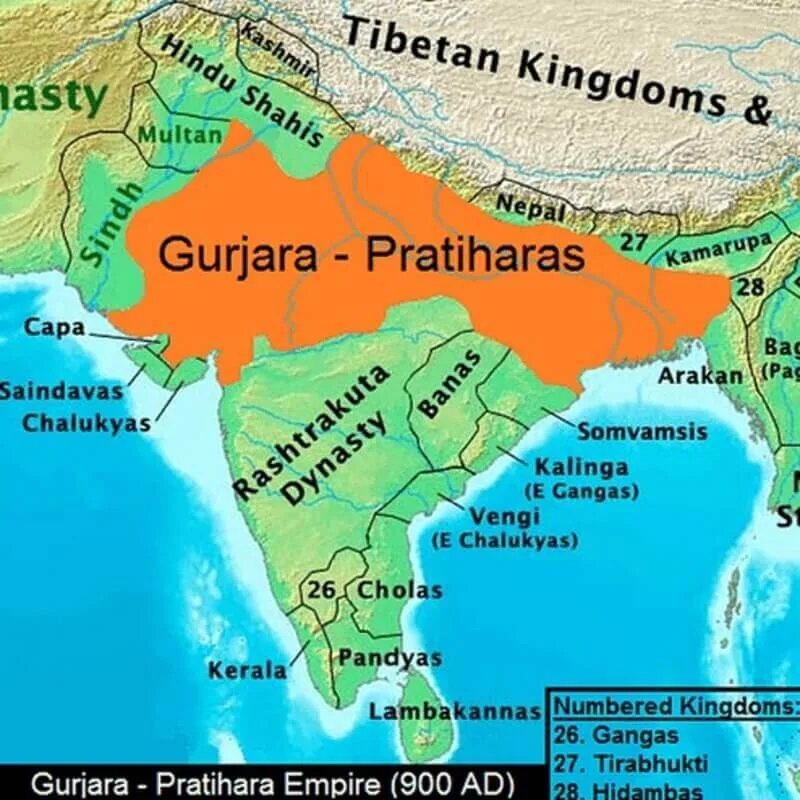
The three powerful dynasties involved were:
- Gurjara-Pratiharas
- Palas
- Rashtrakutas
The main reason for the conflict was the control of Kannauj, which was considered the political center of northern India.
The struggle continued for many years. Sometimes one dynasty gained control, while at other times another became powerful.
Although the Pratiharas often lost battles to the Rashtrakutas, they repeatedly recovered and remained strong for a long time.
Administration of the Gurjara-Pratihara Empire
The administration of the Gurjara-Pratiharas was well organized and efficient.
The king held the highest position in the state. Kings used grand titles such as:
- Parmeshwara
- Maharajadhiraja
- Parambhattaraka
The ruler controlled:
- Military affairs
- Land grants
- Appointment of officers
- Relations with feudatories
Role of Samantas
The empire depended heavily on feudatory chiefs called Samantas.
These chiefs:
- Paid tribute to the king
- Supplied military support
- Helped in administration
Some powerful feudatories were called:
- Maha Samantadhipati
- Maha Pratihara
Important Officers
The Pratihara administration included many officers with different responsibilities.
Kottapala
The officer in charge of forts.
Tantrapala
Representative of the king in feudatory states.
Dandapashika
Chief police officer.
Dandanayaka
Officer responsible for military and justice.
Dutaka
Messenger who carried royal orders and grants.
Bhangika
Officer who prepared documents related to grants and donations.
Vyavaharina
Legal advisor.
Baladhikrita
Commander of the army.
Administrative Divisions
The empire was divided into different administrative units.
Bhukti
Large provinces.
Mandala
Smaller divisions inside bhuktis.
Villages
Basic unit of administration.
Village administration was handled by local elders called Mahattaras. Another officer known as Gramapati advised in village matters.
Cities were managed by councils such as:
- Goshthi
- Panchakula
- Uttar Sabha
This system helped maintain law, order, and smooth governance.
Military Strength of the Pratiharas
The Gurjara-Pratiharas were famous for their military power, especially cavalry forces.
Arab travelers described their horse army as one of the best in India.
Their army included:
- Cavalry
- Infantry
- Elephants
The Pratiharas played an important role in stopping Arab expansion into northern India. Their military success protected Indian culture and political independence during that time.
Social Conditions During the Pratihara Period
The society during the Gurjara-Pratihara period was based mainly on the caste system.
The four traditional varnas were:
- Brahmins
- Kshatriyas
- Vaishyas
- Shudras
Different groups and sub-castes also existed.
Brahmins
Brahmins were respected in society. Groups like Chaturvedi and Bhatta were important among them.
They were mainly involved in:
- Religion
- Education
- Rituals
Kshatriyas
Kshatriyas were warriors and rulers. Arab writers referred to them as the “Kataria” class.
They played an important role in politics and warfare.
Vaishyas and Shudras
Vaishyas were mainly traders and businessmen. Some also practiced agriculture and cattle rearing.
Shudras generally worked as farmers, laborers, and servants.
Interestingly, some evidence suggests that people from different castes began doing occupations outside their traditional roles. This shows that the caste system was becoming slightly flexible.
Position of Women
Women in royal families did not generally follow the purdah system.
Women learned:
- Music
- Dancing
- Painting
They liked ornaments, perfumes, oils, and cosmetics.
Most men had one wife, though kings and rich people sometimes practiced polygamy.
There are also references to sati, where a widow burned herself on her husband’s funeral pyre. However, this practice was not very common during the period.
Inter-caste marriages also existed in some cases. The famous scholar Rajashekhara married a Kshatriya woman named Avanti Sundari.
Religion Under the Pratiharas
The Gurjara-Pratihara rulers mainly followed Hinduism.
They supported:
- Vaishnavism
- Shaivism
- Shakti worship
Temples dedicated to Vishnu, Shiva, and Devi were constructed during their rule.
Mihir Bhoja was a devotee of Vishnu and used the title “Adivaraha.”
At the same time, the rulers generally tolerated other religions.
Literature and Learning
The Gurjara-Pratiharas encouraged Sanskrit learning and literature.
The most famous scholar of the period was Rajashekhara.
He wrote many literary works and dramas. His writings provide important information about the society and culture of the time.
The royal courts became centers of education and artistic activity.
Art and Architecture of the Gurjara-Pratihara Period
The Gurjara-Pratiharas made an outstanding contribution to Indian temple architecture.
Their temples are known for:
- Beautiful carvings
- Tall shikharas
- Decorative pillars
- Detailed sculptures
Many temples built during this period still survive.
Important Centers of Architecture
Osian
Osian in Rajasthan became an important center of temple construction.
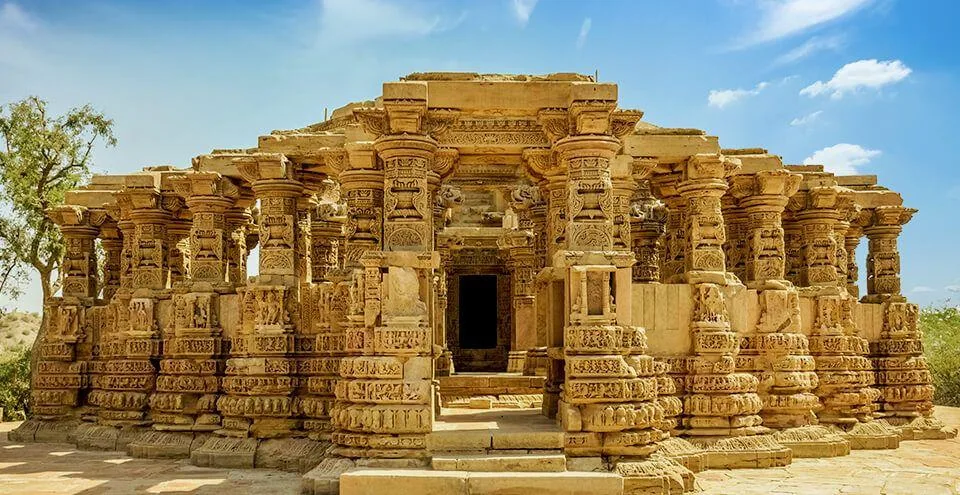
The temples here contain:
- Open halls
- Carved pillars
- Sculptures of gods and goddesses
The Surya Temple and Hari-Hara temples are famous examples.
Gwalior
The famous Teli-ka-Mandir at Gwalior Fort is one of the finest examples of Pratihara architecture.
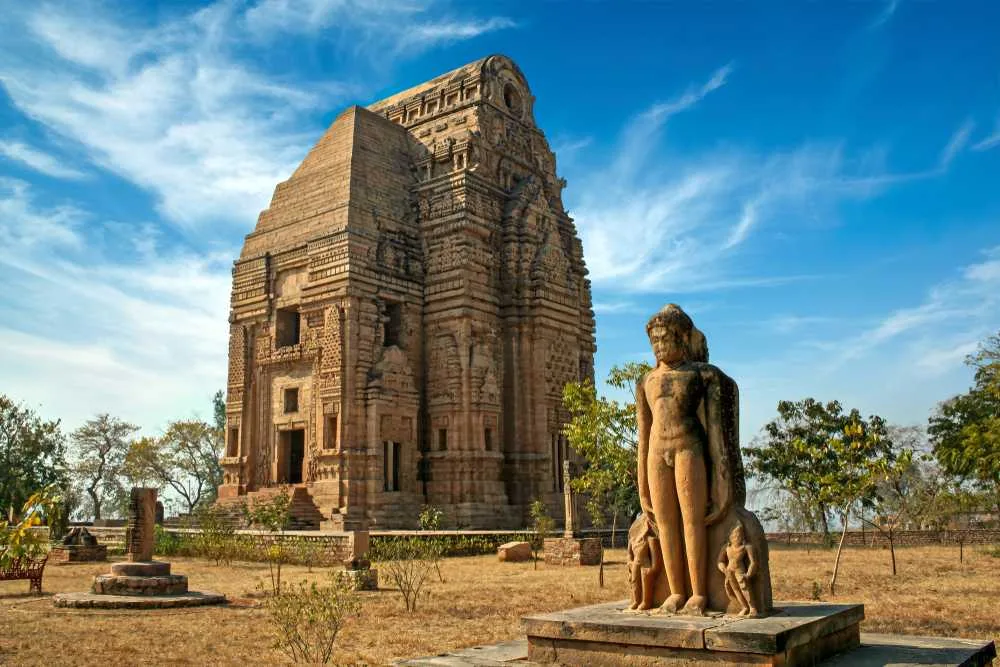
It is known for:
- Tall structure
- Unique shikhara
- Decorative carvings
The temple combines features of northern and southern Indian styles.
The Gwalior Museum also preserves beautiful sculptures from this period, including the famous Sursundari figure.
Baroli
The Ghateshwara Temple at Baroli represents advanced Pratihara architecture.
The temple has:
- Elegant towers
- Rich carvings
- Decorative miniature shrines
Its style later influenced Chandela architecture.
Gyaraspur and Jagat
Temples at Gyaraspur and Jagat show the further development of temple design.
These temples include:
- Ambulatories
- Decorative balconies
- Detailed carvings
- Complex shikhara styles
The Ambika Mata Temple at Jagat is especially famous for its artistic beauty.
Kiradu Temples
The Vishnu and Someshwara temples at Kiradu are examples of the later Pratihara style.
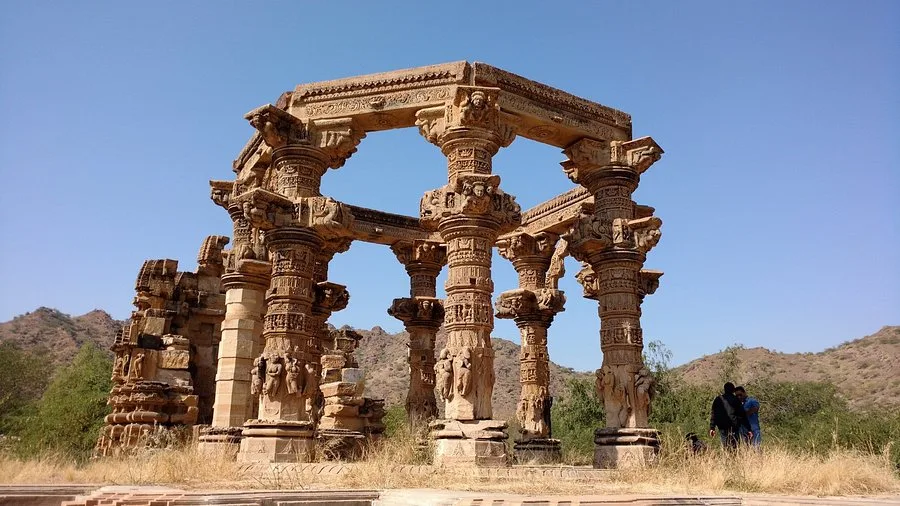
They display:
- Rich ornamentation
- Large halls
- Beautiful pillars
- Complex temple structures
These temples show the peak of Pratihara artistic achievement.
Importance of the Gurjara-Pratihara Dynasty
The Gurjara-Pratiharas played a very important role in Indian history.
Their major contributions include:
- Protecting India from Arab invasions
- Strengthening northern India politically
- Supporting Sanskrit literature
- Encouraging temple architecture
- Developing administration and military organization
They also helped preserve Indian culture and traditions during a period of political conflict.
Decline of the Gurjara-Pratihara Empire
Several reasons led to the decline of the empire:
Continuous Wars
Constant fighting with the Palas and Rashtrakutas weakened the kingdom.
Rise of Regional Powers
Local rulers became powerful and reduced the authority of the central government.
Rashtrakuta Attacks
Repeated invasions by Rashtrakuta rulers damaged the empire badly.
Invasions of Mahmud Ghazni
Foreign invasions further weakened the Pratiharas.
Weak Later Rulers
After strong rulers like Mihir Bhoja and Mahendrapala, weak kings failed to control the empire effectively.
Finally, the dynasty disappeared, and other kingdoms took control of northern India.
Conclusion
The Gurjara-Pratihara Empire was one of the strongest kingdoms of early medieval India. The rulers of this dynasty successfully defended northern India from Arab invasions and created a powerful empire centered at Kannauj.
Kings like Nagabhata I, Nagabhata II, and Mihir Bhoja expanded the empire and brought political stability. The Pratiharas also encouraged literature, religion, art, and architecture.
Their temples at Osian, Gwalior, Baroli, Jagat, and Kiradu remain important examples of medieval Indian architecture. The administration of the empire was organized, and the military was highly respected.
Even though the empire later declined because of wars and invasions, the Gurjara-Pratiharas left a lasting impact on Indian history and culture. Their achievements in politics, defense, literature, and architecture continue to be remembered today.
FAQs on Gurjara-Pratihara Empire
1. Who were the Gurjara-Pratiharas?
The Gurjara-Pratiharas were a powerful medieval Indian dynasty that ruled northern and western India between the 8th and 11th centuries.
2. What does the word Pratihara mean?
The word “Pratihara” means “doorkeeper” or “protector.”
3. Who founded the Gurjara-Pratihara dynasty?
Nagabhata I is considered the founder of the Gurjara-Pratihara dynasty’s power and expansion.
4. Why is Nagabhata I famous?
Nagabhata I is famous for defeating Arab invaders and protecting India from further Arab expansion.
5. Which city became the capital of the Gurjara-Pratihara Empire?
Kannauj became the capital and political center of the Gurjara-Pratihara Empire.
6. Who was the greatest ruler of the Gurjara-Pratihara dynasty?
Mihir Bhoja, also known as Bhoja I, was the greatest ruler of the dynasty.
7. What was the Tripartite Struggle?
The Tripartite Struggle was a long conflict among the Gurjara-Pratiharas, Palas, and Rashtrakutas for control over Kannauj.
8. What religion did the Gurjara-Pratiharas follow?
Most Gurjara-Pratihara rulers followed Hinduism, especially Vaishnavism and Shaivism.