National Education Day: Celebrating Knowledge, Vision, and India’s Educational Journey

Education is often described as the most powerful tool for transformation of individuals, of societies, of nations. In India, the celebration of National Education Day symbolizes this conviction and commemorates the vision of one of our great educationists. On this day we reflect on our progress, challenges and the roadmap ahead.
Thank you for reading this post, don't forget to subscribe!What is National Education Day?
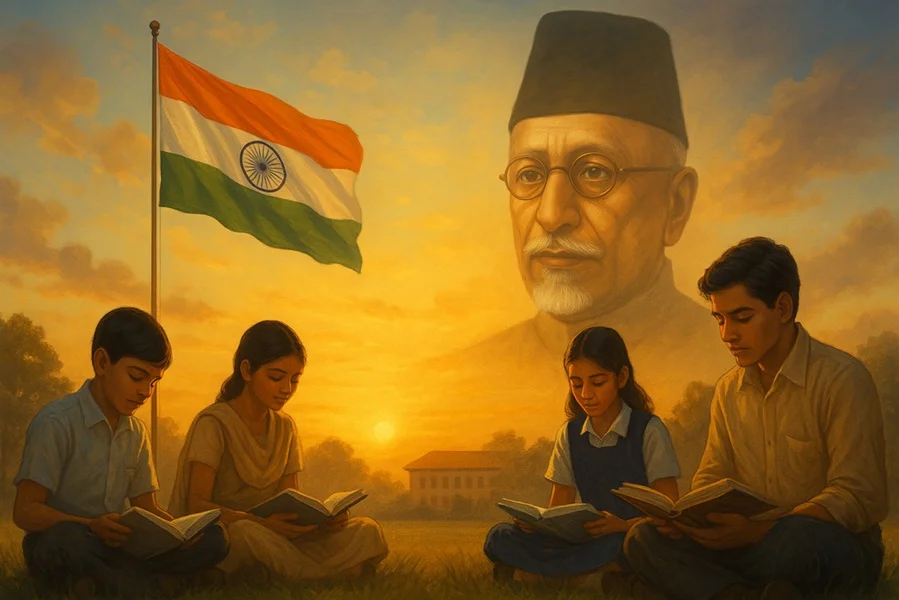
National Education Day is observed in India on 11 November each year. The date marks the birth anniversary of Maulana Abul Kalam Azad (11 November 1888–22 February 1958), the country’s first Education Minister after independence.
The Government of India (through the Ministry of Human Resource Development, now Ministry of Education) officially declared 11 November as National Education Day in September 2008.
On this day all educational institutions are encouraged to conduct seminars, workshops, essay writing competitions, symposia, and other activities to highlight the importance of education and continue with the vision of inclusive, quality education.
Historical Background and the Legacy of Maulana Azad
Early Life and Freedom Struggle
Maulana Abul Kalam Azad was born on 11 November 1888. He was a scholar, activist, journalist and freedom fighter. He played a prominent role in the Indian National Congress, was a close associate in India’s freedom movement and contributed significantly to educational and cultural institutions.
Tenure as Education Minister
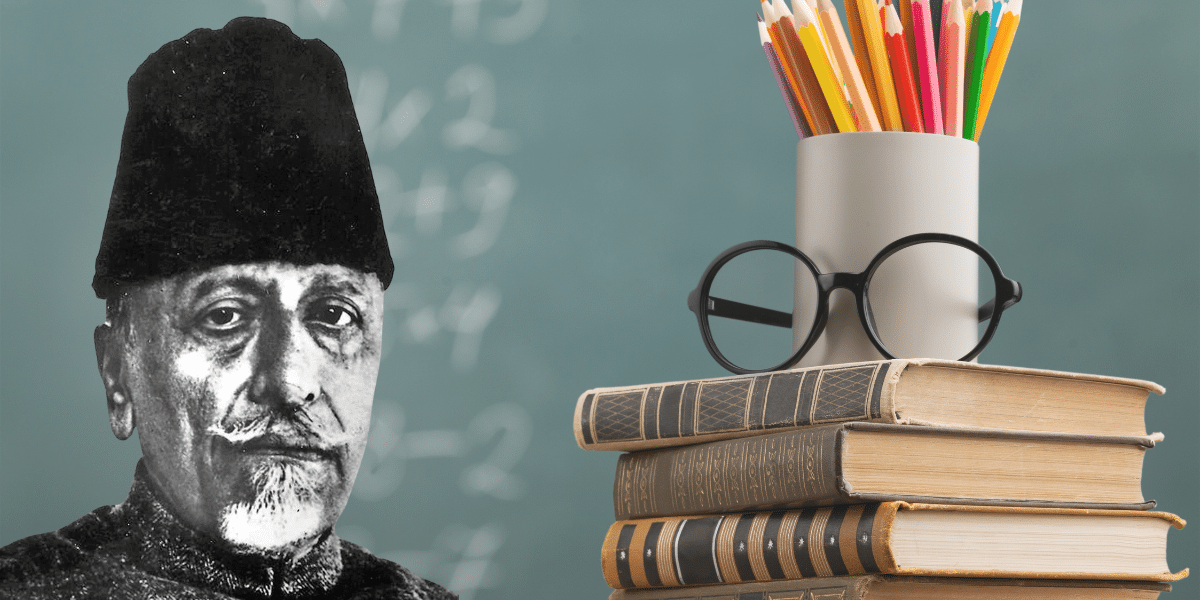
After India’s independence in 1947, Maulana Azad served as the first Education Minister of India (15 August 1947 – 2 February 1958). During that period he laid the foundation of many institutions, emphasised scientific and technical education, promoted a secular and inclusive vision of schooling, and championed access to education for all children.
Institutional Contributions
- He helped establish the University Grants Commission (UGC) in 1953 – which regulates university education in India.
- He laid emphasis on technical education bodies such as the All India Council for Technical Education (AICTE).
- He believed that education must be free and compulsory for children up to a certain age (which later influenced the Right of Children to Free and Compulsory Education Act, 2009) for children aged 6-14.
Why 11 November?
The date 11 November is selected because it is the birth anniversary of Maulana Azad. Commemorating the day helps us remember his vision and mission for an India built on knowledge and education.
Significance of National Education Day
National Education Day has multiple layers of significance, for individuals, schools, communities and the nation as a whole.
1. Honour the legacy of an education visionary
By celebrating this day, we pay tribute to Maulana Azad and the enormous efforts that he put into shaping India’s education framework in the early years of independence. Recognising that helps keep alive the ideals he stood for: quality, access and social justice in education.
2. Raise awareness about the importance of education
The celebration encourages reflection on how education influences lives, empowers people, shapes society and propels nation-building. It reminds us that education is not only acquisition of knowledge, but also the cultivation of values, critical thinking, social responsibility.
3. Reflect on progress and identify gaps
While many strides have been made, the day opens up space for acknowledging the challenges ahead: access disparities, quality issues, regional/urban-rural divides, gender gaps, infrastructure, teacher quality, technology integration, etc. For example, one source notes that though access has improved, more remains to be done to assure quality education for every child.
4. Promote inclusive, quality education for all
The theme and activities often emphasise inclusion ensuring children from all backgrounds (gender, caste, region, socio-economic) receive education that is meaningful, useful and leads to empowerment. The day serves as rallying point for stakeholders (government, educators, civil society, parents) to recommit to this goal.
5. Encourage future-oriented skills and learning
In a fast-changing world (digital, technological, globalised), the day also emphasises that education must evolve: not just rote learning, but critical thinking, creativity, problem-solving, life skills, digital competence. Many institutions use the day to focus on such themes.
Themes, Activities and How It Is Observed
Themes

Each year, the observance may focus on a particular theme related to current educational priorities. For instance, the theme for 2024 was around “Inclusive quality education” / “Empowering the future through quality education.” Under the theme “AI and education: Preserving human agency in a world of automation”, the 2025 International Day of Education inspires reflections on the power of education to equip individuals and communities to navigate, understand, and influence technological advancement.
How Schools and Institutions Celebrate
Activities typically include:
- Special assemblies remembering Maulana Azad
- Seminars, lectures and panel discussions on educational issues
- Essay writing, elocution, debates and poster-making competitions with education-centred themes.
- Workshops for teachers on pedagogy, technology in learning and inclusive practices
- Awareness campaigns in local communities emphasising the right to education and the value of lifelong learning.
- Book donation drives, library drives, reading-encouragement events
- Use of social media, webinars, digital events to engage students and stakeholders more widely.
Examples of Celebration and Implementation
In one illustration: “Educational institutions in the country celebrate the day by organising seminars, symposia, essay-writing competitions, workshops and rallies on the importance of literacy in the country.”
Another source describes it as “a day of hope, gratitude and remembrance … an opportunity to look back at the growth of education in India, recognise its challenges and think of the future.”
Education Landscape in India: Achievements & Challenges
To understand the significance of National Education Day, it is helpful to look at the current education landscape what we have achieved and what remains.
Achievements
- Expanded access – Through various national programmes, enrolment in primary and secondary education in India has grown substantially over the decades.
- Legal frameworks – The Right to Education Act (2009), various state-level initiatives, increased awareness of education as a fundamental right.
- Institutional development – Growth of universities, technical institutions, professional colleges, regulatory bodies like UGC, AICTE have contributed to building the infrastructure.
- Innovation & digital learning – With technology increasingly entering education (digital classrooms, e-learning platforms, blended learning), new opportunities are visible for reaching remote and marginalised areas.
Challenges
However, significant challenges persist:
- Quality of education: Merely being in school is not sufficient. The quality of teaching, learning outcomes (literacy, numeracy, comprehension, critical thinking) remain uneven.
- Equity and inclusion: Gender gaps, socio-economic disparities, rural-urban divides, children with disabilities, minorities still face access and retention issues.
- Infrastructure and teacher quality: Many schools lack adequate infrastructure (labs, libraries, toilets, safe drinking water). Teacher training, availability, motivation remain issues.
- Relevance to future needs: As the world changes, the skills required by students are evolving (digital literacy, problem-solving, socio-emotional skills). Education systems must adapt.
- Transition and drop-out: Ensuring students not only enrol but also complete education, transition to higher levels and avoid drop-outs is important.
- Funding and policy implementation: Many programmes are in place, but implementation gaps, monitoring and accountability remain a challenge.
One source notes that while many children are now in school, “more has to be done to ensure that each Indian student receives a quality education.”
Relevance for the Future: Why It Matters Today
National Education Day is not just a ritual or commemoration; its relevance is increasing in today’s world, for several reasons:
1. Rapid technological change
With the digital revolution, artificial intelligence, automation and globalisation, education systems must move beyond traditional models. The future workforce must be skilled, adaptable and lifelong learners. National Education Day can be a point of reflection on aligning education to future needs.
2. Social equity and inclusive growth
As India aims to harness its demographic dividend (large youth population), ensuring that every child, irrespective of background, gets quality education is essential. This is critical for social mobility, reducing inequality and enabling inclusive development.
3. Global competitiveness
Education systems are increasingly comparable globally; nations strive for higher human development indices, innovation, research and development. To secure India’s place in a knowledge economy, quality education is key.
4. Sustainable development
Education intersects with many Sustainable Development Goals (SDGs): poverty reduction, health, gender equality, decent work, innovation. By emphasising education, we contribute to holistic development of individuals and society.
5. Lifelong learning
In today’s dynamic environment, learning does not end with school. The mindset of continuous learning, upskilling, re-skilling is vital. National Education Day is an opportunity to spark this culture among learners, educators and citizens.
Implications for Stakeholders
For Students
- Recognise that education is not just for passing exams but for building capabilities, character and lifelong potential.
- Use the day to reflect on your learning journey: What am I really learning? How can I make it meaningful?
- Take part in activities (essay, debate, community service) that enhance your understanding of learning beyond textbooks.
For Teachers and Educators
- Revisit your role: You are not just teaching content, you are shaping minds, attitudes, citizenship and future-ready learners.
- Use the day to adopt innovative teaching methods, integrate technology, encourage critical thinking and creativity.
- Foster inclusive classrooms where every student is supported and motivated.
For Educational Institutions
- Organise meaningful programmes on National Education Day that go beyond token rituals workshops, panel discussions, community outreach, student-led projects.
- Use the occasion to audit your institution’s learning environment: infrastructure, pedagogy, outcomes, student support.
- Link the celebration to actionable commitments: improving access, upgrading resources, teacher training, digital adoption.
For Policymakers and Civil Society
- Use the day as a platform for policy reflection: Are our schemes translating into real learning? Are we closing gaps?
- Engage communities, NGOs, private sector for partnerships in education innovation, teacher development, infrastructure support.
- Promote advocacy for neglected areas: children with special needs, remote regions, gender parity, adult education, vocational skills.
How One Can Celebrate or Observe National Education Day
Here are some concrete ideas how individuals, schools, colleges, community groups can observe the day in a meaningful way:
- Organise an essay or poster competition on themes like “Education for All”, “Quality Learning”, “Inclusive Education in India”.
- Host a seminar or webinar where educators, students and experts discuss future of education, challenges and innovations.
- Launch a book-donation drive or library enrichment programme in your local school or community centre especially targeting under-served areas.
- Arrange for student-led presentations or performances (skits, street plays, digital storytelling) on the importance of education and inspiring role-models.
- Invite alumni or community leaders to share motivational talks on how education transformed their lives.
- Incorporate technology demos or exhibitions show how digital learning, e-resources, blended classrooms are shaping modern education.
- Create a pledge wall or digital board where students, teachers, parents commit to improving some aspect of education (reading habit, mentoring younger students, supporting peers, etc).
- Use social media campaigns #NationalEducationDay, #EducationForAll to spread awareness, share stories of change, highlight grassroots efforts.
- Organise an inclusion-awareness drive: highlight challenges faced by differently-abled students, marginalised communities, and discuss solutions.
- Combine the celebration with community outreach: like tutoring under-privileged children, organising reading camps, family-education sessions for parents.
Looking Ahead: The Roadmap for Education in India
To honour the spirit of National Education Day truly, we must go beyond reflection and commit to action. Here are key areas that should guide the roadmap:
Quality Over Mere Access
Access to schooling has improved substantially, but the quality of learning must now take centre stage. Measures include strengthening teacher training, upgrading curricula, integrating modern pedagogy, monitoring learning outcomes and reducing the gap between rote learning and meaningful learning.
Equity and Inclusion
We must strive to reduce the disparities: gender, socioeconomic status, urban-rural divide, minority/tribal communities, children with disabilities. Policies must be implemented with accountability, resources must reach the last mile, and local realities must drive solutions.
Technological Integration for 21st Century Skills
Technology is not a substitute but a tool. Blended learning, digital resources, interactive pedagogy, computer literacy, analytical thinking, collaborative learning must be embedded across levels. Especially in remote and under-served areas, technology can be a game-changer if deployed with care.
Lifelong Learning and Vocational Skills
Schooling is no longer the end; learning is continuous. Aligning education with employability, vocational training, skilling, entrepreneurship, and preparing learners for uncertain futures is essential.
Localisation, Culture and Language
An education system must resonate with local cultures, languages, traditions. Especially in a diverse country like India, and regions like Assam with tribal communities, educational content and pedagogy must reflect local realities. Mother-tongue instruction, culturally relevant materials, bilingual teaching all matter.
Community Engagement and Partnerships
Education is not only a teacher-student interaction; families, communities, local bodies, NGOs, private sector all play a role. On National Education Day we can emphasise community involvement in school governance, support for under-privileged children, mentoring programmes, library initiatives.
Monitoring, Accountability and Innovation
Policies are only as good as their implementation. Data tracking, learning outcome measurement, transparency in resource allocation, encouragement of innovation in pedagogy and institution management are essential. Pilot programmes must be scaled if successful.
Global Outlook & Indian Context
India must learn from global best practices but adapt them to local contexts. The goal is to build an Indian system that is globally competitive, yet locally relevant producing learners who can thrive in a globalised world, while rooted in Indian values.
Conclusion
National Education Day offers us more than a date on the calendar. It is a reminder of past legacies, current responsibilities, and future possibilities. It calls upon students, teachers, institutions, policymakers and society at large to pause and ask: Are we fulfilling the promise of education? Are we equipping our young people not only with knowledge, but with skills, character and the capacity to shape the future?
From the vision of Maulana Azad to the aspirations of modern India, education remains the bedrock of individual empowerment and national progress. On this National Education Day, let us reaffirm our commitment to education for all, quality for every learner, relevance for tomorrow. And let each of us, in our own sphere school, college, home or community take one concrete step toward that goal.
FAQs on National Education Day
1. What is National Education Day?
National Education Day is observed every year on November 11 in India to commemorate the birth anniversary of Maulana Abul Kalam Azad, the first Education Minister of independent India, who played a key role in shaping the nation’s education system.
2. Why do we celebrate National Education Day?
The day is celebrated to honor Maulana Azad’s contributions to education and to promote awareness about the importance of education in building an inclusive, equitable, and progressive society.
3. Who was Maulana Abul Kalam Azad?
Maulana Abul Kalam Azad was a renowned scholar, freedom fighter, and India’s first Education Minister. He laid the foundation for several educational institutions, including the University Grants Commission (UGC) and AICTE, and emphasized free and compulsory education for all children.
4. When was National Education Day first celebrated?
It was first celebrated in 2008, after the Government of India officially declared November 11 as National Education Day to commemorate Maulana Azad’s birthday.
5. What is the theme of National Education Day 2025?
The 2025 observance aligns with the global focus on “AI and education: Preserving human agency in a world of automation,” encouraging reflection on how education can empower people to adapt to and influence technological progress.
6. How is National Education Day celebrated in schools and colleges?
Institutions across India organize seminars, essay competitions, debates, poster-making contests, and awareness rallies to discuss educational issues and promote literacy and learning for all.
7. What message does National Education Day convey?
It reminds us that education is the foundation of empowerment, progress, and equality. It emphasizes the need for quality, accessible, and inclusive education to create responsible citizens and a strong nation.
8. Is National Education Day a public holiday?
No, it is not a public holiday, but schools, colleges, and universities actively observe the day through educational and awareness-building activities.
9. How is National Education Day relevant today?
In a world driven by digital transformation, National Education Day highlights the need to integrate technology, critical thinking, and life skills into education while preserving human values and creativity.
10. What lessons can we learn from Maulana Abul Kalam Azad’s vision?
Maulana Azad believed that education is the right of every individual, irrespective of caste, gender, or religion. His vision teaches us to uphold equality, secularism, and universal access to education as key pillars of national growth.