


Onam: History, Story, Traditions and Celebrations

Onam is one of the most important festivals celebrated in Kerala and is widely known as a harvest festival of the Malayali people. Celebrated during the Malayali month of Chingam, which usually falls in August and September, Onam marks the beginning of the Malayali New Year and brings families and communities together. The festival is mainly associated with Kerala, although Onam celebrations are also observed by people in other parts of India and by Malayali communities around the world.
Thank you for reading this post, don't forget to subscribe!Onam is celebrated for 10 days, with Thiruvonam being the most important and grandest day. The festival combines religious traditions, folk culture, food, music, dance, games, family gatherings and community celebrations. At the heart of the festival is the story of King Mahabali, a legendary ruler remembered for his kindness, justice and generosity.
What is Onam?
Onam is a Hindu festival connected with the harvest season and the traditional calendar of Kerala. It is celebrated in the month of Chingam, which generally overlaps with August and September in the Gregorian calendar.
The festival is closely connected with the belief that King Mahabali returns to Kerala once every year to meet his people. According to tradition, Mahabali was a powerful ruler but was also known for his generosity and fair treatment of his subjects. People believe that his annual return is celebrated during Onam.
The festival is also a time to express gratitude for the harvest and prosperity. Homes are cleaned and decorated, flowers are arranged in beautiful designs, new clothes are worn, and families prepare a traditional vegetarian feast known as Onam Sadya.
The Story of King Mahabali
The most famous story connected with Onam is the story of King Mahabali. In Hindu tradition, Mahabali was an asura king who ruled Kerala. Although asuras are often presented as opponents of the devas in Hindu mythology, Mahabali is remembered in the tradition as a good, generous and righteous ruler.
Mahabali was a devotee of Vishnu and was known for his charity. Under his rule, his kingdom became prosperous, and his people were believed to be happy with his leadership.
However, Mahabali became extremely powerful and gained control over large territories. His growing power concerned the devas. They approached Vishnu and asked for help.
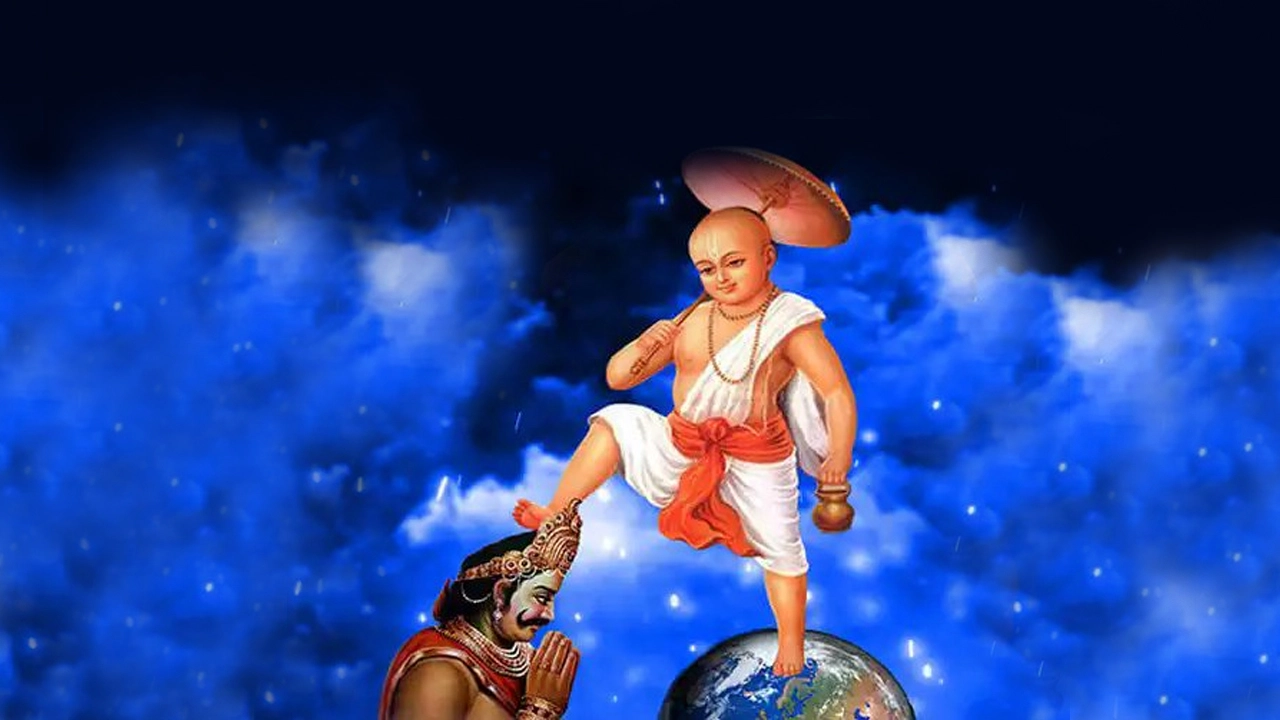
Vishnu decided to test Mahabali’s generosity. He appeared before the king in the form of Vamana, a dwarf avatar of Vishnu. Vamana asked Mahabali for only as much land as he could cover in three steps.
Mahabali agreed to the request.
Vamana then grew into a huge divine form. With his first step, he covered the Earth. With his second step, he covered the heavens. There was no space left for his third step.
Mahabali then offered his own head for the third step. Vishnu placed his foot on Mahabali’s head and sent him to Patala, the underworld.
However, Vishnu was pleased with Mahabali’s devotion and generosity. As a reward, Mahabali was allowed to return to his people once every year. This annual return is traditionally associated with the celebration of Onam.
The story gives Onam a special meaning. It celebrates not only religious devotion but also values such as generosity, humility, equality and love for one’s people.
Why is Onam Celebrated?
Onam is celebrated for several reasons. One of the most important is the traditional belief that King Mahabali returns to Kerala during this period.
The festival is also associated with the harvest. Kerala has a strong agricultural tradition, and Onam provides an opportunity for people to express gratitude for the food and prosperity received from the land.
For many families, Onam is also a time for reunion. People living away from their homes often return to their families during the festival. Relatives meet, traditional food is prepared, houses are decorated, and cultural activities take place.
Thus, Onam has both cultural and religious importance.
Ten Days of Onam
Onam celebrations traditionally begin with Atham and continue for 10 days until Thiruvonam. Each day has its own importance and traditional activities.
Atham
Atham is the first day of Onam. One of the major activities begins on this day: the creation of the Pookalam, a decorative design made with flowers.
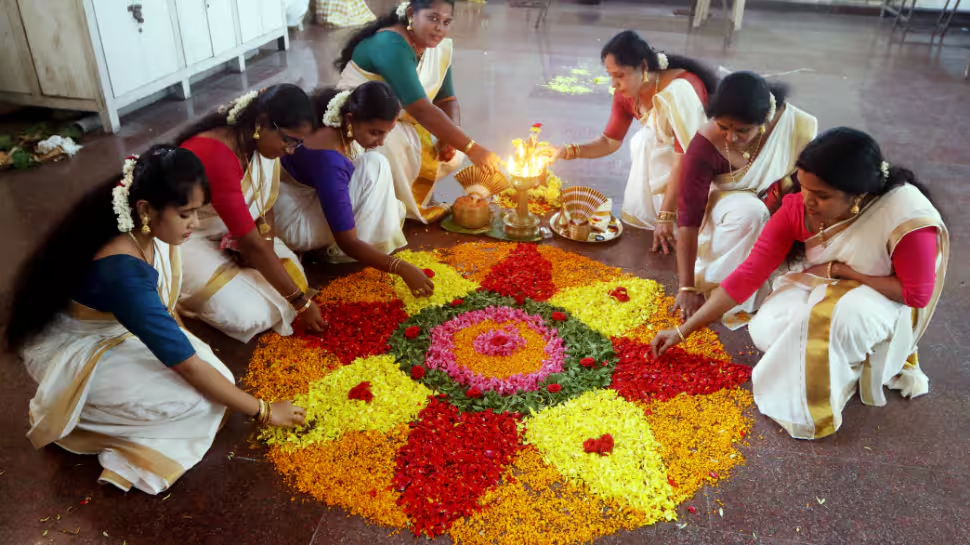
People also begin cleaning their homes and preparing for the festival.
Chithira
On the second day, more flowers are added to the Pookalam. Families continue cleaning and decorating their homes.
Chodi
The third day is associated with shopping. People may buy new clothes, jewellery and gifts for family members.
Visakam
Visakam brings more festive activities, competitions and cultural performances. Traditional activities such as Onathallu may be performed in some places.
Anizham
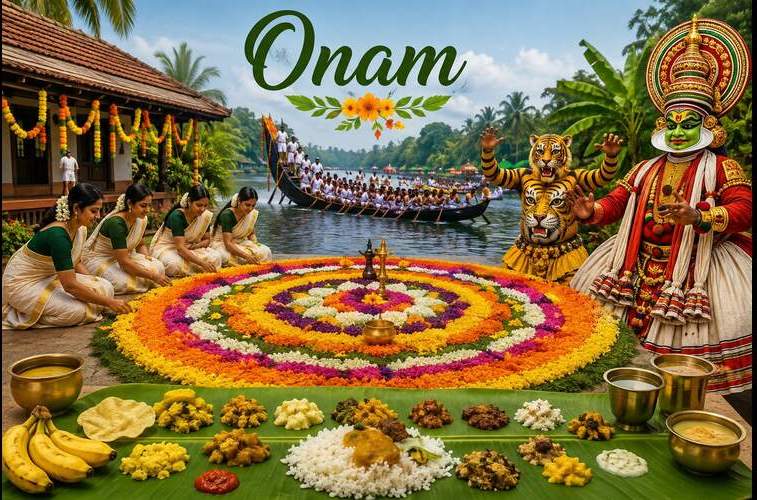
Anizham is particularly associated with Vallamkali, the famous snake boat races of Kerala. Long traditional boats filled with rowers compete on Kerala’s rivers and backwaters.
Thriketta
On the sixth day, people increasingly focus on family gatherings. Many people travel to their ancestral homes to spend time with relatives.
Moolam
Moolam brings more cultural performances and smaller community versions of the Onam feast. Puli Kali, also called the Tiger Dance, is one of the colourful traditional performances associated with Onam.
Pooradam
On the eighth day, traditional figures or murtis of King Mahabali and Vamana may be placed in homes and around the Pookalam.
Uthradam
Uthradam is considered an important preparation day before Thiruvonam. Families exchange gifts and prepare food and other items for the main celebration.
Thiruvonam
Thiruvonam is the most important day of Onam. Families wear new clothes, offer prayers, visit temples and spend time together.
The famous Onam Sadya is also traditionally prepared on this day.
Pookalam: The Floral Decoration of Onam
One of the most recognisable traditions of Onam is the Pookalam. It is a beautiful floral arrangement created on the floor, usually near the entrance of a house.
People use flowers of different colours to create circular and geometric patterns. New flowers may be added as the festival progresses.
The Pookalam is traditionally associated with welcoming King Mahabali. Today, Pookalam competitions are also held in many places, especially in schools, colleges, offices and public spaces.
Creating a Pookalam is not only about decoration. It is also a community activity where family members, friends and neighbours can work together.
Onam Sadya: The Traditional Feast
Food is one of the most important parts of Onam celebrations. The traditional feast is called Onam Sadya.
Sadya is a large vegetarian meal served on a banana leaf. It can include around 11 to 13 dishes or even more, depending on the occasion and family tradition.
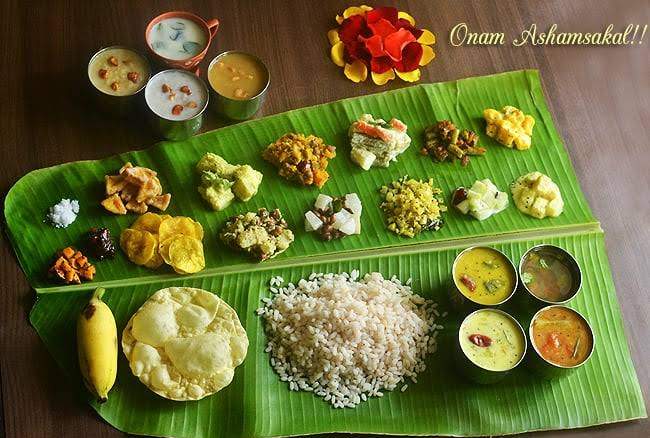
Common dishes associated with Sadya include rice, sambar, avial, thoran, olan, pachadi, kichadi, pickles, banana chips and different types of payasam.
The dishes are traditionally served in a particular arrangement on the banana leaf. Families sit together and enjoy the meal as part of the festival celebration.
The variety of dishes reflects the rich food culture of Kerala.
Vallamkali: The Snake Boat Race
Vallamkali is one of the most exciting cultural events connected with Onam.
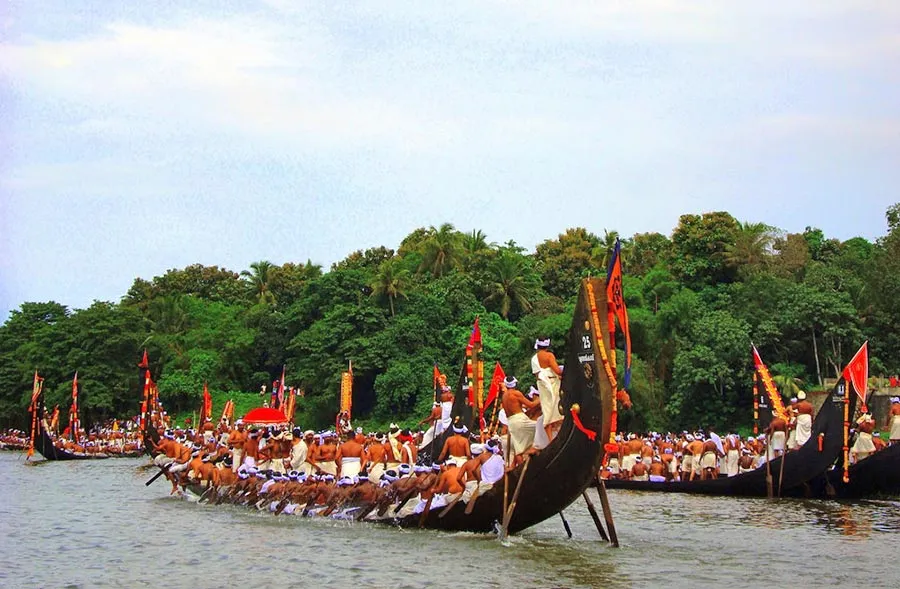
In these traditional boat races, long boats are rowed by large teams of people. The boats move together in rhythm, often accompanied by traditional songs and cheers from spectators.
The races take place on Kerala’s rivers and backwaters and attract large crowds. Vallamkali represents teamwork, coordination and community spirit.
Puli Kali and Kaikottikali
Onam is also famous for traditional dances and performances.
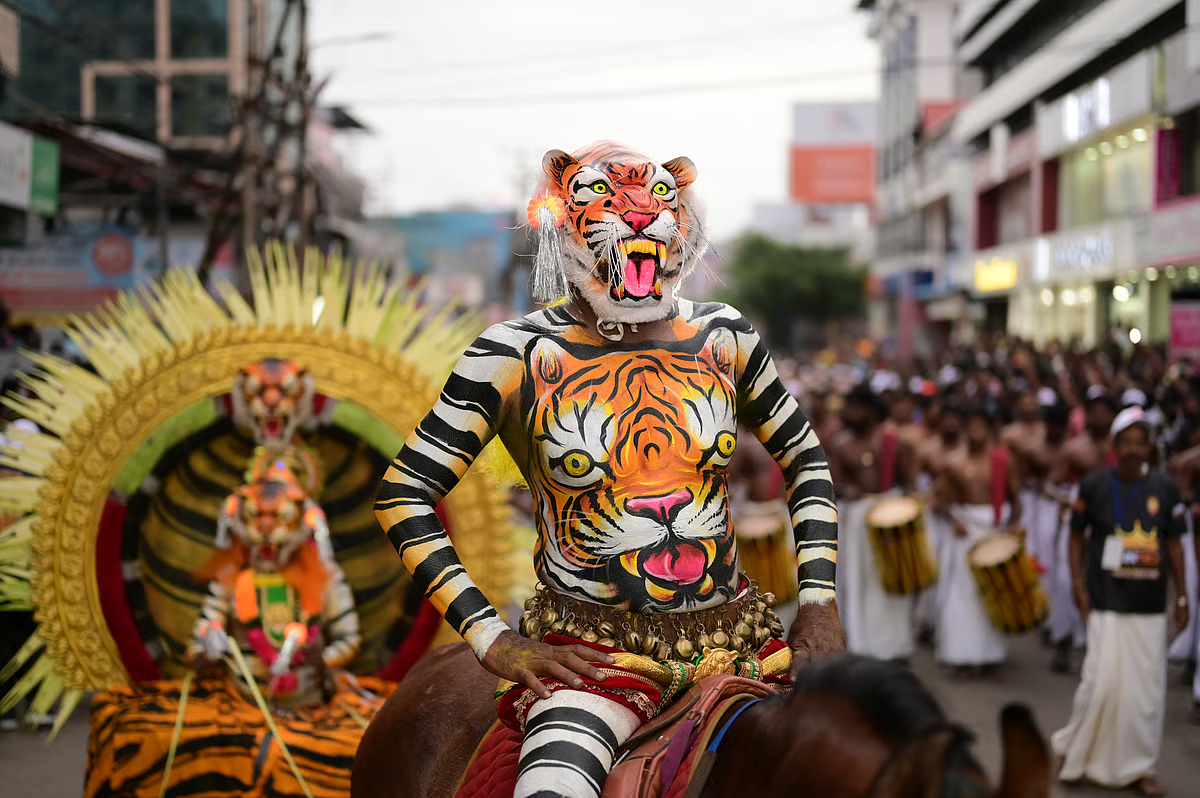
Puli Kali, or Tiger Dance, is a colourful street performance. Performers paint their bodies with tiger-like patterns and dance to traditional music. The performance creates a lively atmosphere during the festival.
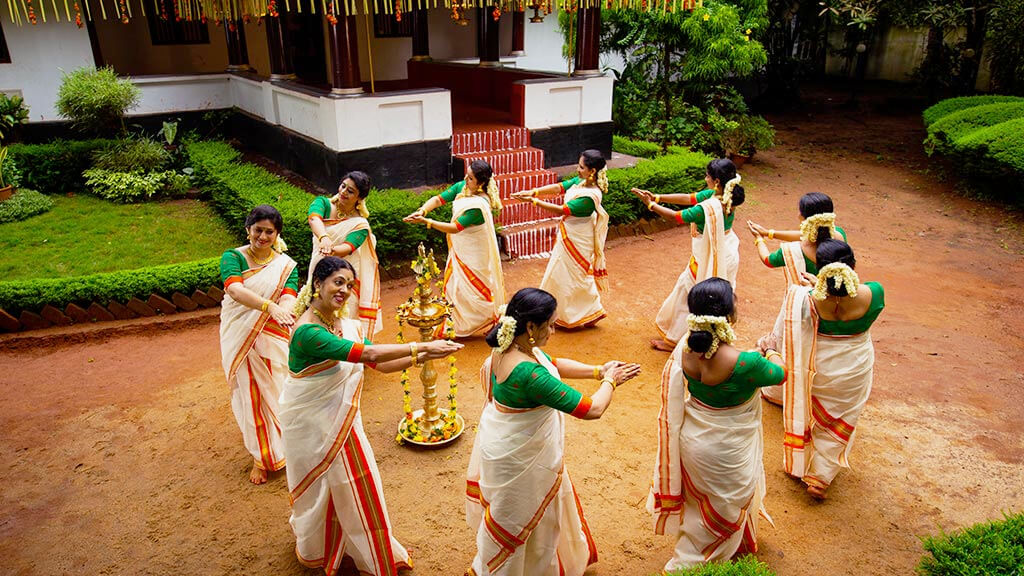
Kaikottikali, also known as Thiruvathirakali in related cultural contexts, is a traditional group dance performed by women. Participants dance in a circle while clapping their hands and moving in rhythm.
These performances help preserve Kerala’s traditional arts and make Onam a major cultural celebration.
New Clothes, Gifts and Family Gatherings
Wearing new clothes is another popular Onam tradition. New garments bought for the festival are often called Onakkodi.
Families exchange gifts and spend time together. People visit relatives, prepare traditional meals and participate in cultural activities.
Homes are cleaned and decorated before the main day. The festival therefore creates a sense of freshness and togetherness.
Onam Beyond Kerala
Although Onam is strongly connected with Kerala and Malayali culture, the festival is not limited to the state.
Malayali communities living in other Indian states and in different countries also celebrate Onam. Cultural organisations, schools, workplaces and community groups often organise Pookalam competitions, Sadya meals, dances and other programmes.
In this way, Onam has become an important celebration of Malayali culture across India and among Malayali communities worldwide.
Importance of Onam Today
Onam continues to be important because it brings together different aspects of Kerala’s cultural life. It connects traditional stories with food, art, music, dance, family customs and community activities.
The story of Mahabali is especially meaningful because the king is remembered as a ruler who cared for his people. The festival therefore carries ideas of generosity, equality, prosperity and social harmony.
Modern Onam celebrations may look different from traditional celebrations, but many important customs remain popular. People continue to create Pookalams, enjoy Sadya, wear traditional clothes, participate in cultural programmes and meet their families.
Interesting Facts About Onam
- Onam is primarily celebrated in Kerala.
- The festival takes place during the Malayali month of Chingam.
- Onam celebrations traditionally continue for 10 days.
- Thiruvonam is the main day of the festival.
- King Mahabali is the central legendary figure associated with Onam.
- Vamana is the dwarf avatar of Vishnu connected with the Mahabali story.
- Pookalam is a floral decoration made during Onam.
- Onam Sadya is a traditional vegetarian feast served on a banana leaf.
- Vallamkali is the famous traditional boat race associated with Onam.
- Puli Kali is a colourful Tiger Dance performed during the festival.
- Onam is also connected with the traditional harvest season and the Malayali New Year.
- The festival encourages family gatherings, cultural activities and community participation.
Onam as a Celebration of Culture and Togetherness
Onam is much more than a harvest festival. It brings together mythology, agriculture, food, art, music, dance and family traditions. The story of King Mahabali gives the festival its central legend, while traditions such as Pookalam, Vallamkali, Puli Kali and Onam Sadya make the celebration colourful and memorable.
For generations, Onam has helped preserve Kerala’s cultural identity. From flower decorations outside homes to large family meals and traditional performances, the festival creates an atmosphere of happiness and togetherness.
The annual celebration of Mahabali’s return also remains one of the most distinctive features of Onam. It connects an ancient religious story with a living cultural tradition that continues to be celebrated by millions of people.
FAQs About Onam
1. What is Onam?
Onam is a major harvest festival of Kerala, celebrated mainly by Malayali people during the month of Chingam.
2. Why is Onam celebrated?
Onam is traditionally celebrated to welcome the annual return of King Mahabali and to celebrate the harvest and prosperity.
3. How many days is Onam celebrated?
Onam celebrations traditionally continue for 10 days, beginning with Atham and ending with Thiruvonam.
4. Which is the main day of Onam?
Thiruvonam is the most important and grandest day of the Onam festival.
5. Who is King Mahabali?
King Mahabali is a legendary asura king remembered in Kerala tradition as a generous, righteous and beloved ruler.
6. What is Pookalam in Onam?
Pookalam is a decorative floral design made on the floor using flowers during the Onam celebrations.
7. What is Onam Sadya?
Onam Sadya is a traditional vegetarian feast served on a banana leaf and prepared especially for the Onam festival.
8. What is Vallamkali?
Vallamkali is a traditional boat race of Kerala, commonly known as the snake boat race, associated with Onam celebrations.