Rengma Nagas Tribe: An Insight into Assam’s Naga Community

The Rengma Nagas Tribe of Assam is one of the lesser-known yet culturally rich Naga communities residing in the Karbi Anglong district. Originally hailing from the Naga Hills of present-day Nagaland, a section of the Rengmas migrated to Assam in the 19th century, settling in the lush, hilly terrains between Barpathar in the south and Chokihola in the north. Currently, approximately 400 families, spread across 12 villages under the Naga Rengma Mauza jurisdiction, form the core population of Rengma Nagas in Assam, numbering around 4,000 people as of 1987.
Thank you for reading this post, don't forget to subscribe!This blog explores the history, social structure, traditions, religious beliefs, economic practices, and unique lifestyle of the Rengma Nagas Tribe of Assam, highlighting their contributions to the region’s cultural mosaic.
Racial Affinities of the Rengma Nagas Tribe of Assam
The Rengma Nagas are one of the sixteen major Naga tribes, known for their distinctive language, customs, and social practices. Linguistically, the Rengma Nagas of Karbi Anglong belong to the southern section of the western Rengmas of Nagaland. Their dialect closely resembles this section, differentiating them from the northern section of western Rengmas and the eastern Rengmas, each of whom speak distinct dialects.
For instance, the numerals used by the Rengmas of Karbi Anglong align with the southern western Rengma dialect, illustrating their ancestral roots. Similarly, the bachelor’s dormitory is referred to as ‘Rensi’, just like the southern western Rengmas, unlike other Rengma groups who call it Azughu or Awikhu.
This linguistic and cultural alignment indicates that the Rengma Nagas of Assam are direct descendants of the southern western Rengmas who migrated from Nagaland.
Migration of the Rengma Nagas Tribe of Assam
The migration of the Rengma Nagas to Karbi Anglong likely occurred in the early 19th century. Two chieftains, Desong Sebo and Mongkha Sebo, led around 200 families from the Naga Hills into the uninhabited hills of Karbi Anglong. Various accounts explain the migration:
- Historical Causes: J.P. Mills, in The Rengma Nagas, suggests that internal feuds and threats from neighboring Angami Nagas prompted the migration. The death of a Rengma hero, Vyembi, weakened their defense, leading to the northward movement and eventual settlement in Mikir Hills.
- Hunting Expeditions: According to local accounts, the Rengmas were avid hunters. While pursuing game, Desong and Mongkha discovered the fertile and uninhabited hills of Karbi Anglong, which prompted a permanent settlement.
- Clan Conflicts: Another version narrates a feud between two influential brothers over fishing rights, which led the younger brother and his followers to leave the Naga Hills and settle in Karbi Anglong.
The migration route traversed dense cane forests, earning them the names Noong Teri Phenyan (Cane Path Rengmas) and Nizayi Awi Khiya (Cane-Cutting Rengmas) among northern and southern western Rengmas, respectively.
Chieftainship in the Rengma Nagas Tribe of Assam
The leadership of the Rengma Nagas of Karbi Anglong has been traditionally hereditary. Since their migration, the lineage of chieftains has been as follows:
- Desong Sebo
- Kehung Sebo (Phukan)
- Lathe Himbo
- Suga Nandu
- Yakungle Nandu
- Pukhu Nandu
- Bidya Ram Nandu
Kehung Sebo was honored with the title of Phukan by the Ahom King for paying tribute, marking a significant recognition of Rengma leadership during the Ahom regime.
Clans and Social Structure
The Rengma Nagas Tribe of Assam is traditionally divided into eight exogamous clans, each with its unique identity and social significance. These clans are:
- Kenpuvnyu
- Kanrjnyu
- Resobinyu
- Jisenbinyu
- Sab-Inyu
- Nyenthanyu
- Nangdunyu
- Henbunye
Each clan functions as a social unit with specific roles, responsibilities, and hereditary traditions. Marriage within the same clan is strictly prohibited, as exogamy is a fundamental principle of Rengma society. Violating this rule is considered a grave offense and can result in serious social sanctions, including excommunication or fines in cash and kind. This rule ensures genetic diversity, strengthens alliances between different clans, and maintains harmony within the community.
Clan names are often used as titles in abbreviated forms to indicate lineage and social identity. For instance, Sab-Inyu is commonly shortened to Sebo, while Nangdunyu becomes Nandu. These titles are not only markers of ancestry but also serve to establish respect and recognition within the village and among neighboring communities.
The family structure among the Rengma Nagas follows a patriarchal system. Property, wealth, and family authority are traditionally inherited through male members, with the eldest son assuming primary responsibility for family property and affairs. He acts as the custodian for younger siblings until they reach maturity, ensuring the smooth management of assets and maintaining family honor. Beyond material responsibilities, the eldest son also plays a crucial role in performing family rituals, overseeing marriages, and representing the family in village matters.
In addition to the nuclear family, extended members such as unmarried brothers, sisters, and other male relatives may reside in the same household. This collective living arrangement fosters strong familial bonds, mutual support, and cooperation in daily activities such as agriculture, hunting, and festivals. It also reinforces the clan system, as each family unit remains closely connected to its broader lineage and social obligations.
Through this structured clan system and patriarchal family organization, the Rengma Nagas of Assam have maintained social cohesion, preserved their cultural identity, and ensured the continuity of traditions across generations.
Marriage Customs
Marriage among the Rengma Nagas is highly ritualized, combining negotiation, service, and celebration:
- Minimum marriageable age: Boys 20, Girls 16
- Sempom: Engagement ceremony involving gifts of betel leaves, rice beer, and a formal proposal
- Bride price: Traditionally included one year of unpaid service by the groom or livestock offerings
- Jankhim: Marriage ceremony featuring feasts, songs, dances, and mock fights between the families
- Consummation occurs on the fourth night after marriage
- Monogamy is standard, though polygamy and remarriage for widows are allowed
Cross-cousin marriage is strictly forbidden, reflecting the tribe’s exogamous traditions.
Birth and Death Rituals
Birth
Newborns are celebrated with Genna, a nine-day period of family isolation and ritual observance. On the tenth day, a feast is conducted, and offerings like cocks or hens and weapons are presented to the child.
Death
Death rituals also involve a nine-day Genna during which family members refrain from work and movement. The deceased is buried with traditional rites, with stone slabs marking the grave, and a feast on the tenth day signifies the soul’s final departure.
Religion and Beliefs
All Rengma Nagas of Karbi Anglong are now Christians, having transitioned from animistic beliefs. Earlier, they worshipped a pantheon of gods and goddesses:
- Terunyu: Supreme deity
- Nichagyu: God of wealth
- Nichagyi: Goddess of wealth
No priests exist in the traditional sense; elders provide guidance during festivals and rituals. Belief in magic, witchcraft, and a medicine man, called Pethinyu, remains influential. Observances like Genna are deeply ingrained in religious life.
Bachelors’ Dormitory (Rensi)
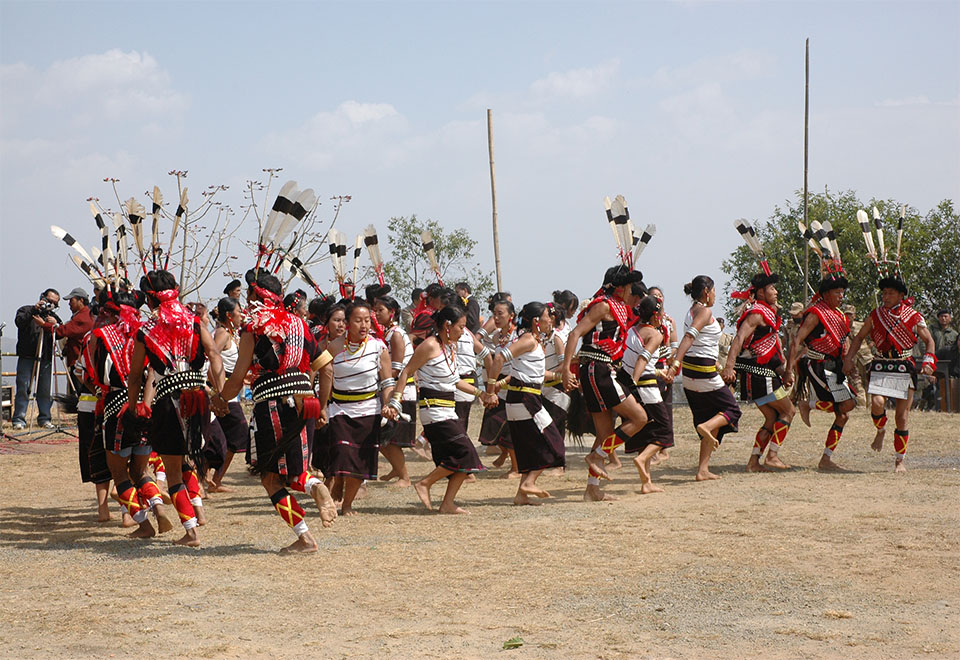
The Rengma Nagas maintain a Rensi, or bachelors’ dormitory, where boys live until marriage. The dormitory serves as a training ground for:
- Handicrafts and weaving
- Warfare
- Singing and dancing
- Hunting and fishing
The senior member trains juniors, who assist in chores. It fosters leadership, communal responsibility, and skill-building.
Occupation and Economic Condition
Agriculture forms the backbone of the Rengma Nagas Tribe of Assam:
- Jhum cultivation: Rice, maize, cotton, chillies, and ginger
- Wet-land cultivation where possible
- Horticulture: Oranges, pineapples, gourds
- Cottage industries: Weaving, blacksmithy, bamboo and cane craft
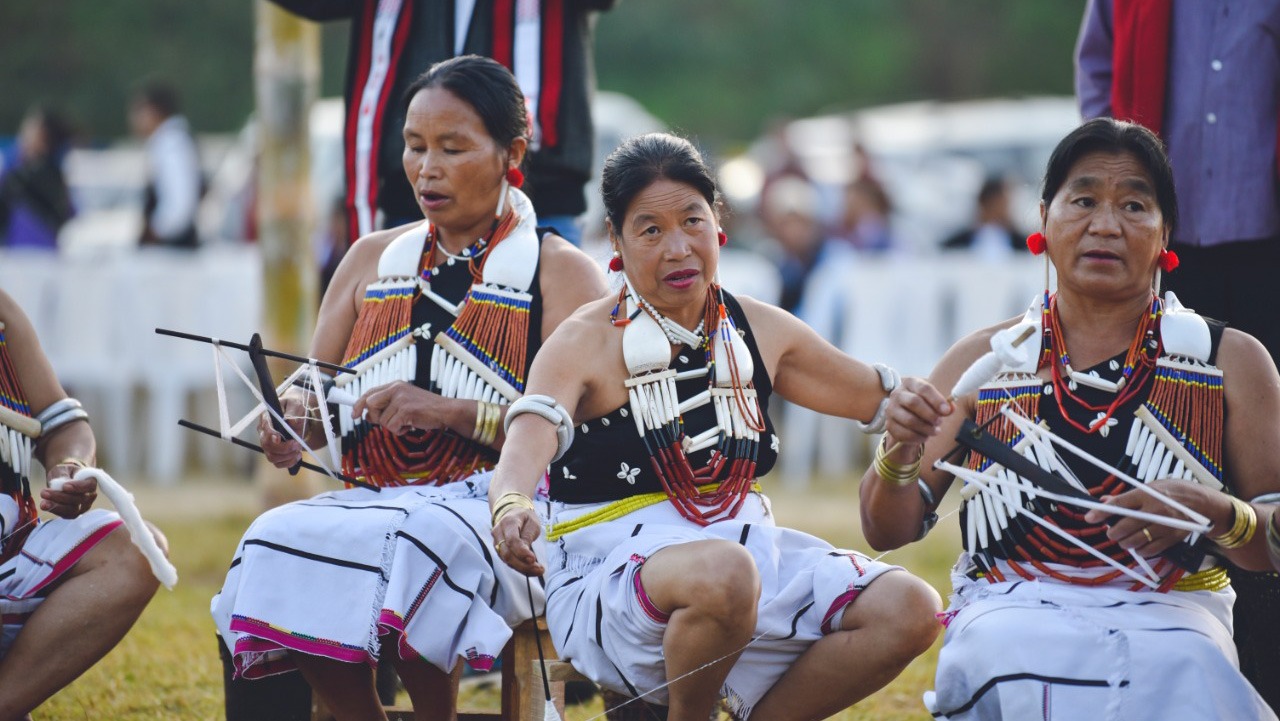
Women play an essential role, especially in spinning, weaving, and domestic labor. Economically, the Rengmas are relatively self-sufficient and better off than neighboring communities like the Karbis.
Agricultural Ceremonies
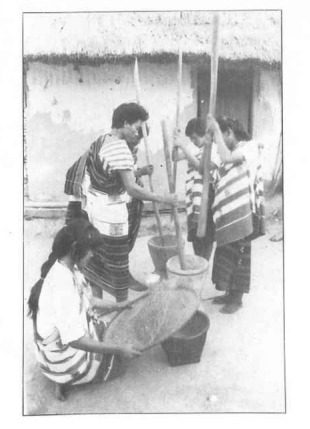
- Nyada: Eight-day festival marking the end of the agricultural year, including ancestor worship and communal feasting
- Pi-Pe: Three-day purification ritual at the start of January before clearing Jhum fields
- Lotsung Nga: Ceremony for burning cleared jungle land for cultivation
- Khong Kepang Kennyu: First paddy harvest ritual, similar to the Assamese ‘Lakhimi Ana,’ but performed at a communal level
Traditional Dress and Ornaments
Men
- Nzanyan: Traditional dhoti/pants
- Pihu: Headgear for dances
- Phehong/Judu: Scarves
- Ornaments: Benpen (armlet), Khajanchi (bracelet), Phapen (anklet), Tabinyu (ear ornament), Ten (bracelet)
Women
- Ginhu: Plain skirt
- Pherhe: Decorated skirt
- Phehong: Upper body covering
- Jewelry: Sea-shell necklaces (Teharou and Tesang), bracelets, armlets
Village Structure and Housing
Rengma villages, or Phen, are organized with houses (Kalo) in two rows facing each other. Each house consists of:
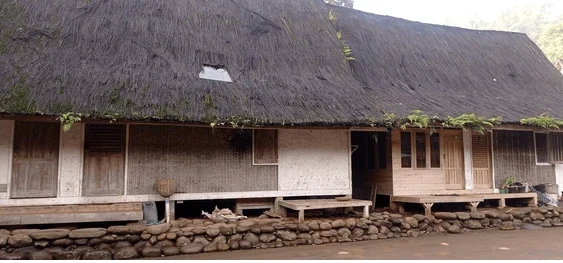
- Khepensuen: Front room for paddy pounding and storage
- Kanyusuen: Central room with hearth, bedroom for elders
- Pakhensuen: Rear room for young members and kitchen
- Verandahs: Front (Kabusen) and back (Kathtasuen)
The village is governed by the Songpegyu (headman) and Pethinyu (medicine man), who maintain law, order, and ceremonial oversight.
Education and Development
The Rengma Nagas of Karbi Anglong have historically lagged in literacy and infrastructural development. As of 1971, literacy stood at 15.51%, with male literacy at 22.55% and female literacy at 8.33%. Only one M.E. School exists in Phancherep, the main Rengma settlement.
However, the community is adaptive, with educated youth increasingly taking leadership roles. Representation in local governance, such as the Karbi Anglong District Council, demonstrates their gradual integration into mainstream development.
The Contemporary Relevance and Future of the Rengma Nagas Tribe of Assam
The Rengma Nagas Tribe of Assam is a vibrant, resilient, and culturally rich community that has preserved its unique identity through centuries of migration, settlement, and social evolution. Their deep-rooted connection to history, language, traditions, and the natural environment of the Karbi Anglong hills has shaped a community that values heritage while embracing change. Despite facing challenges such as geographical isolation, limited educational infrastructure, and inadequate healthcare facilities, the Rengma Nagas have demonstrated remarkable adaptability.
Their strong social structures, exemplified through clan systems, the bachelors’ dormitory (Rensi), and collective village governance, continue to foster communal harmony and intergenerational knowledge transfer. Their agricultural expertise, particularly in jhum cultivation, horticulture, and sustainable farming practices, has enabled them to remain largely self-sufficient while maintaining ecological balance in their hilly terrains.
Today, with increasing access to modern education, infrastructural development, and engagement in local governance, the Rengma Nagas are progressively integrating into Assam’s broader socio-cultural and economic landscape. Educated youth are emerging as leaders, bridging traditional practices with contemporary opportunities, and ensuring that the Rengma identity remains strong, respected, and forward-looking. As they stride into the future, the Rengma Nagas of Assam stand as a testament to resilience, cultural preservation, and the harmonious coexistence of tradition and modernity.