
ICME Thermal Study 2026

ICME Thermal Study 2026 highlights new findings about how solar eruptions behave as they travel from the Sun to Earth. Researchers from the Indian Institute of Astrophysics studied Interplanetary Coronal Mass Ejections over nearly three decades to understand their thermal changes in space.
Thank you for reading this post, don't forget to subscribe!These findings are important for understanding space weather and its impact on modern technology.
What Are Interplanetary Coronal Mass Ejections
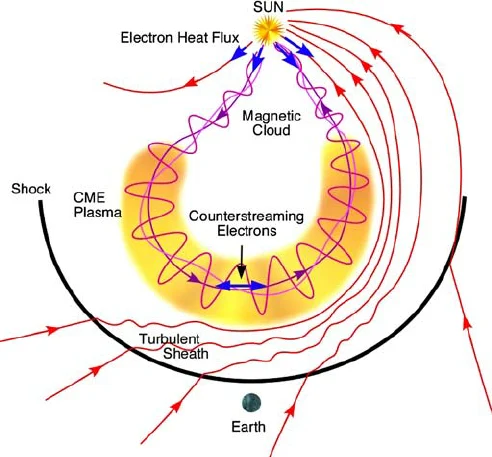
Interplanetary Coronal Mass Ejections, or ICMEs, are massive bursts of plasma and magnetic energy released from the Sun.
They travel through space and can reach Earth, interacting with the solar wind and Earth’s magnetic field.
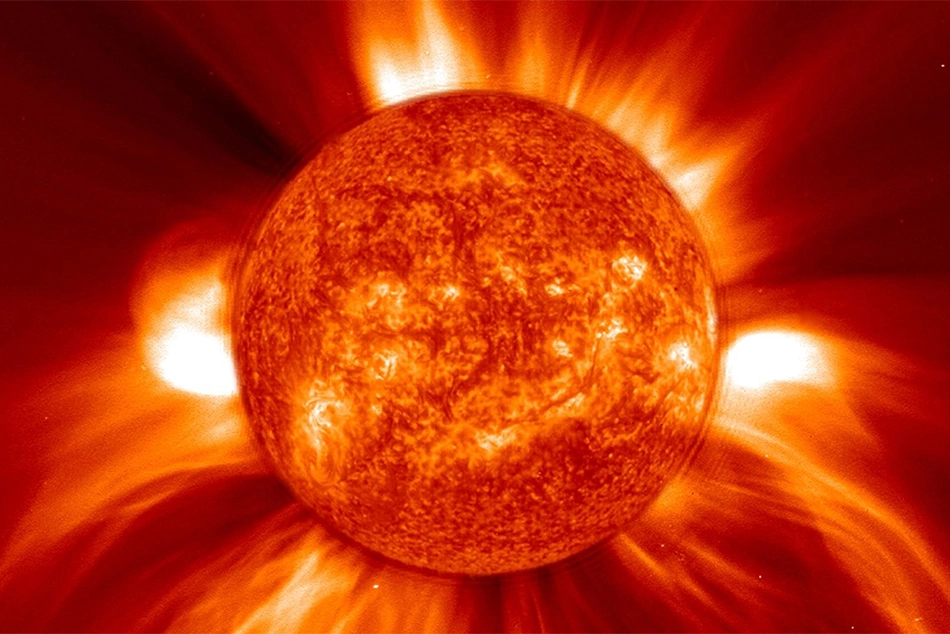
ICMEs are connected to coronal mass ejections, which originate from the Sun’s outer layer known as the corona.
These events are a major part of solar activity.
Long-Term Study and Observations
The ICME Thermal Study 2026 used data collected between 1995 and 2024.
This period includes multiple solar cycles, allowing researchers to observe long-term patterns.
The study focused on observations taken at a distance of 1 Astronomical Unit, which is the average distance between the Earth and the Sun.
This location is important because it helps scientists measure how solar events behave when they reach near-Earth space.
ICME Thermal Study 2026 also highlights the importance of global collaboration in space science. Data from multiple international spacecraft and observatories contributed to this long-term research, showing how countries work together to study solar activity. As space weather affects the entire planet, shared knowledge and coordinated efforts help improve early warning systems and protect global communication networks. This collaborative approach is becoming essential as the world becomes more dependent on space-based technology.
New Insights into Thermal Behaviour
One of the key findings of the study is that ICMEs do not always cool as they expand.
Earlier ideas suggested that these solar eruptions lose heat as they travel.
However, the new research shows that around 45 percent of these events actually show signs of heating.
This is especially noticeable during periods of high solar activity.
Changes Across Solar Cycles
The study also found differences in behaviour across solar cycles.
During Solar Cycle 23, more ICMEs showed heating characteristics.
In Solar Cycle 24, there was a shift toward more cooling behaviour.
These changes suggest that solar activity influences how these eruptions behave in space.
Understanding these patterns helps scientists improve predictions.
Impact on Space Weather
ICMEs play a major role in space weather, which affects Earth’s environment beyond the atmosphere.
When these solar eruptions interact with Earth’s magnetic field, they can cause geomagnetic storms.
Such storms can disrupt communication systems, GPS signals, and satellite operations.
They can also impact aviation routes and power grids.
Importance for Modern Technology
In today’s world, many systems depend on satellites and communication networks.
Understanding ICME behaviour helps reduce risks to these systems.
Better predictions allow authorities to take preventive measures during solar storms.
This makes space research more relevant to everyday life.
Research and Publication
The ICME Thermal Study 2026 was conducted by scientists including Soumyaranjan Khuntia and Wageesh Mishra.
The findings were published in the Monthly Notices of the Royal Astronomical Society.
The study used publicly available data, showing the importance of open research in advancing science.
Growing Interest in Space Science
Space science is gaining attention worldwide as countries invest more in research and technology.
Studies like the ICME Thermal Study 2026 help improve our understanding of the Sun-Earth connection.
They also support the development of better forecasting systems for space weather.
Understanding the Sun-Earth Connection
The ICME Thermal Study 2026 shows how closely linked the Sun and Earth are.
Events happening on the Sun can have direct effects on life and technology on Earth.
By studying these connections, scientists can better prepare for future challenges.
This research is a step forward in understanding the dynamic nature of our solar system.