
Ahom Dynasty History of Assam

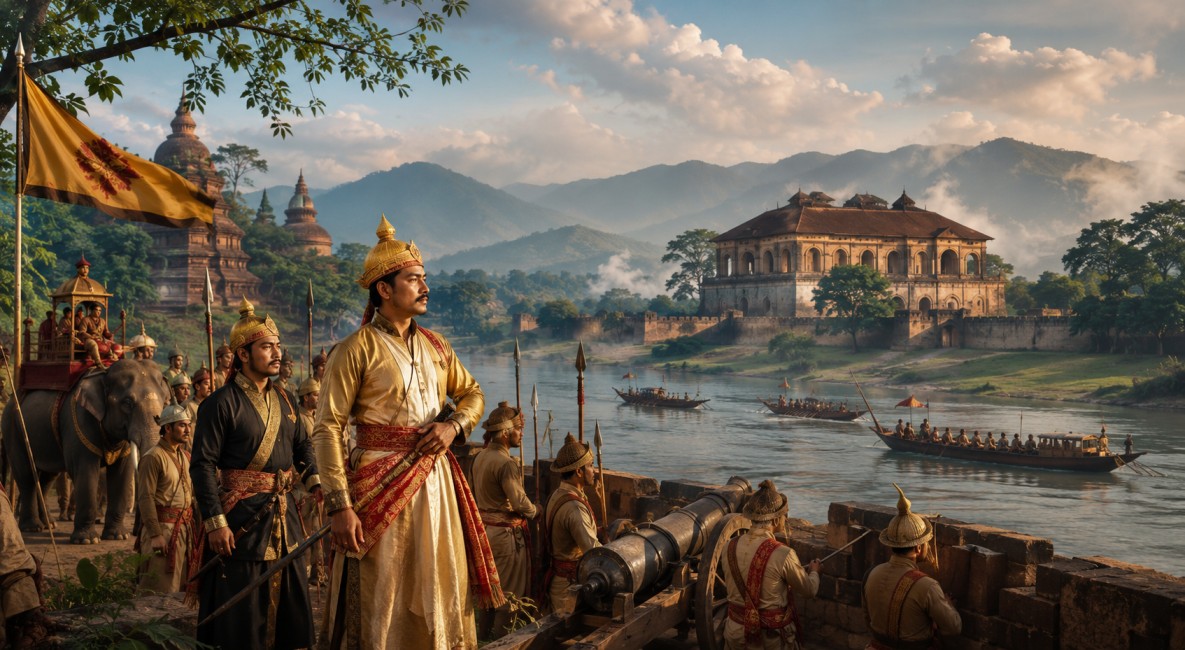
Ahom Dynasty is one of the most important and longest ruling dynasties in Indian history. It ruled Assam for nearly 600 years, from 1228 AD to 1826 AD. This long rule made the Ahom Dynasty very powerful and influential in Northeast India.
The Ahom Dynasty was started by a prince named Sukaphaa. He came from a place called Mong Mao, which is now in Myanmar. He crossed the Patkai hills and entered Assam in 1228 AD. After coming to Assam, he established a strong kingdom and slowly expanded it.

The Ahom kings were also called Swargadeo, which means “Lord of the Heavens.” People believed that the kings had divine power. The Ahom Dynasty played a big role in shaping Assam’s culture, language, and traditions.
Administration of Ahom Dynasty
The Ahom Dynasty had a very well-organized system of administration.
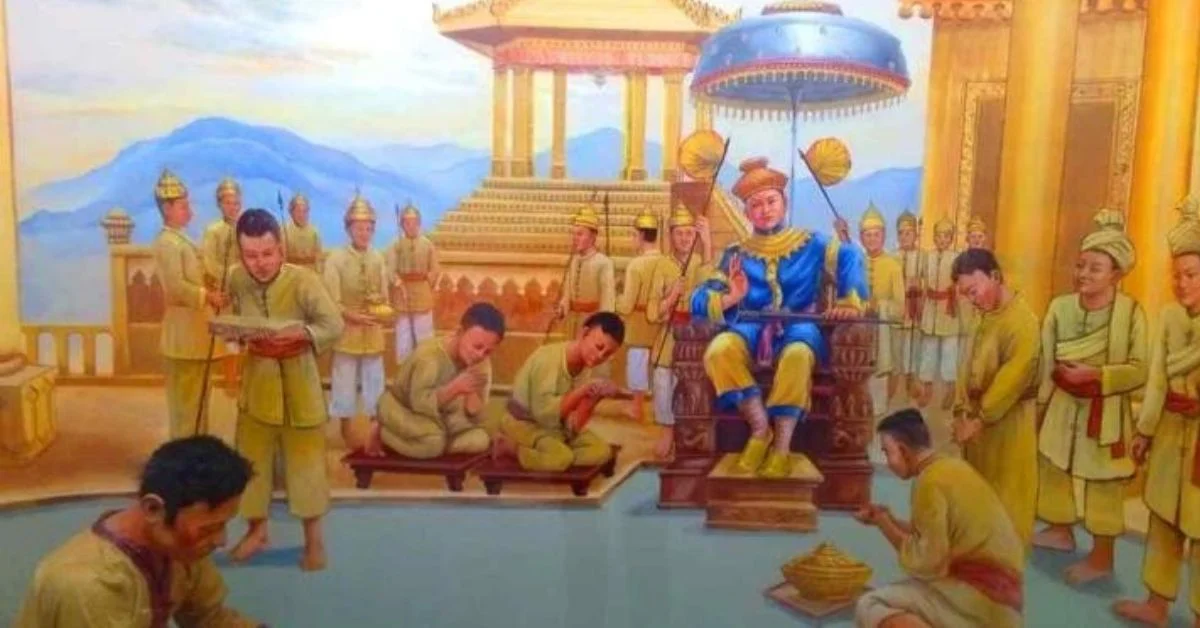
- The king was the highest authority.
- Only the family members of Sukaphaa could become king.
- The king was helped by ministers called Patra Mantris.
- Important ministers included:
- Burhagohain
- Borgohain
- Borbarua
- Borphukan
These ministers helped in running the kingdom smoothly.
Sometimes, if a king was not good, ministers could remove him. This shows that the system had some control over the king’s power.
Succession System
In the Ahom Dynasty, the next king was usually the eldest son of the king. But sometimes, other sons also became king.
There were many problems related to succession:
- Many princes wanted to become king.
- This led to fights and killings.
- To stop this, a rule was made that only physically perfect princes could become king.
Because of this rule, sometimes weak kings became rulers, which later caused problems in the kingdom.
Titles and Coronation
Ahom kings had special titles:
- Swargadeo (Lord of Heaven)
- Chaopha
The coronation ceremony was called Singarigharutha. It was an important ritual where the king officially became ruler.
During coronation:
- Coins were made in the king’s name.
- Religious rituals were performed.
- People accepted the king as their leader.
Role of Queens
Queens in the Ahom Dynasty had an important role.
- The chief queen was called Bor Kuwori.
- Other queens also had ranks and responsibilities.
- Some queens ruled the kingdom when the king was weak or absent.
For example:
- Queen Ambika and others ruled during King Siva Singha’s time.
Queens were respected and even had their names on coins.
Religion and Culture
The Ahom Dynasty followed different religions over time.
- Early kings followed their own Tai religion.
- Later, Hinduism became popular.
- Kings also followed Mahapuruxiya Dharma (a form of Vaishnavism).
The kings respected all religions. This helped in maintaining peace among people.
- Tai language was used in early times.
- Later, Assamese became the main language.
Art and Culture
The Ahom Dynasty supported art and culture.
- They encouraged painting and manuscript writing.
- A special style called Garhgaon School of Art developed.
- Famous books like Bhagavata Purana and Gita Govinda were illustrated.
The kings also built:
- Palaces
- Temples
- Forts
Origin and Foundation
The Ahoms originally came from Southeast Asia. Sukaphaa entered Assam with his followers and settled in the Brahmaputra Valley.
Important points:
- Year of arrival: 1228 AD
- First capital: Charaideo
- Sukaphaa made friendly relations with local tribes like Morans, Sutias, and Kacharis
- He united different communities and built a strong society
Because of this, Sukaphaa is called the creator of “Greater Assam” or “Bor Asom.”
Growth of the Ahom Empire
After Sukaphaa, his successors expanded the kingdom.
The Ahom Empire:
- Spread across Assam
- Defeated many local rulers
- Built strong forts and cities
- Developed agriculture and irrigation
The kingdom became powerful because of:
- Strong leadership
- Unity among people
- Good administration
King (Swargadeo)
- The king was called Swargadeo
- Only Sukaphaa’s descendants could become king
Ministers (Dangarias)
The three main officers were:
- Burhagohain – Prime Minister and army head
- Borgohain – Finance and justice
- Phukan – Foreign affairs and trade
Provinces
- The kingdom was divided into provinces
- Governors managed law, tax, and security
Vassals
- Smaller kingdoms supported Ahoms
- Paid tribute and gave military help
Paik System (Backbone of Administration)
The Paik system was the most important feature of the Ahom Dynasty.
- Every adult male was a paik
- They worked for the state (army, farming, building)
- Organized into groups called gots
- Each group had officials
This system helped:
- Build roads, tanks, and forts
- Maintain army strength
- Support economy
Economy of Ahom Dynasty
The Ahom Dynasty had a strong economy based on agriculture.
Main features:
- Rice cultivation was most important
- Wet rice farming introduced
- Irrigation systems developed
- Trade done mainly through barter
Coins:
- Gold coins
- Silver coins
- Cowries
The economy was simple but effective.
Life Under Ahom Rule
Life under the Ahom Dynasty was simple and organized.
- Agriculture was main occupation
- People followed local traditions
- Society was mixed (different tribes and cultures)
- Festivals like Bihu were important
The Ahoms successfully mixed their culture with local culture, creating a unique Assamese identity.
Religion of Ahom Dynasty
The Ahom Dynasty followed different religious practices.
- Early religion: Worship of ancestors (Phi and Dam)
- Later influence: Hinduism
- Also followed Vaishnavism
Features:
- Respect for all religions
- Rituals and ceremonies
- Animal sacrifice in early times
This religious tolerance helped maintain peace.
Art, Culture, and Literature
The Ahom Dynasty supported art and culture.
Art
- Painting and manuscript art developed
- Land given to artists and scholars
Literature
- Buranjis (historical records) were written
- Written first in Ahom language, later in Assamese
Culture
- Bihu festival became popular
- Mixing of Tai and local culture
Architecture of Ahom Dynasty
The Ahom Dynasty built many important structures.
Famous buildings:
- Rang Ghar (amphitheatre)
- Kareng Ghar (royal palace)
- Talatal Ghar
Features:
- Brick and mortar construction
- Dome-shaped temples
- Decorative designs
These buildings show advanced engineering and art skills.
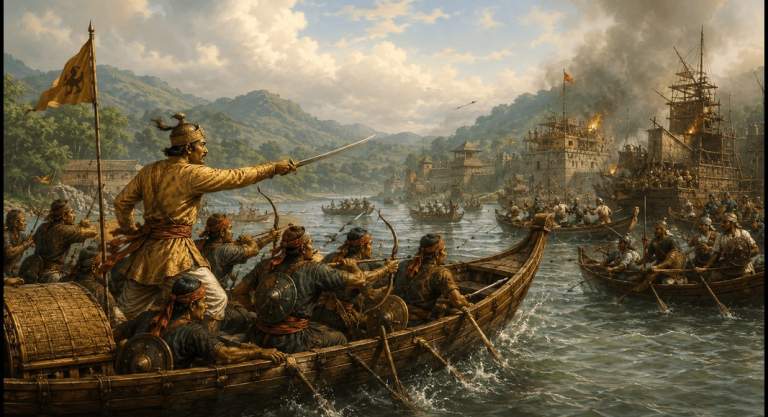
Military System of Ahom Dynasty
The Ahom Dynasty had a powerful military.
Components:
- Infantry (foot soldiers)
- Cavalry (horse soldiers)
- Navy (boats and ships)
- Artillery (guns and cannons)
Special features:
- Strong navy for river battles
- War boats called bacharis
- Forts and defensive walls
The Ahoms successfully resisted Mughal attacks many times.
Conquests and Expansion
The Ahom Dynasty expanded its territory through wars.
Conquest of Chutia Kingdom
- Conquered in 1523–24
- Land added to Ahom kingdom
Conquest of Kachari Kingdom
- Many battles fought
- Finally controlled by Ahoms
Expansion to West
- Defeated Muslim invaders
- Built forts and defenses
Ahom and Mughal Conflict
The Ahom Dynasty fought many battles with the Mughals.
- Period: 1616–1682
- Total attacks: Around 17
- Ahoms successfully defended Assam
Important result:
- Western boundary fixed at Manas River
This shows the strong military power of the Ahoms.
Important Kings of Ahom Dynasty
Some important kings:
- Sukaphaa – Founder
- Suhungmung – Expanded kingdom
- Pratap Singha – Strong ruler
- Rudra Singha – Cultural development
- Siva Singha – Queens got power
These kings made the dynasty strong and successful.
Decline of Ahom Dynasty
The Ahom Dynasty started declining in the late 18th century.
Main reasons:
- Internal conflicts
- Weak rulers
- Economic problems
- Moamoria rebellion
Burmese Invasion and Fall
The Burmese invaded Assam several times between 1817 and 1826.
Effects:
- Destroyed economy
- Weakened administration
- Created fear and instability
- British defeated Burmese
- Treaty of Yandabo signed in 1826
- Ahom rule ended
Legacy of Ahom Dynasty
The Ahom Dynasty left a strong legacy.
- Longest rule in Assam
- Strong cultural identity
- Rich architecture
- Historical records (Buranjis)
Even today, their influence can be seen in Assam’s culture and traditions.
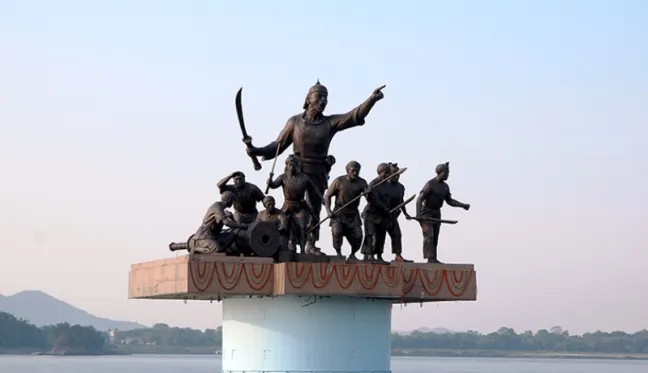
Important Kings of Ahom Dynasty
Some important kings were:
- Sukaphaa – Founder of the dynasty
- Suhungmung – Expanded the kingdom greatly
- Pratap Singha – Strengthened administration
- Rudra Singha – Powerful ruler, improved culture
- Siva Singha – Promoted religion and queens’ power
- Gadadhar Singha – Established Tungkhungia rule
These kings made the Ahom Dynasty strong and successful.
Ahom Dynasty ruled Assam for nearly 600 years (1228–1826 AD).
Founder: Sukaphaa (1228 AD)
• Came from Mong Mao (present Myanmar)
• Entered Assam through Patkai Hills
• First capital: Charaideo
Title of Kings:
• Swargadeo (Lord of Heaven)
• Also called Chaopha
Rule Period:
• 1228–1826 AD
• Brief restoration: 1833–1838 (Purandar Singha)
Administration:
• King was supreme authority
• Only Sukaphaa’s descendants could become king
• Council of ministers (Patra Mantris):
– Burhagohain
– Borgohain
– Borbarua
– Borphukan
Succession System:
• Based on family lineage
• Rule of “physically unblemished prince”
• Often led to weak kings
Important Kings:
• Sukaphaa – Founder
• Suhungmung – Expansion of kingdom
• Pratap Singha – Strong administration
• Rudra Singha – Powerful ruler
• Siva Singha – Queens got power
• Gadadhar Singha – Tungkhungia dynasty
Coronation Ceremony:
• Called Singarigharutha
Queens (Kunworis):
• Chief Queen: Bor Kuwori
• Played role in administration
• Some queens ruled the kingdom
Religion:
• Early: Tai religion
• Later: Hinduism influence
• Also followed Mahapuruxiya Dharma
Language:
• Early: Tai language
• Later: Assamese became main language
Military System:
• Strong army and bodyguards
• Types: Hendangdhara, Chabukdhara, Da-dhara
Art and Culture:
• Patron of manuscripts and paintings
• Garhgaon School of Art
• Important texts illustrated
Moamoria Rebellion:
• Major internal revolt
• Weakened Ahom rule
Fall of Ahom Dynasty:
• Internal conflicts
• Weak rulers
• Moamoria rebellion
• Burmese invasion
• Ended after Treaty of Yandabo (1826)
Important Terms:
• Swargadeo – King
• Buranji – Historical records
• Moidam – Royal burial vaults
• Charing Raja – Heir apparent
Legacy:
• Longest ruling dynasty in Assam
• Strong administration and culture
• Important heritage sites like Charaideo Maidams
FAQs on Ahom Dynasty
Q1. Who founded the Ahom Dynasty?
Sukaphaa founded the Ahom Dynasty in 1228 AD.
Q2. How long did the Ahom Dynasty rule?
It ruled for nearly 600 years.
Q3. What was the title of Ahom kings?
The kings were called Swargadeo.
Q4. What was the capital of the Ahom Kingdom?
The first capital was Charaideo.
Q5. What caused the fall of the Ahom Dynasty?
Internal conflicts, rebellion, and Burmese invasion caused the fall.
Q6. What is the Singarigharutha ceremony?
It is the coronation ceremony of Ahom kings.
Q7. What role did queens play in Ahom Dynasty?
Queens sometimes ruled the kingdom and had strong power.
Q8. What language was used in the Ahom court?
Initially Tai language, later Assamese.
Q9. What is Moamoria Rebellion?
It was a revolt that weakened the Ahom Kingdom.
Q10. When did Ahom rule end?
It ended in 1826 after the Treaty of Yandabo.