


Complete History of Assam: From Pragjyotisha to Modern Assam

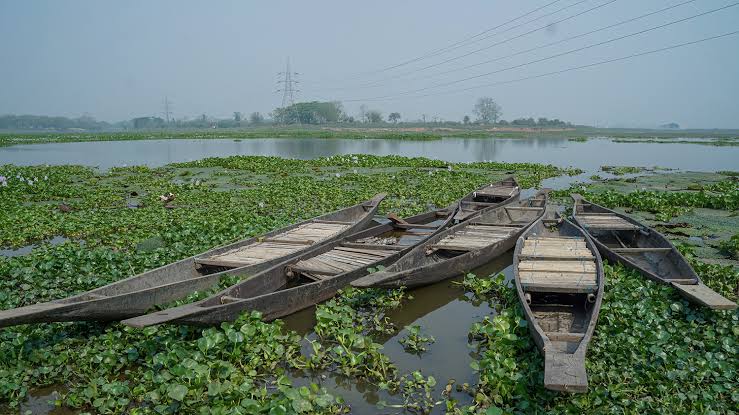
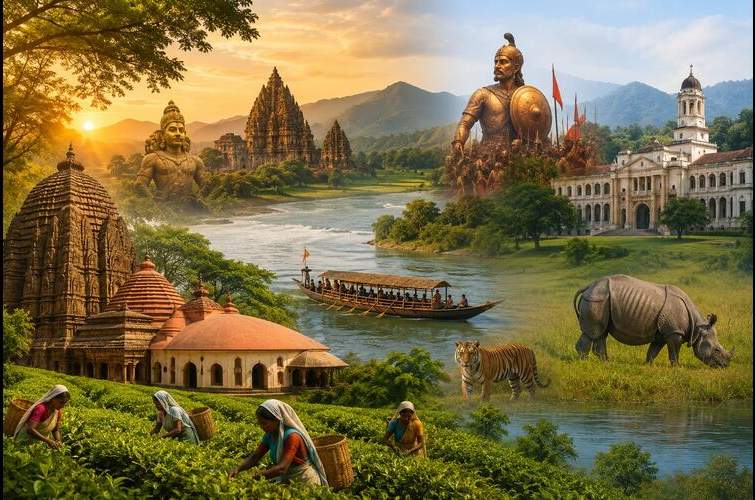
Complete History of Assam is a fascinating journey that begins with the ancient kingdom of Pragjyotisha and continues through the powerful Kamarupa Kingdom, the long rule of the Ahom dynasty, the British colonial period, and finally the formation of modern Assam after India’s independence. Assam is one of the oldest and most culturally rich states in Northeast India. It is known for its ancient civilization, brave rulers, tea gardens, mighty Brahmaputra River, diverse tribes, and unique traditions.
Ancient Assam: Pragjyotisha and Kamarupa
The earliest known history of Assam is linked with the ancient kingdom of Pragjyotisha. According to Hindu mythology, Pragjyotisha was ruled by King Naraka, also known as Narakasura. The kingdom is mentioned in the Mahabharata, Ramayana, and several Puranas, making it one of the oldest regions in Indian history.

Later, Pragjyotisha developed into the Kingdom of Kamarupa, one of the strongest kingdoms in Northeast India.
Important Rulers of Kamarupa
- Pushyavarman founded the Varman Dynasty.
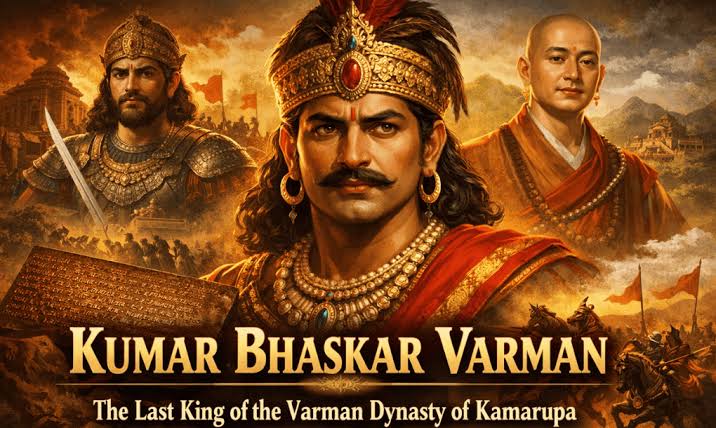
- Bhaskaravarman became one of the greatest rulers of Assam.
- Bhaskaravarman was a close friend of Emperor Harshavardhana.
- Chinese traveller Xuanzang visited Kamarupa during his reign and described it as a prosperous kingdom.
During this period, Hinduism flourished, but Buddhism also existed peacefully. Trade, education, literature, and temple architecture developed rapidly.
Importance of Ancient Assam
- Mentioned in ancient Indian scriptures.
- Strong political and military power.
- Development of religion and culture.
- Growth of trade with neighbouring regions.
Medieval Assam and the Ahom Kingdom (1228–1826)
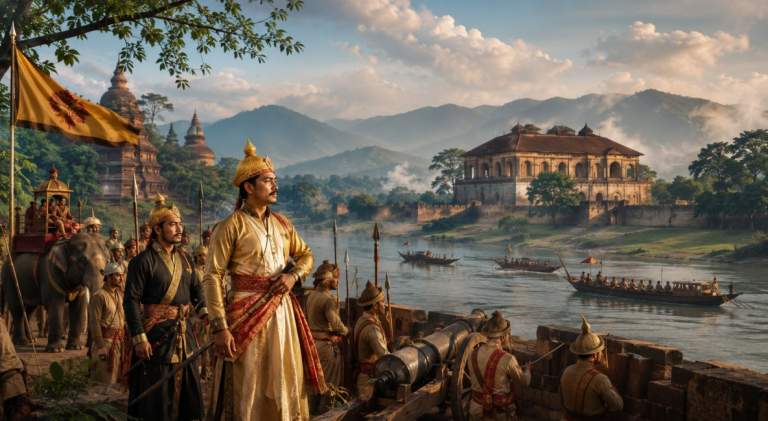
The medieval history of Assam changed when Sukaphaa, a Tai prince from present-day Myanmar, entered Assam in 1228 CE. He founded the Ahom Kingdom, which ruled Assam for nearly 600 years.
The Ahoms united different communities and built one of the strongest kingdoms in Northeast India.
Administration of the Ahom Kingdom
The Ahom rulers created an efficient administrative system called the Paik System. Under this system, every adult male had to provide military or public service to the state.
The Ahoms also improved:
- Agriculture
- Irrigation
- Roads
- Forts
- Local administration
The Battle of Saraighat (1671)
One of the greatest events in Assam’s history was the Battle of Saraighat.
The Mughal Empire attempted to capture Assam several times. However, the Ahom army under the leadership of Lachit Borphukan defeated the Mughal forces on the Brahmaputra River.
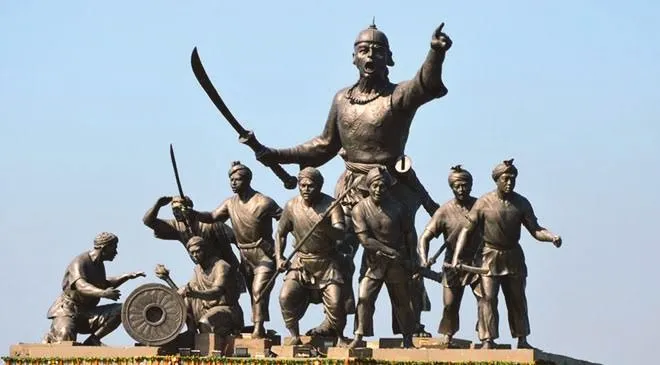
This victory remains a symbol of courage and patriotism.
Culture During Ahom Rule
The Ahoms promoted:
- Assamese language
- Literature
- Music
- Dance
- Architecture
Historical records called Buranjis were written during this period. These books remain valuable sources for understanding Assam’s history.
British Colonial Rule (1826–1947)
The Ahom Kingdom weakened due to internal conflicts and repeated Burmese invasions.
The First Anglo-Burmese War ended with the Treaty of Yandabo in 1826, through which Assam came under British rule.
This marked the beginning of British administration in Assam.
Changes During British Rule
The British introduced many new developments.
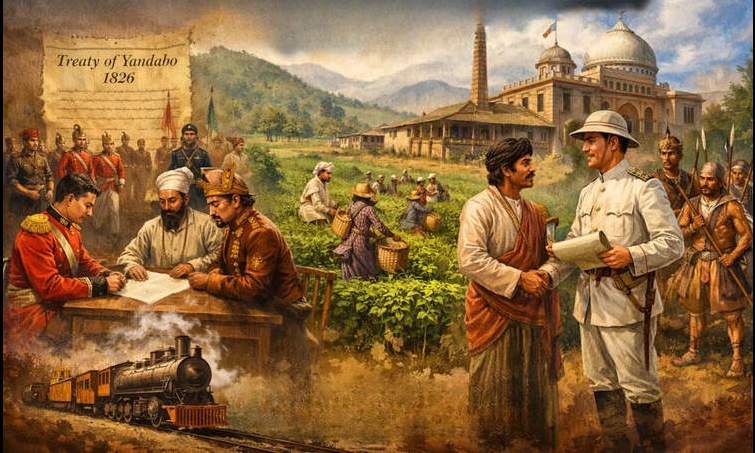
Tea Industry
Assam became one of the world’s largest tea-producing regions after tea was discovered in the Brahmaputra Valley.
Large tea plantations were established, and thousands of workers were brought from different parts of India.
Railways and Transport
The British developed:
- Railways
- Roads
- River transport
- Postal services
These improvements helped trade and administration.
Education
Modern schools and colleges were established.
English education spread, creating new opportunities for the people of Assam.
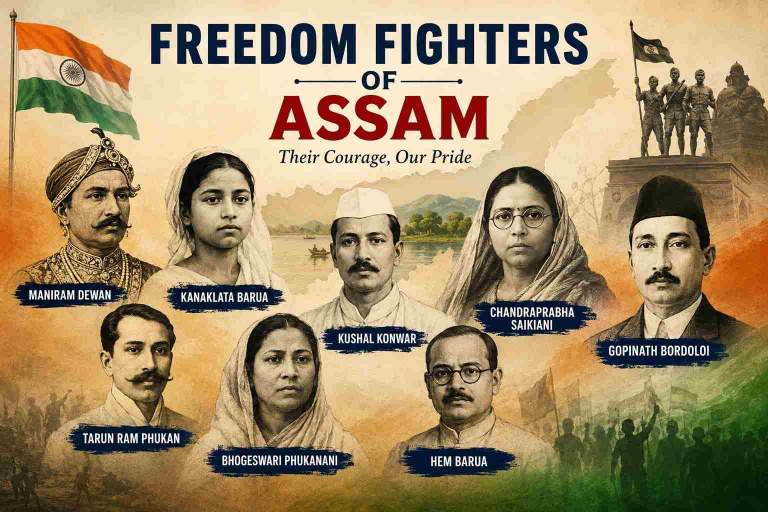
Freedom Movement in Assam
The people of Assam actively participated in India’s freedom struggle.
Important leaders included:
- Gopinath Bordoloi
- Kushal Konwar
- Kanaklata Barua
- Tarun Ram Phukan
Many people sacrificed their lives to achieve India’s independence.
Modern Assam (1947–Present)
India became independent on 15 August 1947, and Assam became an important state of the Indian Union.
After independence, Assam witnessed political, economic, educational, and industrial development.
Formation of New States
Several new northeastern states were later formed from the larger Assam region.
These include:
Despite these changes, Assam remains the largest economy in Northeast India.
Economy
The major industries include:
- Tea production
- Oil and natural gas
- Agriculture
- Silk production
- Tourism
- Handloom and handicrafts
Culture
Assam is famous for its:
- Bihu festival
- Sattriya dance
- Majuli Island
- Kamakhya Temple
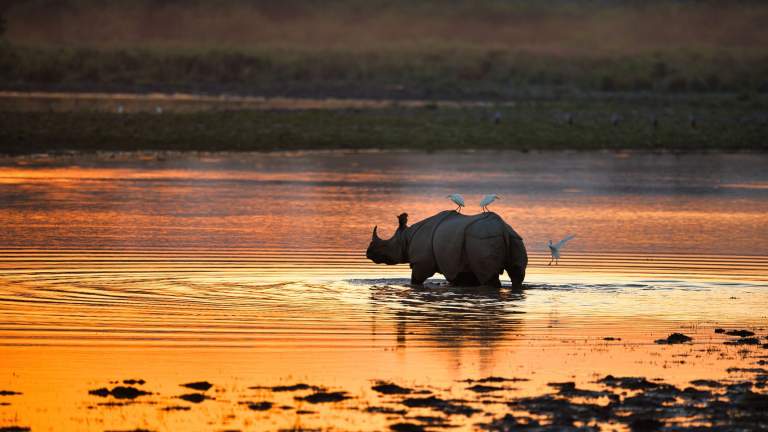
- Kaziranga National Park
- One-horned rhinoceros
- Traditional weaving
People from different communities live together peacefully, making Assam culturally diverse.
Assam Today
Today, Assam is developing rapidly in areas such as:
- Education
- Healthcare
- Infrastructure
- Digital services
- Tourism
- Trade and commerce
The state continues to preserve its rich heritage while embracing modern development.
Important Timeline of Assam History
| Year/Period | Event |
|---|---|
| Ancient Period | Kingdom of Pragjyotisha |
| 4th Century CE | Rise of Kamarupa Kingdom |
| Reign of Bhaskaravarman | Golden period of Kamarupa |
| 1228 | Sukaphaa founded the Ahom Kingdom |
| 1671 | Battle of Saraighat |
| 1826 | Treaty of Yandabo and British rule began |
| 1947 | India became independent |
| 1963 | Nagaland became a separate state |
| 1972 | Meghalaya became a separate state |
| 1972 | Mizoram became a Union Territory |
| 1987 | Arunachal Pradesh became a state |
Interesting Facts About Assam
- Assam has one of the oldest civilizations in Northeast India.
- The Ahom Kingdom ruled for nearly 600 years.
- Lachit Borphukan is one of India’s greatest military heroes.
- Assam is the largest producer of tea in India.
- The state is home to the famous one-horned rhinoceros.
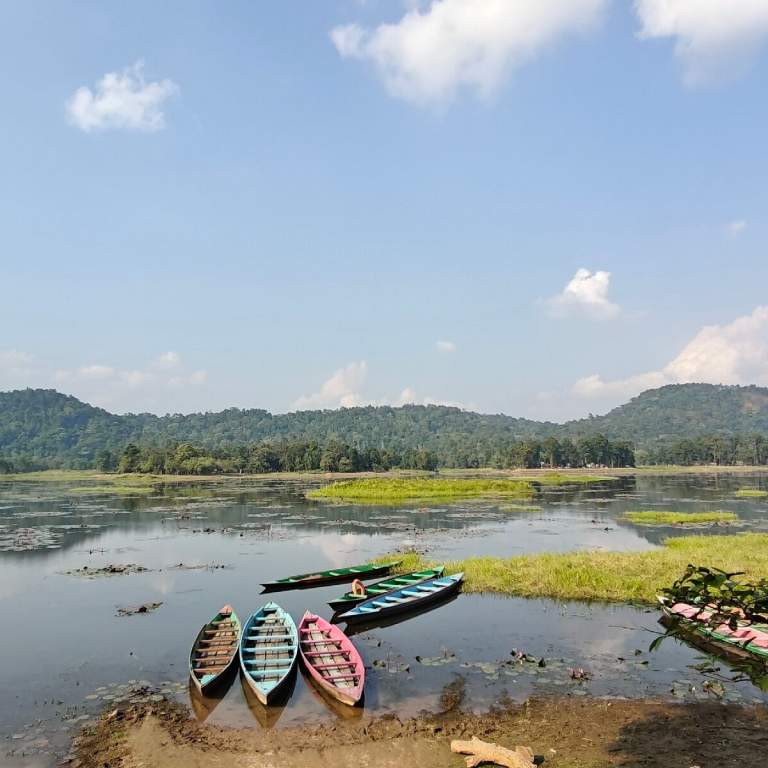
- The Brahmaputra is one of the world’s largest rivers.
- Majuli is the world’s largest inhabited river island.
FAQs
What is the ancient name of Assam?
The ancient name of Assam is Pragjyotisha, which later became known as Kamarupa.
Who founded the Ahom Kingdom?
The Ahom Kingdom was founded by Sukaphaa in 1228 CE.
Why is the Battle of Saraighat important?
The Battle of Saraighat is important because Lachit Borphukan led the Ahom army to defeat the Mughal forces in 1671.
How did British rule begin in Assam?
British rule began after the Treaty of Yandabo was signed in 1826, ending the First Anglo-Burmese War.
Who was the famous ruler of Kamarupa?
Bhaskaravarman was one of the most famous rulers of the Kamarupa Kingdom.
Why is Assam famous today?
Assam is famous for tea gardens, Kaziranga National Park, the Brahmaputra River, Bihu festival, silk, oil, and its rich cultural heritage.
Final Thoughts
The Complete History of Assam reflects the state’s remarkable journey from the legendary kingdom of Pragjyotisha to the prosperous Kamarupa Kingdom, the powerful Ahom dynasty, British colonial administration, and the modern state we see today. Assam’s history is filled with brave rulers, rich traditions, cultural diversity, and significant contributions to India’s heritage. Learning this history is essential not only for competitive examinations but also for understanding the identity and development of Northeast India.