


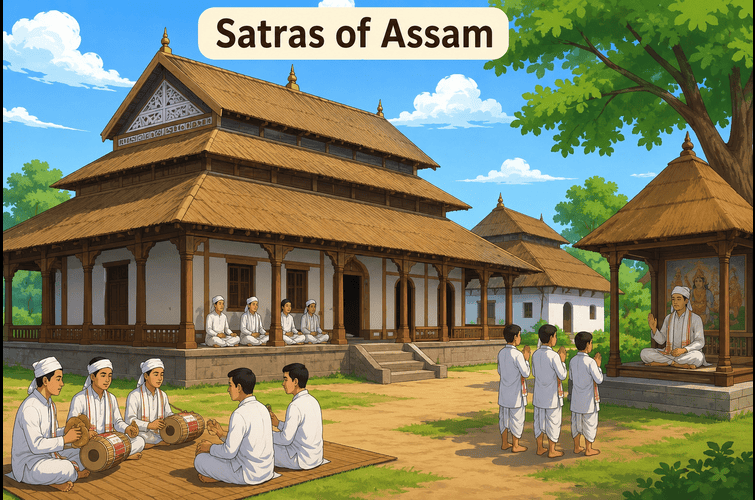
Satras of Assam: History and Importance – The Spiritual and Cultural Heritage of Assam

The Satras of Assam: History and Importance represent one of the richest chapters in the cultural and spiritual history of Northeast India. More than just religious institutions, Satras are centres of education, art, literature, music, theatre, and community life. Established by Mahapurush Srimanta Sankardeva during the 15th and 16th centuries, these institutions became the foundation of Assam’s Neo-Vaishnavite movement and played a transformative role in shaping Assamese identity.
From preserving classical dance and drama to promoting social equality and moral values, the Satras continue to influence Assamese society even today.

What are Satras of Assam?
A Satra is a Vaishnavite monastery and cultural institution established primarily for propagating Ekasarana Naam Dharma, the Neo-Vaishnavite faith introduced by Srimanta Sankardeva (1449–1568). Unlike conventional monasteries, Satras function as centres of worship, education, cultural preservation, and social reform.
They serve multiple purposes, including:
- Religious teaching and worship
- Preservation of Assamese literature and manuscripts
- Promotion of music, dance, theatre, and painting
- Community gatherings and dispute resolution
- Training disciples in spiritual and cultural traditions
For over five centuries, Satras have remained the backbone of Assam’s spiritual and cultural heritage.
Origins and Founding by Srimanta Sankardeva
The history of Satras began with Mahapurush Srimanta Sankardeva, one of India’s greatest saint-reformers, poets, dramatists, and social thinkers. During the spread of Neo-Vaishnavism, he established the first Kirtanghar at Bardowa (Batadrava Than), his birthplace in present-day Nagaon district.
Initially, these prayer halls served as places where devotees gathered for Naam-Kirtan (devotional singing). As the movement expanded, the prayer halls evolved into Thans, which later developed into fully organised Satras under the leadership of Sankardeva’s disciples, especially Madhavdeva and Damodardeva.
These institutions soon became centres of spiritual learning and cultural excellence across Assam.
Evolution from Kirtanghars to Satras
The early Kirtanghars focused mainly on collective worship. Over time, they expanded into organised institutions with clearly defined administrative and residential structures.
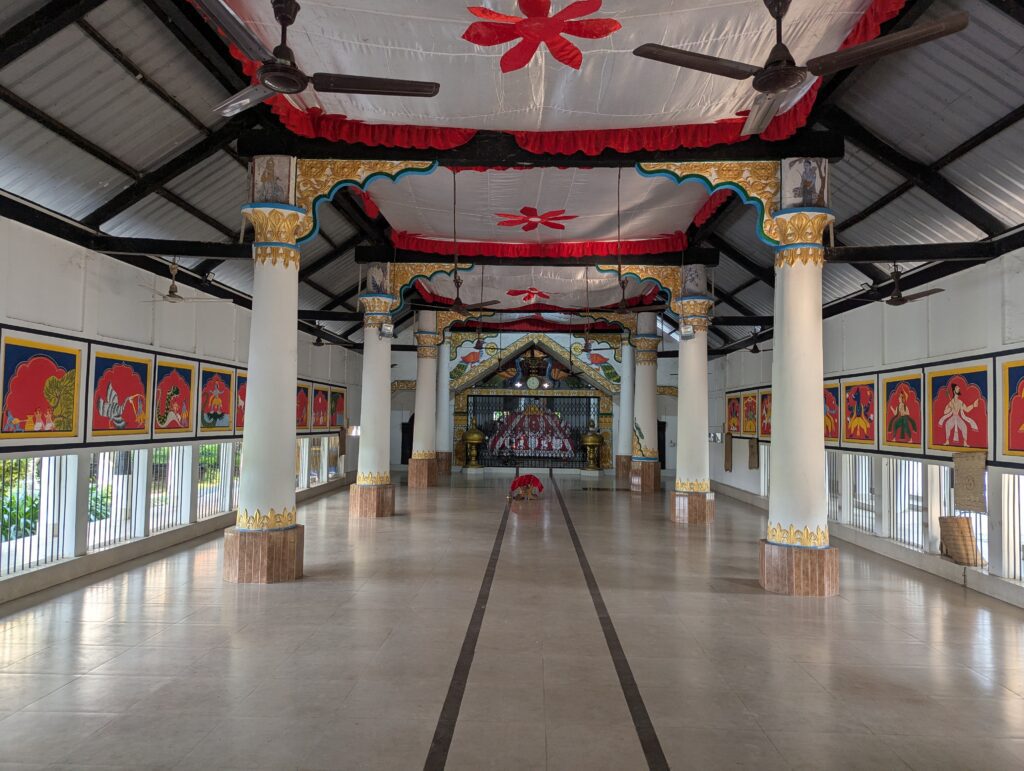
A traditional Satra generally consists of:
- Naamghar – the congregational prayer hall
- Manikut – the sacred shrine housing the Bhagavata and Guru Asana
- Residential quarters for monks and devotees
- Storehouses and utility buildings
- Open courtyards for cultural performances
This organised structure enabled Satras to become self-sustaining religious and educational institutions.
Institutional Structure of a Satra
Every Satra follows a well-defined administrative hierarchy.
Satradhikar
The Satradhikar is the spiritual and administrative head of the Satra. He supervises religious activities, manages administration, and guides disciples.
Deka Adhikar
The Deka Adhikar assists the Satradhikar and usually succeeds him after his death.
Bhakats
Bhakats are resident devotees responsible for daily worship, maintenance, agriculture, cultural activities, and administration.
Those who remain unmarried throughout their lives are called Kewalia Bhakats.
Shishyas
Young disciples known as Shishyas receive training in:
- Religious scriptures
- Sattriya dance
- Music
- Bhaona
- Moral values
- Assamese literature
Types of Satras
Satras are broadly classified into two categories based on the lifestyle of their devotees.
1. Udasin Satras
In these Satras, the monks remain celibate throughout their lives.
Examples include:
- Uttar Kamalabari Satra
- Auniati Satra
- Bhogpur Satra
2. Grihasti Satras
Here, devotees may marry and lead household lives while continuing religious service.
Example:
- Garamur Satra
Four Major Sanghatis of Satras
Based on religious philosophy and traditions, Satras are divided into four major Sanghatis.
Purusha Sanghati
Founded by Purusottama Thakura, grandson of Sankardeva, this denomination follows the traditions of Sankardeva’s direct descendants.
Nika Sanghati
Established by Mathuradas Burha Ata and Badaluwa Padma Ata, it places great emphasis on purity, discipline, and cleanliness.
Kala Sanghati
Founded by Gopaldeva, this order is known for its egalitarian outlook and worked extensively among tribal and marginalized communities.
Brahma Sanghati
Developed by Damodardeva and Harideva, this denomination combines Vedic rituals with devotional practices and is generally considered more orthodox.
Architecture of Satras
The architecture of Satras reflects simplicity, spirituality, and functionality.
A traditional Satra is enclosed by four gateways with the Karapat serving as the main entrance. It is often decorated with wood carvings and sculptures depicting Jaya and Vijaya, the divine gatekeepers.
The central structure is the Naamghar, a rectangular hall supported by wooden pillars where prayers, festivals, discussions, and cultural performances are conducted.
At the eastern end lies the Manikut, considered the holiest part of the Satra. It houses:
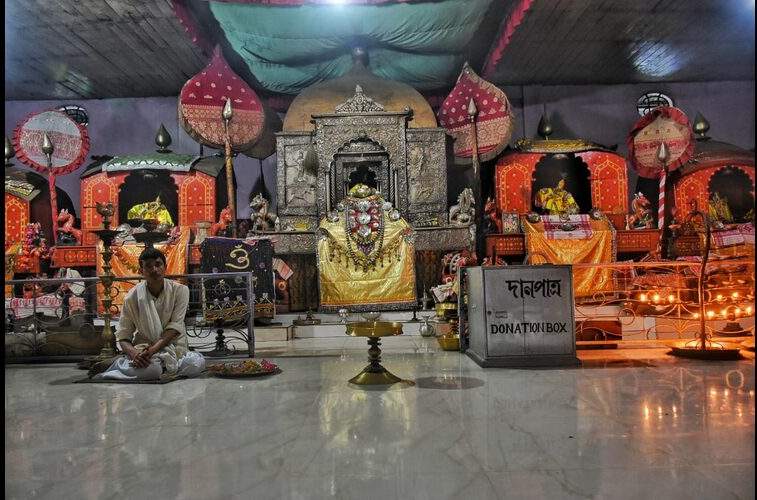
- Guru Asana
- Bhagavata
- Sacred manuscripts
- Royal gifts
- Traditional brass utensils
- Historical relics
Other important structures include:
- Batsora – used for dance lessons, debates, and instruction
- Cho-Ghar – dressing room for Bhaona and Sattriya performances
- Haati – residential quarters
- Boha – individual living units
- Bharal – storehouse for paddy and food grains that supports the Satra during floods and emergencies
Cultural Contributions of Satras
One of the greatest achievements of Satras has been their contribution to Assamese culture.
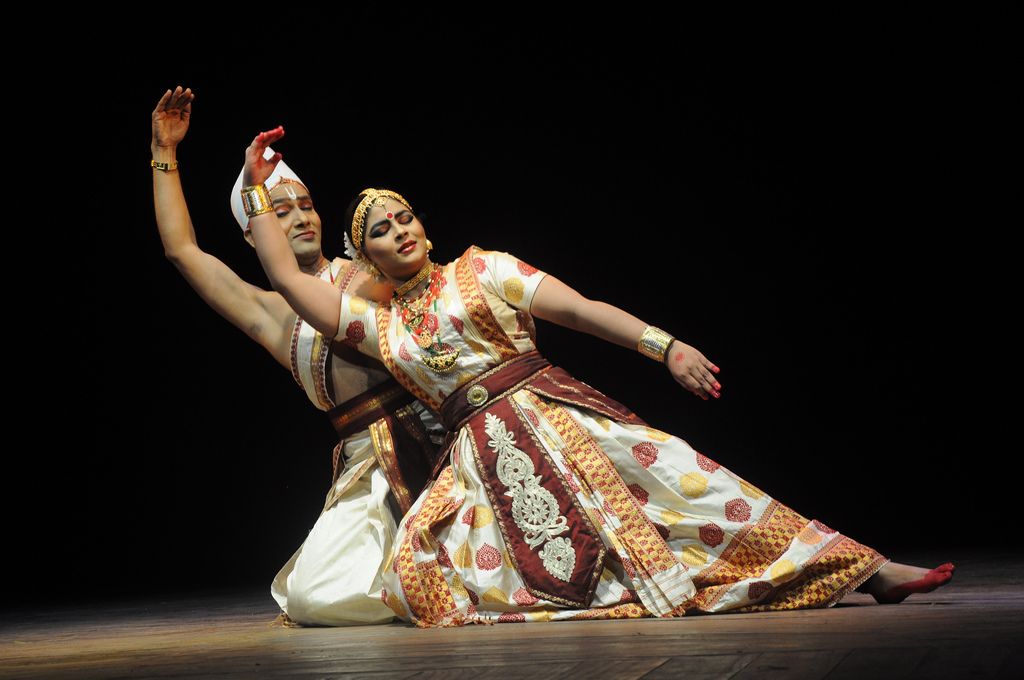
Sattriya Dance
Satras preserved and developed Sattriya, which was later recognised as one of India’s eight classical dance forms.
Bhaona
Bhaona is a traditional religious theatre created by Sankardeva to communicate spiritual teachings through drama, music, and dance.
Borgeet
Satras continue to preserve Borgeet, the devotional songs composed by Sankardeva and Madhavdeva.
Manuscripts and Literature
Ancient manuscripts written on Sanchi tree bark, paintings, wood carvings, masks, and religious texts have been carefully preserved inside many Satras for centuries.
Naamghars: The Heart of Village Life
The influence of Satras extended beyond monasteries through the establishment of Naamghars.
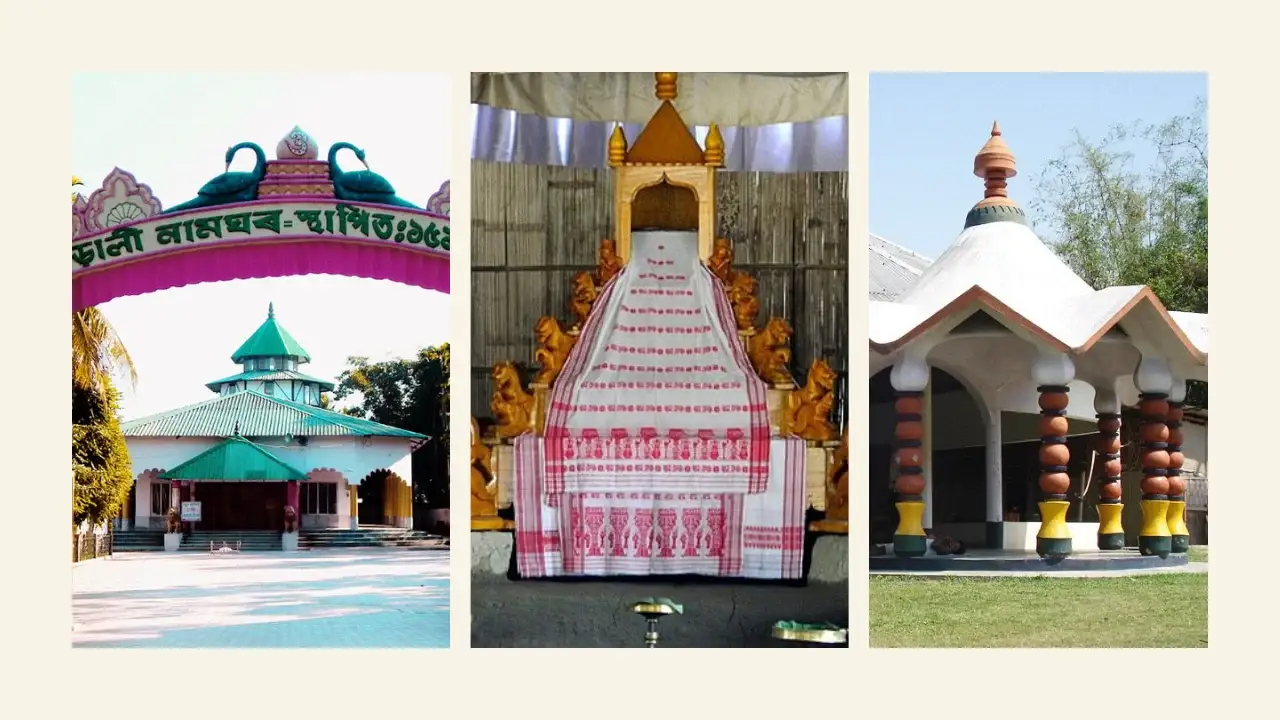
Naamghars became the social, cultural, and religious centres of Assamese villages where people gathered for:
- Prayer meetings
- Community discussions
- Festivals
- Cultural performances
- Conflict resolution
Led by a respected elder called the Naamghar Burha, these institutions strengthened community harmony and preserved Assamese traditions at the grassroots level.
Social Reform and Democratization of Religion
One of Sankardeva’s greatest contributions was making religion accessible to everyone.
Instead of restricting religious knowledge to Sanskrit scholars, he translated and composed devotional works in the Assamese language. His teachings promoted:
- Equality
- Simplicity
- Compassion
- Moral living
- Community participation
People from different castes and communities were encouraged to participate in devotional practices, making Neo-Vaishnavism one of the most inclusive religious movements in medieval India.
Famous Satras of Assam
Several Satras continue to preserve Assam’s spiritual and cultural traditions.
- Auniati Satra is renowned for its five-day Paal Naam, extensive collection of ancient Assamese artefacts, and celebrations of Bihu, Krishna Janmashtami, Raas Leela, and the All Assam Bhaona Festival.
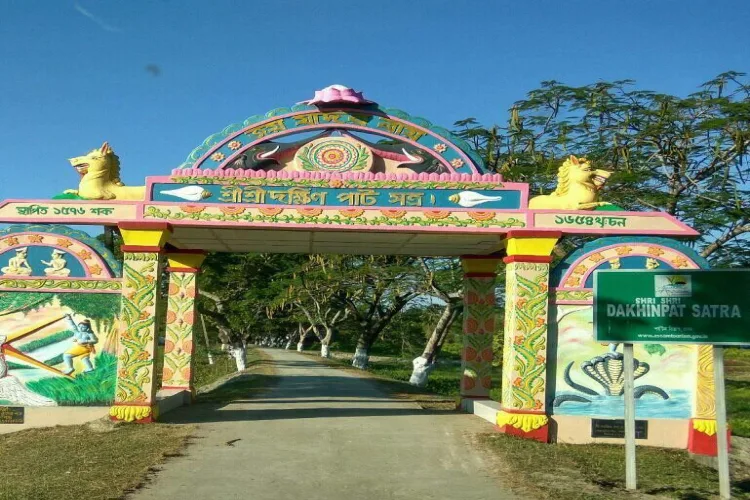
- Dakhinpat Satra is famous for organising the grand Raas Festival, one of Assam’s most celebrated religious and cultural events.
- Garamur Satra is an important centre of Sattriya culture and houses valuable manuscripts, wooden idols, and historic cannons preserved from the Ahom era.
- Kamalabari Satra is recognised as a major institution for classical studies, literature, and Sattriya dance. Its branch, Uttar Kamalabari Satra, has played a significant role in promoting Sattriya art across India and abroad.
- Bengena-ati Satra preserves rare antiques, royal robes of Ahom King Swargadeo Gadadhar Singha, and valuable historical relics.
- Chamaguri Satra is internationally known for its traditional mask-making (Mukha Shilpa), where handcrafted masks are created for Bhaona performances.
- Barpeta Satra, established by Madhavdeva, is one of Assam’s most prominent Vaishnavite monasteries and is noted for its democratic system of selecting the head monk, its magnificent Kirtanghar, and the Akshay Banti, a sacred lamp believed to have remained lit for over five centuries.
- Batadrava Than (Bordowa Than), the birthplace of Srimanta Sankardeva, marks the origin of the Neo-Vaishnavite movement and the establishment of the first Kirtan Ghar.
Present-Day Challenges
Despite their immense historical significance, many Satras face modern challenges, including:
- Land encroachment
- Flooding, particularly in Majuli
- Declining number of resident monks
- Urbanisation and migration
- Conservation of ancient manuscripts and heritage structures
To safeguard these institutions, the Government of Assam has introduced initiatives such as the Satra Protection Force, inspired by the Village Defence Party (VDP), along with conservation and restoration efforts.
Conclusion
The Satras of Assam are far more than religious monasteries. They represent centuries of spiritual wisdom, artistic excellence, social reform, and cultural preservation. Founded by Srimanta Sankardeva, these institutions transformed Assamese society by promoting devotion, equality, education, and creativity.
From preserving Sattriya dance, Bhaona, Borgeet, and ancient manuscripts to nurturing community life through Naamghars, the Satras continue to shape Assam’s identity. Even today, they remain living symbols of the state’s rich heritage and serve as enduring centres of faith, culture, and collective memory for future generations.