Amazon Dolphin Tragedy: Heatwave Turns Lake Tefé into a Deadly Trap for Hundreds of Dolphins

Amazon dolphin tragedy has shocked environmentalists and communities across Brazil as a severe heatwave and drought turned Lake Tefé into a deadly trap for hundreds of Amazon river dolphins. With water temperatures soaring to nearly 41°C, the tranquil lake became an inferno for aquatic life, leading to one of the most alarming wildlife die-offs in recent memory. The event has exposed how vulnerable tropical freshwater ecosystems are to the growing threat of climate change and rising global temperatures.
Thank you for reading this post, don't forget to subscribe!A Perfect Storm of Heat and Drought
The Amazon dolphin tragedy unfolded when an unusually severe drought gripped the central Amazon region, drastically lowering river levels. As the lake’s water volume shrank, the remaining shallow pools were rapidly heated by relentless sunlight. The absence of rain, weak winds, and cloudless skies created a “perfect storm” for a thermal disaster.
Lake Tefé, usually a thriving ecosystem filled with life, became an overheated cauldron. The surface water, unable to mix with deeper layers, reached temperatures close to 41°C conditions lethal to most aquatic species. Unlike oceanic environments that can dissipate heat, inland lakes like Tefé are closed systems. When the heat builds up, there’s nowhere for it to escape.
This rare combination of low river flow, high solar radiation, and stagnant water pushed the lake’s delicate ecological balance beyond recovery. For the dolphins, who depend on oxygen-rich, moderately cool waters, the lake turned into a suffocating trap.
Why the Water Became Lethal
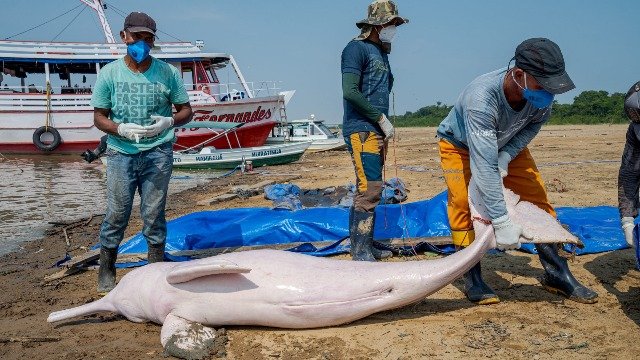
The tragedy of the dolphins was not caused by human hunting or pollution this time it was purely environmental stress. In shallow areas, sunlight penetrated to the bottom, heating the entire water column. The sediment-rich and turbid water trapped the heat, preventing the usual temperature layering that offers cooler depths for animals to escape.
The overheated water began losing dissolved oxygen, which is essential for fish and other aquatic organisms. Dolphins, though air-breathing mammals, still rely on healthy fish populations and cooler environments to survive. With rising temperatures, both their prey and their own bodies faced metabolic overload.
Experts note that even short-term exposure to such extreme heat can trigger organ failure in dolphins. The boto (Inia geoffrensis) and tucuxi (Sotalia fluviatilis) both already listed as endangered were the worst affected.
Scale of Mortality and Species at Risk
The Amazon dolphin tragedy at Lake Tefé saw hundreds of pink river dolphins and tucuxis perish in just a few days. Images of bloated carcasses floating across the lake horrified local residents and scientists. Initial estimates by the Mamirauá Institute for Sustainable Development suggested that over 150 dolphins died within a week a catastrophic loss for species already struggling with pollution, habitat loss, and illegal fishing.
What made the event even more devastating was the synchronous mortality. Adult males, pregnant females, and young calves were all found dead, showing that no age group was spared. The absence of disease indicators in autopsies confirmed that the deaths were almost entirely heat-driven.
For small populations like those in the Tefé region, such sudden losses can have long-term genetic and reproductive consequences, potentially pushing the species closer to extinction.
Ecological and Community Fallout
The Amazon dolphin tragedy also triggered a wider ecological collapse around Lake Tefé. Alongside dolphin deaths, mass fish kills were reported as oxygen levels plummeted. The once-clear waters turned murky and foul-smelling, with algal blooms fed by decomposing organic matter.
This environmental disaster hit local communities hard. Thousands of residents depend on the lake for fishing, drinking water, and transportation. As the water quality deteriorated, people faced food insecurity and health risks.
Eco-tourism, which draws visitors eager to see the charismatic pink dolphins, also suffered a blow. For the riverside communities, the dolphins are not just a source of income but also a symbol of cultural identity and spiritual significance. Their loss left deep emotional scars.
The tragedy underscores how climate change and deforestation are now intersecting with local livelihoods. Droughts across the Amazon are becoming more frequent and intense, fueled by large-scale forest clearing and global temperature rise.
Scientists Sound the Alarm
Environmental scientists warn that what happened at Lake Tefé is not an isolated incident. Similar heatwave-induced die-offs have occurred in other tropical lakes and rivers worldwide, but rarely with such a dramatic loss of large mammals.

Researchers are urging for urgent monitoring and intervention systems to prevent future tragedies. Key recommendations include:
- Early warning systems using satellite data and thermal sensors to detect rising lake temperatures.
- Rescue protocols to guide animals into cooler tributaries during extreme events.
- Emergency aeration systems or temporary shading to reduce surface heat.
- Basin-level water management to maintain flow and prevent stagnation.
- Conservation of wetlands and forests that naturally moderate heat and store moisture.
Scientists also stress the need for international cooperation to combat climate-driven threats to biodiversity. The Amazon basin spans several countries, meaning regional collaboration is essential for ecosystem resilience.
A Warning for the Planet
The Amazon dolphin tragedy serves as a grim reminder of what unchecked global warming can do to even the most remote ecosystems. The Amazon, often called the “lungs of the Earth,” is showing visible signs of ecological breakdown from forest fires to river drying.
Experts fear that without significant reduction in greenhouse gas emissions and stronger protection for rainforests, such mass mortality events could become more common. Tropical freshwater species, already under stress from pollution and overfishing, now face an existential threat from climate-induced heat extremes.
The loss of these intelligent, social, and iconic dolphins is not just a local disaster it is a symbol of planetary imbalance. As scientists and conservationists work to understand the full impact, one message is clear: protecting the Amazon means protecting life itself.