Aravalli Hills Ecological Dispute: Why Defining India’s Oldest Mountains Has Become a National Concern

Aravalli Hills Ecological Dispute has emerged as one of the most sensitive environmental debates in India today. What began as an effort to technically define an ancient mountain system has turned into a complex conflict involving courts, government agencies, conservationists, miners and local communities. The outcome of this dispute will shape the future of one of India’s oldest and most fragile ecological landscapes.
Thank you for reading this post, don't forget to subscribe!The ancient range that shapes north-west India
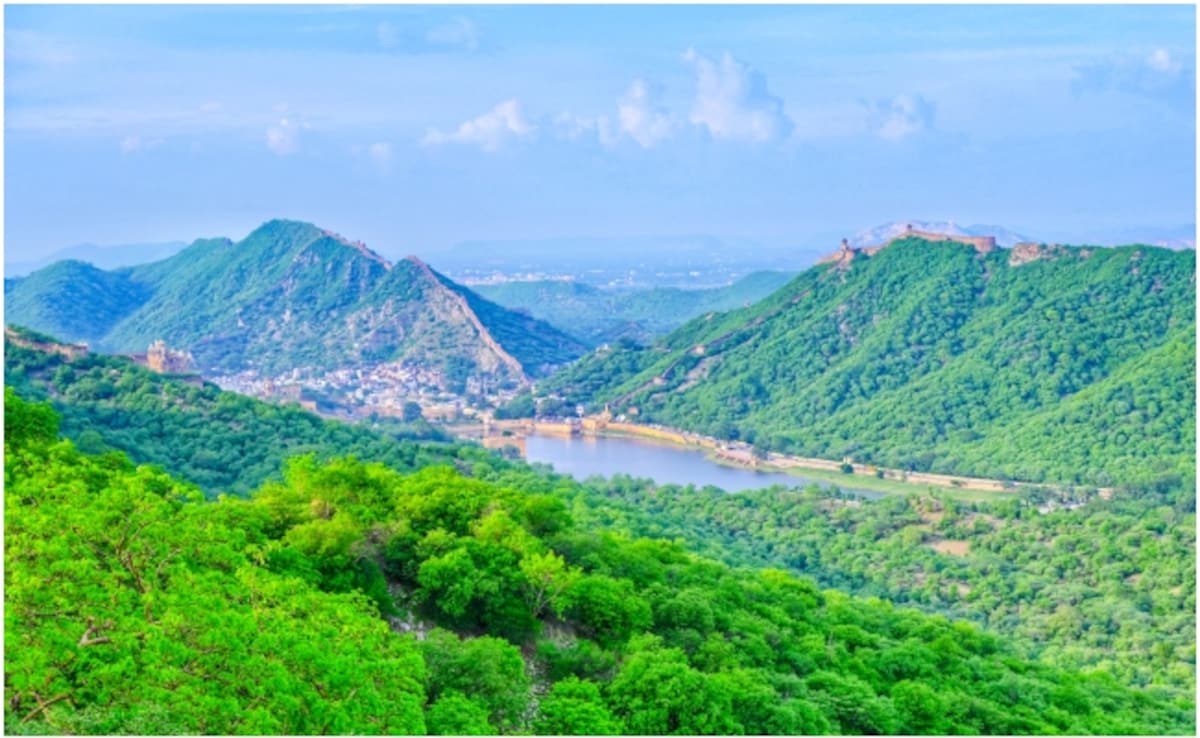
Stretching nearly 680 kilometres across Gujarat, Rajasthan, Haryana and Delhi, the Aravalli range is older than the Himalayas by geological time. These hills may not look dramatic everywhere, but their role is immense. They act as a natural barrier that slows the spread of the Thar desert towards fertile regions in north India. They also influence wind patterns, helping bring winter rainfall to Punjab, Haryana, Delhi and parts of western Uttar Pradesh.
Beyond climate, the Aravallis support forests that absorb carbon, reduce air pollution in the Delhi-NCR region, and host a wide variety of plants and animals adapted to semi-arid conditions. Their fractured rocks and slopes help store and recharge groundwater, which is critical in water-stressed areas.
More than just hills on a map
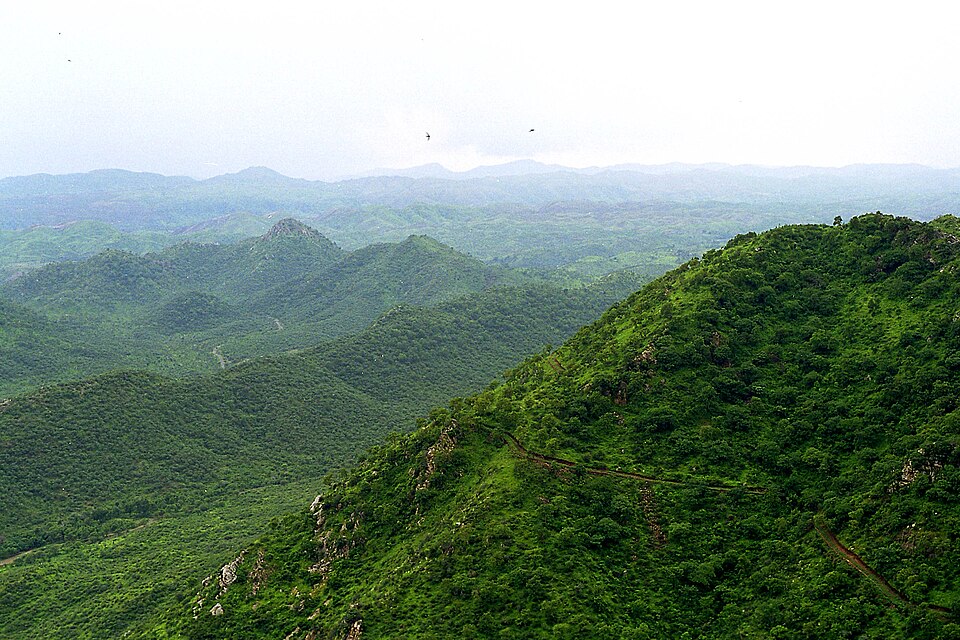
Ecologically, the Aravallis are not limited to sharp peaks or high ridges. They include low hills, shallow slopes, valleys, scrub forests and underground aquifers. Many important ecological zones lie only slightly above surrounding land. This makes the region difficult to define using simple physical measurements like height or slope.
Over decades, protection of the Aravallis has focused on preserving this wider landscape rather than identifying only tall hilltops. This understanding is now being tested by a push for a formal, uniform definition.

How the definition debate reached the Supreme Court
On May 5, 2024, the Supreme Court directed the Union Environment Ministry to create a uniform definition of the Aravalli ranges. In response, the Ministry of Environment, Forest and Climate Change formed an expert panel led by its Secretary, with members from the Forest Survey of India, Geological Survey of India and the Central Empowered Committee.
The panel studied elevation data across 34 districts in four states. It soon became clear that the Aravallis do not follow a single physical pattern. Some districts have hills that are not geologically part of the Aravalli system, while many genuine Aravalli areas consist of low and degraded landforms.
Why elevation and slope created confusion
The panel examined different ways to define the hills, including elevation and slope. Both approaches had serious flaws. Elevation-based criteria risked excluding low but ecologically vital parts of the range. Slope-based criteria risked including landforms that are not part of the Aravallis at all.
Rajasthan highlights this problem clearly. Earlier mapping by the Forest Survey of India used a 3-degree slope rule and identified more than 40,000 square kilometres as Aravalli terrain. This included over 12,000 hills, most of which were under 100 metres in height.
If height alone became the rule, almost 90 percent of these hills would lose Aravalli status.
The 100-metre rule and rising concern
Despite these issues, the panel recommended defining the Aravallis as landforms rising 100 metres or more from local relief, along with related slopes and features. The Supreme Court approved this definition on November 20, 2025.
The panel also pointed out that the region contains valuable mineral resources, including zinc, copper, gold, tungsten and critical minerals like lithium and graphite. These are important for clean energy technologies and national security.
Environmental groups reacted strongly. They argued that a height-based definition would remove legal protection from large areas of lower hills and slopes, opening them to mining, construction and real estate development. This, they warned, could damage the entire ecological system.
A pause ordered by the court
Facing public concern, the Environment Ministry announced that no new mining leases would be granted until further studies were done. However, doubts remained. On December 29, 2025, the Supreme Court took suo motu notice, stayed its earlier approval of the 100-metre rule, and ordered a fresh expert committee to review the issue.
The court’s adviser warned that relying only on elevation could expose low hills to heavy mining. This echoed earlier court rulings in the M.C. Mehta cases, which had repeatedly stressed the need to protect the Aravallis from deforestation and mineral extraction.
Aravalli Hills Ecological Dispute and the deeper policy inconsistency
The Aravalli Hills Ecological Dispute also reveals a larger policy gap. India does not have rigid numerical definitions for other major hill systems like the Himalayas or Western Ghats. Protection in those regions developed through broader landscape-level understanding, not strict height limits.
Applying a narrow definition only to the Aravallis risks treating geology as a bureaucratic checklist instead of a living system shaped by climate, water and biodiversity.
Aravalli Hills Ecological Dispute and the green wall contradiction
Another contradiction lies in government policy itself. In 2024, the Environment Ministry announced a massive “green wall” project, aiming to restore forests across nearly 1,400 kilometres from Gujarat to Delhi. The plan promised reforestation of over one million hectares around the Aravallis using native species.
However, little public data exists on progress so far. Critics say it is contradictory to promote large-scale ecological restoration while simultaneously narrowing the legal definition of the very landscape that needs protection.
What the debate is really about
At its heart, the Aravalli Hills Ecological Dispute is not just about maps or measurements. It is about how India chooses between short-term economic gains and long-term ecological security. Defining the Aravallis only by height may bring administrative clarity, but it risks breaking apart an ancient, interconnected system.
As the Supreme Court re-examines the issue, the challenge remains clear. Protecting the Aravallis means recognising them as a continuous landscape, where even low and quiet hills play a vital role in holding back deserts, storing water and supporting life.