Atlas Moth Recorded in Karnataka: A Majestic Discovery Highlighting Western Ghats’ Monsoon Richness

A spectacular sighting of the Atlas Moth (Attacus atlas), one of the largest moths on Earth, has been recorded from the Karwar region of coastal Karnataka, adding another gem to the biodiversity treasure trove of the Western Ghats. This remarkable discovery not only reaffirms the ecological richness of India’s monsoon landscapes but also underscores the importance of protecting native forest habitats that sustain such rare species.
Thank you for reading this post, don't forget to subscribe!Rare Sighting of Atlas Moth Recorded in Karnataka
The Atlas Moth recorded in Karnataka marks a significant observation within the moth’s known range across tropical Asia. Typically found in humid evergreen and semi-evergreen forests, the species thrives in regions where host plants are abundant. The Karwar observation follows previous Western Ghats records, pointing to the moth’s sporadic yet consistent presence across India’s southwestern biodiversity belt.
Naturalists note that these majestic moths often appear shortly after heavy monsoon showers, when adults emerge from cocoons to rest on tree trunks, shrubs, or walls. Their enormous size and striking appearance make them easy to spot but also vulnerable to natural predators and human curiosity alike.
The Giant of the Skies: Atlas Moth Recorded in Karnataka
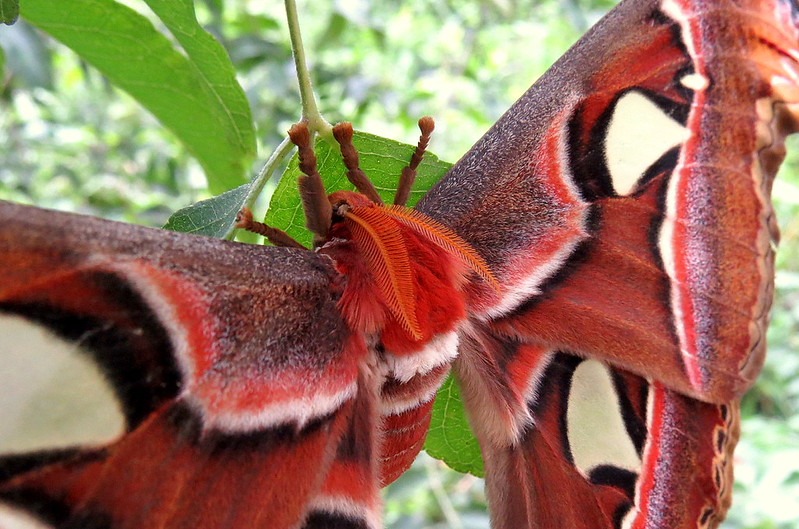
The Atlas Moth is celebrated for its sheer scale and intricate beauty. With females spanning up to 25–27 centimetres, and exceptional individuals approaching 30 centimetres, the species possesses one of the largest total wing areas among all Lepidoptera.
Its rusty-brown wings, patterned with bold black, white, and pink markings, showcase an evolutionary marvel the forewing tips mimic snake heads, a natural adaptation to deter predators like birds and reptiles. This illusion, combined with the moth’s broad wings and gentle flight, gives it an almost mythical presence in the forest canopy.
Female Atlas Moths are larger and heavier, designed for egg production, while males are smaller yet more agile, their feathery antennae exquisitely tuned to detect female pheromones over long distances. The balance between grace and strength makes this species a living symbol of the fragile magnificence of tropical biodiversity.
The Short, Intense Life of the Atlas Moth
The life cycle of the Atlas Moth recorded in Karnataka offers a fascinating glimpse into nature’s brevity and purpose. The caterpillars plump, green, and voracious feed on the leaves of citrus, guava, cinnamon, and other native trees, storing immense energy before sealing themselves into silken cocoons.
Once metamorphosis is complete, the adult moth emerges, magnificent yet ephemeral. With non-functional mouthparts, it cannot feed; instead, its life revolves solely around reproduction. Within one or two weeks, the adults mate, lay eggs, and die, completing a life cycle that is both intensely purposeful and poignantly brief.
Predation is an ever-present threat. Birds, ants, and parasitic wasps often target both larvae and adults. Despite these challenges, the moth’s recurring appearances during the monsoon months show the resilience of its populations and the persistence of suitable habitats across Karnataka’s forested landscapes.
Habitat Preferences and Seasonal Activity
The Atlas Moth thrives in warm, humid environments precisely the conditions offered by coastal and montane forests of the Western Ghats. These ecosystems provide dense foliage for larvae and shelter for pupae, ensuring stable development.
During the monsoon and post-monsoon seasons, sightings increase significantly. The moisture-laden air supports vegetation growth and larval feeding, while adults, newly emerged from cocoons, become highly visible against lush green backdrops. Naturalists and photographers often encounter them resting motionless during daylight, their vast wings camouflaging them against bark or leaves.
This seasonal rhythm links the species’ lifecycle closely with the regional climate, making the Atlas Moth a natural indicator of monsoon health and forest vitality.
Conservation Significance and Environmental Pressures
Though the Atlas Moth is not globally threatened, its local survival depends on the preservation of native vegetation, minimal pesticide use, and balanced light conditions. Rapid urbanization along coastal Karnataka, coupled with deforestation and artificial lighting, poses growing threats to nocturnal insects like moths.
Light pollution, in particular, disorients adult moths, disrupting mating behaviour and leading to energy exhaustion. Similarly, pesticide drift from nearby agricultural fields can poison larvae feeding on host plants. Loss of mixed native tree cover especially species like citrus and cinnamon further limits the moth’s breeding potential.
Protecting this species requires landscape-level conservation, where both forest core areas and surrounding buffer zones are managed sustainably. Community-led efforts in Karwar and adjoining taluks, emphasizing eco-friendly farming, organic pest control, and habitat restoration, can ensure that sightings like this remain part of the region’s natural rhythm.
A Symbol of Biodiversity in the Western Ghats
The rediscovery of the Atlas Moth in Karnataka is more than a biological record it is a symbolic reminder of India’s living heritage. Every such sighting reinforces the ecological significance of the Western Ghats, one of the world’s eight “hottest” biodiversity hotspots.
The presence of such sensitive, short-lived insects reflects a relatively healthy microclimate clean air, moist soil, and diverse flora that sustain complex ecological interactions. It also draws attention to the need for citizen science initiatives that document and report wildlife observations, helping researchers map species distributions and detect population changes over time.
By merging traditional forest knowledge with modern ecological monitoring, Karnataka can continue to celebrate its biodiversity without compromising its development goals.
Conclusion
The Atlas Moth recorded in Karnataka stands as a magnificent reminder of nature’s artistry and fragility. Its brief life, immense wingspan, and intricate mimicry all speak of millions of years of evolution shaped by the monsoon rhythms of the Western Ghats.
To ensure future generations can witness this extraordinary insect, conservation efforts must extend beyond protected areas reaching into farms, villages, and towns where biodiversity quietly thrives. The sight of an Atlas Moth resting after the rains is not just a natural event; it is a testament to coexistence between people and the wilderness that surrounds them.