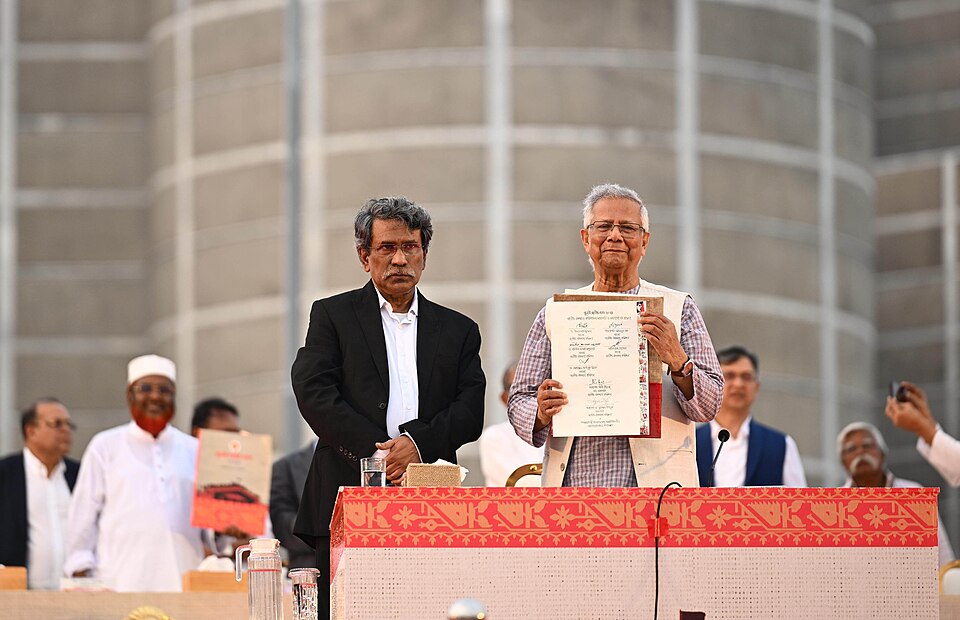
Bangladesh Approves July Charter: Voters Back Landmark Governance Reforms

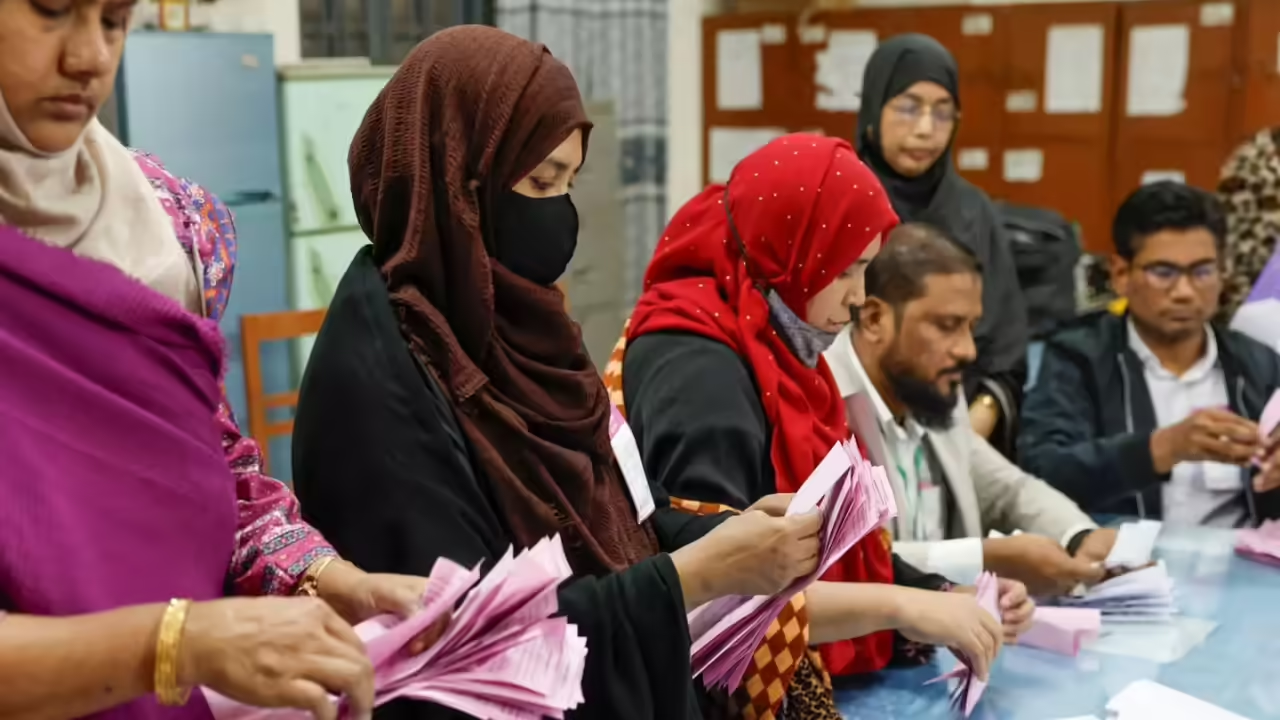
Bangladesh Approves July Charter in a landmark national referendum, marking a decisive shift toward political and constitutional reform in the country. Nearly 70 per cent of voters supported the July National Charter 2025, showing strong public backing for changes aimed at reducing concentration of power and strengthening democratic institutions. Held alongside the general elections, the referendum recorded a voter turnout of 60.26 per cent, underlining widespread public engagement in shaping Bangladesh’s political future.
Thank you for reading this post, don't forget to subscribe!A Vote That Coincided With Political Change
The referendum took place at a time of significant political transition. The general elections resulted in a decisive victory for the Bangladesh Nationalist Party-led alliance, setting the stage for Tarique Rahman to form the next government. The combination of electoral success and popular approval of the charter has given the incoming leadership both political power and public backing to push forward with reforms.
For many voters, the referendum was not just about approving a document but about expressing hope for a more balanced and accountable system of governance. The strong mandate suggests that citizens want changes that can prevent political instability and reduce the risk of authoritarian rule in the future.
How the July Charter Came Into Being
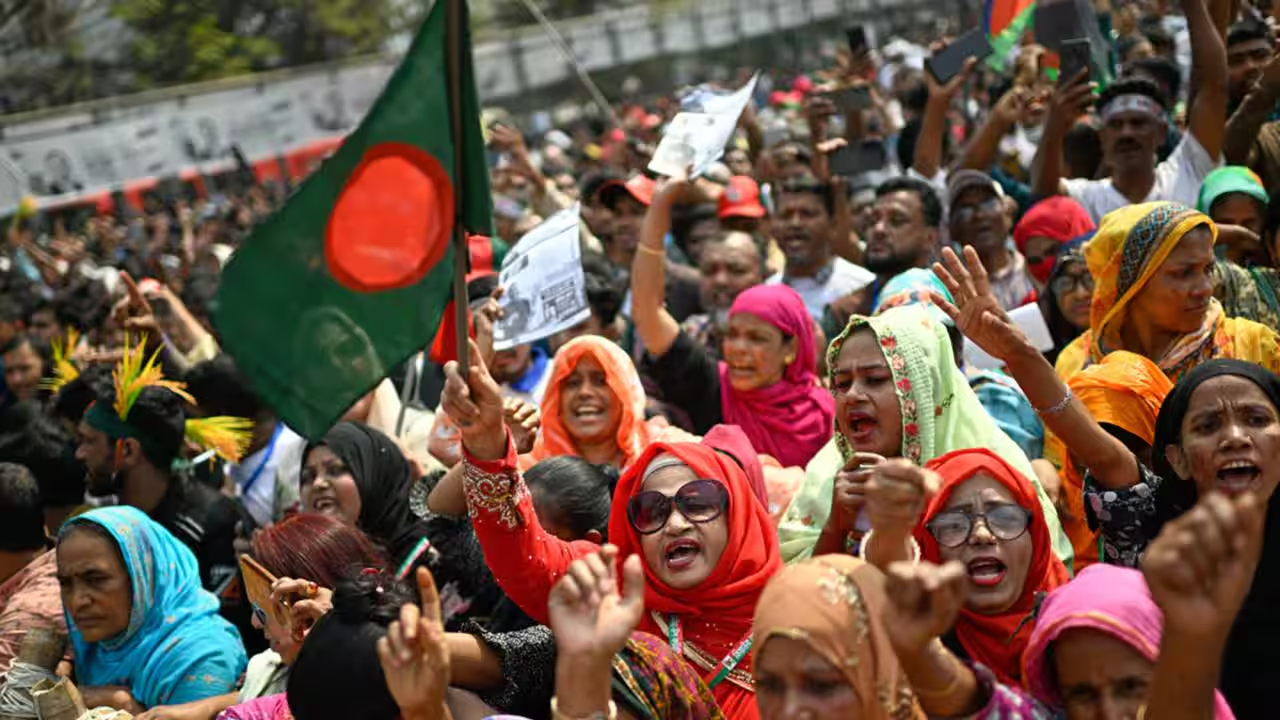
The July Charter has its roots in the dramatic events of mid-2024. In July that year, a student-led uprising shook the political landscape and eventually led to the removal of former Prime Minister Sheikh Hasina from office. The movement highlighted public anger over governance issues, concentration of power, and lack of accountability.
In response to these events, political leaders, civil society members, and reform advocates began drafting a new reform agenda. The result was the July Charter, which became the third major reform charter in Bangladesh’s political history. It was designed not as a short-term fix, but as a comprehensive roadmap to rebuild trust in democratic institutions.
A Broad Plan for Structural Reform
The July Charter is ambitious in scope. It lists 84 reform points aimed at restructuring the state and strengthening democratic checks and balances. Of these, 47 reforms require constitutional amendments, while the remaining 37 can be carried out through new laws or executive decisions.
To manage this complex process, the charter proposes the creation of a Constitutional Reform Council. This body would be responsible for implementing the approved changes within 270 working days. Supporters of the charter believe this structured timeline will help prevent delays and ensure that reforms move forward in a transparent manner.
Reducing Concentration of Power
One of the main goals of the July Charter is to prevent excessive concentration of executive authority. The document proposes strict term limits for prime ministers to ensure that no individual can remain in power for an extended period. This measure is seen as crucial in avoiding a return to authoritarian-style governance.
The charter also proposes changes to the structure of parliament. It calls for the creation of a bicameral legislature by adding a 100-seat upper house. Seats in this chamber would be allocated based on each party’s share of the national vote, allowing for broader political representation. Supporters argue that this system would give smaller parties and diverse voices a stronger role in lawmaking.
Bangladesh Approves July Charter: Strengthening the Role of the President
Another key feature of the charter is its focus on rebalancing power within the executive branch. The reforms seek to enhance the authority of the president, reducing the dominance of the prime minister’s office. By distributing power more evenly, the charter aims to create a system where decisions are subject to greater scrutiny and debate.
This shift is intended to encourage cooperation between different branches of government and reduce the chances of unilateral decision-making. Many analysts see this as a step toward a healthier democratic system.
Focus on Judicial Independence and Opposition Rights
Judicial independence is a central theme of the July Charter. The document emphasizes protecting courts and key institutions from political pressure. Stronger safeguards are proposed to ensure that judges and oversight bodies can function without fear or influence.
The charter also outlines a more meaningful role for opposition parties. It proposes that opposition leaders head major parliamentary committees and that the position of deputy speaker be reserved for them. These measures are designed to strengthen parliamentary oversight and encourage constructive debate.
In addition, the charter includes provisions to increase women’s representation in parliament, reflecting a commitment to inclusivity. It also offers legal protections to participants in the 2024 uprising, referred to as “July Fighters,” recognizing their role in shaping the country’s political future.
What This Means for Bangladesh Ahead
The approval of the July Charter marks a significant moment in Bangladesh’s political history. It represents public support for deep, systemic reform at a time when trust in institutions has been tested. If implemented effectively, the charter could reshape the country’s constitutional framework, rebalance executive and legislative powers, and strengthen democratic accountability.
For citizens, the vote reflects hope for a more transparent and representative system. For the incoming government, it presents both an opportunity and a challenge: to turn ambitious promises into real change. As Bangladesh moves forward, the success of the July Charter will depend on political will, cooperation across parties, and continued public engagement in the democratic process.