National Flag Day: History, Significance, and Importance of India’s Tiranga

National Flag Day in India is observed every year on July 22 to remember the historic day in 1947 when the Constituent Assembly officially adopted the Indian National Flag. This day is not just about a piece of cloth made of saffron, white, and green. It is about the spirit of freedom, unity, sacrifice, and national pride that the flag represents.
Thank you for reading this post, don't forget to subscribe!For every Indian, the national flag is a symbol of honor and respect. When we see the Tiranga flying high in the sky, our hearts fill with pride. It reminds us of the freedom fighters who sacrificed their lives for our country. National Flag Day gives us a chance to remember their courage and renew our promise to serve and respect our nation.
The Significance of July 22
On July 22, 1947, just a few weeks before India became independent on August 15, the Constituent Assembly of India adopted the present design of the Indian National Flag. This was a very important moment in Indian history.
The Constituent Assembly was the body that was responsible for writing the Constitution of India. On that day, the members agreed that independent India should have its own national flag that would represent all its people.

The adoption of the flag was a strong message to the world. It showed that India was ready to become a free and sovereign nation. The flag became a symbol of India’s identity and unity.
Every year on July 22, National Flag Day is observed to remember this historic decision. It is a day to think about what the flag stands for and how we can follow its values in our daily lives.
History of the Indian National Flag
The story of the Indian flag is long and interesting. Before independence, India did not have one single flag that represented the entire country.
Flags During British Rule
Before 1947, India was under British rule. Different princely states had their own flags, but there was no common flag for all Indians.
After the Revolt of 1857, the British designed a flag for India. It had:
- A red background
- The Union Jack in one corner
- A “Star of India” symbol in the middle
The “Star of India” was connected to an award called the “Order of the Star of India,” introduced by Queen Victoria. This symbol tried to connect India to the British Empire.
However, this flag did not represent the feelings and identity of the Indian people. It mainly showed British control.
Early Attempts to Create an Indian Flag
As the freedom movement grew stronger, Indians started thinking about creating their own national flag.
Religious-Based Designs
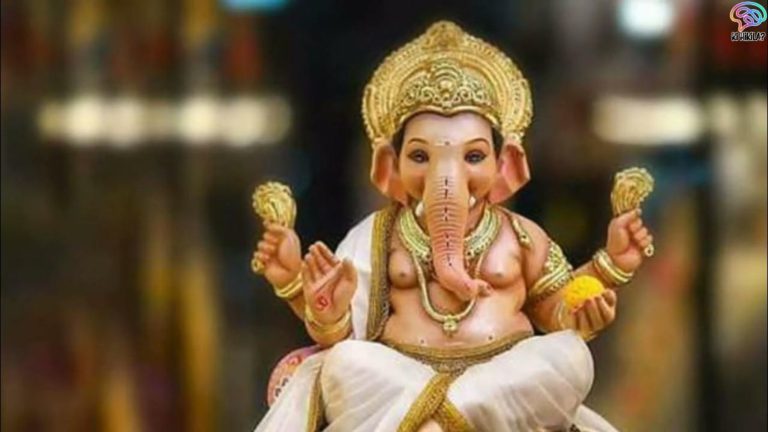
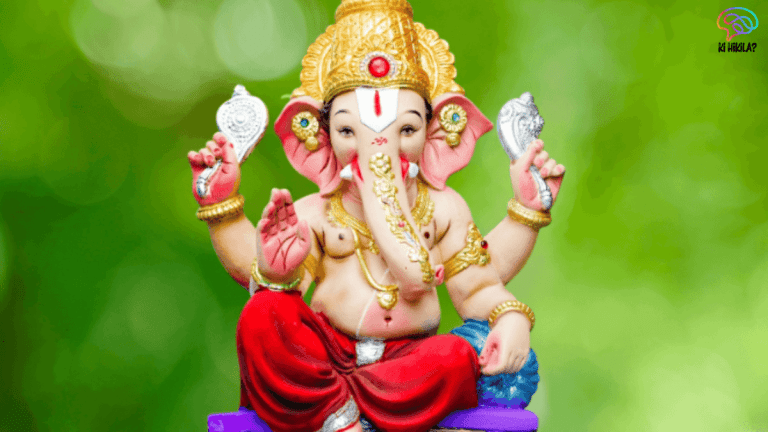
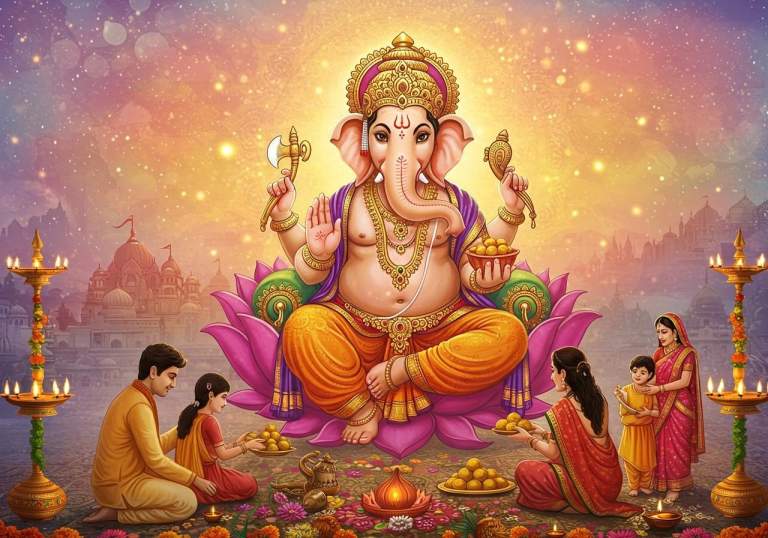
Some leaders like Bal Gangadhar Tilak and Aurobindo Ghosh suggested using Hindu religious symbols like Ganesha, Kali, and the holy cow. However, these designs did not include Muslims and people of other religions. So, they were not accepted as a national symbol.
India is a country of many religions and communities. A national flag had to represent everyone equally.
Early Tricolor Flags
Inspired by countries like France and the Netherlands, which used tricolor flags as symbols of freedom, India also began to experiment with tricolors.
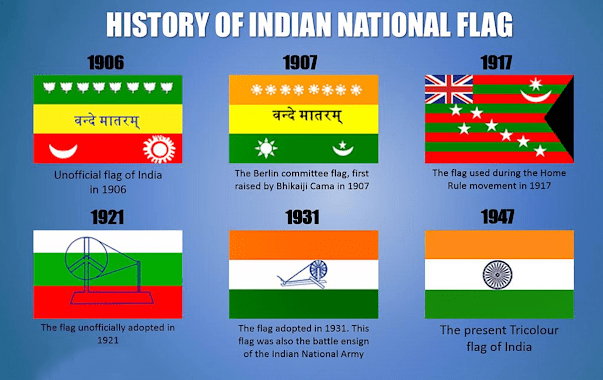
The 1905 Flag
In 1905, when Bengal was divided by the British, the Swadeshi Movement began. During this time, a tricolor flag was created. It had:
- Green, yellow, and red stripes
- Lotus flowers
- A sun and crescent moon
- The words “Vande Mataram”
This flag was even used by Bhikaji Cama in Germany to represent India internationally. However, it did not become widely accepted.
Sister Nivedita’s Design
Another design was suggested by Sister Nivedita. Her flag included a thunderbolt and lamps. But again, it did not become popular across the country.
Even British officials noticed that India did not have one common flag. This showed the need for a symbol that could unite all Indians.
New Designs and Gandhi’s Role
In 1916, a man named Pingali Venkayya created around 30 different flag designs. He studied flags of many countries and wanted to design one for India.
Home Rule Movement Flag
Around the same time, Annie Besant and Bal Gangadhar Tilak introduced a new flag for the Home Rule Movement. It included both British and Indian symbols. However, the British government banned it.
Gandhi and the Charkha
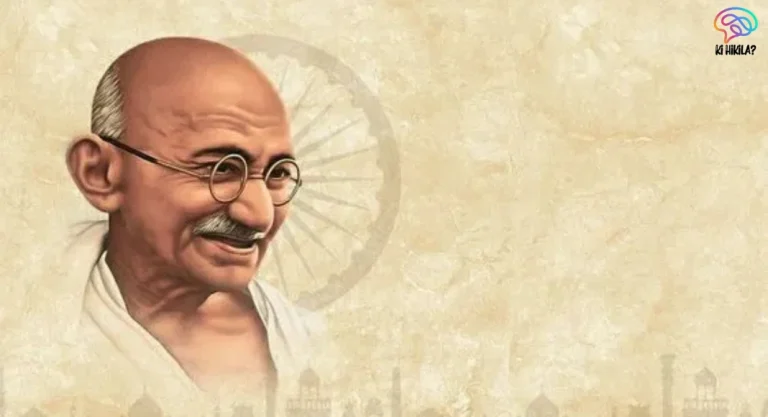
In the 1920s, Mahatma Gandhi suggested a new flag design. He included the charkha (spinning wheel) in the center. The charkha symbolized self-reliance and the Swadeshi movement.
At first, Gandhi suggested red and green colors to represent Hindus and Muslims. Later, white was added to include all other communities.
By 1929, Gandhi gave meanings to the colors:
- Red for sacrifice
- White for peace
- Green for hope
This design became popular among freedom fighters.
Flag Satyagraha and Public Support
In 1923, the spinning wheel flag was raised in Nagpur to remember the Jallianwala Bagh massacre. The police arrested many people who participated in the protest. This led to the Flag Satyagraha, a peaceful movement to protect the right to hoist the national flag.
Leaders like Jamnalal Bajaj supported this movement. Gradually, people from different communities began to accept the tricolor as a national symbol.
In 1931, the Indian National Congress officially adopted a tricolor flag with saffron, white, and green stripes and the spinning wheel in the center. This was very close to the present design.
Adoption of the Present Flag in 1947
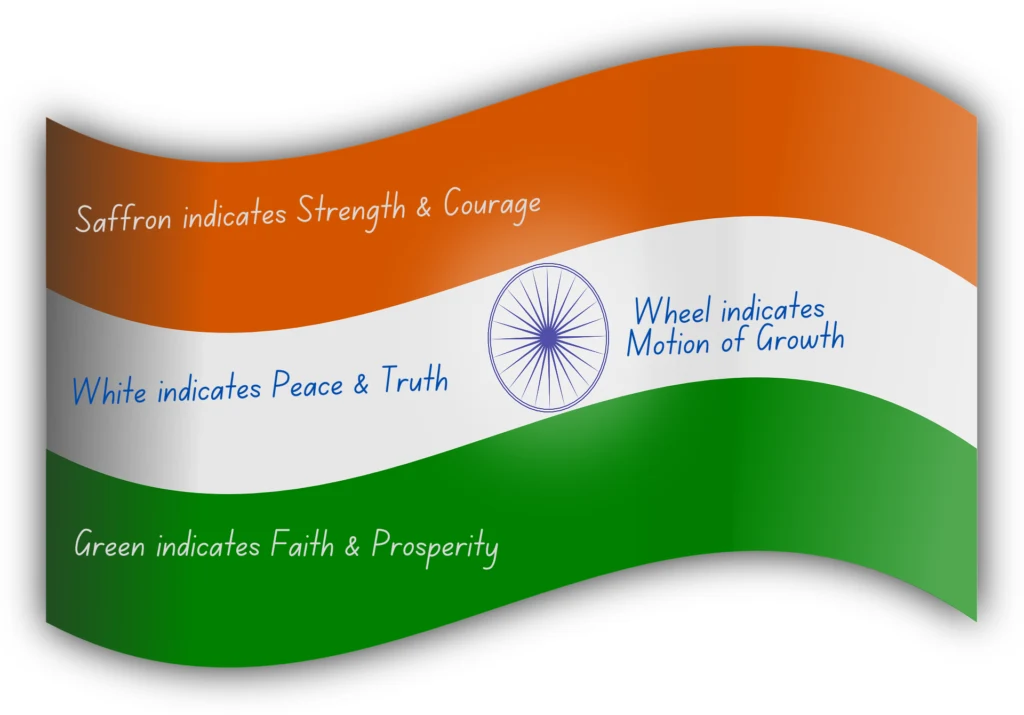
Finally, on July 22, 1947, the Constituent Assembly adopted the present design of the Indian National Flag.
The spinning wheel was replaced by the Ashoka Chakra, inspired by the Lion Capital of Ashoka.
On August 15, 1947, when India became independent, the Tiranga was proudly hoisted as the national flag of free India.
The Tiranga and Its Symbolism
The Indian National Flag, also known as the Tiranga, has deep meaning.
1. Saffron (Top)
The saffron color stands for:
- Courage
- Sacrifice
- Renunciation
It reminds leaders to work without selfishness and to serve the nation honestly.
2. White (Middle)
The white color represents:
- Truth
- Peace
- Purity
It shows that India believes in peace and honesty.
3. Green (Bottom)
The green color stands for:
- Fertility
- Growth
- Prosperity
It shows India’s connection with nature and agriculture.
4. Ashoka Chakra
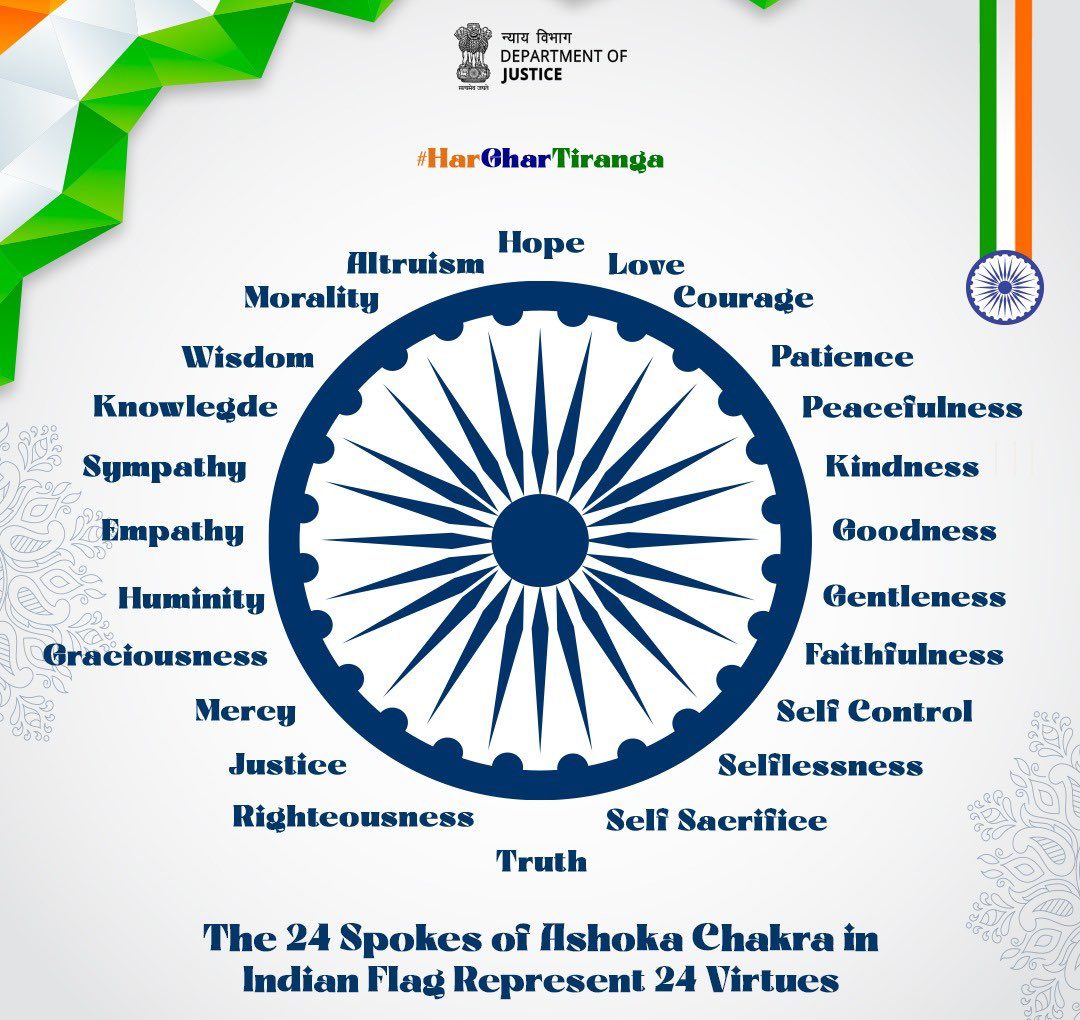
In the center of the white stripe is the navy blue Ashoka Chakra with 24 spokes. It represents:
- Dharma (righteousness)
- Law
- Progress
- Movement
The wheel shows that life should always move forward. Stopping means death. The 24 spokes also remind us to follow moral values every hour of the day.
Why National Flag Day is Important
National Flag Day is important because:
- It reminds us of our freedom struggle.
- It teaches us unity in diversity.
- It inspires us to respect our national symbols.
- It strengthens our feeling of patriotism.
The flag belongs to every Indian, no matter what religion, language, or region they belong to.
How to Observe National Flag Day
Here are some simple ways to celebrate National Flag Day:
1. Hoist the National Flag
You can hoist the flag at your home, school, or office. Make sure to follow the Flag Code of India.
2. Learn About the Flag
Read about the history of the Tiranga. Teach children about the meaning of the colors and the Ashoka Chakra.
3. Organize Cultural Programs
Schools can organize:
- Speeches
- Essay competitions
- Patriotic songs
- Quiz competitions
4. Visit Museums
You can visit museums that display national symbols and freedom movement history.
5. Follow the Flag Code of India
The Flag Code tells us how to use and respect the national flag properly. For example:
- The flag should not touch the ground.
- It should not be used as clothing or decoration.
- It should always be treated with dignity.
National Flag and Indian Youth
The youth of India have a big responsibility. The flag reminds young people to:
- Work hard
- Be honest
- Respect others
- Serve the country
Students should understand that patriotism is not just about waving the flag. It is about following the values it represents.
National Flag Day and National Unity
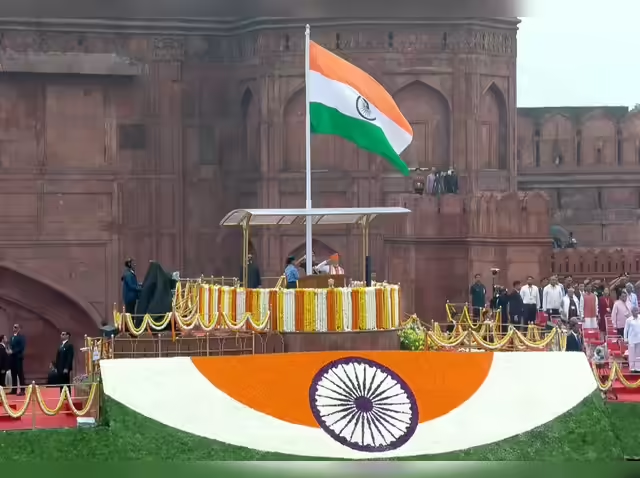
India is a country of many cultures, languages, and traditions. But one thing unites us all the Tiranga.
When we see the flag at sports events, schools, or national celebrations, we feel connected to each other. It does not matter where we come from; we all stand under the same flag.
Conclusion
National Flag Day is a proud day for every Indian. It reminds us of July 22, 1947, when the Constituent Assembly adopted our national flag. The Tiranga is not just a piece of cloth. It is a symbol of our freedom, unity, and identity.
The saffron teaches courage, white teaches peace, green teaches growth, and the Ashoka Chakra teaches progress and righteousness.
As responsible citizens, we must respect our national flag and live by its values. Let us celebrate National Flag Day with pride and promise to make India stronger, united, and peaceful.
When the Tiranga flies high, it tells the world that India stands tall with dignity and honor.
FAQs on National Flag Day
1. When is National Flag Day observed in India?
National Flag Day is observed on July 22 every year.
2. Why is July 22 important?
On July 22, 1947, the Constituent Assembly adopted the Indian National Flag.
3. Who designed the Indian National Flag?
Pingali Venkayya played a key role in designing the early versions of the flag.
4. What does the Ashoka Chakra represent?
It represents dharma, law, and progress.
5. What are the three colors of the Indian flag?
Saffron, white, and green.