
Chungthang-Lachen Road Restored: BRO Rebuilds Lifeline in North Sikkim

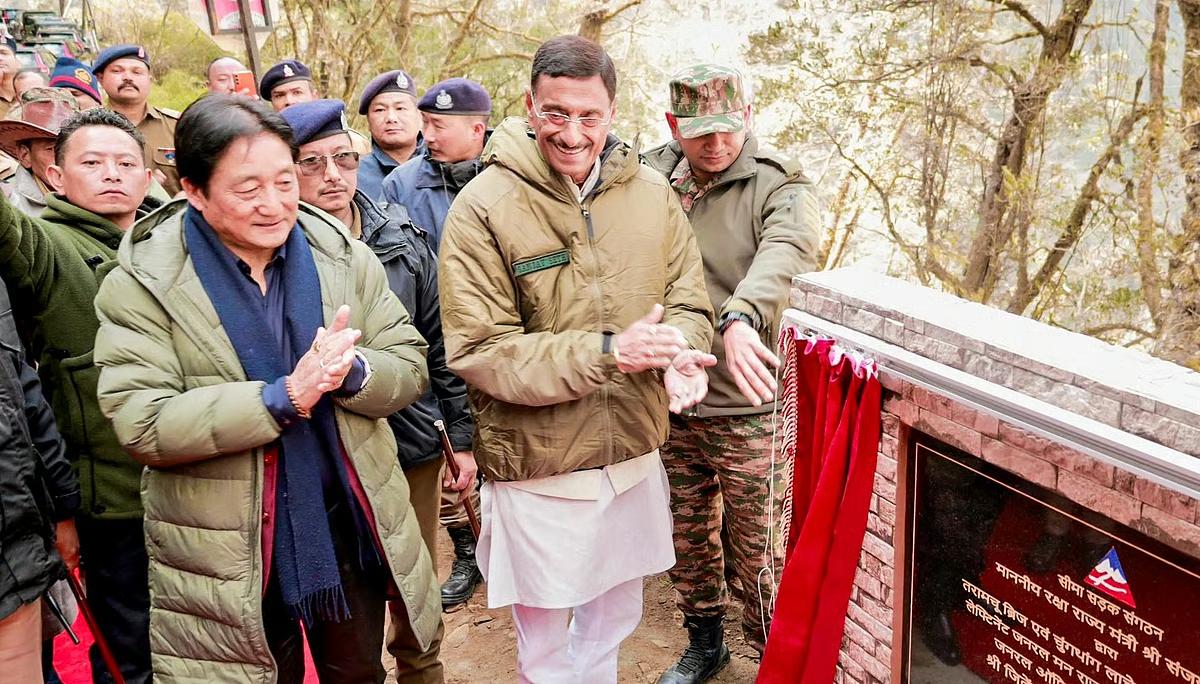
The Chungthang-Lachen Road Restored milestone has brought major relief to the people of North Sikkim after months of disruption caused by natural disasters. Raksha Rajya Mantri Sanjay Seth inaugurated the rebuilt Chungthang–Lachen road axis along with the newly constructed 400-foot Bailey Suspension Taram Chu Bridge. The restoration work was carried out by the Border Roads Organisation (BRO) under Project Swastik.
Thank you for reading this post, don't forget to subscribe!This development marks an important step in rebuilding critical infrastructure in one of India’s most sensitive and disaster-prone Himalayan regions.
A Region Hit by Repeated Natural Disasters
North Sikkim has faced a series of severe natural events over the past few years. In October 2023, a Glacial Lake Outburst Flood (GLOF) caused massive destruction in the region. This was followed by Cyclone Remal in June 2024 and multiple cloudbursts during May–June 2025. These disasters damaged roads, bridges and communication networks, cutting off remote towns like Lachen from the rest of the state.
The Chungthang–Lachen road is a lifeline for local communities, tourists and security forces. When it was damaged, it disrupted daily life, transport of essential goods and emergency services. The restoration was therefore treated as a top priority by the government.
Massive Engineering Efforts by BRO
The rebuilding of the 28-kilometre Chungthang–Lachen stretch required intense engineering efforts in extremely difficult terrain. The BRO cleared 96 landslides that had blocked the road. Many sections were unstable due to sinking zones and loose mountain slopes.
To restore connectivity, engineers constructed four major bridges and repaired two others. They also carried out eight kilometres of fresh formation cutting to reshape and stabilise damaged road sections. Temporary diversions were created to allow safe movement around dangerous areas.
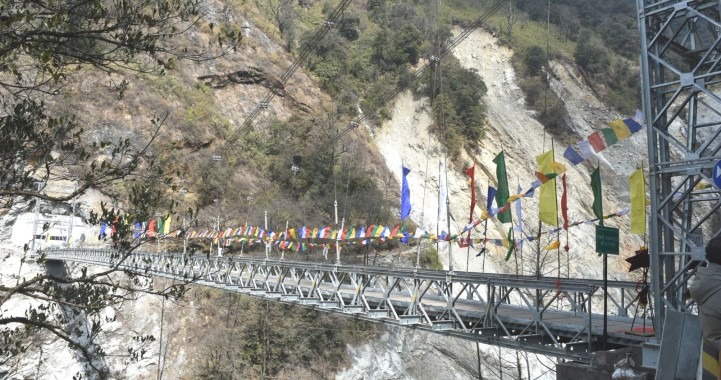
One of the highlights of the project is the 400-foot Bailey Suspension Bridge over the Taram Chu stream. A Bailey bridge is a portable and prefabricated truss bridge that can be assembled quickly. It is widely used in hilly and disaster-affected regions because of its strength and speed of construction. The new bridge has restored safe crossing over the fast-flowing river, ensuring uninterrupted travel.
These works build on the earlier reopening of the 7.5-kilometre Naga–Toong stretch in October 2025, which was another key achievement in reconnecting North Sikkim.
Strategic Importance of the Road
The Chungthang–Lachen route is not just important for civilians. It also holds high strategic value for India. Sikkim shares international borders with China, Bhutan and Nepal. Because of its sensitive location, the region requires strong road connectivity for defence movement and supply transport.
Improved infrastructure ensures smooth movement of troops, equipment and essential materials. In high-altitude border areas, roads are crucial for national security. The restoration of this road strengthens India’s preparedness and response capability in the Himalayan belt.
During the inauguration, Minister Sanjay Seth praised the BRO teams for working in extreme weather and challenging mountain conditions. He highlighted that building and maintaining roads in such terrain requires dedication, technical skill and courage.
Benefits for Local Communities and Tourism
The reopening of the Chungthang–Lachen road brings hope for local residents who depend on the route for trade, health services and education. Farmers and small traders can now transport their goods more easily to markets. Essential supplies such as food, fuel and medicines can reach remote villages without long delays.
Tourism is another major beneficiary. Lachen is a popular destination for visitors travelling to Gurudongmar Lake and other scenic spots in North Sikkim. With road connectivity restored, tourism activities are expected to increase again, supporting hotels, homestays and local businesses.
Better connectivity also helps in faster disaster response. In case of future landslides or floods, authorities can act quickly if roads and bridges remain strong and accessible.
Supporting the Vision of Development with Chungthang-Lachen Road Restored
The restoration aligns with the state government’s vision of “Atmanirbhar Sikkim–Viksit Bharat,” which focuses on strong and resilient infrastructure. Building roads that can withstand extreme weather is essential in the fragile Himalayan ecosystem.
The region is prone to landslides, heavy rainfall and glacial activity. Climate change has further increased the risk of sudden floods and cloudbursts. Therefore, infrastructure projects now focus not only on speed but also on durability and safety.
The work by the Border Roads Organisation shows India’s commitment to building disaster-resilient infrastructure in remote and high-risk regions. By combining modern engineering with quick response methods like Bailey bridges, the government aims to reduce the impact of natural disasters on local communities.
Strengthening Resilience in the Himalayas After Chungthang-Lachen Road Restored
The successful completion of the Chungthang–Lachen road and Taram Chu Bridge stands as a symbol of resilience and determination. Despite repeated natural challenges, the authorities have ensured that connectivity in North Sikkim is restored.
The project highlights the importance of coordinated efforts between defence agencies, state authorities and engineering teams. It also shows how infrastructure development plays a key role in national security, regional growth and community welfare.
With the Chungthang-Lachen Road Restored, North Sikkim is once again connected, bringing stability, economic opportunity and renewed confidence to the region.