


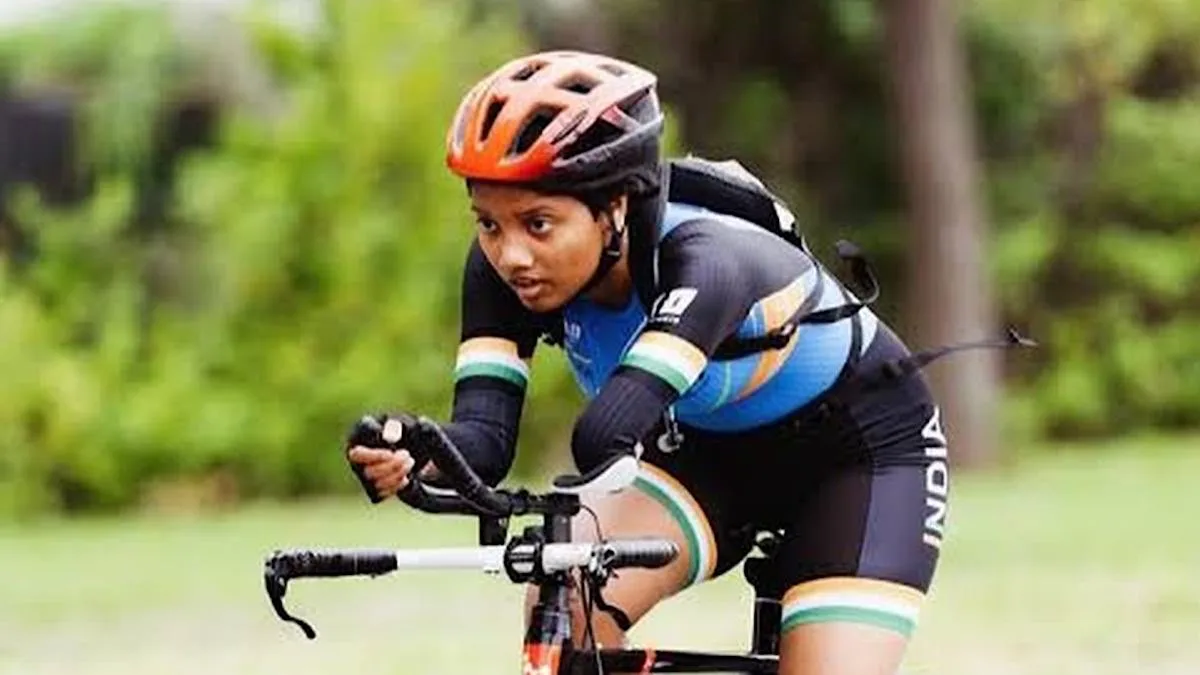
Lisha Das CWG 2026 Journey

Lisha Das CWG 2026 journey came to an end in Glasgow after the 16-year-old Indian para cyclist finished sixth in the women’s C4-C5 4,000m individual pursuit qualification. Das was the youngest member of India’s Commonwealth Games contingent and the country’s only para-track cyclist at the 2026 Games. Although she did not advance to the medal races, her participation marked an important step in her young sporting career. The cycling events were held at the Sir Chris Hoy Velodrome in Glasgow.
Thank you for reading this post, don't forget to subscribe!A Young Athlete on a Big International Stage
At only 16 years of age, Lisha Das entered the Commonwealth Games with a major responsibility. She was representing India in para track cycling at one of the biggest multi-sport events of her career. Her appearance also brought attention to the growing participation of young athletes with disabilities in international sport.
The Glasgow Games provided Das with an opportunity to compete against experienced international cyclists. For a young athlete making her Commonwealth Games debut, the experience itself was an important part of her development.
Sixth Place in the 4,000m Individual Pursuit
Das competed in the women’s C4-C5 4,000m individual pursuit qualification. She finished sixth and last in the qualifying field, recording a time of 6:58.000 and an average speed of 34.450 kmph.
The result meant that she could not progress to the medal races. The fastest two riders qualified for the gold-medal race, while the third- and fourth-fastest riders moved into the bronze-medal contest.
The difference in times showed how difficult the competition was. Australia’s Tara Neyland led the qualification with 4:45.796, while England’s Morgan Newberry finished second in 5:06.470.
New Zealand’s Nicole Murray and Australia’s Erin Normoyle completed the four riders who moved into the medal positions.
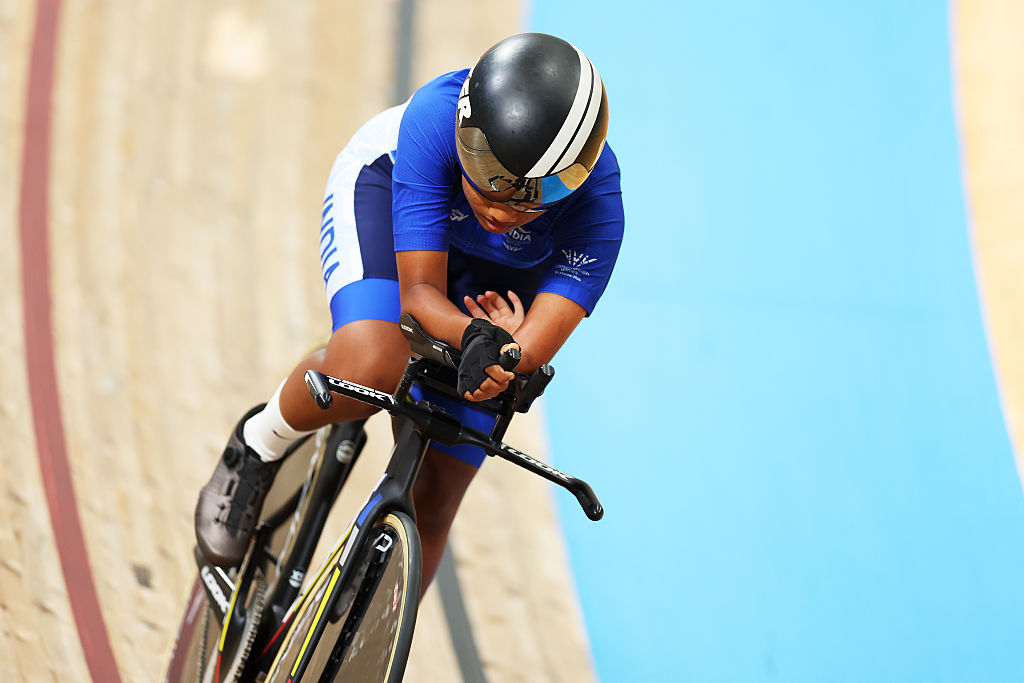
Understanding Para Track Cycling
Para track cycling allows athletes with eligible physical impairments to compete under a classification system. The classification system is designed to create fair competition between athletes with similar levels of sporting impact from their impairments.
Lisha Das competes in the C5 classification. She has a deformity affecting her right hand. The C5 category includes athletes with eligible physical impairments that have a comparatively lower impact on cycling performance than some other para-cycling classifications.
The classification system is an important part of para sport because it allows athletes with different disabilities to compete within structured categories.
The Challenge of the 4,000m Pursuit
The individual pursuit is a demanding track cycling event. Riders race individually against the clock, requiring a combination of speed, endurance, pacing and concentration.
The 4,000m distance requires athletes to manage their energy carefully. Starting too quickly can affect performance in the final stages, while a slow opening can make it difficult to recover lost time.
For Das, the event provided valuable experience against some of the strongest para cyclists in the Commonwealth Games field.
India’s Youngest Athlete in Glasgow
Das’s age made her participation particularly notable. At 16, she was the youngest athlete in India’s Commonwealth Games contingent. She was also the country’s only para-track cyclist to qualify for the Glasgow Games.
Her selection reflected the progress being made in Indian para sport. The country has increasingly focused on giving athletes with disabilities access to international competitions, specialised training and high-performance support.
Coming From Assam
Lisha Das comes from Assam, adding a regional dimension to her international sporting journey. Her participation has brought attention to para cycling in the Northeast and could encourage more young athletes from the region to explore competitive sports.
For Assam, the emergence of a young athlete on an international stage is significant. Sports development in the region has traditionally included disciplines such as boxing, athletics, weightlifting and football, while cycling continues to have opportunities for further growth.
Das’s journey could help increase interest in para cycling among young people in the state.
Support Concerns Before the Games
Das’s participation in Glasgow was preceded by concerns about the support available to her. Before travelling to the Games, she raised concerns about her personal coach and female support staff not initially being included in the Indian contingent.
She had requested a three-member support team consisting of her personal coach, a female physiotherapist and a technician. Reports before the Games said she had expressed emotional distress over uncertainty surrounding support and travel arrangements.
The Indian Olympic Association later stepped in to ensure that a female support staff member would accompany her in Glasgow.
Why Support Staff Matter in Para Sport
Support staff play an important role in high-level para sport. Athletes may require specialised assistance related to equipment, physical preparation, medical care and competition routines.
For a teenage athlete competing internationally for the first time, reliable support can be especially important. Coaches and technical staff help athletes prepare for races, while physiotherapists can support physical recovery and injury prevention.
Para cycling also depends heavily on specialised equipment. Technical support can therefore have a direct impact on an athlete’s preparation and performance.
A Difficult Build-Up to the Competition
The uncertainty surrounding Das’s support arrangements became part of the story before her race. Reports indicated that she experienced significant stress during the preparation period.
Such circumstances can be difficult for any athlete, but they can be particularly challenging for a 16-year-old competing at her first Commonwealth Games.
Despite these difficulties, Das travelled to Glasgow and competed for India. Her participation itself demonstrated determination to remain focused on her sporting opportunity.
The Wider Growth of Para Sport in India
India’s para athletes have achieved major success in recent years across athletics, badminton, shooting, swimming, powerlifting and other sports. Para cycling is another area where Indian athletes are seeking greater international recognition.
The development of young athletes like Das is important because international success requires long-term preparation. Early exposure to major competitions can help athletes understand the demands of elite sport and prepare for future events.
Glasgow 2026 and Para Sport
The 2026 Commonwealth Games featured an expanded role for para sport. Track cycling and para track cycling were among the disciplines included in the Glasgow programme. The cycling events were held at the Sir Chris Hoy Velodrome.
The Glasgow Games were designed around a more compact sporting programme, with events concentrated across the city. The competition included several integrated para sports, giving athletes with disabilities opportunities to compete alongside the wider Commonwealth sporting community.
India’s Cycling Challenge
India’s cycling contingent also faced a difficult competition in the men’s team sprint. The Indian trio finished seventh among seven teams, while Australia and England produced the fastest qualifying times.
India recorded 46.396 seconds in the 750m event. Australia topped the qualification with 42.754 seconds, while England was close behind with 42.799 seconds.
The results showed the gap Indian track cyclists still need to close against leading cycling nations.
Building a Stronger Cycling System
The performances in Glasgow also highlight the need for continued development of India’s cycling ecosystem. High-level track cycling requires specialised velodromes, equipment, coaching, sports science and regular international competition.
For para cycling, additional support is needed to ensure that athletes receive appropriate classification guidance, equipment assistance, medical care and technical coaching.
Young athletes need these systems early in their careers so that they can develop steadily rather than having to overcome administrative or logistical difficulties later.
More Than a Result
A sixth-place finish does not fully describe the importance of Das’s Commonwealth Games appearance. She entered the competition as a teenager and faced experienced international athletes in a highly demanding event.
The result gives her direct experience of competing at a major multi-sport event. That experience can help her understand international competition, race preparation and the level required to challenge for medals in the future.
Looking Beyond Glasgow
The end of Das’s Commonwealth Games campaign does not mark the end of her international journey. At 16, she has considerable time to develop her cycling skills and gain experience.
Future competitions could provide opportunities to improve her times, strengthen her technical skills and compete against the same international riders again.
Her long-term progress will depend on consistent training, access to suitable equipment, expert coaching and strong institutional support.
A Wider Message for Young Athletes
Das’s journey also highlights the importance of giving young athletes opportunities to compete at major international events. Not every debut ends with a medal, but international experience can be an important part of building a successful sporting career.
For young para athletes in India, her participation sends a message that international competition is possible with the right talent, training and support.
India’s Commonwealth Games Campaign
The 2026 Commonwealth Games concluded in Glasgow on 2 August, with India finishing fourth overall with 39 medals — 13 gold, 17 silver and 9 bronze. India’s campaign included several major performances across sports, while the cycling events also provided valuable international experience.
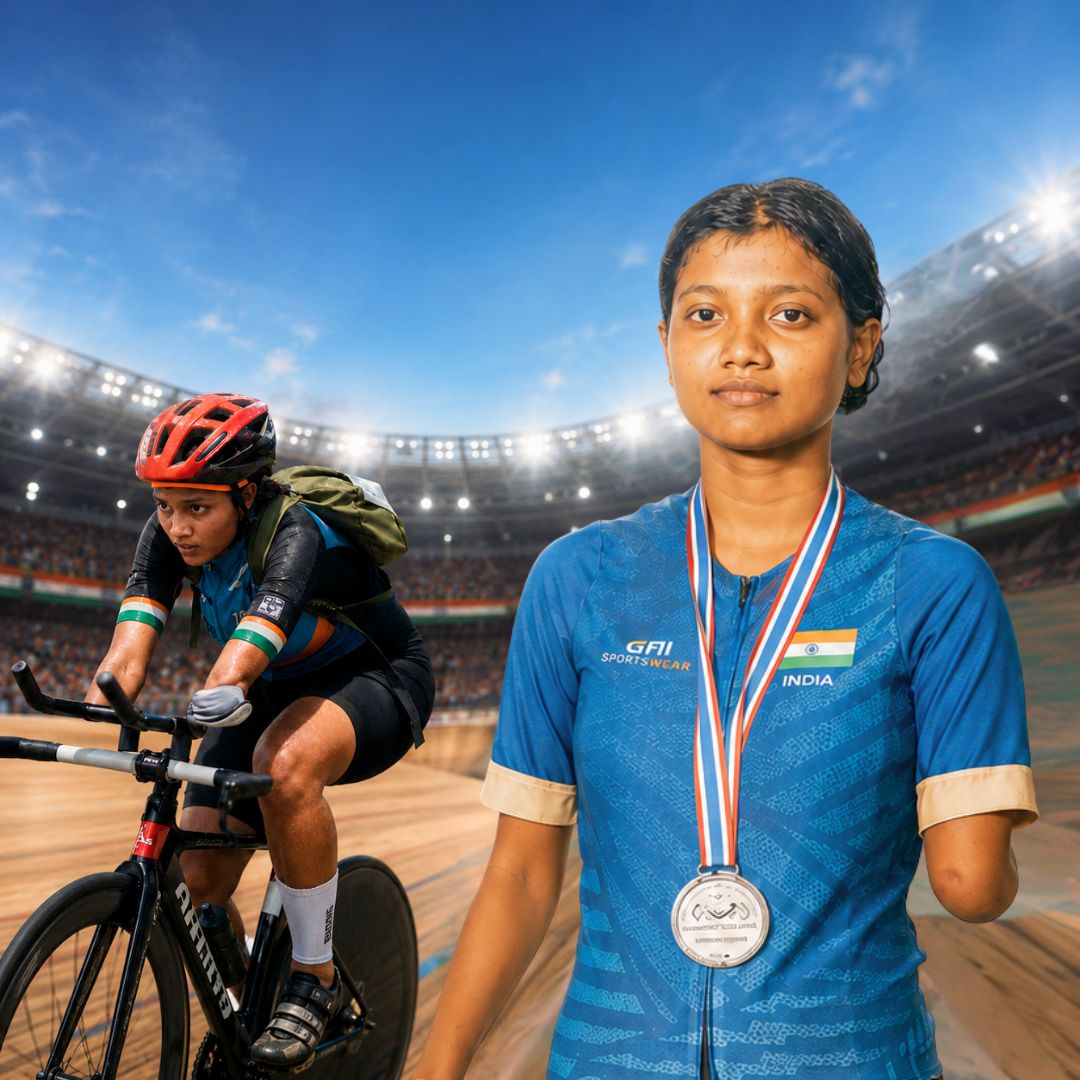
For Lisha Das, Glasgow became the setting for her first Commonwealth Games appearance. Her sixth-place finish in the C4-C5 individual pursuit was followed by another sixth-place result in the women’s C4-C5 1,000m time trial final, according to reports from the Games.
Her Glasgow experience has placed a young Assamese para cyclist on a much larger international platform and given Indian para cycling another athlete to watch as she continues her development.