Forest Rights Act Report 2025 by UNDP Highlights Progress and Challenges

Forest Rights Act Report released by the United Nations Development Programme (UNDP) in 2025 has brought fresh attention to the implementation of the Forest Rights Act (FRA) in India. The report stresses the urgent need for consensus on a sunset clause, setting an end date for recognising and vesting rights under the FRA. Alongside this, it calls for reforms in governance, improved record-keeping, stronger gender equity measures, and integration of tribal livelihoods with broader development policies.
Thank you for reading this post, don't forget to subscribe!The FRA, enacted in 2006, was a landmark legislation aimed at recognising the rights of Scheduled Tribes and other traditional forest dwellers over forest land and resources. Nearly two decades later, the latest Forest Rights Act Report provides both a reality check and a roadmap for future action.
Background of the Forest Rights Act
The FRA recognises both individual and community rights over forest land. According to official figures, titles have been distributed over 2.32 crore acres, of which 1.88 crore acres fall under community rights. Yet this progress covers only about 18 per cent of the estimated 9.88 crore acres potentially eligible for community claims.
The Forest Rights Act Report attributes the slow pace to historical conflicts, gaps in policy, and overlapping jurisdiction between different government departments. This lag has left millions of potential beneficiaries still awaiting recognition of their rights.
State-Level Implementation and Challenges
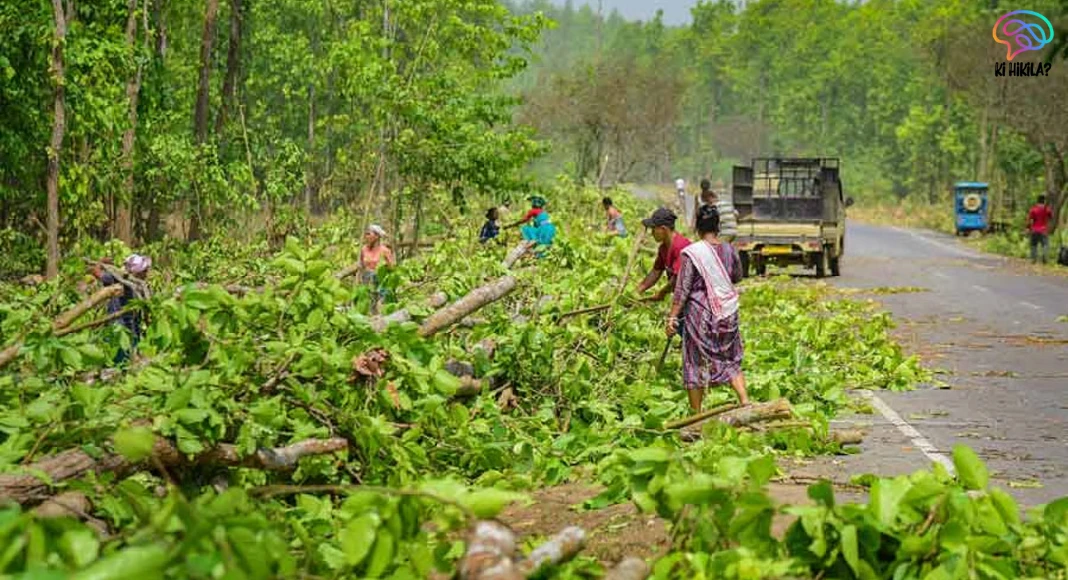
The UNDP study focused on FRA implementation in Chhattisgarh, Maharashtra, and Odisha, three states where large tribal populations live in forest areas. Officials in these states supported the idea of introducing a sunset clause to provide a definitive end to the recognition process.
However, the report also revealed serious challenges. Some individual titles were found to be incorrectly recognised, prompting efforts to rectify the records. Chhattisgarh reported major issues of missing titles and poor record-keeping, signalling the need for a centralised and transparent data management system. Without accurate data, accountability and policy reforms remain difficult to enforce.
Governance and Institutional Conflicts
The Forest Rights Act Report underlines that governance has often been hampered by conflicts between tribal welfare departments and forest departments. While the FRA empowers Gram Sabhas to prepare forest management plans, uncertainty remains on when these plans should be integrated with the working plans of forest departments.
The report recommends setting up high-level inter-departmental committees to resolve these conflicts. This integration is crucial to ensure that community forest resource management plans approved by Gram Sabhas are implemented alongside existing conservation and forestry frameworks.
Gender Equity in FRA Implementation
Gender equity emerges as a core theme in the UNDP’s Forest Rights Act Report. The study emphasises that women should not only be beneficiaries but also leaders in forest governance. It recommends systematic collection of gender-disaggregated data, which is currently lacking, to better understand women’s participation and challenges.
To empower women, the report suggests linking FRA implementation with the National Rural Livelihood Mission (NRLM). This integration would create gender-sensitive livelihood opportunities, ensuring that women play a central role in resource management and economic development. Recognising FRA right holders as a distinct category within social protection schemes is also advised, strengthening safety nets for women and vulnerable communities.
Policy Recommendations and National Strategy
The Forest Rights Act Report makes several forward-looking policy recommendations. Chief among them is the formulation of a National Tribal Policy for the next five years. Such a policy would provide a unified framework to guide tribal welfare, forest governance, and sustainable livelihoods.
The report also highlights the potential of Article 275(1) of the Constitution, which allows targeted funding for tribal welfare. By leveraging this provision, the government could integrate the FRA with related laws like the Panchayat Extension to Scheduled Areas (PESA) Act. This alignment would strengthen tribal self-governance and reduce policy overlaps.
Additionally, ongoing programmes of the Ministry of Tribal Affairs such as PM-JANMAN and DAJGUA have been acknowledged for their leadership. However, the report stresses the need for long-term support and consistent funding to ensure sustained impact rather than short-term gains.
Intellectual Property and Minor Forest Produce
A striking aspect of the Forest Rights Act Report is its focus on intellectual property rights. Section 3(1)(k) of the FRA recognises community rights over biodiversity and traditional knowledge, yet there is little data on claims in this area. The report suggests exploring opportunities to monetise traditional knowledge and biodiversity while safeguarding community ownership.
The management of minor forest produce (MFP) remains another critical area. While the central government has issued guidelines on minimum support prices, many states remain hesitant to deregulate commercially valuable products such as bamboo and tendu leaves. This regulatory ambiguity limits communities’ ability to fully benefit from their recognised rights. The report calls for clear policies on ownership, harvesting, transit, and sale of MFP to ensure that communities gain fair economic returns.
The Way Forward

The Forest Rights Act Report highlights a mixed record of achievements and persistent challenges. On the one hand, millions of acres have been recognised under the FRA, strengthening the legal standing of tribal and forest-dwelling communities. On the other, slow implementation, governance conflicts, and poor record-keeping continue to hold back progress.
The emphasis on gender equity, livelihood integration, and intellectual property rights shows that the FRA must evolve to address contemporary issues beyond land recognition. The call for a sunset clause underscores the importance of bringing clarity and closure to the recognition process, while policy reforms can ensure that granted rights translate into sustainable management and economic empowerment.
The report serves as a timely reminder that recognising forest rights is not the end of the process but the beginning of a new phase in governance. Effective implementation of the FRA can strengthen both environmental conservation and social justice, provided the recommendations are acted upon with urgency.