Anganwadi Co-location Guidelines: Strengthening Early Childhood Care and Education in India

Anganwadi Co-location Guidelines mark a significant step by the Government of India towards transforming the Early Childhood Care and Education (ECCE) ecosystem. The initiative promotes the integration of pre-school education provided in Anganwadi Centres (AWCs) with formal primary schooling, ensuring a smooth transition for young learners. This strategic move supports India’s broader goal of developing a robust education system and nurturing the foundational years of every child.
Thank you for reading this post, don't forget to subscribe!The Anganwadi Co-location Guidelines were jointly launched by the Ministry of Education and the Ministry of Women & Child Development. The programme seeks to provide holistic development by combining health, nutrition, and early education under one roof. By co-locating AWCs with schools, the government aims to create a seamless continuum of learning from pre-school to Grade 1, a crucial stage for cognitive and emotional development.
Recent Initiative and Context
The guidelines target nearly 15 crore children across the nation, focusing on improving their early learning experiences. This initiative aligns with the government’s commitment to achieving universal foundational literacy and numeracy as envisioned under the NIPUN Bharat Mission. It also complements the objectives of the National Education Policy (NEP) 2020, which identifies early childhood education as the cornerstone of lifelong learning.
Through the Anganwadi Co-location Guidelines, schools and AWCs will share resources, infrastructure, and teaching expertise. The plan also promotes the use of digital technologies and Artificial Intelligence (AI) tools to enhance early education, especially in regional languages. This integration of education and technology is expected to create a more inclusive and engaging environment for children.
Integration with National Education Policy 2020
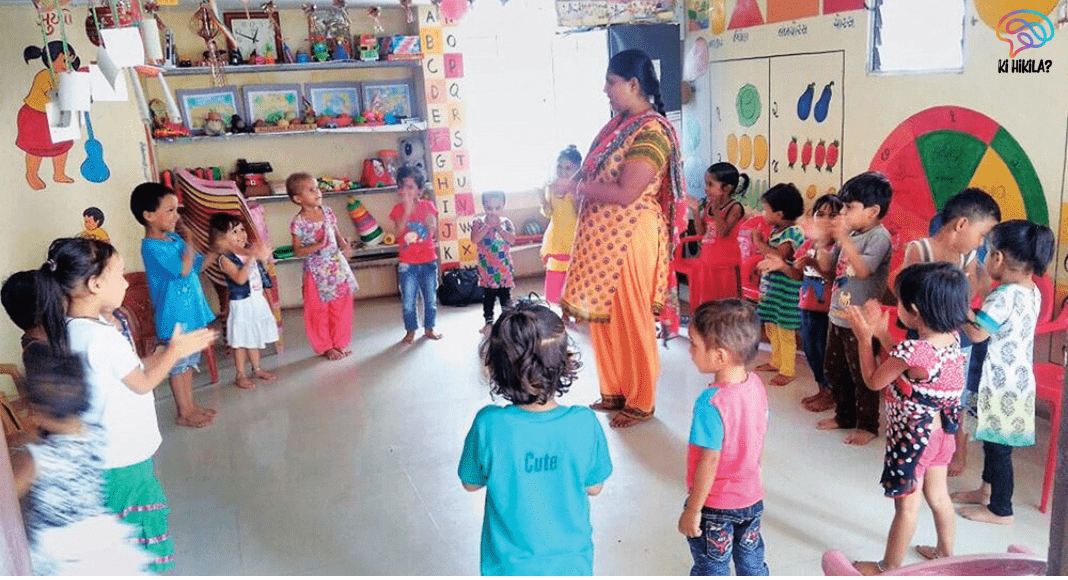
The NEP 2020 laid the foundation for transforming India’s education structure through its 5+3+3+4 framework, which includes three years of pre-school education as part of the foundational stage. The policy highlights the need to integrate Anganwadi Centres with primary schools to ensure continuity and quality in learning.
According to NEP 2020, ECCE should be delivered through various modes such as standalone Anganwadi Centres, co-located AWCs within schools, pre-primary sections, and independent pre-schools. The Anganwadi Co-location Guidelines provide a practical framework for this policy vision, enabling smooth implementation across states and union territories.
Teachers under this system will receive specialized training in ECCE pedagogy, ensuring that young children are nurtured in an environment that promotes creativity, curiosity, and emotional well-being. The co-located centres will also serve as a bridge between home-based learning and formal education.
Objectives of the Co-location Guidelines
The Anganwadi Co-location Guidelines have been designed with a set of clear objectives to enhance early education and care services. These include:
- Preparing children for formal schooling through joyful and play-based learning methods.
- Strengthening the link between Anganwadi Centres and primary schools to improve retention.
- Promoting the holistic development of children through integrated care, health, and education services.
- Encouraging community engagement to ensure local participation and sustainability.
- Optimising available resources by merging infrastructure and personnel wherever feasible.
Key Components of the Guidelines
The Anganwadi Co-location Guidelines outline a comprehensive roadmap for states and union territories to follow. They focus on:
- Establishing standard norms and criteria for co-locating AWCs with schools.
- Mapping Anganwadi Centres to nearby schools for efficient integration.
- Creating safe, inclusive, and child-friendly learning spaces.
- Encouraging parental and community involvement in ECCE activities.
- Defining the roles and responsibilities of various government departments for effective coordination.
These steps are expected to create a unified ecosystem where children receive consistent care and quality education right from their formative years.
Implementation Challenges
While the Anganwadi Co-location Guidelines set a visionary path, implementation poses several challenges. Different states and union territories follow diverse models of Anganwadi management, leading to variations in quality and resources. Effective coordination between the Departments of Education and Women & Child Development will be vital for success.
Infrastructure availability, teacher training, and inter-departmental communication remain critical areas of focus. The government’s continued efforts to ensure adequate funding, monitoring, and capacity-building will determine how smoothly the co-location model operates across the country.
Technology and Learning Tools
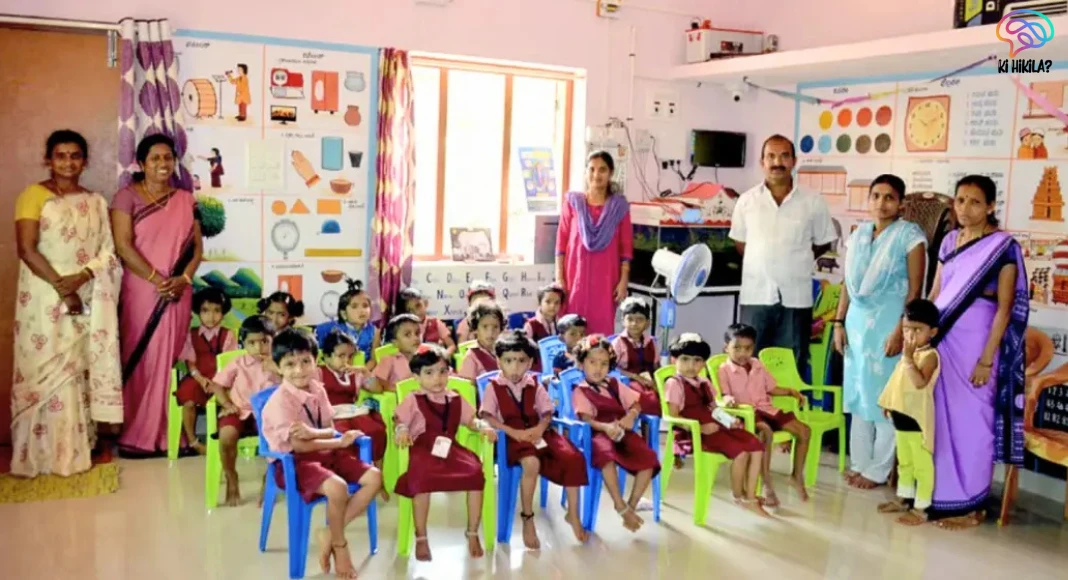
A major highlight of the Anganwadi Co-location Guidelines is the emphasis on innovative learning tools and technology integration. The use of Jaadui Pitara and e-Jaadui Pitara—interactive teaching materials aligned with the National Curriculum Framework for the Foundational Stage (NCF-FS)—plays a key role in this initiative.
These digital resources are designed to make early learning engaging, inclusive, and culturally relevant. With improved broadband connectivity, schools and AWCs will be able to adopt AI-powered tools and educational apps, making foundational education more interactive and effective.
The co-location model thus represents a transformative approach to early childhood education. It bridges the gap between pre-school and primary school, ensuring that every child in India begins their educational journey with strong cognitive, emotional, and social foundations.