



FY27 Net Market Borrowing Set at ₹11.73 Lakh Crore to Support Growth and Fiscal Discipline

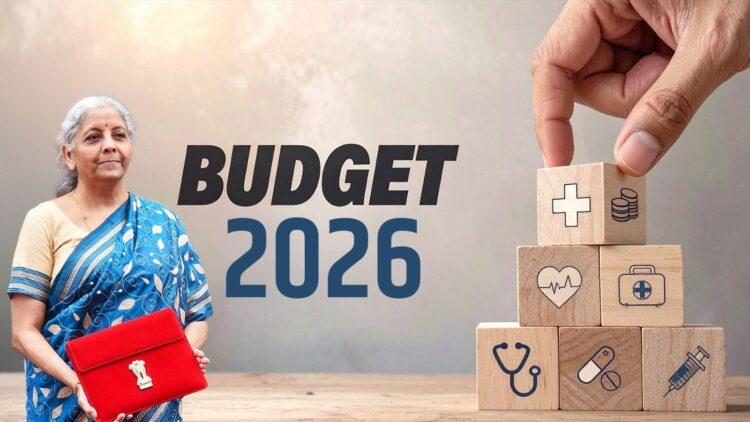
FY27 Net Market Borrowing has been fixed at ₹11.73 lakh crore by the Union government, highlighting a carefully planned increase in funding to support economic growth while staying committed to fiscal consolidation. The announcement was made by Finance Minister Nirmala Sitharaman during the presentation of the Union Budget 2026 in Parliament. The decision reflects the government’s intent to balance higher public investment with responsible management of public finances.
Thank you for reading this post, don't forget to subscribe!Borrowing Plan for the Year Ahead
According to the Budget documents, the net market borrowing of ₹11.73 lakh crore for FY27 is estimated to be around 3 per cent of India’s gross domestic product (GDP). At the same time, gross market borrowing has been pegged at ₹17.20 lakh crore, which equals about 4.4 per cent of GDP.
This represents a steady increase compared with earlier years. In FY26, net borrowing stood at ₹10.7 lakh crore under revised estimates, while in FY25 it was about ₹9 lakh crore. The gradual rise suggests that the government is expanding spending in a controlled manner, aligned with economic needs and long-term planning.
Net market borrowing refers to the fresh funds the government raises after adjusting for repayments of existing debt. Gross market borrowing, on the other hand, includes the total amount raised before taking redemptions into account. Together, these numbers provide a clear picture of the government’s funding requirements.
Capital Expenditure Remains the Priority
A major share of the increased borrowing is intended to finance capital expenditure. This includes spending on infrastructure such as roads, railways, ports, power projects, digital networks, and urban development. The government has consistently argued that such investment has a stronger impact on economic growth compared to routine or consumption-based spending.
Capital expenditure creates assets that improve productivity, generate jobs, and attract private investment. Over the past few years, the Centre has steadily raised its capital spending, making it a key pillar of its economic strategy. Officials believe this approach improves the overall quality of government expenditure and delivers better long-term returns.
By using borrowed funds mainly for asset creation, the government aims to ensure that future generations also benefit from today’s spending.
Commitment to Fiscal Consolidation
Despite higher borrowing in absolute terms, the government has reiterated its commitment to fiscal consolidation. This means reducing the fiscal deficit and public debt gradually as a percentage of GDP.
The Budget indicates that the fiscal deficit is on a downward path, supported by improved tax collections, better compliance, and rationalisation of spending. A lower deficit-to-GDP ratio signals that the government is borrowing responsibly in relation to the size of the economy.
Maintaining this balance is important for macroeconomic stability. It helps control inflation, supports a stable currency, and preserves the country’s creditworthiness in global markets.
Impact on Bond Markets and Interest Rates
Economists note that a higher borrowing programme can increase the supply of government bonds in the market, which may put some upward pressure on yields. Higher yields mean higher interest costs for the government and other borrowers.
However, analysts also point out that clear communication, predictable borrowing calendars, and a credible consolidation roadmap help reassure investors. If the government continues to demonstrate discipline and transparency, markets are more likely to absorb the additional supply smoothly.
The role of the Reserve Bank of India in managing liquidity and conducting open market operations will also be important in keeping bond markets stable.
What the Numbers Indicate
The FY27 Net Market Borrowing figure signals continuity in policy. The government is not shifting course but building on its existing framework of growth through investment and gradual deficit reduction.
The steady increase in borrowing, rather than a sharp jump, suggests caution and planning. It shows that the government is mindful of both development needs and financial risks.
At the same time, the focus on capital expenditure indicates confidence that public investment will continue to crowd in private investment and strengthen economic momentum.
Looking Ahead
India’s medium-term public finance strategy revolves around three key pillars: sustained economic growth, high-quality public spending, and credible fiscal consolidation. The FY27 borrowing programme reflects an attempt to align these goals.
With ₹11.73 lakh crore in net market borrowing and ₹17.20 lakh crore in gross borrowing, the government has set out a funding plan that supports development while keeping fiscal discipline in view. The success of this strategy will depend on effective implementation of projects, stable revenue growth, and supportive financial market conditions in the years ahead.