


Deepak Dhar Wins Dirac Medal

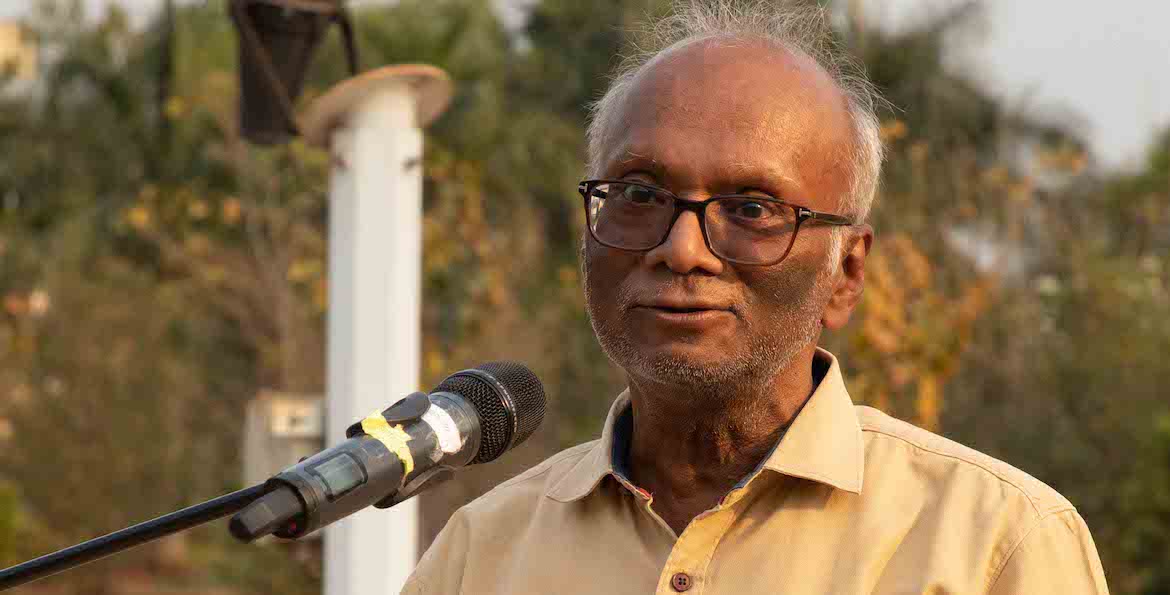
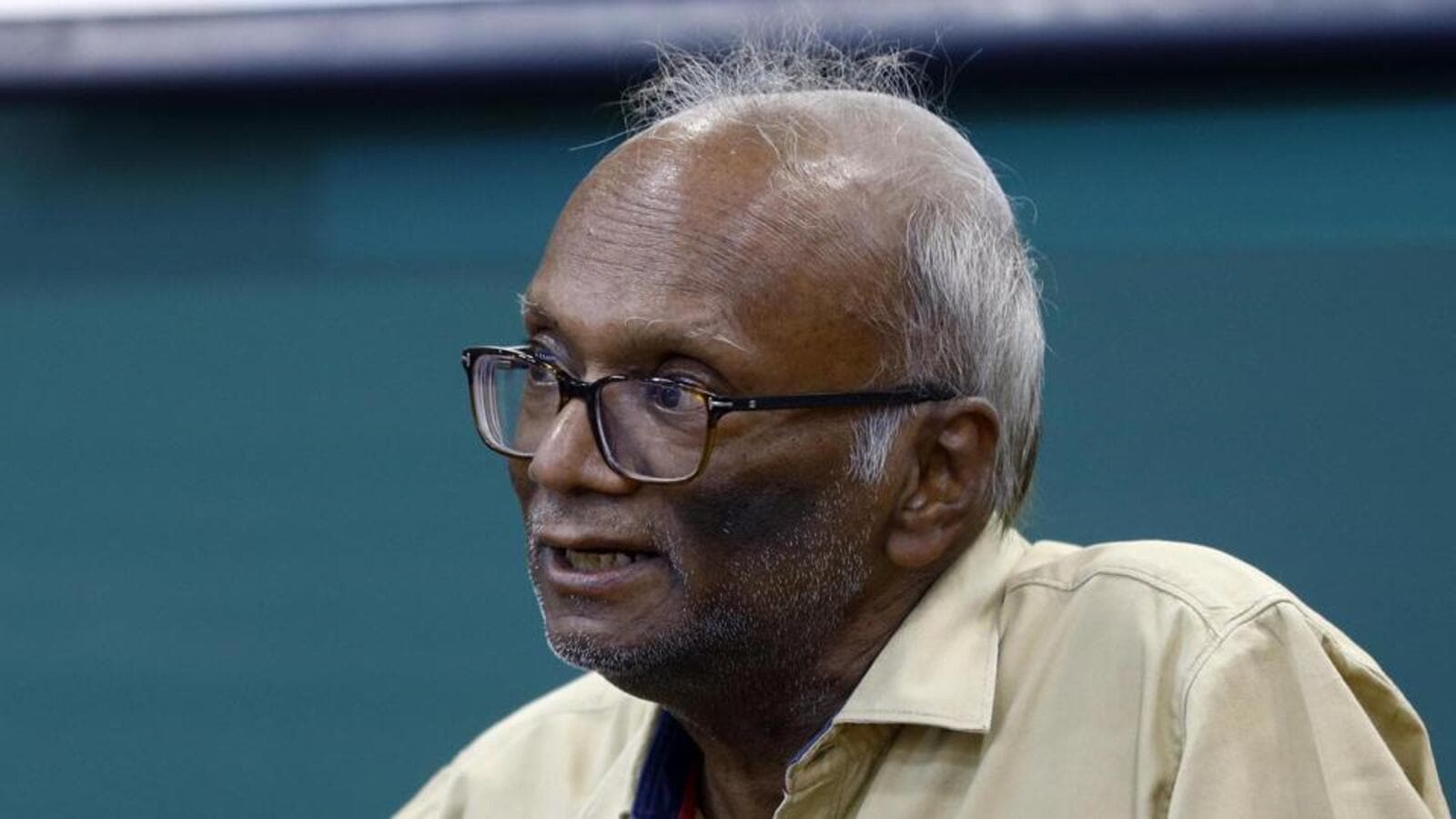
Deepak Dhar has been awarded the 2026 Dirac Medal by the Abdus Salam International Centre for Theoretical Physics (ICTP), recognising his major contributions to statistical mechanics and complex systems. The Indian theoretical physicist shares the prestigious award with Bernard Derrida of France, Marc Mézard of Italy, and Haim Sompolinsky of Israel and the United States. ICTP announced the 2026 recipients on August 8, the birth anniversary of renowned physicist Paul Dirac.
Thank you for reading this post, don't forget to subscribe!Deepak Dhar Receives a Major Global Physics Honour
Deepak Dhar is an INSA Distinguished Professor at the International Centre for Theoretical Sciences (ICTS) of the Tata Institute of Fundamental Research in India. His latest recognition highlights decades of work in theoretical physics, especially in understanding systems with many interacting parts.
The 2026 Dirac Medal recognises the four scientists for important contributions to equilibrium statistical mechanics and for extending ideas from the field into areas such as non-equilibrium physics, optimisation, theoretical neuroscience and artificial intelligence. ICTP said this work has helped expand the use of theoretical physics in areas far beyond traditional physics.
The award is particularly relevant today because statistical methods are increasingly connected with modern research in computing, machine learning, complex networks and brain science.
What Is the Dirac Medal?
The Dirac Medal was established by ICTP in 1985 and is named after Paul Dirac, one of the most influential theoretical physicists of the 20th century. The medal is awarded each year to scientists who have made significant contributions to theoretical physics.
The award is announced on August 8, Dirac’s birthday. ICTP describes the medal as one of its major recognitions for achievements in theoretical physics. The 2026 award brings together four researchers whose work has helped develop statistical mechanics and apply its ideas to new scientific problems.
Deepak Dhar and the Sandpile Model
One of the areas strongly associated with Dhar’s research is the sandpile model, an important idea in the study of complex systems and self-organised criticality.
The basic idea uses a simple model in which grains are added to a pile until the system reaches a point where a small change can trigger a much larger event. This kind of behaviour helps scientists study how complex patterns can emerge from simple rules.
Dhar’s work on the sandpile model became an important part of research into statistical mechanics and complex systems. His research has also contributed to understanding how mathematical ideas can describe systems that appear unpredictable or complicated.
From Statistical Physics to AI and Neuroscience
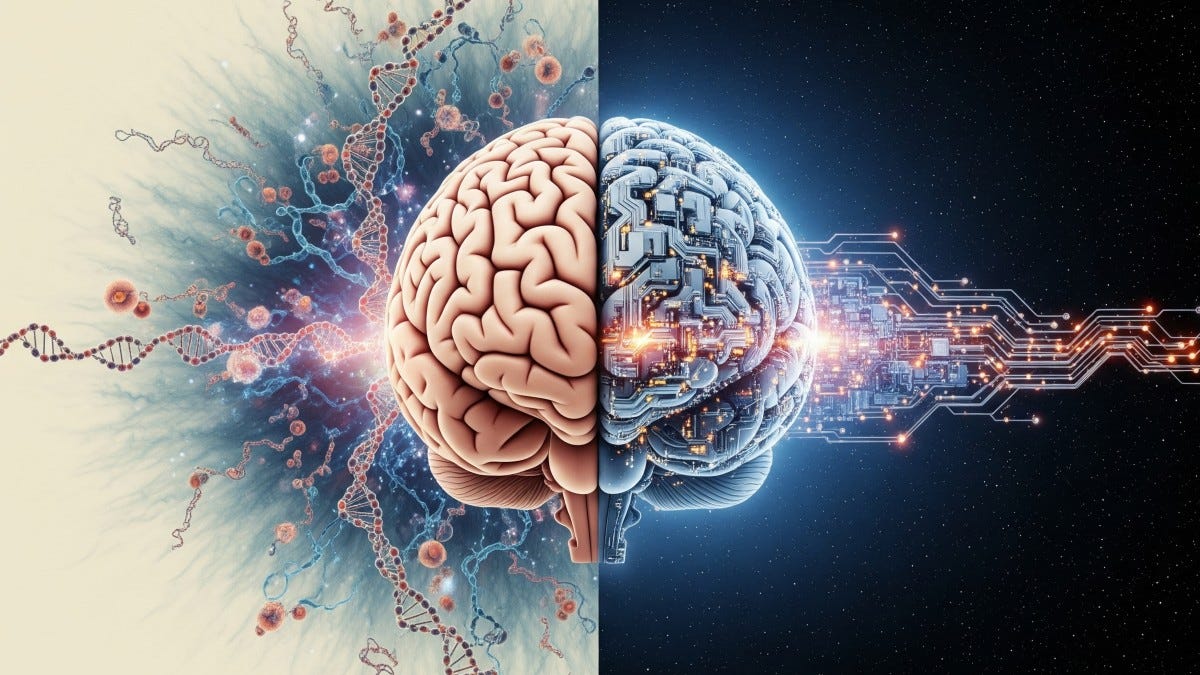
The 2026 Dirac Medal citation reflects how statistical mechanics has expanded into new areas. The work recognised this year connects physics with artificial intelligence, theoretical neuroscience and optimisation.
Statistical mechanics traditionally helps scientists understand large systems made up of many particles. Researchers can use probability and mathematical models to study how individual components interact and how large-scale behaviour emerges.
Similar ideas can be useful when studying neural networks, optimisation problems and some forms of artificial intelligence. Modern AI systems contain many interacting elements, making mathematical tools for understanding complex behaviour increasingly valuable.
ICTP Director Atish Dabholkar said the work of the 2026 recipients has helped establish theoretical physics, especially statistical mechanics, as a framework for addressing questions in areas including biology, computer science and artificial intelligence.
Deepak Dhar’s Academic Journey
Deepak Dhar studied physics in India before moving to the United States for higher research. He graduated from the University of Allahabad in 1970, completed his MSc at IIT Kanpur in 1972 and earned his PhD from the California Institute of Technology in 1978.
During his time at Caltech, Dhar worked as a teaching assistant to Nobel Prize-winning physicist Richard Feynman. His later career focused strongly on theoretical physics and statistical mechanics.
He has spent much of his research career working in India and has been associated with major Indian research institutions. His work has earned international recognition for its influence on statistical physics and the study of complex systems.
Earlier Recognition for Deepak Dhar
The Dirac Medal adds to a long list of honours received by Dhar. In 2022, he became the first Indian recipient of the Boltzmann Medal, a major international recognition in statistical physics. He was also awarded the Padma Bhushan by the Government of India in 2023.
His research has helped strengthen India’s presence in the global theoretical physics community. Dhar’s career also reflects the role of Indian research institutions in producing internationally recognised work in mathematics and physics.
Why the 2026 Award Is Significant
The latest Dirac Medal brings attention not only to Deepak Dhar but also to the changing role of theoretical physics. Statistical mechanics is no longer limited to questions about particles and materials. Its ideas are increasingly being explored in areas involving complex networks, biological systems, optimisation and AI.
For India, Dhar’s recognition is another important international honour for a scientist whose research has been developed largely through the country’s scientific institutions. His work connects fundamental physics with some of the scientific questions that are becoming increasingly important in the modern era.
The 2026 Dirac Medal therefore highlights a wider trend in science: ideas developed in one field can provide useful tools for understanding problems in completely different areas, from complex physical systems to the mathematics behind modern artificial intelligence.