



Garra nambashiensis: New Freshwater Fish Species Discovered in Manipur

The discovery of a new freshwater fish species in Manipur marks a significant addition to the region’s already rich biodiversity. Named Garra nambashiensis, this species was found in the Taretlok River, a tributary of the Chindwin River near Nambashi Valley in Kamjong district. The discovery was led by Dr. Bungdon Shangningam and his research team from Dhanamanjuri University, Imphal. This finding not only enhances the scientific understanding of freshwater ecosystems in Northeast India but also highlights the ecological connectivity between India and Myanmar’s river systems.
Thank you for reading this post, don't forget to subscribe!Discovery and Habitat of Garra nambashiensis
The Garra nambashiensis was discovered in the fast-flowing sections of the Taretlok River, known as riffles, characterized by shallow waters and high oxygen content. These areas are vital for aquatic life because they support rich algal growth and provide an ideal habitat for fish adapted to rapid currents. The substrate in this zone consists of gravel, cobbles, boulders, sand, silt, and coarse sediments, creating a mixed environment suitable for bottom-dwelling species.
The Taretlok River, located near the Indo-Myanmar border, flows through a biodiversity hotspot that serves as a natural corridor for various aquatic species. This transboundary river system underlines the shared ecological heritage between Manipur and Myanmar, emphasizing the importance of cross-border conservation efforts.
Physical Characteristics of Garra nambashiensis
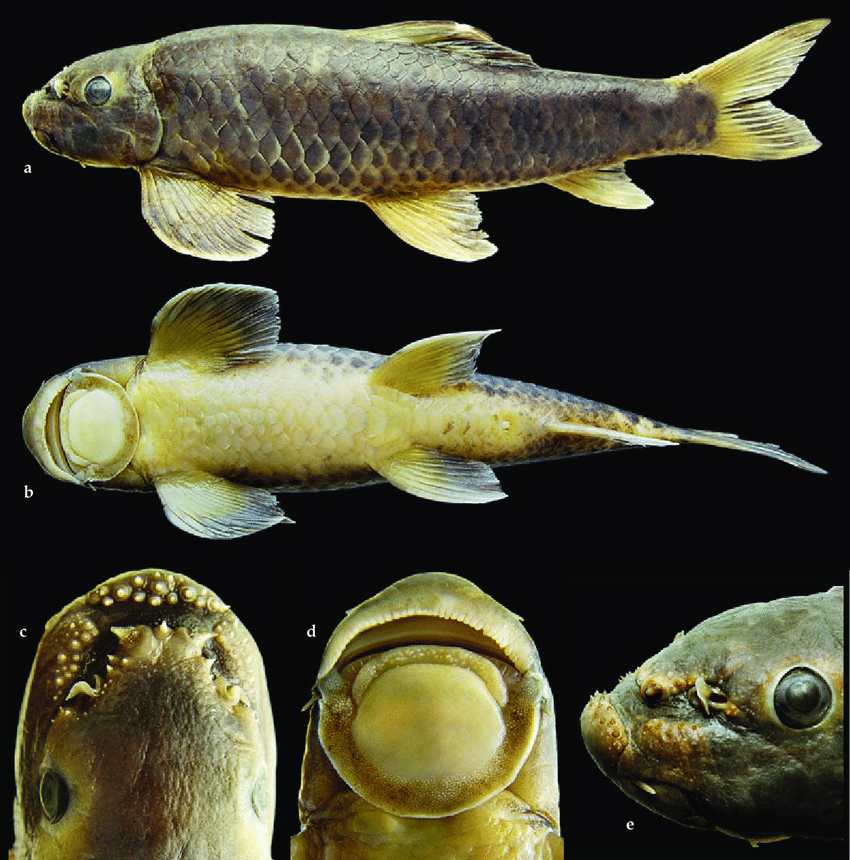
The newly identified Garra nambashiensis exhibits unique morphological traits that distinguish it from other related species. One of the most striking features is its quadrate-shaped proboscis, a distinctive projection on the snout typical of the Garra genus.
Other notable characteristics include:
- 7 to 8 acanthoid tubercles on the anterolateral margin.
- Black spots on the opercle, the bony flap covering the gills.
- Dorsal fin with 8 to 11 scales and six black stripes that extend to the hypural plate near the tail base.
- Adults range between 90 and 140 millimetres in length.
Locally, this fish is known as “Nutungnu”, reflecting its regional identity and cultural connection with the local communities who live along the Taretlok River.
Taxonomy and Classification of Garra nambashiensis
Taxonomically, Garra nambashiensis belongs to the Labeonine family, which includes species that have evolved to thrive in fast-flowing freshwater habitats. Within this family, it is categorized under the proboscis species group of the genus Garra.
Members of this group are characterized by the presence of a fleshy or bony snout projection, which helps them attach to rocks and navigate through strong currents. The discovery of Garra nambashiensis adds to the growing list of over 60 known Garra species found across the river systems of Northeast India, particularly within the Brahmaputra, Chindwin, Barak, and Kaladan basins.
This classification enhances scientific understanding of the region’s evolutionary history and helps in tracing the adaptive patterns of freshwater fish species across varied ecological zones.
Ecological Significance of Garra nambashiensis
The identification of Garra nambashiensis underscores the ecological richness of the Chindwin River system. This particular region harbours multiple Garra species, reflecting complex evolutionary processes shaped by hydrological diversity and climatic variations.
Currently, 32 species within the Garra genus are recognized under the proboscis group, and the Chindwin River system alone houses eight species, including the recently discovered Garra chingaiensis. Such diversity showcases the adaptive potential of these fish to thrive in unique aquatic habitats and underscores the biogeographic significance of Northeast India as one of the world’s key freshwater biodiversity hotspots.
These discoveries also shed light on micro-evolutionary adaptations, helping scientists understand how species diversify in response to ecological pressures such as current speed, substrate type, and oxygen levels.
Conservation Implications of Garra nambashiensis Discovery
The discovery of Garra nambashiensis highlights the urgent need for continued ichthyological research in the remote river systems of Northeast India. These regions are under increasing threat from pollution, habitat fragmentation, dam construction, and climate change, which can disrupt delicate aquatic ecosystems.
Freshwater habitats, particularly in border regions like the Taretlok River, are often overlooked in conservation policies despite their ecological and cultural importance. Therefore, findings like this serve as a scientific reminder to strengthen habitat protection measures, improve water quality management, and implement sustainable fishing practices.
Moreover, this discovery provides valuable insights for cross-border environmental cooperation between India and Myanmar, fostering joint efforts in biodiversity documentation and conservation strategies. Protecting such river systems is crucial not only for ecological balance but also for the livelihoods of indigenous communities dependent on these freshwater resources.
Previous Discoveries by the Research Team

The research team led by Dr. Bungdon Shangningam has made remarkable contributions to the documentation of Manipur’s freshwater fish diversity. In 2018, the same team discovered Pethia poiensis from the Challou River in Ukhrul district. This earlier discovery, combined with the latest finding of Garra nambashiensis, reflects a sustained scientific effort to explore and catalogue the region’s rich aquatic biodiversity.
Such systematic research initiatives play a critical role in updating taxonomic databases, supporting biodiversity conservation programs, and enhancing the global understanding of freshwater ecosystems. The consistent discoveries from Manipur’s river systems indicate that many more undiscovered species may still inhabit these pristine waters, waiting to be identified.
Broader Impact of Garra nambashiensis Discovery
The discovery of Garra nambashiensis not only enriches scientific literature but also enhances regional awareness about the importance of freshwater conservation. It emphasizes that Manipur’s river systems are reservoirs of hidden biodiversity, deserving focused research and conservation funding.
This finding also aligns with India’s national biodiversity goals and international commitments under the Convention on Biological Diversity (CBD). It strengthens the scientific foundation for protecting freshwater ecosystems the lifelines that support both ecological stability and community well-being in the Northeast.