




Hall and Woodford Win 2026 Economics Nobel

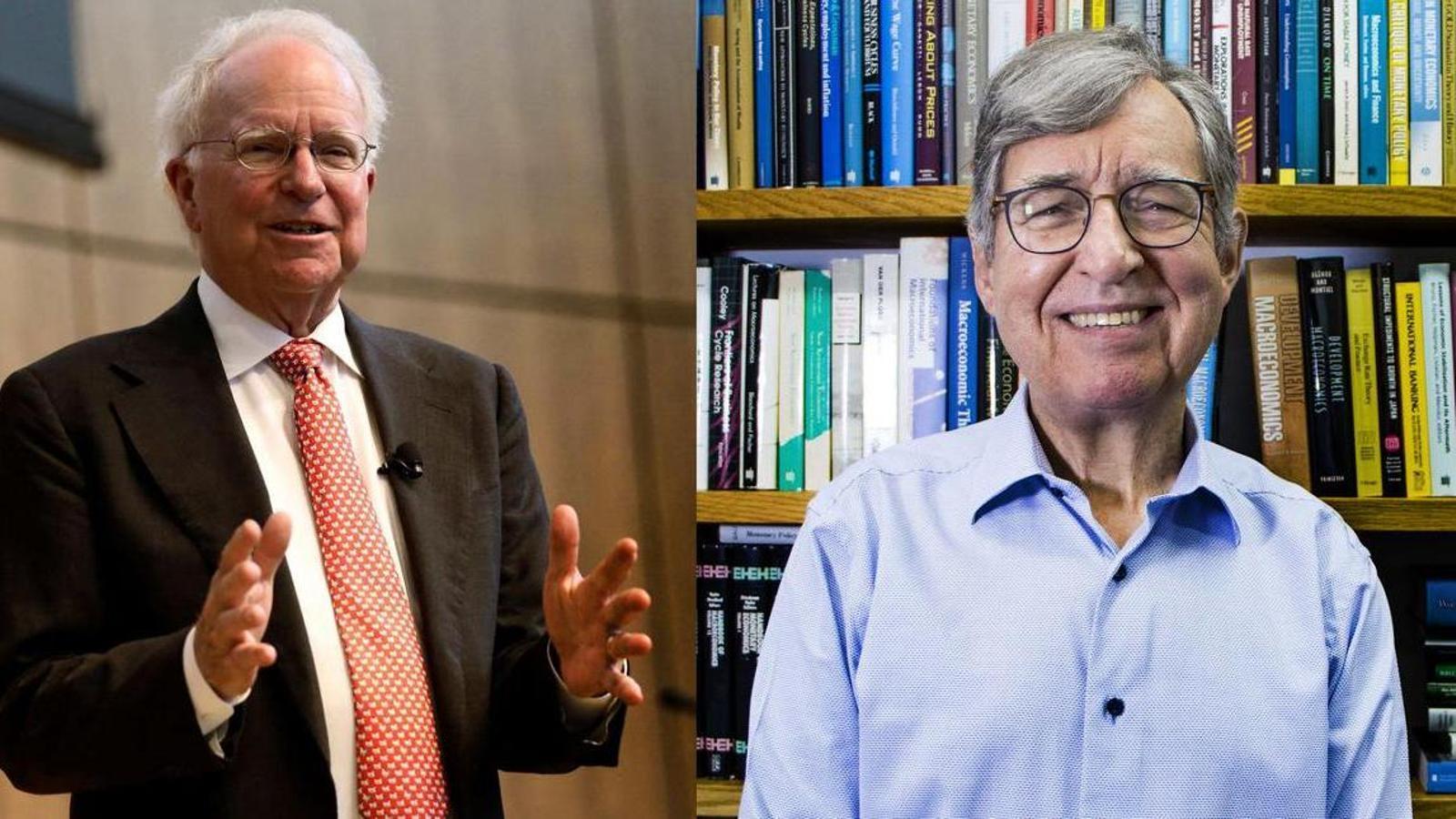
Hall and Woodford received the 2026 Sveriges Riksbank Prize in Economic Sciences in Memory of Alfred Nobel on 12 October 2026. American economists Robert E. Hall and Michael Woodford were recognised for their research on the microeconomic foundations of macroeconomic stabilisation. Their work helps explain how the decisions of households and businesses affect the wider economy and how governments and central banks can respond to economic changes.
Robert E. Hall is affiliated with Stanford University, while Michael Woodford is affiliated with Columbia University. The Royal Swedish Academy of Sciences announced the award, which carries a total prize amount of 12 million Swedish kronor. The prize money is shared equally between the two economists.

Hall and Woodford’s Research on Economic Stability
Hall and Woodford are recognised for research that connects individual economic decisions with changes across the whole economy. Their work examines how households, businesses and policymakers influence economic activity.
Macroeconomics is the branch of economics that studies the economy as a whole. It looks at issues such as inflation, unemployment, economic growth, national income and changes in production. Microeconomics, on the other hand, studies the decisions made by individuals, households and businesses.
The microeconomic foundations of macroeconomics connect these two areas. They help economists understand how decisions made by individual people and firms can affect overall production, employment and prices.
For example, when families reduce their spending, businesses may receive fewer orders. Companies may then reduce production or delay hiring workers. When many households and businesses make similar decisions, these changes can affect the wider economy.
Hall and Woodford’s research contributes to understanding such economic processes and how stabilisation policies can influence business cycles.
What Is Macroeconomic Stabilisation?
Macroeconomic stabilisation refers to policies designed to reduce sharp fluctuations in economic activity and support a more stable economy. Economic activity does not always grow at the same speed. Periods of growth may be followed by slowdowns or recessions.
During an economic slowdown, businesses may produce fewer goods, investment may decline and unemployment may rise. During periods of strong demand, prices may increase rapidly, creating inflationary pressure.
Governments and central banks use different policy tools to respond to these conditions. Their decisions depend on factors such as inflation, employment, economic growth and financial conditions.
Economic models help policymakers study how different actions may affect the economy. Research into macroeconomic stabilisation can therefore help explain why some policies work in particular situations and why their effects may differ across households and businesses.
Role of Microeconomic Foundations
Microeconomic foundations are important because people and businesses do not always respond to economic changes in the same way. A household may change its spending when interest rates rise, while a business may reconsider investment or recruitment plans.
These individual decisions influence broader economic results, including output, employment and prices. Economic models that consider these choices can offer a clearer picture of how the economy operates.
Another important factor is price rigidity. Prices and wages do not always change immediately when economic conditions change. Businesses may take time to adjust prices, while workers’ wages may not respond quickly to changes in demand.
These delays can influence how monetary and fiscal policies affect production, employment and inflation. New Keynesian economic models include such factors and are widely used to study the effects of economic policies.
Fiscal Policy and Monetary Policy
Fiscal policy and monetary policy are two major tools used to influence economic activity. Both are important in discussions about macroeconomic stabilisation.
Fiscal policy refers to government decisions on taxation and public spending. A government may increase spending on infrastructure, public services or other programmes to support economic activity. Changes in taxes can also influence how much households spend and how much businesses invest.
Monetary policy refers to actions taken by a central bank to influence money, credit and interest rates. Central banks may adjust policy interest rates to manage inflation and influence borrowing and spending.
For example, higher interest rates can make loans more expensive, potentially reducing spending and investment. Lower interest rates can make borrowing cheaper and may encourage households and businesses to spend or invest more.
However, the effects of these policies depend on economic conditions and how people and businesses respond. Models based on microeconomic foundations help policymakers analyse these relationships.
Central banks and finance ministries use economic models when assessing possible policy decisions. Research on stabilisation can help improve the understanding of how these decisions may affect output, employment and inflation.
About the 2026 Economics Nobel Prize
The formal name of the Economics Nobel is the Sveriges Riksbank Prize in Economic Sciences in Memory of Alfred Nobel. It was established by Sweden’s central bank, Sveriges Riksbank, in 1968 and awarded for the first time in 1969.
Unlike the five original Nobel Prizes, the Economics prize was not included in Alfred Nobel’s will of 1895. The original prize categories were Physics, Chemistry, Physiology or Medicine, Literature and Peace.
The Economics prize was created to recognise important contributions to economic science. It is administered through the Nobel award system, with the Royal Swedish Academy of Sciences responsible for selecting the laureates.
The prize is traditionally presented on 10 December, the anniversary of Alfred Nobel’s death in 1896. The award ceremony recognises the contributions of individuals whose research has advanced their fields.
Why the Award Matters
The 2026 award to Hall and Woodford highlights the importance of understanding the relationship between individual decisions and the wider economy. Economic policies can affect people differently depending on their income, spending habits, borrowing needs and employment situation.
Research that connects these individual responses with economy-wide outcomes helps economists develop and assess models of economic activity. Such models are useful when governments and central banks consider how to respond to inflation, unemployment or a slowdown in growth.
The work also underlines the role of economic research in modern policymaking. As economies face changing financial conditions, shifts in demand and uncertainty about future growth, policymakers need tools to evaluate the possible effects of their decisions.
By recognising Robert E. Hall and Michael Woodford, the 2026 Sveriges Riksbank Prize in Economic Sciences drew attention to research on the microeconomic foundations of macroeconomic stabilisation and its relevance to understanding business cycles and economic policy.