



Solar Polar Brightening Explained

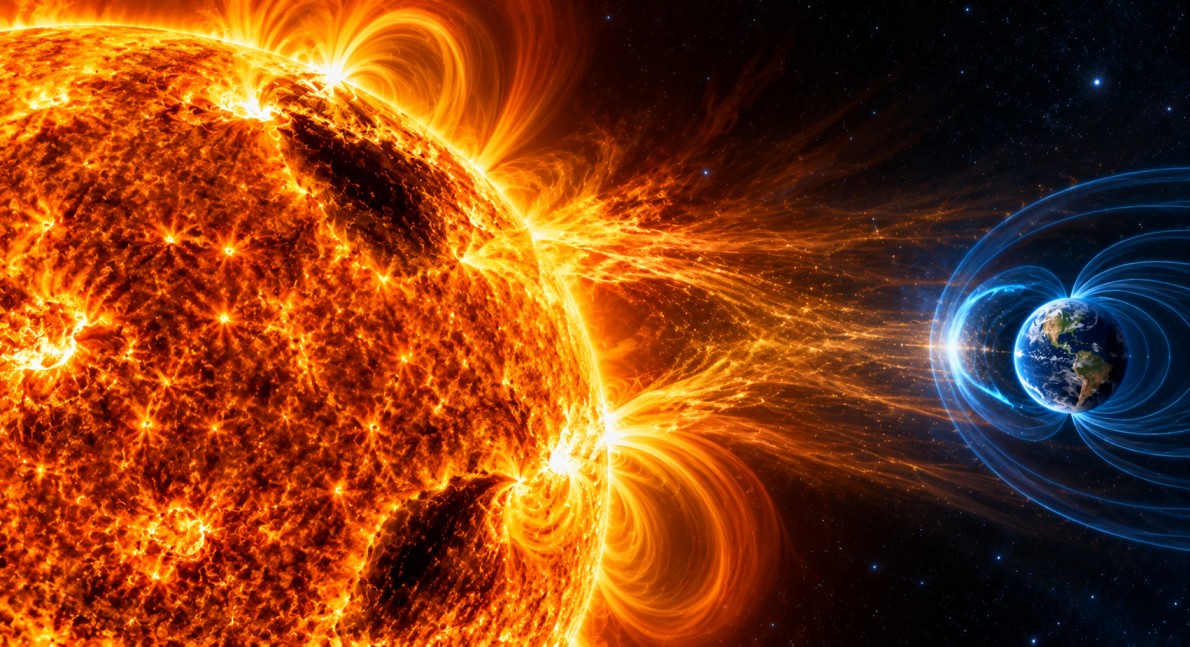
Solar Polar Brightening is helping scientists understand how the Sun’s magnetic fields influence activity near its north and south poles. A study reported on 12–13 October 2026 examined the link between the Sun’s polar magnetic field and increased microwave radio emission from these regions. The research involved scientists from the Aryabhatta Research Institute of Observational Sciences (ARIES), the Udaipur Solar Observatory (USO), the Physical Research Laboratory (PRL), IIT Delhi and IIT Roorkee. The findings offer new information about the changing magnetic environment of the Sun.
What Is Solar Polar Brightening?
Solar polar brightening refers to stronger microwave radio emission from the Sun’s polar regions compared with surrounding areas. Scientists study this emission to understand the magnetic structures and physical conditions in the solar atmosphere.

The Sun has a complex magnetic field that changes over time. These changes influence solar activity, including sunspots, solar flares, coronal mass ejections and the solar wind. Studying the polar regions is important because their magnetic fields are closely linked to the Sun’s large-scale magnetic cycle.
The research found that microwave polar brightening was strongly related to the size of polar coronal holes. An even closer relationship was found between the brightening and the strength of the Sun’s polar magnetic field.
Nearly Three Decades of Solar Observations
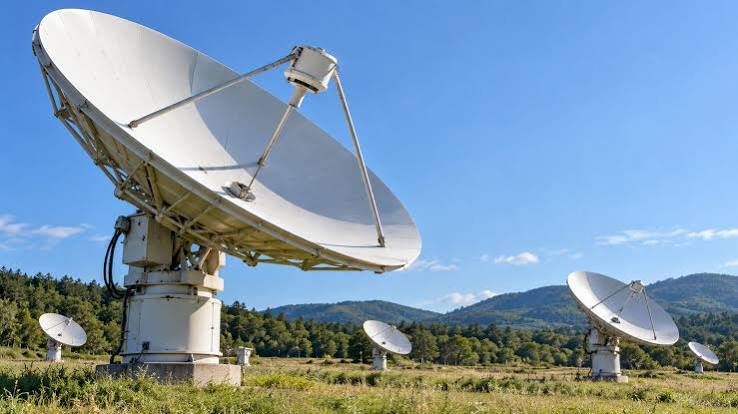
The research team analysed nearly 30 years of solar observations collected at a microwave frequency of 17 gigahertz (GHz) by Japan’s Nobeyama Radioheliograph.
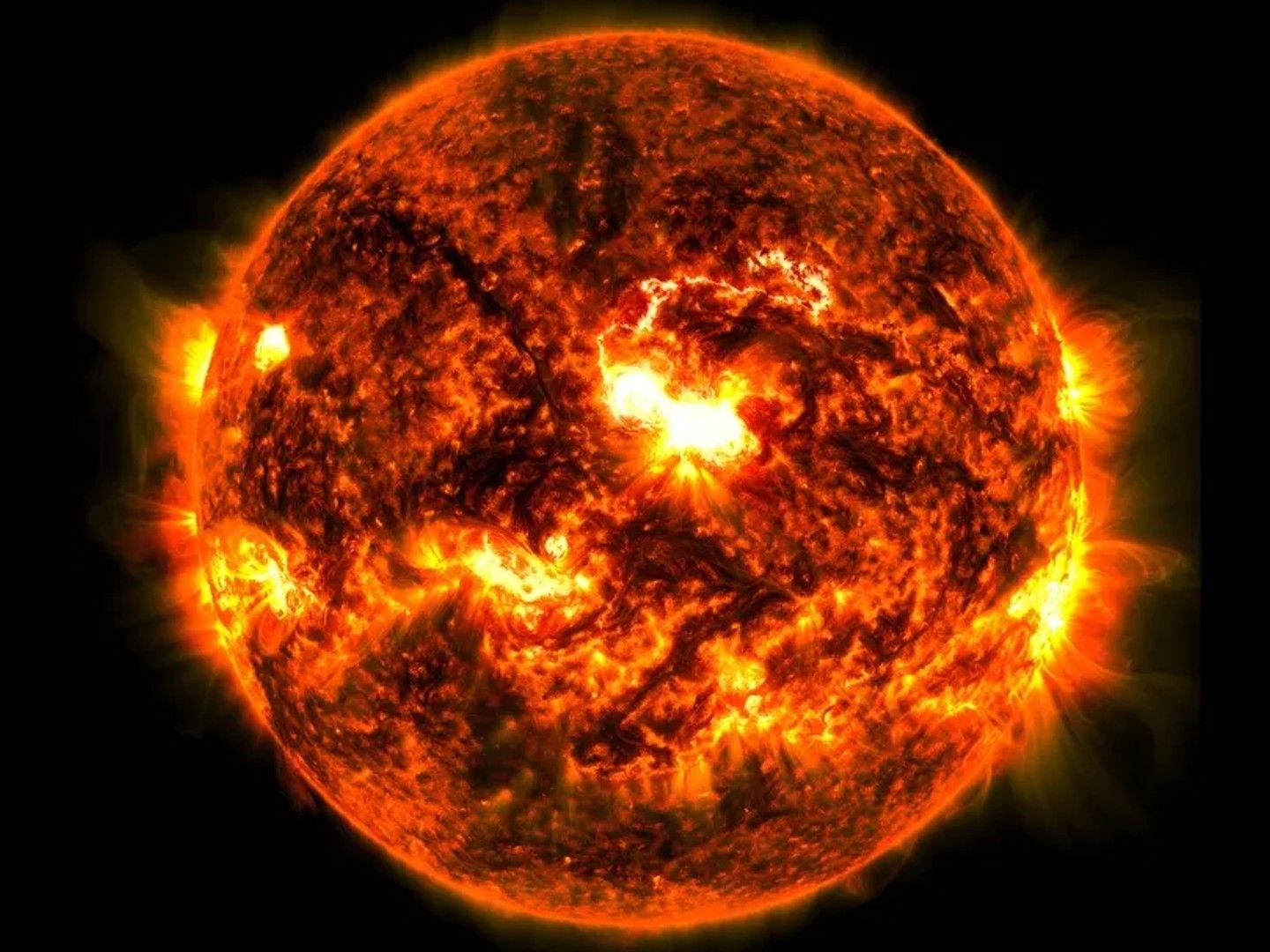
The researchers compared these radio observations with extreme-ultraviolet images from NASA’s Solar Dynamics Observatory and magnetic-field measurements from the Wilcox Solar Observatory in California.
Each type of observation provides different information. Radio observations help scientists study microwave emission from the solar atmosphere. Extreme-ultraviolet images reveal hot material in the Sun’s outer atmosphere, while magnetic-field measurements help researchers track changes in solar magnetism.
By combining these datasets, the team investigated how the Sun’s polar magnetic fields and surrounding structures changed over several decades.
The study was led by Rohan Bose of ARIES and IIT Roorkee, with Anshu Kumari of USO/PRL and Vaibhav Pant of IIT Delhi among the researchers involved.
How Coronal Holes Affect Solar Activity
Coronal holes are regions of the Sun’s outer atmosphere, known as the corona, where the plasma is relatively less dense and cooler than in surrounding areas. They often appear dark in extreme-ultraviolet and X-ray images.
Their magnetic field lines extend out into space rather than forming closed loops near the solar surface. As a result, coronal holes are important sources of high-speed solar wind, a continuous stream of charged particles flowing away from the Sun.
When this solar wind reaches Earth, it can interact with Earth’s magnetic field. Under suitable conditions, it can contribute to geomagnetic storms and auroras. Strong geomagnetic storms may also affect satellites, radio communications and some navigation systems.
Understanding coronal holes and their magnetic structure can therefore help scientists improve their knowledge of how solar activity influences the space environment around Earth.
The Role of Coronal Bright Points
The research also examined small, bright features known as coronal bright points. These features are associated with small-scale magnetic loops in the solar atmosphere and are commonly found inside polar coronal holes.
The researchers found that individual microwave-bright patches often coincided with these bright points. This suggests that the observed microwave emission is connected not only to the large-scale magnetic field near the solar poles but also to smaller magnetic structures.
These findings help scientists investigate how different scales of solar magnetism work together. Large-scale magnetic fields shape the polar environment, while smaller magnetic loops contribute to localised activity in the solar atmosphere.
Differences Between the Sun’s Northern and Southern Poles
The study found that changes in microwave polar brightening and the area of polar coronal holes did not follow exactly the same pattern in the northern and southern solar hemispheres.
The differences show that the two polar regions can evolve in different ways during the Sun’s magnetic cycle. Researchers linked changes in microwave brightening to variations in polar magnetic-field strength and the changing structure of the polar atmosphere.
Long-term observations are particularly useful for studying these differences because the Sun’s magnetic activity changes over periods of several years. A record spanning multiple decades allows scientists to compare different stages of the solar cycle.
Why This Research Matters
The findings provide more information about the relationship between solar magnetic fields, coronal holes and microwave emission. A better understanding of these processes may help scientists interpret changes in the solar atmosphere and improve models of solar activity.
This research is also relevant to space-weather science. Solar wind and other forms of solar activity can affect Earth’s near-space environment, where satellites, spacecraft and communication systems operate.
The study was published in The Astrophysical Journal, a peer-reviewed astronomy and astrophysics journal. By combining radio, extreme-ultraviolet and magnetic-field observations, the researchers have added to the long-term study of the Sun’s polar regions and their role in solar activity.