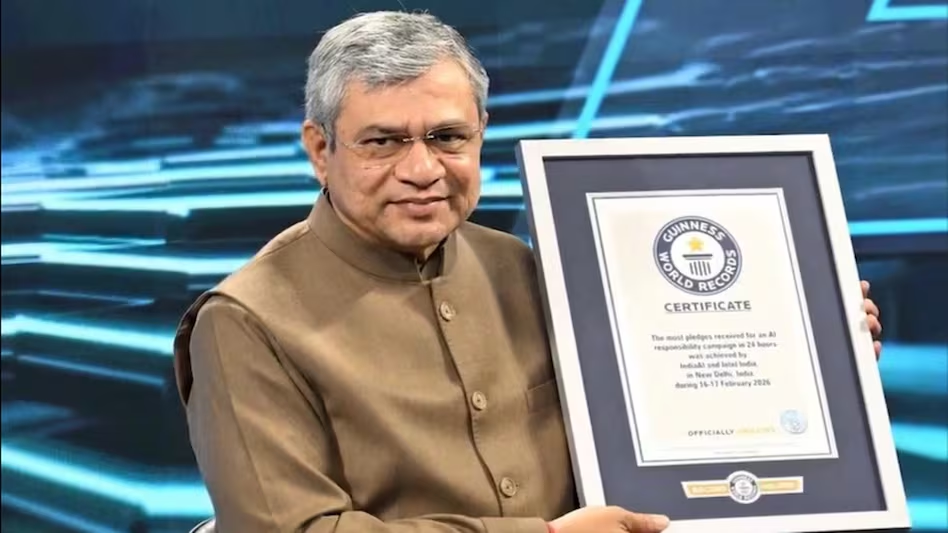
India AI Impact Summit Guinness Record Highlights Responsible AI Push

The India AI Impact Summit Guinness Record became the biggest highlight on Day 3 of the India AI Impact Summit 2026, held at Bharat Mandapam in New Delhi. The day showed how India is combining public participation, government vision and global technology investments to shape the future of artificial intelligence. With a strong focus on responsible AI, digital connectivity, talent development and computing power, India projected itself as a global meeting point for AI governance and real-world deployment, especially for emerging economies.
Thank you for reading this post, don't forget to subscribe!India AI Impact Summit Guinness Record Creates History
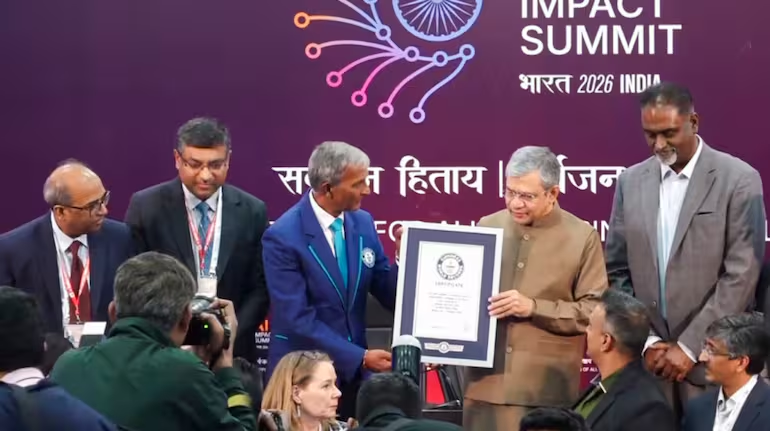
A major moment of pride came when Union IT Minister Ashwini Vaishnaw announced that India had entered Guinness World Records. The country achieved the record for the Most pledges received for an AI responsibility campaign in 24 hours.
Between February 16 and February 17, a total of 250,946 valid pledges were collected. These pledges focused on responsible and ethical use of artificial intelligence. The campaign was designed to involve citizens directly, with colleges and student networks playing a major role. This record was not just about numbers, but about building trust in AI and making people feel included in how new technologies are shaped.
The India AI Impact Summit Guinness Record highlighted that AI adoption is not only about advanced machines and software, but also about public awareness, ethics and shared responsibility.
Responsible AI Takes Centre Stage
Throughout Day 3, the message was clear: innovation must go hand in hand with responsibility. Speakers stressed that AI systems should be transparent, fair and designed to benefit society as a whole. The record-setting pledge campaign showed that citizens are ready to engage with these ideas, especially young people who will shape the future workforce.
India’s approach stood out because it linked national policy goals with citizen participation. By encouraging people to take a pledge, the summit moved responsible AI from policy documents into everyday conversation.
Google Expands Digital Connectivity and AI Support
Global technology companies used the summit to announce large-scale plans for India. Google revealed a major connectivity initiative called America-India Connect. This plan aims to create new fibre-optic routes linking the United States, India and several locations across the Southern Hemisphere.
The project includes expanded subsea cable capacity and a new international gateway in India. These investments are critical as AI-driven services require fast, reliable and secure data movement. Strong digital infrastructure will help India manage growing AI traffic and support services like cloud computing, research platforms and digital public services.
Google also announced two challenge funds worth $30 million each. One fund focuses on AI for Government Innovation, helping improve public service delivery. The second supports AI for Science, encouraging researchers to use AI for scientific breakthroughs. Partnerships for skilling and education were also highlighted, including work with Karmayogi Bharat and Indian public institutions.
Microsoft and OpenAI Back India’s AI Talent
Another strong signal came from Microsoft, which said it plans to invest $50 billion by 2030 to expand AI access across countries in the Global South. This move reflects the growing importance of emerging markets like India in the global AI ecosystem.
OpenAI announced collaborations with Indian higher education institutions to promote responsible and structured use of AI on campuses. The first group includes IIT Delhi, IIM Ahmedabad, AIIMS New Delhi, Manipal Academy of Higher Education, UPES and Pearl Academy.
The goal is to support more than 100,000 students, faculty and staff over the next year. These partnerships aim to ensure that future professionals understand not only how to use AI tools, but also how to use them responsibly.
Yotta and the Race for AI Compute Power
India’s AI ambitions also depend on strong computing infrastructure. Yotta Data Services announced plans to invest over $2 billion in Nvidia’s latest chips to build a major AI computing hub. These specialised chips are essential for training and running large AI models.
Alongside this, Yotta shared plans to raise capital ahead of a possible IPO. This shows growing private sector confidence in India’s AI market and the long-term demand for high-performance computing.
What the Day Showed About India’s AI Direction
Day 3 of the summit made it clear that India is following a balanced path. On one side, the India AI Impact Summit Guinness Record showed a people-driven approach, focusing on trust and responsibility. On the other, major investments in connectivity, skills and computing power showed readiness for large-scale AI deployment.
Government initiatives, global technology firms and academic institutions are working together. This combined effort supports AI use in public services, education, research and industry. It also positions India as a leader in shaping AI rules and standards that reflect the needs of developing and emerging economies.
The events of the day suggested that India does not want to be just a consumer of AI technologies. Instead, it aims to be a global hub where ideas, ethics, infrastructure and talent come together to shape how AI is built and used worldwide.